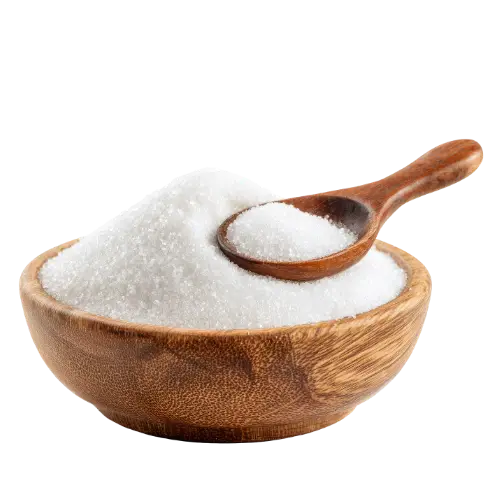
Granulated sugar is the most neutral baking sugar and also the most precise. It creams cleanly with butter, dissolves evenly into liquid batters, and caramelizes predictably in the oven. Brown sugar brings extra moisture and a molasses note that granulated does not have. Powdered sugar dissolves instantly but behaves differently in a batter. When a recipe calls for granulated specifically, substituting another form changes the moisture balance, texture, and browning behavior of the finished bake – sometimes in ways you notice immediately, sometimes after cooling.
The amount of granulated sugar in a recipe controls more than sweetness. In cookies it affects spread: more sugar means more spread because sugar melts and the dough loosens. In muffins it affects the top: a higher sugar ratio produces the domed, crackled bakery-style crown that home bakers often miss. Lemon Raspberry Muffins use a specific granulated sugar amount to get that dome right, and the results are visibly different if you scale the amount down. Eggless Chocolate Chip Cookies show the same principle in cookie form – the spread and edge crisp are both controlled by the granulated sugar level in the dough.
In yeast breads and enriched doughs, granulated sugar feeds the yeast early in the rise and contributes to the golden crust during baking. The Best Cinnamon Rolls use granulated sugar in the dough for exactly those reasons – feeding the yeast for a reliable rise and building a tender, lightly golden outer crust. The filling gets its chew and sweetness from brown sugar, but the dough itself needs the neutral, fast-dissolving granulated version to develop properly.
Creaming granulated sugar with room-temperature eggs and butter is the foundation of most scratch cakes and many cookies. The mechanical action of beating sugar crystals into fat creates air bubbles that expand during baking and produce lift. This is why creaming time in a recipe is not arbitrary – under-creamed butter and sugar produces a denser crumb because fewer air pockets were created. Over-creaming causes them to collapse during baking. Both Easy Mini Pumpkin Pies (in the pastry crust) and The Best Peanut Butter Cookies (in the dough) show what properly creamed granulated sugar looks like in practice: the mixture turns pale, fluffy, and slightly increased in volume before you add anything else.