Homemade Lemon Cake
The Best Lemon Cake You’ll Ever Bake
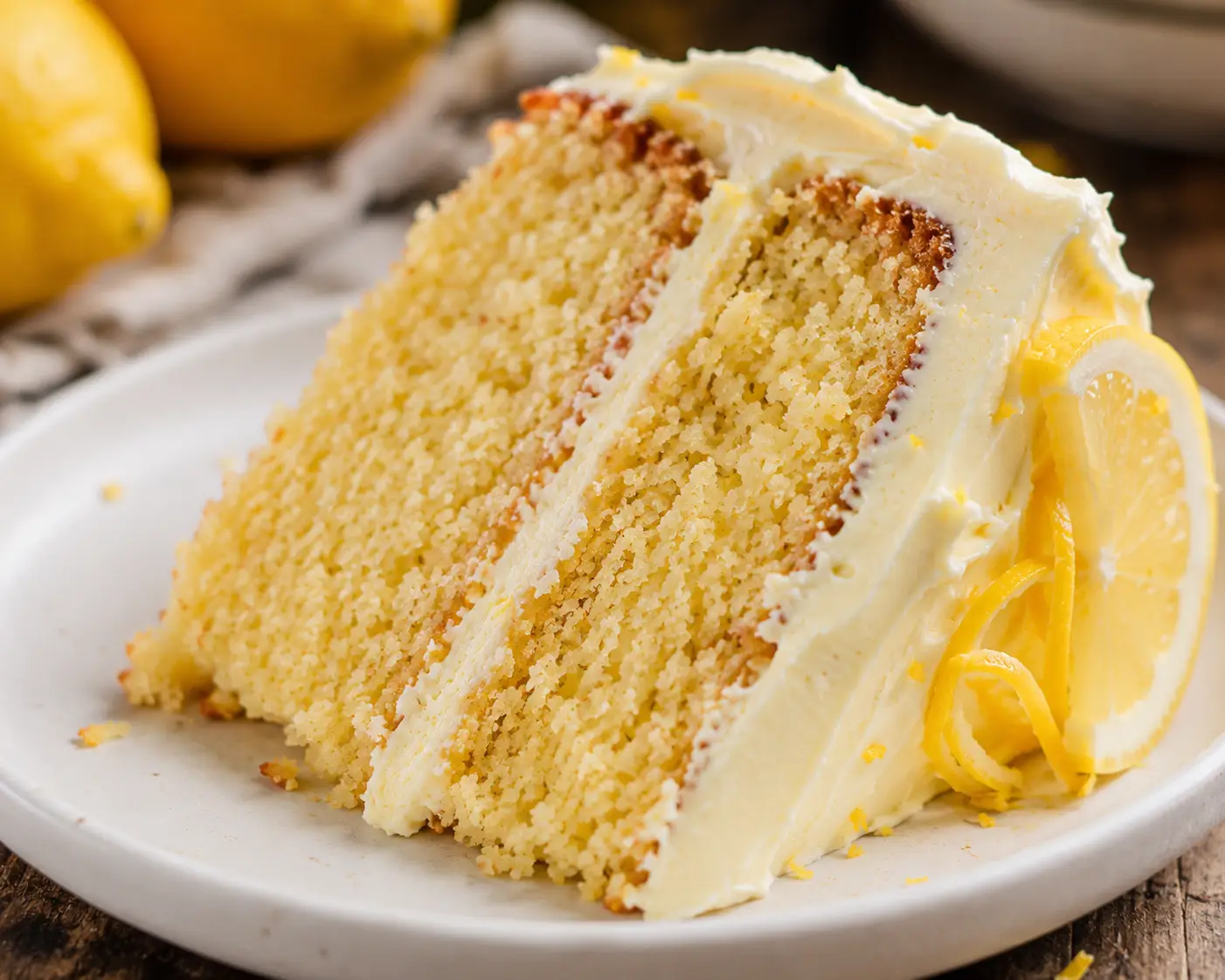
If sunshine had a flavor, it would taste exactly like this homemade Lemon Cake.
Â
This incredibly soft, fluffy cake is packed with fresh lemon zest, real lemon juice, rich butter, and creamy buttermilk to create a bakery-style cake that’s perfectly balanced between sweet and tangy. Every bite is bright, buttery, incredibly moist, and finished with a silky lemon cream cheese frosting that practically melts in your mouth.
Â
Unlike many lemon cakes that turn out dry or overly dense, this recipe combines butter for flavor with a touch of oil for moisture, creating an exceptionally tender crumb that stays soft for days. Fresh lemons provide vibrant citrus flavor without relying on artificial extracts, while buttermilk keeps every slice light and delicate.
Â
Whether you’re baking for Easter, Mother’s Day, birthdays, baby showers, spring brunches, or simply because you’re craving something bright and cheerful, this lemon cake is guaranteed to become one of your favorite desserts.
Â
Even better? It’s surprisingly easy to make.
Why You’ll Love This Lemon Cake
✔ Ultra moist for days
✔ Bright fresh lemon flavor
✔ Soft bakery-style crumb
✔ Easy enough for beginners
✔ Freezes beautifully
✔ Made completely from scratch
✔ Perfect for spring and summer entertaining
✔ Incredible with berries
✔ Better than bakery cakes
What Makes This Lemon Cake So Moist?
One of the biggest complaints about homemade lemon cake is that it often bakes up dry.
This recipe solves that problem using several techniques professional bakers rely on.
Instead of using butter alone, we’re combining butter with a small amount of neutral oil. Butter provides incredible flavor while oil keeps cakes moist long after baking.
Buttermilk adds tenderness because its acidity weakens gluten development, producing an exceptionally delicate crumb. Combined with fresh lemon juice, the cake becomes incredibly soft without becoming heavy.
Finally, plenty of fresh lemon zest adds concentrated citrus oils throughout the batter. Since most of a lemon’s flavor actually lives in the zest—not the juice—you get bold lemon flavor without extra acidity.
Ingredients You’ll Need
For the Cake
All-purpose flour
Cake flour (my secret for an extra soft bakery texture)
Baking powder
Baking soda
Salt
Unsalted butter
Neutral oil
Granulated sugar
Large eggs
Fresh lemons
Fresh lemon zest
Fresh lemon juice
Vanilla extract
Buttermilk
Sour cream (my signature addition for extra moisture)
For the Lemon Cream Cheese Frosting
Cream cheese
Unsalted butter
Powdered sugar
Fresh lemon zest
Fresh lemon juice
Pinch of salt
Vanilla
Heavy cream (only if needed)
Why Sour Cream Is My Secret Ingredient
Here’s what makes this recipe slightly different from many classic lemon cakes.
Adding a small amount of full-fat sour cream creates an incredibly velvety crumb without making the cake heavy.
Sour cream contains fat and acidity that helps lock in moisture while adding richness. Combined with buttermilk, the result is a cake that’s exceptionally soft, stays fresh longer, and slices beautifully.
It’s a small upgrade that makes a noticeable difference.
Fresh Lemons vs Bottled Lemon Juice
Always choose fresh lemons.
Fresh lemons provide both juice and zest, giving the cake layers vibrant citrus oils that bottled juice simply can’t replicate.
Bottled juice is more acidic but lacks the natural fragrant oils found in lemon peel, which is where most of the bright lemon flavor comes from.
My Best Lemon Cake Tips
Before zesting, wash and dry lemons well.
Only zest the bright yellow portion.
Bring butter, eggs and buttermilk to room temperature.
Measure flour with a kitchen scale whenever possible.
Don’t overmix after adding flour.
Bake just until a toothpick comes out with a few moist crumbs.
Cool completely before frosting.
Chill the frosted cake for 20 minutes before slicing for clean layers.
My Signature Lemon Simple Syrup (Optional—but Incredible)
For bakery-quality moisture, brush each cake layer with a quick lemon syrup before frosting.
Lemon Syrup
¼ cup fresh lemon juice
¼ cup granulated sugar
Heat until dissolved, then cool completely.
Brush lightly over cooled cake layers.
The syrup soaks into the cake, adding another layer of fresh lemon flavor while keeping every slice incredibly moist for several days. This technique is widely used in professional baking to extend freshness without making cakes soggy.
Equipment You’ll Need
Two 8-inch cake pans
Stand mixer or hand mixer
Microplane zester
Mixing bowls
Rubber spatula
Cooling racks
Offset spatula
Cake turntable (optional)
Ingredient Tips
Use full-fat buttermilk.
Fresh lemons make all the difference.
European-style butter gives richer flavor.
Full-fat cream cheese creates the smoothest frosting.
Use pure vanilla extract.
Cake flour creates a softer crumb, but combining it with all-purpose flour gives the cake enough structure to support the frosting.
Can I Make This Ahead?
Absolutely.
Bake the cake layers one day ahead.
Wrap tightly in plastic wrap.
Store at room temperature overnight or refrigerate for up to two days.
Frost the following day for the freshest presentation.
The flavor actually improves after resting overnight as the citrus notes deepen throughout the cake.
Baker’s Tips for Success
Always Use Room Temperature Ingredients
Cold butter and eggs won’t emulsify properly.
Allow ingredients to sit at room temperature for about 30–60 minutes before baking.
Don’t Skip the Lemon Zest
The zest contains concentrated citrus oils that provide most of the lemon flavor.
Juice adds brightness, but zest delivers the true lemon aroma.
Measure Flour Correctly
Too much flour is the number one reason cakes become dry.
For the best accuracy:
- Use a kitchen scale.
- Or fluff the flour, spoon it into the measuring cup, and level it with a knife.
Never scoop directly from the bag.
Mix Just Until Combined
Once the flour goes in, mix only until incorporated.
Overmixing develops gluten, creating a dense cake.
Cool Completely
Even a slightly warm cake will cause cream cheese frosting to soften and slide.
Patience pays off.
Chill Before Slicing
After frosting, refrigerate the cake for 20–30 minutes.
You’ll get cleaner, more professional-looking slices.
Delicious Variations
Lemon Blueberry Cake
Fold 1½ cups fresh blueberries into the batter.
Toss them with one tablespoon flour first to prevent sinking.Lemon Raspberry Cake
Layer fresh raspberries between the cake layers with the frosting.
The tart berries pair beautifully with the bright lemon flavor.
Lemon Poppy Seed Cake
Add 2 tablespoons poppy seeds to the dry ingredients.
The subtle crunch adds wonderful texture.
Lemon Coconut Cake
Fold 1 cup sweetened shredded coconut into the batter.
Decorate with toasted coconut flakes.
Lemon Strawberry Cake
Fill the cake with diced strawberries and a thin layer of strawberry preserves for a fresh, summery twist.
Lemon Sheet Cake
Bake the batter in a greased 9×13-inch pan for 35–40 minutes.
Frost directly in the pan for an easy dessert perfect for potlucks, birthdays, and family gatherings.
Lemon Cupcakes
Divide the batter into lined muffin tins, filling each about two-thirds full.
Bake at 350°F for 18–22 minutes, or until a toothpick comes out clean.
This recipe yields about 24 cupcakes.
Make-Ahead Instructions
This cake is ideal for preparing in advance.
Bake the cake layers up to two days ahead.
Once completely cooled, wrap each layer tightly in plastic wrap and refrigerate.
For longer storage, freeze the wrapped layers for up to three months. Thaw overnight in the refrigerator before assembling.
The frosting can also be made up to three days in advance. Store it in an airtight container in the refrigerator, then let it soften at room temperature and rewhip before frosting the cake.
How to Store Lemon Cake
Because of the cream cheese frosting, keep the cake refrigerated in an airtight cake container or loosely covered with plastic wrap.
It will stay fresh for up to 5 days.
For the best flavor and texture, remove the cake from the refrigerator about 30 minutes before serving. This allows the butter and cream cheese to soften, making each slice extra creamy and flavorful.
How to Freeze Lemon Cake
You can freeze the cake either frosted or unfrosted.
For unfrosted layers, wrap each layer tightly in plastic wrap followed by a layer of aluminum foil. Freeze for up to 3 months.
For a frosted cake, place it in the freezer uncovered for about an hour until the frosting is firm. Then wrap it securely and freeze for up to 2 months.
Thaw overnight in the refrigerator before serving.
Common Mistakes to Avoid
- Using bottled lemon juice instead of fresh lemons.
- Skipping the lemon zest, which provides the most intense citrus flavor.
- Overmixing the batter after adding the flour.
- Overbaking the cake, resulting in a dry crumb.
- Frosting the cake while it’s still warm.
- Adding too much powdered sugar at once, which can create a lumpy frosting.
- Not leveling the cake layers before stacking, causing the cake to lean.
- Forgetting to chill the crumb coat before applying the final layer of frosting.
These simple techniques help create a lemon cake that’s exceptionally moist, tender, and bursting with fresh citrus flavor every single time.

Why I Love Baking with Caraway
If you’ve spent any time in my kitchen, you know I’m a big fan of cookware that makes baking easier, cleanup faster, and results more consistent—and that’s exactly why I love my Caraway bakeware.
For this lemon cake, I bake the layers in my Caraway 9-inch Round Cake Pans, or an 8-inch pan which heat evenly from edge to center for beautifully level cakes without overbrowning. Their naturally slick ceramic coating means the cakes release effortlessly with minimal sticking, making cleanup just as satisfying as the first slice.
From cake pans and muffin tins to baking sheets and loaf pans, Caraway’s ceramic-coated bakeware is free of PFAS, PFOA, PTFE, lead, and cadmium, giving me confidence every time I bake for family and friends.
If you’re looking to upgrade your bakeware, I highly recommend giving Caraway a try. Shop here with my generous discount code applied at checkout to save on your order while stocking your kitchen with pieces you’ll reach for again and again.
More Cake Recipes You’ll Love
If you loved this homemade lemon cake, here are a few more popular cake recipes to bake next:
- Chocolate Cake with Chocolate Buttercream – Rich, deeply chocolatey, and perfect for birthdays or celebrations.
- Vanilla Cake – A timeless two-layer vanilla cake with a light, fluffy crumb and silky vanilla frosting.
- Red Velvet Cake – Moist cocoa-kissed layers paired with tangy cream cheese frosting.
- Chocolate Cheesecake – Creamy, decadent, and loaded with chocolate flavor for every special occasion.
- No-Bake Cheesecake – An easy make-ahead dessert that’s perfect for warm summer days.
- Chocolate Cupcakes – Bakery-style cupcakes with a rich cocoa flavor and fluffy chocolate frosting.
- Skillet Chocolate Lava Cake – Warm, gooey, and perfect for sharing straight from the skillet.
Be sure to browse the full recipe collection for more easy homemade desserts, cookies, breads, and family-favorite treats.
Frequently Asked Questions
What makes a lemon cake moist?
The secret to a moist lemon cake is using a combination of butter and oil, full-fat buttermilk, sour cream, and measuring the flour correctly. These ingredients work together to create a soft, tender crumb that stays fresh for days.
Can I use bottled lemon juice?
Fresh lemon juice is highly recommended. Bottled lemon juice lacks the bright citrus flavor that fresh lemons provide and won’t produce the same vibrant taste.
Why is lemon zest so important?
Most of the lemon flavor comes from the natural oils in the zest rather than the juice. Zesting fresh lemons gives the cake its bold, fresh citrus aroma.
Can I make lemon cake ahead of time?
Yes! Bake the cake layers up to two days in advance and wrap them tightly. You can frost the cake the next day for even better flavor.
Can I freeze lemon cake?
Absolutely. Freeze unfrosted cake layers for up to three months or freeze the fully frosted cake for up to two months.
Do I have to use cake flour?
No. While cake flour creates a softer crumb, you can substitute it with additional all-purpose flour if needed. The texture will simply be slightly denser.
Why did my cake sink?
A cake can sink if it is underbaked, if the oven door is opened too early, or if too much leavening is added.
How do I know when my cake is finished baking?
Insert a toothpick into the center. It should come out with a few moist crumbs but no wet batter.
Should I refrigerate lemon cake?
Because of the cream cheese frosting, yes. Store it covered in the refrigerator and let it sit at room temperature for 30 minutes before serving.
How long does lemon cake stay fresh?
Properly stored, it stays moist and delicious for up to five days.
Can I make this into cupcakes?
Yes! This recipe makes about 24 standard cupcakes.
Can I bake this in a 9×13 pan?
Definitely. Bake for about 35–40 minutes, checking for doneness near the end of the baking time.
Can I use Greek yogurt instead of sour cream?
Yes. Full-fat plain Greek yogurt works well and produces a similar moist texture.
What frosting pairs best with lemon cake?
Lemon cream cheese frosting is my favorite because it balances the bright citrus flavor with rich creaminess. Lemon buttercream is another delicious option.
Can I add berries?
Absolutely! Blueberries, raspberries, strawberries, and blackberries all pair beautifully with lemon cake.
How do I prevent dry cake?
Measure flour carefully, avoid overmixing the batter, and remove the cake from the oven as soon as it’s baked through.
Why did my frosting turn runny?
The butter or cream cheese was likely too warm. Chill the frosting for 20–30 minutes before using if needed.
Can I decorate with fresh fruit?
Yes. Fresh berries, lemon slices, candied lemons, edible flowers, or fresh mint all make beautiful garnishes.
What’s the best way to zest lemons?
Use a microplane and zest only the bright yellow outer peel. Avoid the bitter white pith underneath.
Can I make this recipe gluten-free?
Yes. Substitute your favorite 1:1 gluten-free baking flour blend for both flours.
Can I use salted butter?
Unsalted butter is recommended so you can better control the salt level, but salted butter can work if you reduce the added salt slightly.
Why is buttermilk important?
Buttermilk’s acidity helps tenderize the cake while adding richness and moisture, creating a lighter crumb.
Can I add lemon extract?
You can, but fresh zest and juice provide a much more natural and vibrant lemon flavor. If using extract, add only ¼–½ teaspoon.
Why did my cake stick to the pan?
Always grease the pans well and line the bottoms with parchment paper for easy release.
Can I make a three-layer cake?
Yes. Divide the batter evenly among three 8-inch pans and reduce the baking time to approximately 22–26 minutes.
Can I use this recipe for a bundt cake?
Yes. Bake in a well-greased 10–12 cup Bundt pan for approximately 45–55 minutes.
What decorations look best on lemon cake?
Fresh lemon zest, candied lemon slices, blueberries, raspberries, edible flowers, and sprigs of mint all create a beautiful presentation.
Can I reduce the sugar?
You can reduce the granulated sugar by about ¼ cup without significantly affecting the texture, though the cake will be slightly less tender.
Can I make this dairy-free?
Yes. Use dairy-free butter, dairy-free cream cheese, plant-based sour cream, and dairy-free buttermilk made with your favorite unsweetened milk and lemon juice.
Why does this recipe combine butter and oil?
Butter provides rich flavor, while oil keeps the cake exceptionally moist for several days. Combining the two gives you the best of both worlds.
Homemade Lemon Cake Recipe
Ingredients
- 2 cups all-purpose flour or gluten-free flour
- 1 cup cake flour or all-purpose, or gluten-free flour
- 2½ tsp baking powder
- ½ tsp baking soda
- ½ tsp salt
- ¾ cup unsalted butter softened
- ¼ cup vegetable oil or neutral oil
- 1¾ cups granulated sugar
- 4 large eggs room temperature
- 2 tbsp lemon zest
- â…“ cup fresh lemon juice
- 2 tsp vanilla extract
- ½ cup sour cream room temperature
- 1 cup buttermilk room temperature
Lemon Simple Syrup
- ¼ cup lemon juice
- ¼ cup granulated sugar
Lemon Cream Cheese Frosting
- 16 oz cream cheese softened
- 1 cup butter softened
- 5½-6 cups powdered sugar
- 2 tbsp lemon zest
- 2 tbsp lemon juice
- 1 tsp vanilla extract
- 1 tsp vanilla
- pinch of salt
- 1-2 tbsp heavy cream if needed
Instructions
- Preheat oven to 350°F and prepare two greased, parchment-lined 8-inch cake pans. *9-inch baking pan works, too. Adjust your baking time to less.
- Whisk together the flours, baking powder, baking soda, and salt.
- Beat butter, oil, and sugar until light and fluffy, about 3–5 minutes.
- Add eggs one at a time, mixing well after each addition.
- Mix in the lemon zest, lemon juice, vanilla, and sour cream until just combined.
- Alternate adding the dry ingredients and buttermilk, beginning and ending with the dry ingredients. Mix only until incorporated.
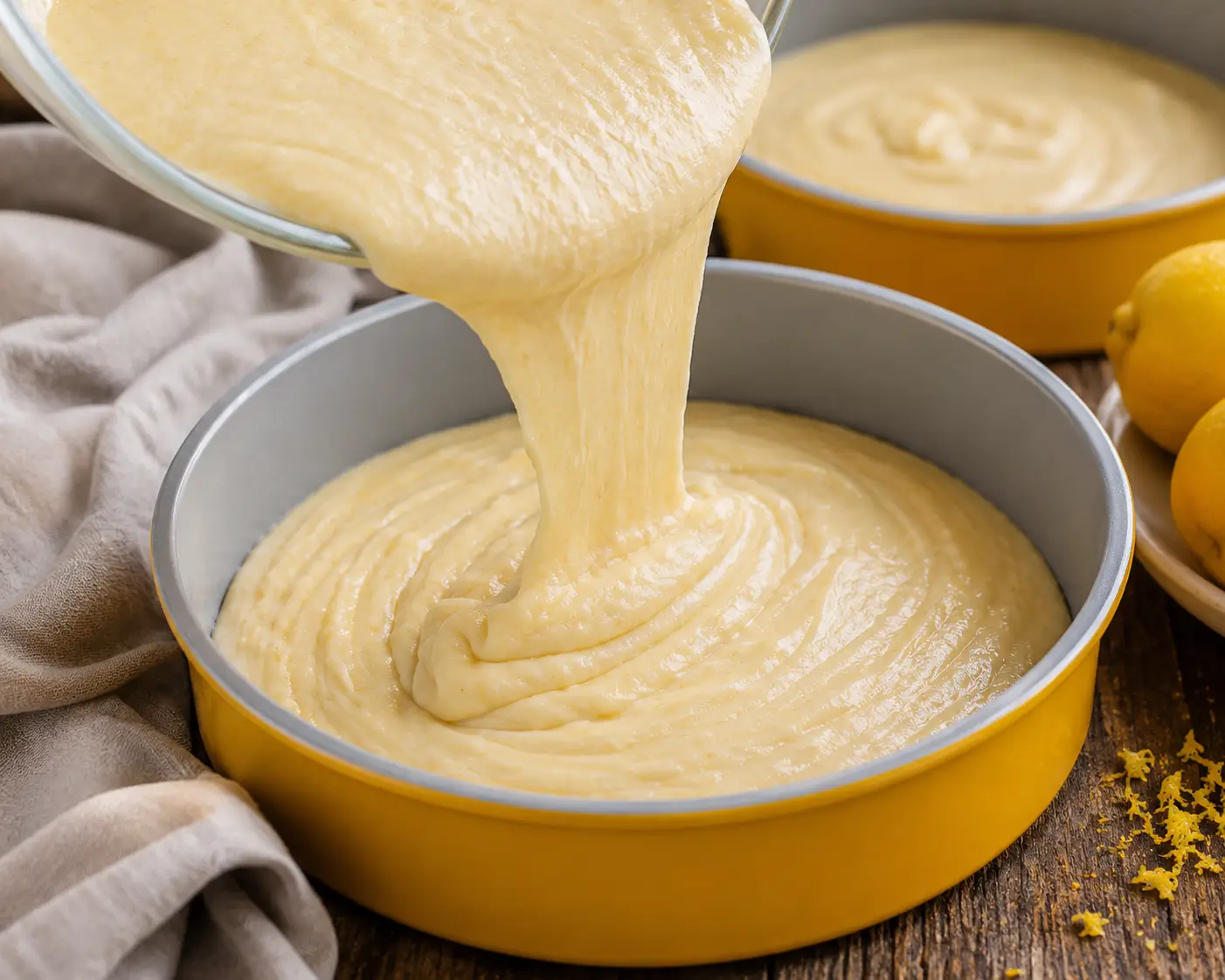
- Divide the batter evenly between the prepared pans and smooth the tops.
- Bake for 28–32 minutes, or until a toothpick inserted into the center comes out with a few moist crumbs.
- Cool in the pans for 10–15 minutes, then transfer to wire racks to cool completely.
- For the optional syrup, heat the lemon juice and sugar until dissolved, cool, and brush lightly over the cooled cake layers.
- To make the frosting, beat the butter until creamy. Add the cream cheese and beat until smooth. Gradually mix in the powdered sugar, then add the lemon zest, lemon juice, vanilla, and salt. Add heavy cream if needed for a spreadable consistency.
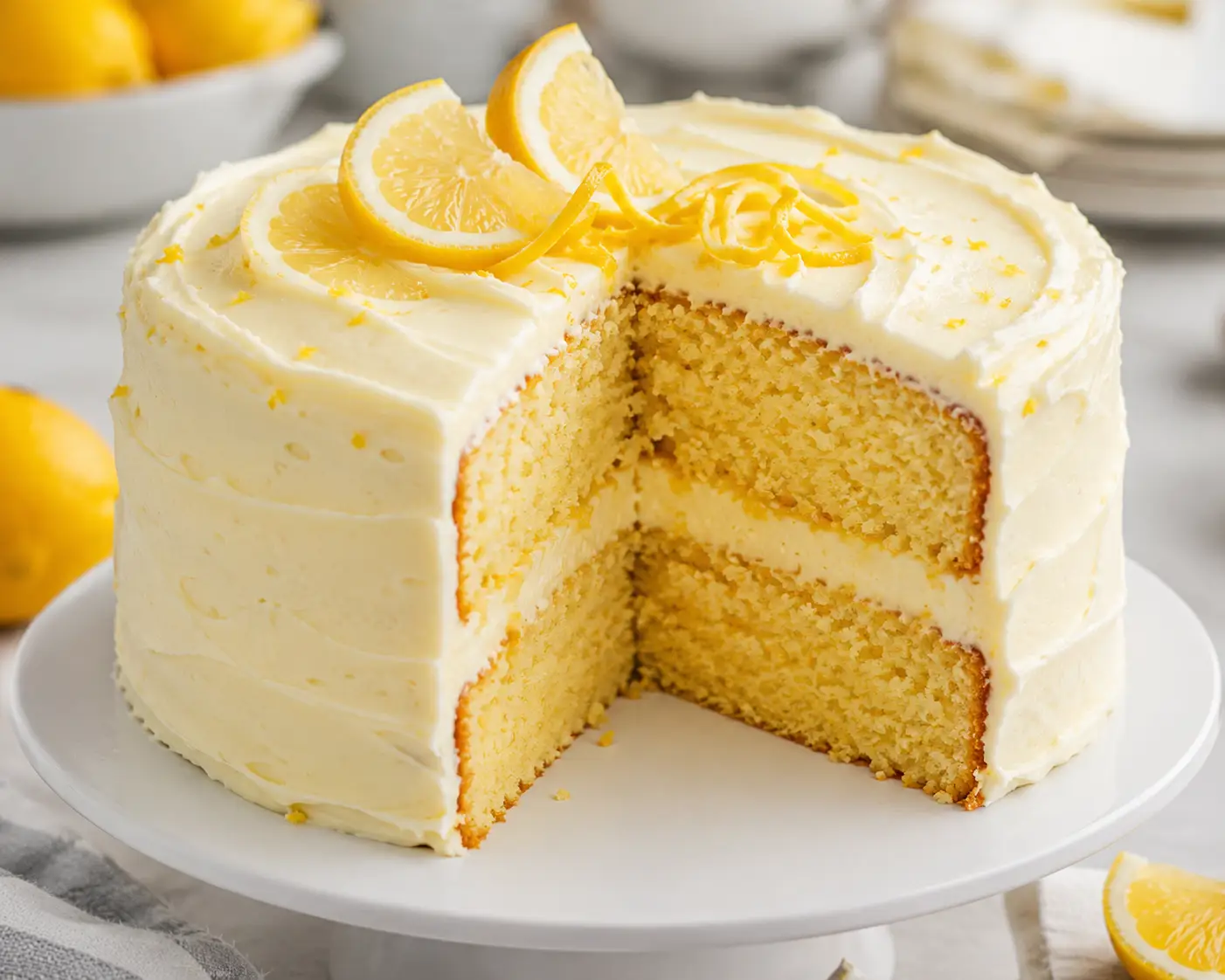
- Place one cake layer on a serving plate and spread about 1½ cups of frosting over the top. Add the second layer, apply a thin crumb coat, chill for 20 minutes, then frost the entire cake.
- Garnish with fresh lemon slices, extra zest, or berries, if desired. Chill for 20–30 minutes before slicing for the cleanest cuts.
Notes
Nutrition Information (Approximate)
Serving Size: 1 slice (1/12 of cake)| Nutrient | Amount |
|---|---|
| Calories | 675 |
| Total Fat | 35g |
| Saturated Fat | 21g |
| Cholesterol | 135mg |
| Sodium | 335mg |
| Carbohydrates | 84g |
| Fiber | 1g |
| Sugar | 61g |
| Protein | 7g |