


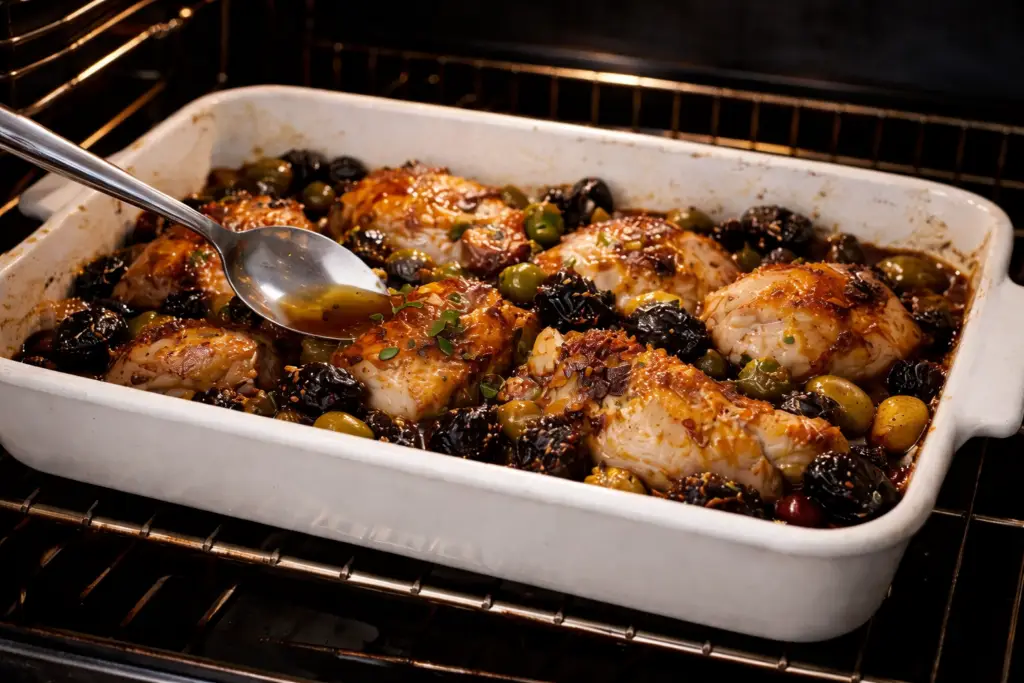
Red wine vinegar is the acidic, fruit-forward vinegar made from fermented red wine, the everyday vinegar for vinaigrettes, marinades, and Mediterranean braises. The flavor is sharper than balsamic vinegar but rounder than white vinegar; the slight color contributes to deeply-colored sauces and dressings. A reader favorite built on it is Chicken Marbella where the red wine vinegar provides the acidic backbone that balances the sweet prunes, briny olives, and dry white wine in this classic braise.




Red wine vinegar, white wine vinegar, balsamic vinegar, and apple cider vinegar each have different applications. Red wine vinegar is sharp, slightly fruity, with mild tannins from the wine origin. White wine vinegar is similar but milder and clearer, the right choice for dishes where you don’t want color contribution. Balsamic vinegar is sweeter and syrupier, used as a finishing vinegar more than a cooking acid. Apple cider vinegar is fruity and slightly sweet, the right choice for American-style applications.
For Mediterranean braises, red wine vinegar goes into the marinade at the start to penetrate the protein and tenderize, then cooks through the long braise to integrate the acid into the sauce. The 1/2 cup typical amount per 4 pounds of chicken provides enough acidity to balance the sweetness of pitted prunes and the brininess of green olives (such as in Ground Beef and Tater Tot Casserole and The Best Slow Cooker Goulash).
For vinaigrettes, the standard ratio is 3 parts olive oil (as in Baked Ziti with Ground Beef and Homemade Hamburger Helper) to 1 part red wine vinegar + 1 teaspoon dijon mustard (used in Chicken Cordon Bleu Casserole and Gut Friendly Honey Mustard Dressing) + 1 minced garlic (seen in The Best Sheperds Pie and The Best Old Fashioned Goulash) clove + salt and pepper. The mustard emulsifies the dressing; the garlic and seasoning are flexible based on what the salad needs. Shake in a jar to combine; keeps 1 week refrigerated.
For marinades on grilled meat, red wine vinegar tenderizes proteins while adding flavor. The standard marinade is 1/4 cup red wine vinegar + 1/4 cup olive oil + 4 cloves garlic + 2 tablespoons herbs + salt (such as in Egg Free Cottage Cheese Muffins and Banana Bread Overnight Oats) and pepper per pound of meat, marinated 2-12 hours. Beyond 12 hours the acid starts to break down the protein excessively, producing mushy texture.
For deglazing pans after cooking meat or vegetables, a splash of red wine vinegar (1-2 tablespoons) lifts the browned bits and contributes to a quick pan sauce. Reduce briefly with broth and finish with a knob of butter (as in The Ultimate Guide to Wedding Cookies and Cottage Cheese Eggless Pancakes) for a 5-minute professional-style sauce.
For storage, opened red wine vinegar keeps 1-2 years in the original bottle at room temperature in a cool dark cabinet. The acetic acid is the preservation mechanism; vinegar essentially doesn’t spoil. The flavor mellows over time. A “mother” (a slimy gel-like blob) sometimes forms in old vinegar; it’s safe and indicates beneficial bacteria. Strain it out or leave it in for stronger flavor.
Red wine vinegar is commonly used in salad dressings, marinades, sauces, roasted vegetables, and Mediterranean-style dishes for added tangy flavor.
Red wine vinegar can be used in low-calorie dressings or diluted in water before meals. Some believe it may help with appetite control, but it should be used in moderation.
Red wine vinegar recipes typically combine the vinegar with oil, herbs, spices, and other ingredients depending on the dish, such as dressings or marinades.
Good substitutes include apple cider vinegar, white vinegar (slightly diluted), balsamic vinegar, or lemon juice depending on the flavor profile needed.
For more vinegar and acid-based options, see our apple cider vinegar and white vinegar recipes.