
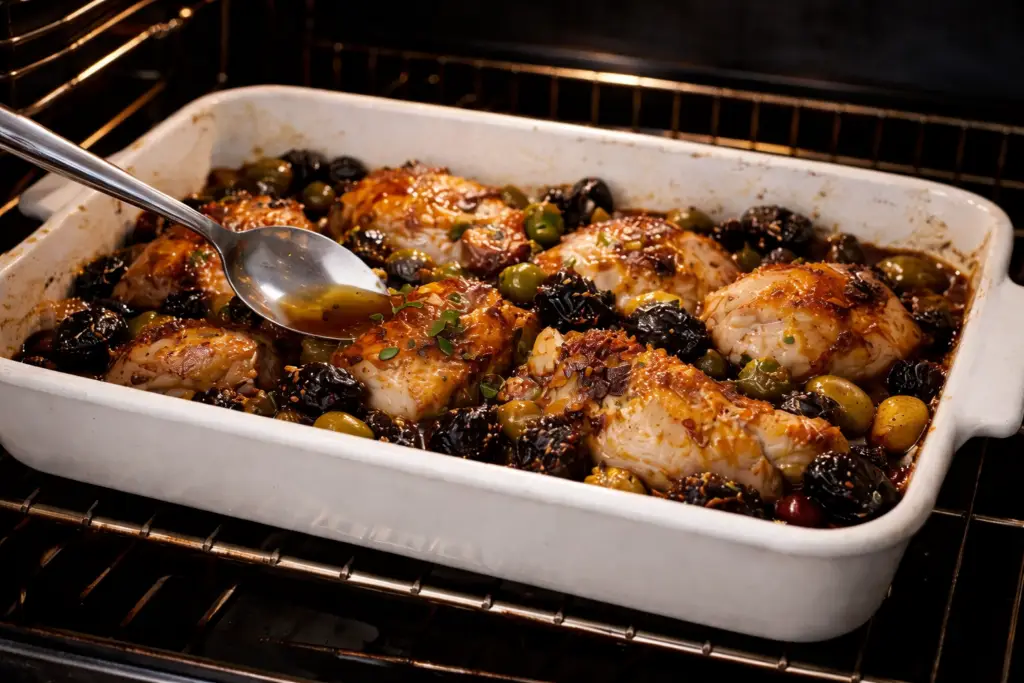
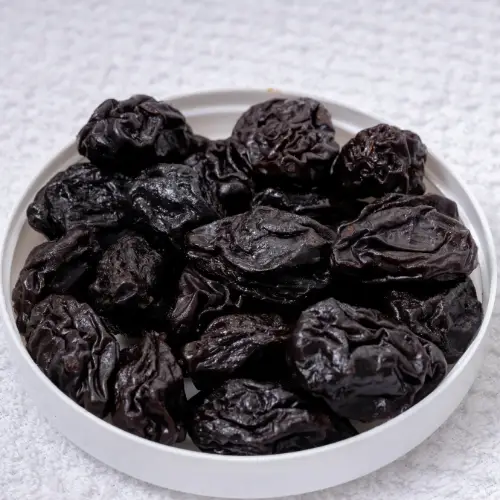
Pitted prunes are the dried plums (technically European plums, prunes d’Agen variety) without the pit, used in savory-sweet braises, baking, and Mediterranean cooking where the deep caramel-fruit flavor balances briny or acidic elements. A reader favorite built on it is Chicken Marbella where the prunes provide the deep, sweet-caramelized fruit note that balances the brininess of olives, capers, and white wine in this Silver Palate classic.

Prunes and dried plums are the same product with different branding. The California prune industry rebranded to “dried plums” in the early 2000s to address the constipation-remedy association that made the original name unappealing to younger consumers. Either name on a package refers to the identical dried fruit.
For the iconic Silver Palate cookbook dish, prunes are the sweet element that balances the briny green olive (such as in Ground Beef and Tater Tot Casserole and The Best Slow Cooker Goulash), capers, and red wine vinegar. The 1 cup whole pitted prunes per 4 pounds of chicken creates intentional pockets of sweetness throughout the braise. The fruit also helps thicken the sauce as the prunes break down slightly during the 45-minute cooking time.
For baking, prunes work in fruit cakes, brown butter cookies, and any application where you want concentrated sweet-fruit depth. Chopped prunes also work as a 1:1 substitute for raisins in many recipes, with deeper caramel flavor and slightly softer texture. Pairing with brown sugar (used in Smoked Chicken and Crispy Oven Baked Chicken Wings) and warm spices produces the holiday-baking profile.
For braising with poultry or pork, the formula is consistent across cuisines: dried fruit + acid + braising liquid + warm spices. The combination shows up in Persian dishes (prunes with chicken and saffron), Sephardic Jewish cooking (lamb with prunes and apricots), and French preparations (rabbit with prunes). The acid balances the fruit sweetness while long cooking concentrates and integrates the flavors.
For prune puree as an egg or fat substitute in baking, soak 1 cup pitted prunes in 1/2 cup hot water for 30 minutes, then blend smooth in a food processor. The resulting puree replaces eggs or fat 1:1 in many quick breads and brownies, producing a moist, slightly denser finished bake. The dark color and slight sweetness work best in chocolate or spice-forward applications. Pairing the puree with cocoa powder (seen in Chocolate Banana Overnight Oats and Viral High Protein Cottage Cheese Breakfast Jars) in brownies masks any fruity notes while keeping the moisture benefit.
For storage, prunes keep 6-12 months at room temperature in a sealed container. The natural sugars on the surface (the white “bloom”) is normal and indicates the fruit is drying out, not spoiling. Soaking briefly in hot water restores plumpness. Discard only if visible mold appears or texture becomes hard and dry beyond softening with water.
Pitted prunes are great for digestion, adding natural sweetness to recipes, and boosting fiber intake. They are commonly used in baking, snacks, and savory dishes.
Pitted prunes are made by drying plums and removing the pits. At home, you can dry plums in a dehydrator or oven and remove the seeds once softened.
Good substitutes include dates, raisins, or dried figs, depending on the texture and sweetness needed in the recipe.
Yes, pitted prunes are known to help relieve constipation due to their high fiber content and natural sorbitol, which supports healthy digestion.