
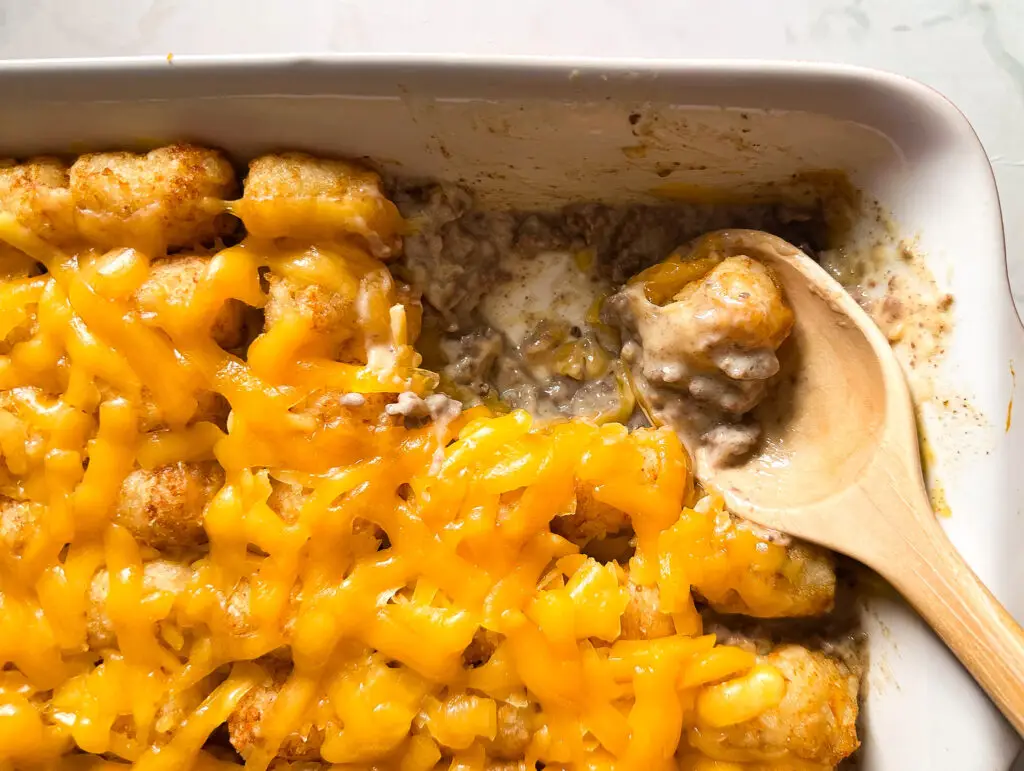
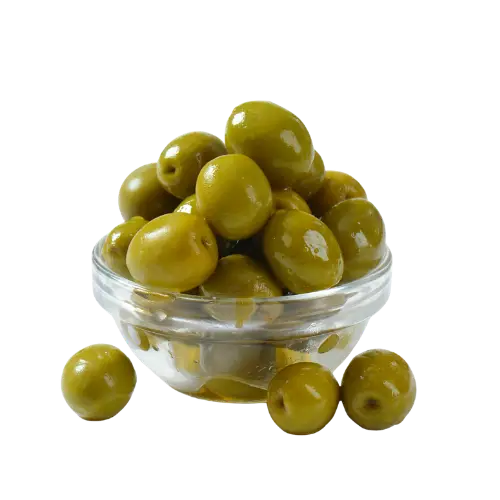
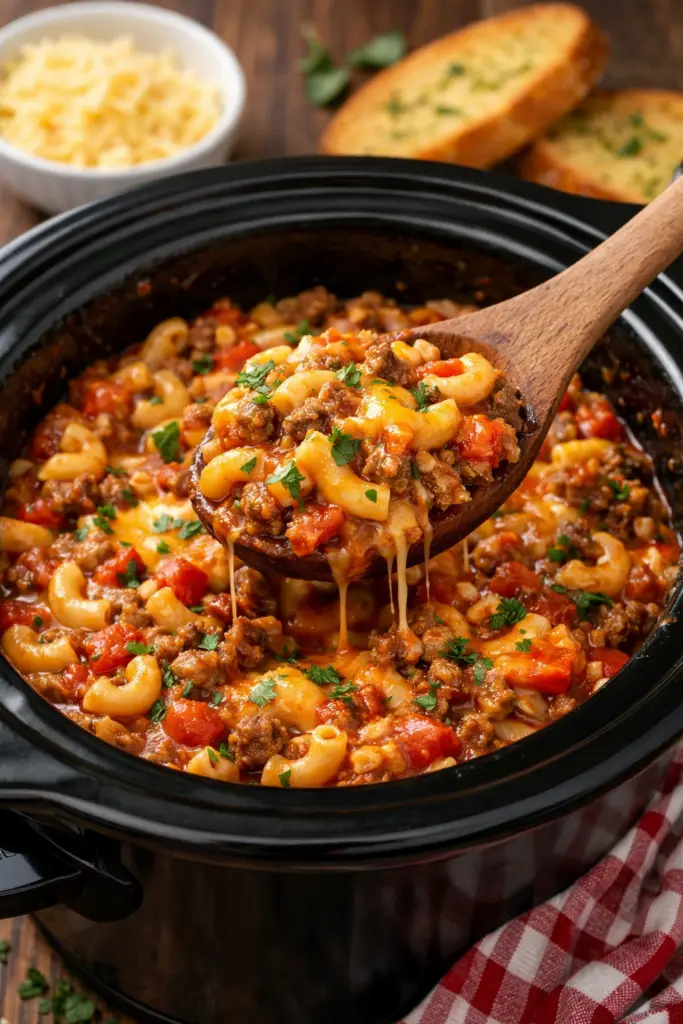
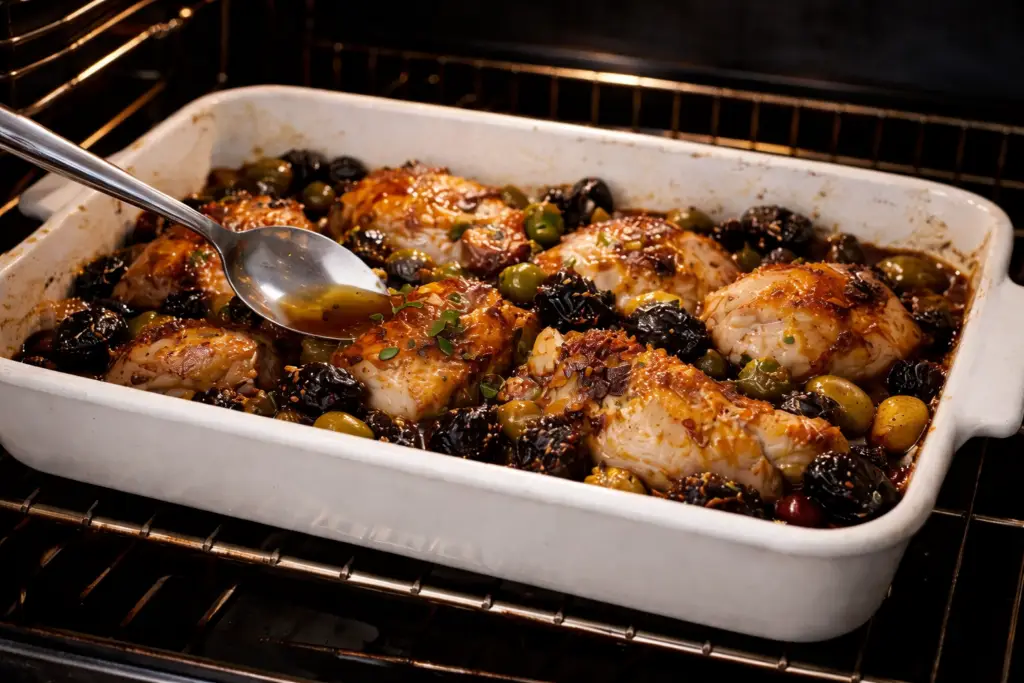
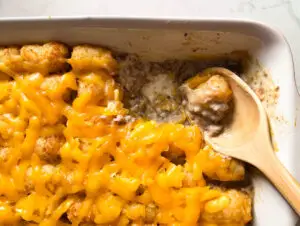
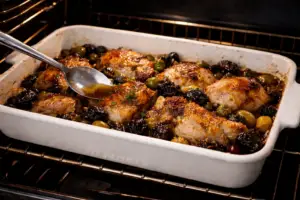
Green olives are the unripened olives picked before they turn black and brined in salt or vinegar for the firm, salty-bitter flavor. The brininess works as a salt substitute in casseroles, braises, and any dish where you want depth without straight salt. Reader favorites built on it include Ground Beef and Tater Tot Casserole, The Best Slow Cooker Goulash, and Chicken Marbella where the green olives provide the briny, slightly bitter punch that balances the richness of ground beef or the sweetness of the prunes and brown sugar in the braise.

Green olives and black olives differ in ripeness and cure, not species. The same tree produces both: green olives are picked early (under-ripe, firmer, more bitter), black olives are picked at full ripeness (softer, milder, more buttery). The curing method then determines the final flavor. Most American supermarket green olives are Spanish-style brine-cured Manzanilla or Sevillano.
For Mediterranean braises with chicken, green olives provide a structural flavor element that holds up to long cooking. Unlike black olives which get muddy and mushy in long-cooked dishes, the firmer texture of green olives stays distinct after 45+ minutes of simmering. The brine they cook in also contributes to the sauce.
For ground beef casseroles, chopped green olives layered into the ground beef mixture add briny depth that ground beef alone lacks. The 1/2 cup typical amount per pound of ground beef is enough to be noticed but not so much that the dish becomes overtly Mediterranean. Pairing chopped olives with italian seasoning (seen in The Best Sheperds Pie and The Best Ground Beef Meatballs) gives the layered weeknight comfort-food flavor.
For slow-cooker dishes, the olives go in during the last hour rather than at the start. Long cooking times (6+ hours on low) extract too much of the bitter compounds and produce a muddy flavor. Adding them later preserves the bright brine and texture. Pimento-stuffed green olives and pitted unstuffed olives both work in cooking. Pimento-stuffed adds a touch of sweet pepper to the brine; pitted unstuffed gives cleaner olive flavor. For most savory applications, either works fine. The choice is mostly what’s stocked in the pantry.
For storage, opened olives keep 4-6 weeks refrigerated submerged in their brine. The brine is the preservation; if olives get exposed to air, top them up with extra brine or olive oil (such as in Baked Ziti with Ground Beef and Homemade Hamburger Helper). Transferring to a smaller jar as olives are consumed keeps them submerged. Discard if the brine becomes cloudy or smells off. The same submerged-storage principle applies to most brine-cured ingredients.
Popular green olive recipes include olive tapenade, pasta dishes, salads, roasted chicken with olives, and Mediterranean-style appetizers.
Green olives pair well with meats like chicken and fish, as well as pasta, tomatoes, cheeses, and fresh herbs. They also complement breads and salads.
Green olives contain healthy fats, antioxidants, and vitamins like vitamin E. They may support heart health and help reduce inflammation when eaten in moderation.
A moderate serving is about 5–10 olives per day, as they are relatively high in sodium. Balance them with other nutritious foods for a healthy diet.
For more briny and Mediterranean ingredient options, see our kalamata olive and feta cheese recipes.