The Ultimate Guide to Wedding Cookies
If you’re searching for the best wedding cookies recipe, you’re in exactly the right place. These buttery, melt-in-your-mouth confections are known by many names — Italian wedding cookies, Mexican wedding cookies, Russian tea cakes, and even snowball cookies — but their delicate texture and powdered sugar finish make them universally beloved.
Whether you’re baking for a wedding dessert table, bridal shower, holiday cookie tray, or simply craving a nostalgic, old-fashioned treat, this complete guide will walk you through the history, variations, baking science, storage tips, and professional secrets to achieving bakery-quality results every single time.
This ultimate guide to wedding cookies covers everything you need to know to create beautiful, delicious cookies for weddings and special events. From classic favorites to creative designs, this guide helps you plan, bake, and present cookies that look as good as they taste.
If you love baking cookies for special occasions, try these Peanut Butter Cookies
What Are Wedding Cookies?
Wedding cookies are small, round butter cookies made with finely chopped nuts and coated generously in powdered sugar — twice. Their texture is tender, crumbly, and almost shortbread-like, dissolving delicately on the tongue.
The defining characteristics:
- No leavening agents
- Finely chopped pecans or almonds
- Rich butter base
- Powdered sugar in the dough
- Double powdered sugar coating
- Baked until just set, not browned
They’re elegant, simple, and timeless — which is exactly why they’ve been staples at weddings, holidays, and celebrations for centuries.
The Fascinating History of Wedding Cookies
Few cookies have traveled the world quite like these.
European Origins
Most culinary historians trace wedding cookies back to medieval European shortbread traditions, particularly from regions where butter and ground nuts were common in celebratory baked goods.
Nuts symbolized prosperity and fertility — two qualities deeply associated with marriage celebrations.
From there, the cookie evolved and adapted across cultures.
Italian Wedding Cookies
In the United States, many families call these Italian wedding cookies. However, interestingly, they are not traditionally served at weddings throughout Italy in the way Americans assume.
Italian versions are often linked to regional nut cookies like:
- Biscotti alle mandorle (almond cookies)
- Ricciarelli from Siena
- Butter-based nut cookies served at Christmas
The Americanized “Italian wedding cookie” became popular through Italian-American communities, where powdered sugar-coated butter cookies became a holiday staple and were later associated with weddings due to their elegant white appearance.
White symbolizes purity and celebration — making them a natural fit for wedding tables.
Mexican Wedding Cookies (Polvorones)
In Mexico, these cookies are known as Polvorones — from the Spanish word polvo, meaning “dust” or “powder.”
That powder? The iconic snowy coating of confectioners’ sugar.
Polvorones are traditionally served at weddings and special events and may sometimes include:
- Cinnamon
- Toasted pecans
- Toasted almonds
- A slightly sandier texture
The Mexican version leans heavily on pecans and is deeply rooted in Spanish culinary influence dating back centuries.
Russian Tea Cakes
In Eastern Europe and Russia, similar cookies are called Russian Tea Cakes.
They became popular in the United States in the mid-20th century and were often served at:
- Afternoon tea
- Holiday gatherings
- Christmas celebrations
The Russian version typically uses walnuts or almonds and is associated more with tea service than weddings — but the base formula is nearly identical.
Snowball Cookies & Butterballs
Other common names include:
- Snowball cookies
- Butterballs
- Pecan meltaways
- Nut balls
Regardless of the name, the technique and flavor profile remain remarkably consistent.
Why Wedding Cookies Are Perfect for Weddings
There’s a reason these cookies show up at bridal showers, rehearsal dinners, and wedding receptions:
- 1. They’re Naturally Elegant
Their snowy white coating complements wedding aesthetics beautifully.
- 2. They’re Make-Ahead Friendly
They store exceptionally well, making them ideal for large batches.
- 3. They Freeze Perfectly
Perfect for bakers prepping months in advance.
- 4. They’re Crowd-Pleasers
Buttery, nutty, and not overly sweet.
- 5. They Ship Well
Their sturdy structure makes them ideal for cookie gift boxes and wedding favors.
The Secret to Melt-In-Your-Mouth Texture
The hallmark of the best wedding cookies is their delicate crumb.
Here’s why they work:
No Leavening Agents
These cookies do not use baking powder or baking soda. That’s intentional. Without chemical leaveners, they remain dense and tender rather than cakey.
Powdered Sugar in the Dough
Powdered sugar contains cornstarch, which contributes to a softer, finer crumb compared to granulated sugar.
High Butter Ratio
Butter provides structure and richness. Using real, high-quality butter is non-negotiable for premium flavor.
Finely Chopped Nuts
The nuts must be finely chopped — not chunky. Large pieces disrupt the texture.
Almond vs. Vanilla Extract — Or Both?
One of the most searched wedding cookie questions:
Should you use vanilla or almond extract?
The answer? Both work beautifully.
- Vanilla extract = warm, classic, comforting
- Almond extract = slightly sweet, aromatic, traditional
- Half vanilla + half almond = depth and balance
Almond extract is particularly traditional in Italian and Russian variations, while vanilla is common in American versions.
Pecans vs. Almonds: Which Is Better?
This comes down to preference and regional tradition.
- Pecans
- Slightly sweeter
- Softer texture
- Classic for Mexican wedding cookies
- Almonds
- Slightly firmer
- More traditional European flavor
- Common in Italian variations
Both deliver exceptional results when finely chopped.
Why You Roll Them in Powdered Sugar Twice
This is the step most beginner bakers get wrong.
- First Roll (While Warm)
When the cookies are still slightly warm:
- The sugar adheres
- It forms a light glaze
- It creates the base layer
- Second Roll (Once Cooled)
This creates:
- The signature snowy finish
- A thick powdered coating
- Professional bakery appearance
Skipping the second roll results in dull, patchy cookies.
How to Prevent Wedding Cookies from Spreading
Because there’s no leavening agent, spread is minimal — but here’s how to ensure perfect round shapes:
- Use room temperature butter, not melted
- Chill dough if kitchen is warm
- Roll uniform 1-inch balls
- Do not flatten before baking
They should remain rounded and barely golden on the bottom.
Common Wedding Cookie Mistakes
- Overbaking
They should NOT brown significantly. Overbaking leads to dryness.
- Using Granulated Sugar
This changes texture dramatically.
- Chopping Nuts Too Large
This affects structure and causes cracking.
- Skipping Cooling Time Before First Roll
Too hot = sugar melts into a paste
Too cool = sugar won’t stick
Slightly warm is perfect.
Storage & Make-Ahead Tips
One of the reasons these wedding cookies are popular is their longevity.
- Room Temperature
Store in airtight container:
- Up to 7 days
- Layer with parchment paper
- Refrigerator
Not recommended — they absorb moisture.
- Freezer
Freeze baked cookies (without final sugar coating) for:
- Up to 3 months
Thaw and roll in powdered sugar again before serving.
How to Serve Wedding Cookies at a Wedding
Here are elegant presentation ideas:
- Tiered dessert stands
- Clear favor bags tied with satin ribbon
- Stacked in white bakery boxes
- Arranged around a wedding cake display
- Paired with espresso bar
They’re minimal, photogenic, and timeless.
Flavor Variations
- Lemon almond wedding cookies
- Chocolate dipped wedding cookies
- Toasted coconut wedding cookies
- Gluten-free wedding cookies
- Vegan wedding cookies
- Mini wedding cookie bites
- Pistachio wedding cookies
Why These Cookies Are So Popular During the Holidays
Although called wedding cookies, they peak in search volume during:
- Christmas
- Thanksgiving
- Bridal shower season
- Engagement parties
- Winter weddings
The powdered sugar coating gives them a festive snowball appearance.
Nutritional Overview
Wedding cookies are:
- Rich
- Buttery
- Moderately sweet
- Portion-controlled due to small size
Their richness means one or two is satisfying.
Why Wedding Cookies Are So Popular
Wedding cookies are a timeless dessert option for weddings, bridal showers, and celebrations. They’re easy to customize, simple to serve, and perfect for gifting or dessert tables.
If you’re planning a dessert spread, you can also include treats like Chocolate Covered Oreos
Types of Wedding Cookies
Here are some popular types of wedding cookies you can include:
- Classic Cookies
Traditional favorites like sugar cookies, butter cookies, and shortbread are always a hit. For a simple and elegant option, try these Shortbread Cookie Bars - Decorated Cookies
Sugar cookies decorated with icing are perfect for themed weddings and custom designs. - Filled Cookies
Cookies with fillings like chocolate, caramel, or fruit add variety. You can also include treats like S’more Cookie Bars - No-Bake Cookies
No-bake options are great for saving time while still offering variety.
How to Make Wedding Cookies
- Plan your cookie selection
Choose 3–5 cookie types to provide variety for guests. - Prepare your doughs in advance
Many cookie doughs can be made ahead and refrigerated or frozen. - Bake in batches
Bake cookies evenly and allow them to cool completely before decorating. - Decorate and finish
Use icing, sprinkles, or fillings to create beautiful designs. - Store properly
Store cookies in airtight containers to maintain freshness.
For more baking inspiration, explore these cookie recipes
Tips for Perfect Wedding Cookies
- Choose recipes that hold their shape well
- Use high-quality ingredients for the best flavor
- Keep sizes consistent for a polished presentation
- Plan ahead to avoid last-minute stress
- Package cookies beautifully for gifting
For decorating inspiration, you can also try fun recipes like Halloween Brownie Cookies
How Many Cookies Do You Need for a Wedding?
Plan for 2–4 cookies per guest when serving wedding cookies as part of a dessert table. If cookies are the main dessert, aim for 5–6 cookies per guest.
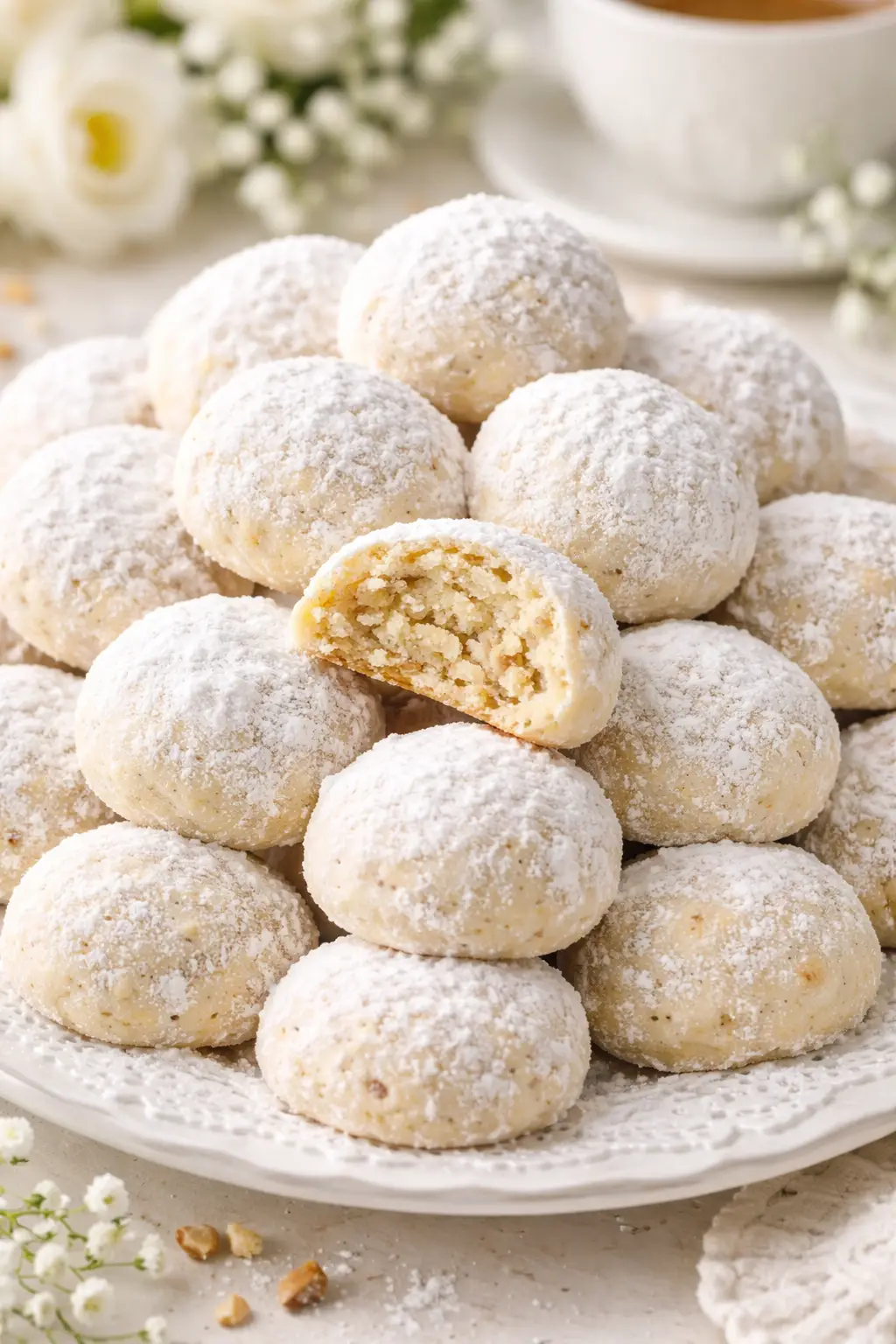
Classic Wedding Cookies
Ingredients
- 1 cup butter softened
- ½ cup powdered sugar
- 1 tsp vanilla extract or almond extract or ½ vanilla and ½ almond
- 1 cup finely chopped pecans
- 2 cups all-purpose flour or gluten-free flour
- additional flour for rolling
 Get Recipe Ingredients
Instructions
- Preheat oven to 350°F.
- In a mixing bowl, cream together softened butter and powdered sugar until light and smooth.
- Mix in extract(s).
- Stir in nuts.
- Gradually add flour and mix until a soft dough forms.
- Roll dough into 1-inch balls and place on ungreased baking sheet.
- Bake for 11–12 minutes until bottoms are lightly golden. Do not overbake.
- Cool slightly on the pan until warm but not hot.
- Roll cookies in powdered sugar.
- Let cool completely, then roll again in powdered sugar for a snowy finish.
- Store in airtight container up to 7 days or freeze up to 3 months.
Notes
Nutritional Information
Serving Size: 1 cookieYield: 24 cookies
Per Cookie (Approximate)
- Calories: 135
-
Total Fat: 9g
- Saturated Fat: 4.5g
- Cholesterol: 18mg
- Sodium: 5mg
-
Total Carbohydrates: 12g
- Dietary Fiber: 0.5g
- Total Sugars: 4g
- Protein: 2g
Nutritional Notes
- Values may vary depending on whether you use pecans or almonds.
- Rolling twice in powdered sugar slightly increases total sugar content.
- Using almond extract vs. vanilla does not significantly affect nutritional value.
Frequently Asked Questions
How far in advance can I make wedding cookies?
Wedding cookies can be made 3–5 days in advance and stored in airtight containers at room temperature. For longer storage, wedding cookies can be frozen for up to 2 months. Thaw at room temperature before serving for best texture.
Can I freeze wedding cookies before the event?
Yes, wedding cookies freeze well for up to 2 months. Place wedding cookies in a freezer-safe container with layers separated by parchment paper. Thaw at room temperature for several hours before serving to maintain freshness.
What are the best types of cookies for weddings?
The best wedding cookies include sugar cookies, shortbread, and butter cookies because they hold their shape and decorate well. Wedding cookies that are sturdy and not overly soft are easier to transport and display.
Can I make wedding cookies without decorating them?
Yes, wedding cookies can be simple and still elegant without detailed decoration. Use powdered sugar, chocolate drizzle, or minimal icing for a clean, classic look.
How do I keep wedding cookies fresh for the event?
Wedding cookies stay fresh when stored in airtight containers at room temperature for up to 5 days. Keep wedding cookies away from heat and humidity. Add parchment paper between layers to prevent sticking.
Can I make wedding cookies gluten-free?
Yes, wedding cookies can be made gluten-free using a 1:1 gluten-free flour substitute. Many cookie recipes adapt well, especially shortbread and sugar cookies. Always test the recipe beforehand for best results.
Why did my wedding cookies spread too much?
Wedding cookies spread too much when the dough is too warm or has too much butter. Chill the dough for at least 30 minutes before baking. Using parchment-lined baking sheets also helps control spreading.
What should I serve with wedding cookies?
Wedding cookies pair well with coffee, tea, or milk. They also complement dessert tables with cakes, brownies, or chocolate treats for a well-rounded selection.
More Dessert Recipes
Looking for more easy and comforting meals? Browse all recipes here: