
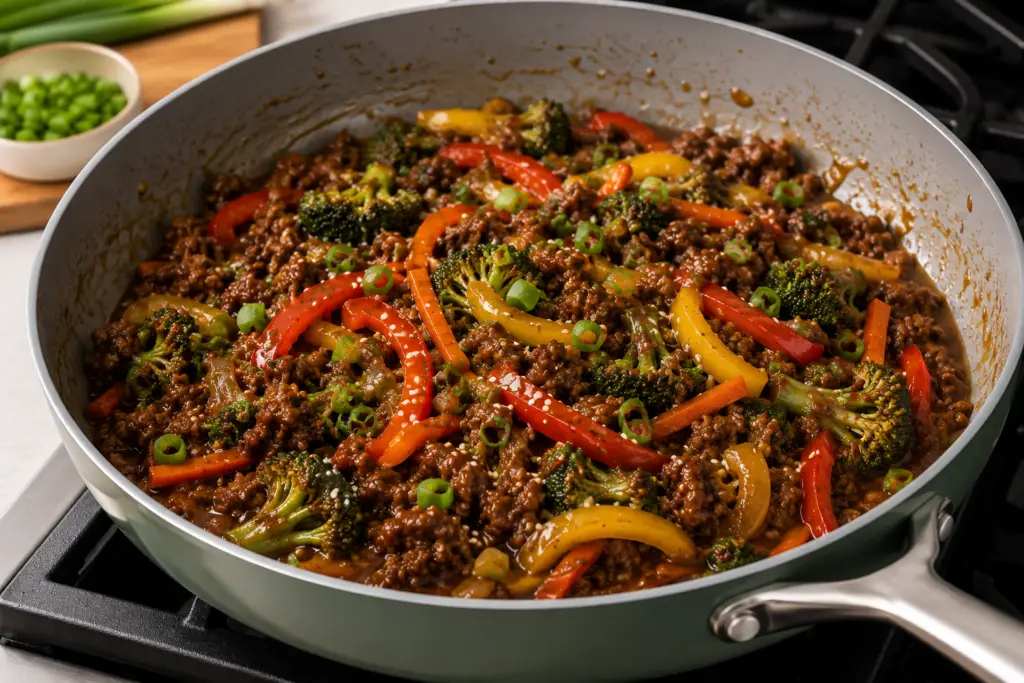
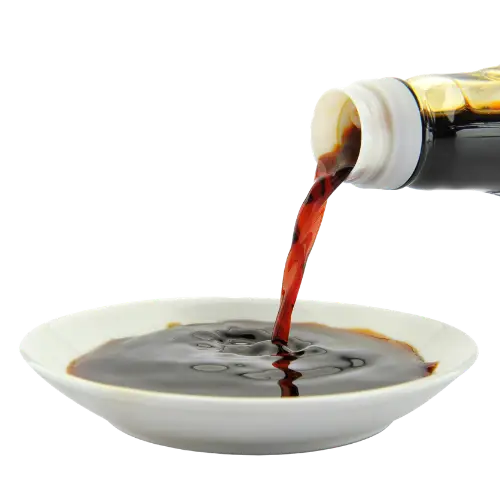
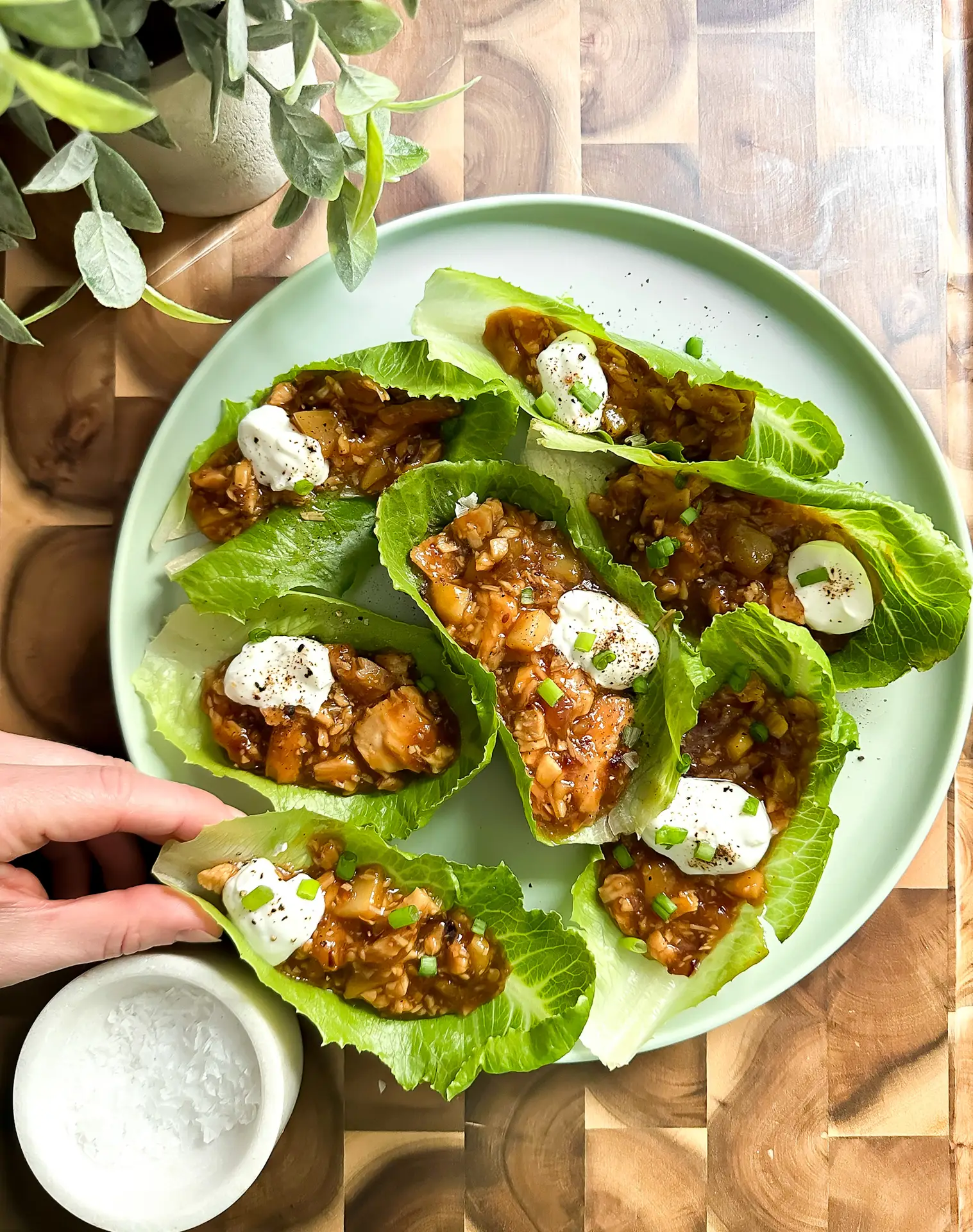
Low-sodium soy sauce is the reduced-sodium version of standard soy sauce (typically 40-50% less sodium), used in recipes where the salt level needs more control without sacrificing the umami depth that soy sauce provides. The flavor profile is nearly identical to standard soy; only the sodium content differs. The reader favorite built on it is PF Changs Chicken Lettuce Wraps where low-sodium soy joins rice vinegar, garlic, and ginger in the savory sauce that flavors the ground chicken filling. Related tags include soy sauce, rice vinegar, and sesame oil, the closely associated ingredients commonly paired with this one.
Low-sodium soy sauce and standard soy sauce can be used interchangeably in nearly every recipe, with the only difference being the saltiness of the finished dish. The umami compounds (glutamates, naturally produced during the fermentation process) are present at similar concentrations in both versions; the sodium reduction is achieved through additional water and slightly extended fermentation. For recipes where the soy sauce is providing the only salt (a quick stir-fry marinade, a finishing drizzle), the low-sodium version may need a pinch of salt added separately to balance the dish. For recipes where soy sauce joins other salty ingredients (miso, fish sauce, kosher salt (as in Gluten Free Granola Clusters and Homemade Focaccia Bread)), the low-sodium version prevents the cumulative salt from overwhelming the dish.
For stir-fries and quick-cooked Asian dishes, low-sodium soy sauce is the base for most pan sauces. The standard stir-fry sauce is 3 tablespoons low-sodium soy, 1 tablespoon rice vinegar, 1 tablespoon honey or brown sugar, 1 teaspoon sesame oil, 2 cloves minced garlic, and 1 teaspoon grated ginger. This four-ingredient base adapts to any protein-and-vegetable stir-fry combination and produces a balanced sauce that does not over-salt the dish. Pairing the sauce with cornstarch (used in Lemon Raspberry Muffins and Eggless Chocolate Chip Cookies) (1 teaspoon dissolved in the sauce before adding to the pan) produces the thickened restaurant-style finish.
For marinades, low-sodium soy sauce penetrates protein over time without over-salting the meat. The standard chicken or beef marinade is 1/4 cup low-sodium soy, 2 tablespoons olive oil (seen in Baked Ziti with Ground Beef and Homemade Hamburger Helper), 2 tablespoons honey, 2 cloves garlic, and 1 teaspoon ginger, whisked together and used to marinate 1-2 pounds of protein for 2-4 hours. The same marinade scales up for larger batches without changing the ratios. Going longer than 4 hours starts to denature the protein surface, especially with chicken; for overnight marinades, reduce the soy quantity slightly to compensate.
For broader Asian cooking, low-sodium soy sauce works in dipping sauces, dressings, and finishing applications where the soy needs to deliver umami without being aggressively salty. The sodium-difference matters most in dishes with longer cook times where the soy sauce reduces and concentrates further. Storage is straightforward: an opened bottle of low-sodium soy sauce keeps 6 months refrigerated; standard soy keeps 1-2 years because the higher salt content acts as a preservative. The same fundamental difference between fermented and additive-based products applies to rice vinegar, where the natural fermentation produces a more stable shelf life than chemical versions.
Low sodium soy sauce recipes typically use store-bought low sodium soy sauce combined with ingredients like garlic, ginger, and sesame oil to build flavor in dishes.
You can substitute low sodium soy sauce with coconut aminos, tamari, or a diluted regular soy sauce to reduce salt content.
Low sodium soy sauce is made from soybeans, wheat, water, and salt, but with reduced sodium compared to regular soy sauce.
Low sodium soy sauce typically contains about 8–10 calories per tablespoon, making it a low-calorie way to add flavor to meals.
For more Asian cooking pantry staples, see our hoisin sauce and ginger recipes.