
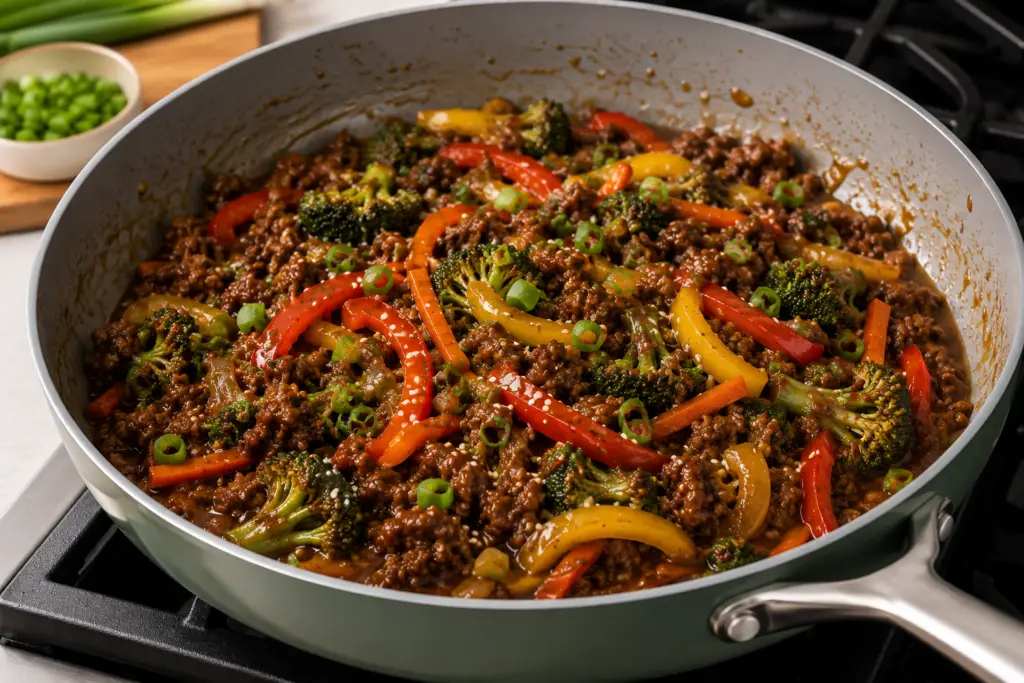
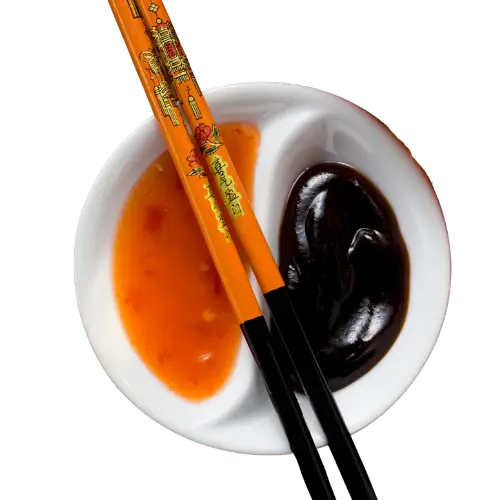
Hoisin sauce is the thick, dark, sweet-savory Chinese condiment made from fermented soybeans, garlic, vinegar, sugar, and spices. The texture is similar to barbecue sauce; the flavor combines salty, sweet, slightly tangy, and faintly anise-like. Best applications: stir-fry sauces, lettuce wrap glazes, dipping sauces, and any Chinese-American dish that needs depth beyond plain soy sauce. Reader favorites built on it include Asian Ground Beef Stir Fry and PF Changs Chicken Lettuce Wraps where the hoisin provides the sweet-savory depth that distinguishes authentic-tasting Chinese-American dishes from generic stir-fries.
Hoisin sauce is sometimes called Chinese barbecue sauce, but the comparison is loose. The flavor profile is sweeter than most Western barbecue sauces, with more soy depth and less smokiness. The traditional use is as a finishing sauce for Peking duck and Mu Shu pork, where it’s spread on the pancake before adding the protein.
For stir-fries, hoisin works as the sauce base alongside soy sauce, garlic (such as in Ground Beef and Tater Tot Casserole and The Best Sheperds Pie), and ginger (as in Vegan Spicy Stir Fy with Rice and One Pot Eggplant Curry). The standard ratio is 2 tablespoons hoisin + 1 tablespoon soy sauce + 1 teaspoon sesame oil + 1 teaspoon rice vinegar per pound of protein. Add the sauce in the last 1-2 minutes of stir-frying so the sugars in the hoisin don’t burn at high heat.
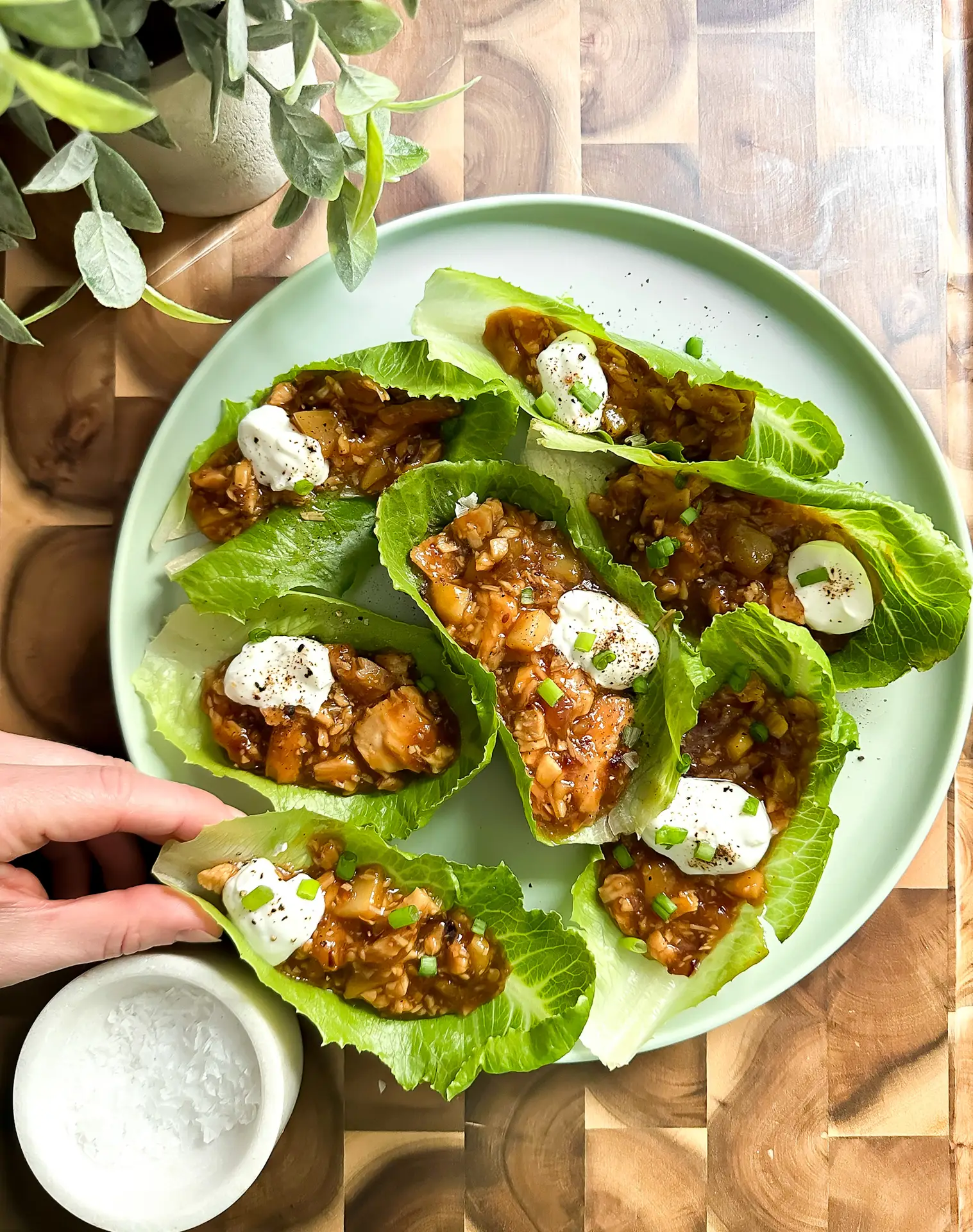
For lettuce wraps, hoisin is the dominant sauce component combined with soy sauce, rice vinegar, and a touch of sriracha for the signature sweet-savory-tangy flavor profile. The diced chicken is cooked with aromatics first, then the sauce mixture is added at the end to coat. Served in chilled iceberg or butter lettuce cups for the eponymous wrap presentation.
For dipping sauces, hoisin can be thinned with rice vinegar, water, or soy sauce to a pourable consistency. The standard ratio of 2 tablespoons hoisin + 1 tablespoon water + 1 teaspoon rice vinegar produces a dip suitable for spring rolls, dumplings, or grilled meat. Adding chopped scallion or sesame seeds adds visual interest and slight texture contrast. Pairing the dip with grilled chicken or tofu produces the appetizer-style starter that anchors most Chinese-American spreads.
For storage, unopened hoisin keeps 1-2 years at room temperature in the pantry. Once opened, refrigerate; it keeps 6-12 months in the original jar. The flavor concentrates and the sugars caramelize slightly over time, making older hoisin actually deeper-flavored than fresh. Discard only if mold appears or the smell goes sour.
You can substitute hoisin sauce with a mix of soy sauce, peanut butter, honey, and a little vinegar or sesame oil to mimic its sweet and savory flavor.
Hoisin sauce is typically made by combining soy sauce, sweeteners like honey or sugar, garlic, vinegar, and spices into a thick, flavorful sauce.
Hoisin sauce is used in stir-fries, marinades, glazes, and dipping sauces. It adds a sweet, savory depth to meats, vegetables, and noodle dishes.
Common ingredients include soy sauce, sugar or honey, garlic, vinegar, sesame oil, and sometimes chili or fermented soybean paste.
For more Asian condiment options, see our soy sauce and sesame oil recipes.