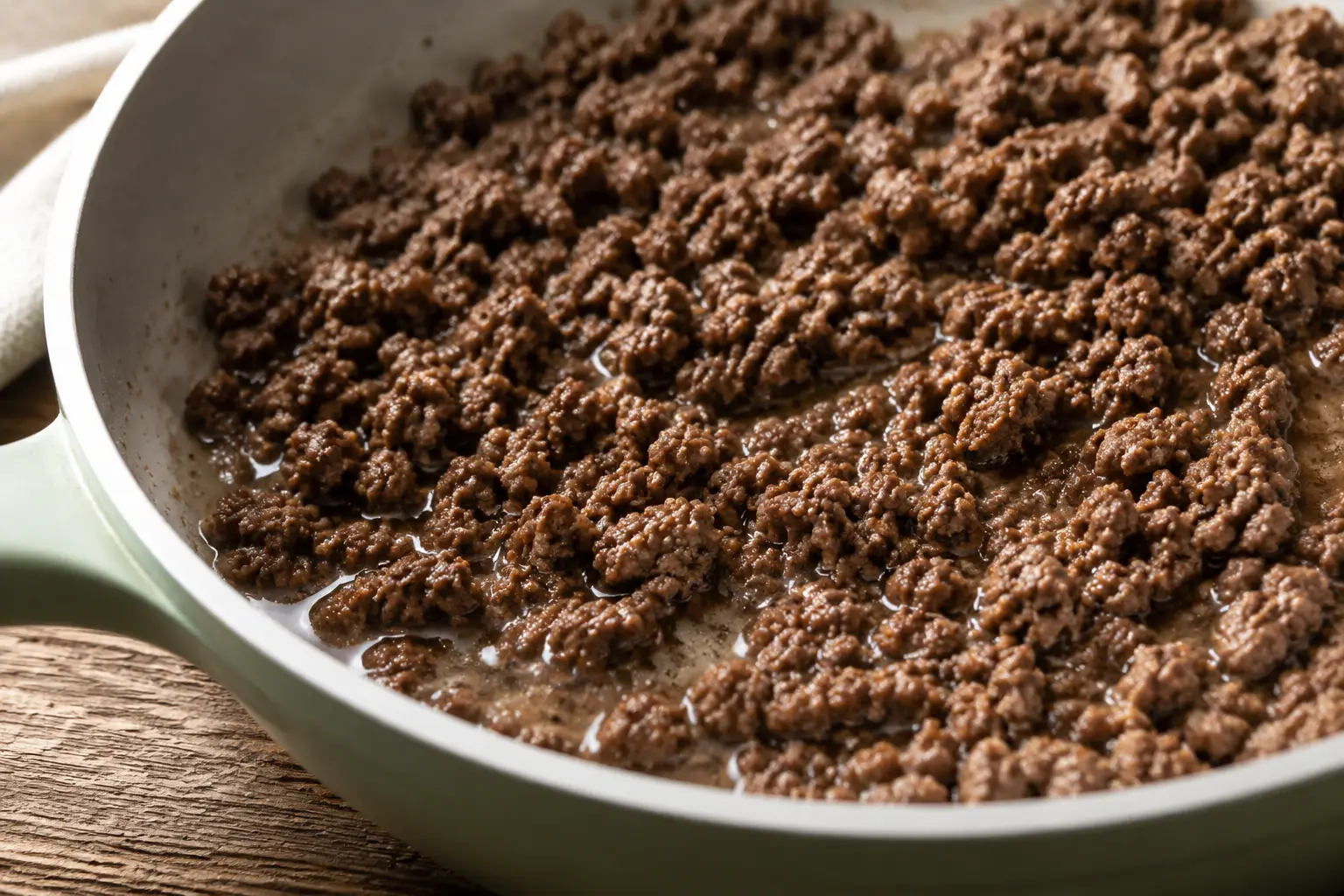
You put ground beef in a skillet expecting it to turn brown with crispy little edges, but instead, it releases a pool of liquid and starts simmering in its own juices. The meat turns gray, the texture becomes soft, and you miss out on that rich, browned flavor.
So, why is your ground beef watery?
Ground beef usually becomes watery when the skillet is overcrowded, the pan is not hot enough, the meat is very cold, or the beef contains a lot of added or retained moisture. Frozen ground beef that has not been fully thawed can also release more water during cooking.
The good news is that watery ground beef is usually easy to save. With the right pan, temperature, and cooking method, you can get deeply browned ground beef instead of pale, steamed meat.
The Quick Answer
If your ground beef is releasing a lot of water, do this:
- Stop stirring the meat.
- Increase the heat to medium-high.
- Spread the beef across the skillet.
- Let the liquid cook off without covering the pan.
- Once the pan is dry, allow the beef to sit against the hot surface so it can brown.
- Drain excess fat only after the moisture has evaporated and the meat has browned.
If there is so much liquid that the meat is boiling, you can carefully spoon some of it out. Just remember that some of what you see may be rendered fat, not water.
Why Does Ground Beef Release Water When Cooking?
Raw ground beef naturally contains water. As the beef heats up, the muscle fibers tighten and push some of that moisture into the skillet.
A small amount of liquid is normal. The problem happens when the moisture cannot evaporate quickly enough. Instead of browning against the skillet, the meat cooks in the liquid.
This creates the difference between browned ground beef and gray, watery ground beef.
Browning happens best when the surface of the meat is relatively dry and has direct contact with a hot pan. If the pan fills with liquid, its temperature drops, and the beef begins to steam or simmer.
The Most Common Reasons Ground Beef Turns Watery
1. The Skillet Is Overcrowded
Overcrowding is one of the most common reasons ground beef becomes watery.
When too much meat is packed into a small skillet, the released moisture has nowhere to go. The beef sits in the liquid instead of making contact with the hot surface.
This is especially common when cooking two or more pounds of ground beef at once.
For one pound of ground beef, use at least a 10-inch skillet. A 12-inch skillet gives the meat even more room to spread out and brown.
If you need to cook a large batch, brown it in two rounds. It takes a little longer, but the final texture and flavor are much better.
2. The Pan Was Not Hot Enough
Adding ground beef to a cold or barely warm skillet causes it to heat slowly. During that time, the meat starts releasing moisture before the pan is hot enough to evaporate it.
Preheat your skillet over medium-high heat for a few minutes before adding the beef.
The pan should be hot, but it should not be smoking heavily. When the beef hits the surface, you should hear a steady sizzle.
If you do not hear any sizzling, the skillet probably needs more time to heat.
3. You Are Stirring the Beef Too Much
It is tempting to start breaking up ground beef as soon as it goes into the pan. Constant stirring, however, prevents the beef from staying in contact with the hot skillet long enough to brown.
Add the ground beef to the hot pan and press it into an even layer. Let it cook undisturbed for about 3 to 5 minutes before breaking it apart.
That first uninterrupted cooking period gives the bottom of the beef time to develop a brown crust.
After that, flip sections of the meat and break them into the size you want.
4. The Ground Beef Was Frozen or Partially Frozen
Frozen ground beef can release a lot of liquid as it thaws in the skillet. Even meat that feels mostly thawed may still contain small ice crystals in the center.
For better browning, thaw ground beef completely in the refrigerator before cooking it.
Once thawed, remove it from the package and blot the surface gently with a paper towel. You do not need to press all the moisture out of the meat. You are simply removing excess liquid from the outside.
Never thaw ground beef on the countertop. Use the refrigerator, cold-water method, or microwave instead.
5. The Beef Was Very Cold
Ground beef does not need to sit out until it reaches room temperature, but meat taken directly from a very cold refrigerator can cool down a lightweight skillet.
You can remove the ground beef from the refrigerator while you prepare the rest of the ingredients, usually about 10 to 15 minutes.
For food safety, do not leave raw ground beef at room temperature for more than two hours. If the room is above 90°F, that window drops to one hour.
6. The Beef Contains a Lot of Moisture
Some packages of ground beef contain more retained moisture than others. This may be related to how the meat was processed, packaged, frozen, or thawed.
Vacuum-sealed ground beef can also appear wet when opened. That does not automatically mean there is anything wrong with it.
Check the label to see whether the product lists beef as the only ingredient. Fresh ground beef should not need added water.
If the package contains a large amount of liquid before cooking, carefully drain it and blot the meat lightly before placing it in the skillet.
7. The Beef Was Salted Too Early
Salt pulls moisture toward the surface of meat. If you salt ground beef and then let it sit before cooking, more liquid may collect on the surface.
For loose ground beef, you can season it once it is in the skillet or shortly before cooking.
If your goal is deep browning, let the meat make contact with the pan first. Add salt and other seasonings after the first side has started to brown.
8. The Pan Does Not Hold Heat Well
A thin skillet can lose heat quickly when cold meat is added. Once the pan temperature drops, moisture collects before it has time to evaporate.
Cast iron, stainless steel, and heavy-bottomed skillets are good choices for browning ground beef because they hold heat well.
A nonstick skillet will work, but you may not get the same dark, caramelized edges. If using nonstick cookware, follow the manufacturer’s heat limits and avoid overheating the empty pan.
9. You Covered the Pan
Covering the skillet traps steam. The steam condenses on the lid and falls back onto the meat, adding to the watery texture.
Leave the pan uncovered while browning ground beef. You want moisture to escape, not circulate inside the skillet.
10. Wet Ingredients Were Added Too Soon
Onions, mushrooms, peppers, frozen vegetables, and some sauces release moisture as they cook.
If you add them before the beef has browned, the skillet may fill with liquid.
Brown the ground beef first, transfer it to a plate if needed, and then cook the vegetables. Once the vegetables have softened and their moisture has cooked away, return the beef to the pan.
This is especially helpful when making tacos, casseroles, chili, sloppy joes, or pasta sauce.
Is the Liquid Water or Fat?
The liquid in your skillet may be a mixture of water, beef juices, and rendered fat.
Water-based liquid usually looks thin and may bubble quickly. Fat often looks glossy or oily and may collect in golden or clear pools around the beef.
As the skillet heats, water will evaporate. Fat will remain in the pan.
This is why draining the skillet too early can be a mistake. If you pour everything out before the water evaporates, you may also remove flavorful juices.
Let the thin liquid cook away first. Once the beef is browned, decide whether you need to drain some of the remaining fat.
Why Is My Ground Beef Gray Instead of Brown?
Gray ground beef is usually being steamed rather than browned.
Browning depends on the Maillard reaction, which occurs when proteins and natural sugars react under dry, high heat. This creates the roasted flavor and dark color people want in taco meat, burgers, chili, and pasta sauces.
When the pan is full of water, the meat cannot get hot enough at the surface to brown properly.
Gray meat is not necessarily undercooked or unsafe. It simply has not developed much browning.
To turn gray ground beef brown, allow the liquid to evaporate, spread the meat across the hot skillet, and leave it alone for a few minutes.
How to Fix Watery Ground Beef While It Is Cooking
Do not throw it away. In most cases, the beef can still be browned.
Step 1: Stop Stirring
Constant stirring slows evaporation and keeps the meat from making steady contact with the skillet.
Spread the beef out and leave it alone for a minute or two.
Step 2: Turn Up the Heat
Raise the burner to medium-high. Avoid turning it to the highest setting right away, especially if you are using a lightweight or nonstick skillet.
A steady simmer will help the water evaporate.
Step 3: Leave the Pan Uncovered
Do not place a lid over the skillet. The steam needs somewhere to escape.
If your kitchen has a vent hood, turn it on.
Step 4: Remove Some Liquid if Necessary
If the beef is completely submerged or there is more liquid than the pan can evaporate, carefully spoon some of it into a heat-safe bowl.
Do not pour hot liquid or grease directly down the sink. Fat can cool and clog the drain.
Let the collected liquid cool. Once the fat becomes solid, dispose of it in the trash.
Step 5: Let the Remaining Moisture Cook Off
Continue cooking until you no longer see thin liquid bubbling around the beef.
You may hear the sound in the pan change. Watery meat produces a softer bubbling sound. Once the water has evaporated, the beef will begin to sizzle.
Step 6: Brown the Meat
Spread the meat into a thin layer and press it gently against the skillet.
Let it cook without stirring for 2 to 4 minutes. Flip the browned sections and repeat as needed.
Step 7: Season the Beef
Once browning has started, add salt, pepper, garlic powder, taco seasoning, or any other seasoning your recipe calls for.
If you are using a seasoning packet, check whether it contains cornstarch or another thickener. Add the recommended water only after the beef has browned and excess grease has been drained.
The Best Way to Brown Ground Beef
This method works for tacos, pasta sauce, casseroles, chili, soups, and meal prep.
1. Choose the Right Skillet
Use a wide, heavy skillet with enough room for the meat to spread out.
A 10 to 12-inch skillet works well for one pound of ground beef.
2. Preheat the Pan
Heat the empty skillet over medium-high heat for 2 to 3 minutes.
If you are using very lean ground beef, add about 1 teaspoon of oil. Beef with a higher fat content usually does not need it.
3. Add the Beef in One Large Piece
Place the ground beef in the center of the skillet and press it into a wide, even layer.
More contact with the pan means more browning.
4. Leave It Alone
Cook the first side for 3 to 5 minutes without stirring.
It may feel like a long time, but this is where the flavor starts to build.
5. Flip and Break It Apart
Use a firm spatula to flip the meat in several large sections. Let the second side brown briefly, then break the beef into smaller pieces.
Do not crush the meat into tiny crumbs unless that is the texture you want.
6. Cook Until Browned and Safe to Eat
Continue cooking until no pink remains and the beef reaches an internal temperature of 160°F.
Check the temperature in a thicker section of meat with an instant-read thermometer.
7. Drain Excess Fat
If needed, tilt the skillet and spoon out the excess fat. You can also transfer the beef to a paper towel-lined plate for a short time.
Do not rinse cooked ground beef. Rinsing removes flavor, creates splatter, and sends grease into your plumbing.
Should You Drain Ground Beef Before or After Seasoning?
In most cases, brown the beef, drain excess fat, and then add the final seasoning.
This prevents you from pouring away spices with the grease.
You can add a small amount of salt and pepper during browning, but save taco seasoning, herbs, and sauce ingredients until after draining.
If you are making a recipe where the fat adds flavor, such as chili or a meat sauce, you may only need to remove part of it.
Does Lean Ground Beef Release More Water?
It can appear that way.
Higher-fat ground beef releases more rendered fat, while very lean ground beef may release a thinner liquid that looks more like water. The exact amount depends on the beef, how it was packaged, and whether it was previously frozen.
Here is a simple guide:
- 70/30 or 73/27 ground beef: Rich and juicy, but releases a lot of fat.
- 80/20 ground beef: A good choice for burgers and flavorful browned beef.
- 85/15 ground beef: Works well for tacos, casseroles, and pasta sauces.
- 90/10 or 93/7 ground beef: Leaner with less grease, but easier to overcook.
- 96/4 ground beef: Very lean and may need a small amount of oil to prevent sticking.
For most skillet recipes, 85/15 or 90/10 offers a nice balance between flavor and easy draining.
How to Prevent Watery Ground Beef Next Time
Use these habits whenever you cook ground beef:
- Thaw frozen beef completely in the refrigerator.
- Drain any liquid sitting inside the package.
- Blot the surface gently with a paper towel.
- Use a wide skillet.
- Preheat the skillet before adding the meat.
- Cook large amounts in batches.
- Leave the pan uncovered.
- Do not stir constantly.
- Wait until the beef begins browning before adding wet ingredients.
- Cook watery vegetables separately when possible.
- Let excess moisture evaporate before draining the fat.
- Season shortly before cooking or after the first side browns.
How Much Ground Beef Can You Cook at Once?
A standard 10-inch skillet can usually handle about one pound of ground beef.
A 12-inch skillet can handle one to one and a half pounds, depending on its shape and the size of the burner.
If the beef is piled several inches deep, the pan is too crowded.
When cooking two or more pounds, divide the meat into batches. Keep the cooked beef on a plate while you brown the remaining batch, then combine everything at the end.
Should You Add Oil When Browning Ground Beef?
It depends on the fat percentage and the type of skillet.
Ground beef that is 80/20 or 85/15 usually contains enough fat to cook without added oil.
For 90/10, 93/7, or 96/4 beef, a teaspoon or two of oil can help prevent sticking and support even browning.
Use an oil that handles medium-high heat, such as avocado oil, light olive oil, or canola oil.
Too much oil can make the finished beef greasy, so start with a small amount.
Should You Add Water to Ground Beef?
You do not need to add water when your goal is deeply browned ground beef.
Some taco seasoning directions call for water after the meat is cooked. This creates a seasoned sauce and helps powdered spices coat the beef. That water should be added only after the meat has browned and excess fat has been drained.
Adding water at the beginning will make the beef steam.
There is one exception. If you want very fine, soft ground beef for chili dogs or certain restaurant-style tacos, simmering the meat in a small amount of liquid can produce that texture. It will not create crisp, browned pieces, but that may be intentional.
Can You Use Baking Soda to Help Ground Beef Brown?
Yes, a small amount of baking soda can help ground beef hold on to moisture while promoting browning.
For one pound of ground beef, mix about ¼ teaspoon of baking soda with 1 tablespoon of water. Toss it gently with the meat and let it rest for about 15 minutes before cooking.
Do not use too much. Excess baking soda can give the beef an unpleasant taste and a springy texture.
This trick is optional. A hot skillet, enough cooking space, and less stirring usually solve the problem without it.
How to Brown Ground Beef With Onions
Ground beef and onions are often cooked together, but onions release water.
For the best browning:
- Brown the ground beef first.
- Transfer it to a plate.
- Cook the onions in the remaining fat.
- Let the onions soften and allow their liquid to evaporate.
- Return the beef to the skillet.
- Add the remaining seasonings or sauce.
If you prefer to use one continuous cooking step, brown the beef on one side of a large skillet while cooking the onions on the other. Combine them once both have started to brown.
How to Brown Frozen Ground Beef
For the best results, thaw it first. If dinner cannot wait, frozen ground beef can still be cooked safely in a skillet.
Place the frozen block in a skillet with a small amount of water and cover it for a few minutes. As the outside softens, scrape off the cooked layer and turn the block.
Once the beef has fully separated, remove the lid and continue cooking until all added water and released moisture evaporate. Then let the meat brown against the pan.
The texture may be softer than beef thawed in the refrigerator, but it will still work well in chili, soup, tacos, and pasta sauce.
Can You Fix Watery Taco Meat?
Yes. If your taco meat becomes watery after adding seasoning, continue simmering it uncovered.
Stir occasionally until the sauce thickens and clings to the beef. Taco seasoning often contains starch, which thickens as it cooks.
If the taco meat is still too thin, try one of these fixes:
- Simmer it uncovered for several more minutes.
- Add a small amount of tomato paste.
- Stir in an extra pinch of seasoning.
- Add ½ teaspoon of cornstarch mixed with 1 teaspoon of cold water.
- Add a spoonful of refried beans for a thicker, creamier texture.
Add thickening ingredients slowly. The meat will continue to thicken as it cools.
Can You Fix Watery Ground Beef in Spaghetti Sauce?
If the beef and sauce are already mixed, simmer the sauce uncovered over medium-low heat.
A wide pan will reduce the liquid faster than a deep pot. Stir every few minutes to prevent sticking.
Tomato paste can also help thicken a watery meat sauce. Start with 1 tablespoon and cook it into the sauce for several minutes.
Avoid adding flour directly to the sauce, as it can form lumps and create a pasty texture.
Can You Fix Watery Ground Beef in a Casserole?
If the beef is still in the skillet, cook off the moisture before assembling the casserole.
If the casserole has already been baked and looks watery, let it rest uncovered for 10 to 15 minutes. Some of the liquid may be absorbed as the dish cools.
For casseroles containing frozen vegetables, thaw and drain the vegetables before assembling the dish. Mushrooms, spinach, zucchini, and frozen broccoli can all release extra water during baking.
Is Watery Ground Beef Safe to Eat?
Watery ground beef is not automatically unsafe. The liquid is often natural moisture released during cooking.
Safety depends on how the meat was stored and whether it reached the proper temperature.
Cook ground beef to an internal temperature of 160°F. Refrigerate raw ground beef within two hours of buying it, or within one hour during hot weather.
Fresh raw ground beef should be used within one to two days when stored in the refrigerator. Cooked ground beef can usually be refrigerated for three to four days.
Discard ground beef if it has a strong sour or rotten odor, a sticky or slimy texture, or if it has been left at room temperature too long.
Color alone does not always indicate spoilage. Raw ground beef can turn brown or gray inside the package because of limited oxygen. Use smell, texture, storage time, and package condition together when deciding whether it is safe.
Common Ground Beef Browning Mistakes
- Breaking It Into Tiny Pieces Immediately
Small pieces release moisture quickly and are harder to brown. Begin with larger sections, brown them, and then break them apart.
- Using a Small Saucepan
High sides and a narrow cooking surface trap steam. A wide skillet gives moisture more room to escape.
- Adding Sauce Before the Beef Browns
Once sauce is added, the beef will simmer. Build the browned flavor first, then add tomato sauce, broth, or seasoning liquid.
- Draining the Beef Too Early
Wait until the thin liquid has evaporated. Drain the remaining fat after browning.
- Rinsing Cooked Ground Beef
Rinsing washes away flavor and can spread grease around the sink. Spoon or drain off the excess fat instead.
- Cooking Too Much at Once
Batch cooking is the easiest solution when your skillet cannot hold all the meat in a single layer.
Ground Beef Cooking Checklist
Before adding ground beef to your skillet, check the following:
- Is the beef fully thawed?
- Is there excess liquid in the package?
- Is the skillet wide enough?
- Has the pan preheated?
- Can the beef spread into an even layer?
- Are you leaving the pan uncovered?
- Are you giving the first side time to brown?
- Are wet vegetables and sauces being added later?
If the answer is yes to each one, you are far more likely to end up with browned, flavorful ground beef.
Final Thoughts
Watery ground beef usually comes down to moisture, space, and heat. If the skillet is crowded or not hot enough, the liquid released by the beef cannot evaporate. The meat steams, turns gray, and develops a softer texture.
The fix is simple. Use a wide, preheated skillet, cook large amounts in batches, keep the pan uncovered, and stop stirring so often. Let the water evaporate before you drain the fat, then give the beef enough time against the hot pan to brown.
Once you hear that steady sizzle and see dark brown edges forming, you will know you are back on track.
More Cooking Guides to Try
If this guide helped solve your ground beef problem, you may also enjoy these practical cooking and baking posts from the blog: