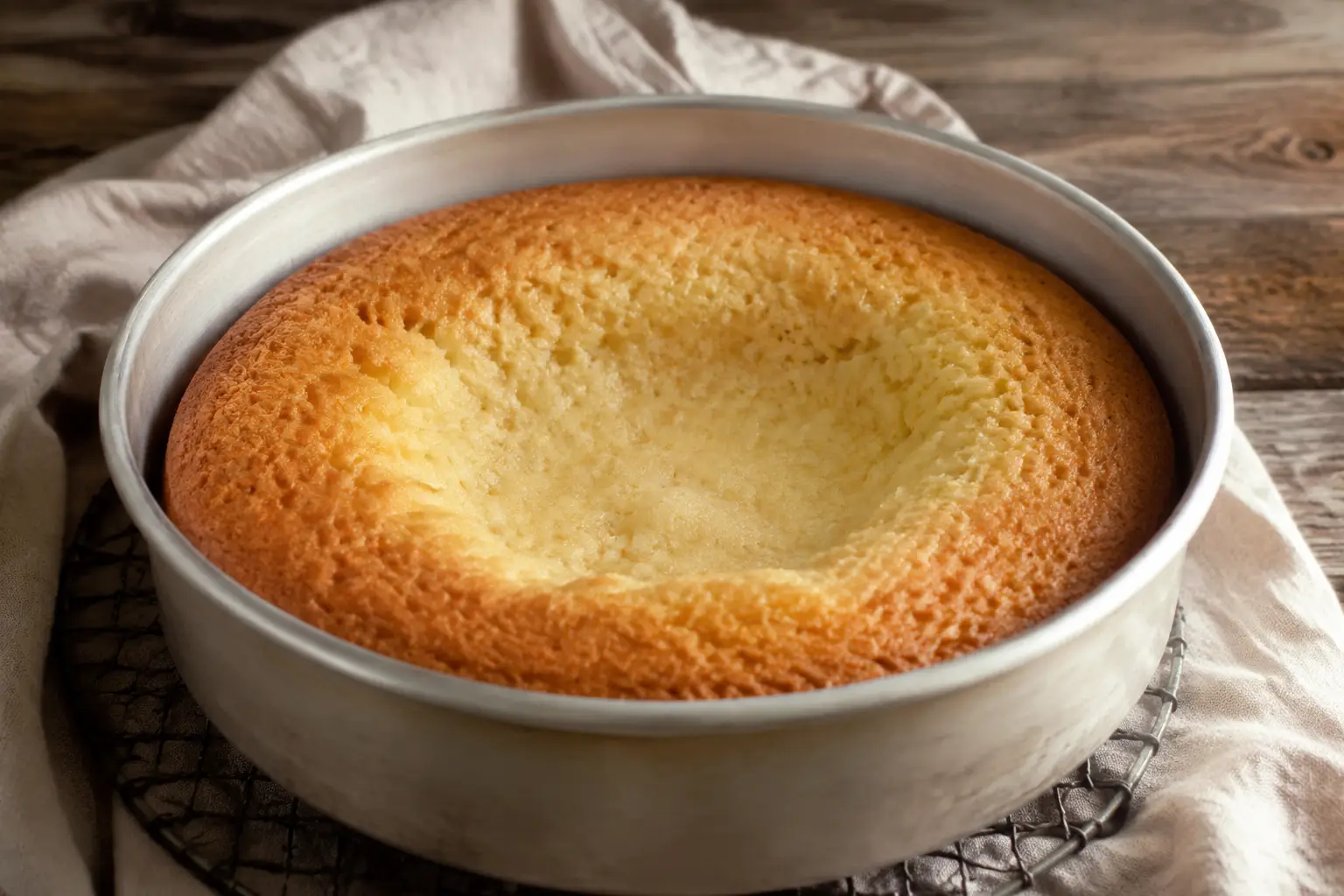
You carefully measured the ingredients, mixed the batter, and watched your cake rise beautifully in the oven. Then, just as it began to cool, the center collapsed.
It is frustrating, but a sunken cake does not mean you are a bad baker. It usually means the cake’s structure was not strong enough to support its rise. That can happen because of an incorrect oven temperature, too much leavening, underbaking, overmixing, or even opening the oven door too soon.
The good news is that most of these problems are easy to correct once you know what to look for. Here is how to figure out why your cake sank in the middle, what you can do with it now, and how to stop it from happening next time.
Why Does a Cake Sink in the Middle?
A cake rises when heat causes air bubbles and gases in the batter to expand. At the same time, the flour, eggs, and other ingredients begin forming a structure around those bubbles.
If the cake rises faster than its structure can set, the middle may collapse. The same thing can happen when the center has not finished baking or when the ingredient balance is off.
A small amount of settling is normal, especially with rich or very moist cakes. A deep crater, gummy center, or collapsed middle usually points to a baking problem.
Quick Guide to Diagnosing a Sunken Cake
| What the cake looks like | Most likely cause |
|---|---|
| Wet or gummy center | The cake was underbaked |
| Tall edges with a deep dip in the middle | Oven was too hot or the pan was too small |
| Cake rose quickly and then collapsed | Too much baking powder or baking soda |
| Dense cake with a sunken center | Batter was overmixed |
| Cake fell after the oven door opened | Door was opened too early |
| Center sank while cooling | Cake was underbaked or moved too soon |
| Cake is greasy and heavy | Too much butter, oil, sugar, or liquid |
| Cake overflowed and then fell | Pan was overfilled |
| Cake is low and dense all over | Expired leavening or inaccurate measurements |
1. The Cake Was Underbaked
Underbaking is one of the most common reasons a cake sinks in the middle.
The outside of a cake often looks finished before the center has fully set. If you remove the pan too early, the soft middle cannot hold the weight of the cake as it cools. It drops, leaving a dip or deep crater.
Signs your cake was underbaked
- The middle is wet, sticky, or gummy
- The cake jiggles when you gently move the pan
- A toothpick comes out coated in raw batter
- The center sinks shortly after leaving the oven
- The cake has a dense line near the bottom
- The edges look baked while the middle remains pale
How to prevent it
Check the cake near the end of the recommended baking time, not at the beginning of the time range. Insert a toothpick into the center. It should come out clean or with a few moist crumbs.
You can also press the center gently with one finger. A finished cake should spring back instead of leaving an indentation.
For the most reliable check, use an instant-read thermometer. Most butter and oil-based cakes are finished when the center reaches about 200°F to 210°F.
2. The Oven Temperature Was Too Low
When the oven is not hot enough, the cake may rise slowly without setting properly. The center can remain soft and eventually fall.
An oven temperature that is even 20 degrees too low can affect baking time and texture. This is more common than many people think because home ovens do not always match the temperature shown on the control panel.
How to fix it next time
Place an oven thermometer in the middle of your oven and compare its reading with the temperature you selected. If the oven runs cool, you may need to raise the setting slightly or have the oven calibrated.
Always let the oven preheat fully before placing the cake inside. Some ovens beep before the full oven cavity has reached the selected temperature, so waiting another 10 to 15 minutes can help.
3. The Oven Temperature Was Too High
A hot oven can make a cake rise very quickly around the edges and on top. The outside sets before the middle has time to bake.
As the soft center cools, it collapses. This often leaves a cake with tall, firm edges and a sunken middle.
A temperature that is too high can also create:
- A dark crust
- Cracked or domed edges
- A raw center
- Dry sides
- A thick outer layer
How to prevent it
Use an oven thermometer to check the actual temperature. Bake the cake on the center rack unless the recipe says otherwise.
Avoid placing the pan too close to the heating element. If your cakes regularly brown before the middle is finished, lower the oven temperature by 25°F and allow a little more baking time.
4. You Opened the Oven Door Too Soon
Opening the oven door releases heat and can cause a fast drop in temperature. A cake is especially sensitive during the first part of baking, while its internal structure is still forming.
If the door is opened too early, the center may stop rising or collapse.
A good rule to follow
Do not open the oven during the first two-thirds of the baking time. If a cake needs 30 minutes, wait at least 20 minutes before checking it.
When you do check the cake, open the door gently and close it as soon as possible. Avoid slamming the oven door because the movement can also disturb a delicate cake.
5. There Was Too Much Baking Powder or Baking Soda
It may seem like extra baking powder would create a taller, fluffier cake. In reality, too much leavening can cause the batter to rise faster than the cake can support.
Large air bubbles form, expand, and then burst. The cake falls because the structure around those bubbles has not finished setting.
Too much baking soda may also give the cake a bitter or soapy flavor.
How to prevent it
Measure baking powder and baking soda with proper measuring spoons. Level the top with the straight edge of a knife.
Do not scoop leavening with a regular eating spoon or add a rounded spoonful. A small measurement error can make a noticeable difference.
As a general baking reference, many cake recipes use about 1 teaspoon of baking powder per cup of flour, but the correct amount depends on the other ingredients. Follow the tested recipe rather than adding more.
6. Your Baking Powder or Baking Soda Was Expired
Old leavening may not create enough lift, causing a cake to remain low, dense, or uneven. Although expired leavening usually causes poor rising rather than a dramatic collapse, it can still contribute to a weak cake structure.
How to test baking powder
Add about ½ teaspoon of baking powder to a small bowl and pour hot water over it. It should fizz immediately.
How to test baking soda
Place about ½ teaspoon of baking soda in a bowl and add a splash of vinegar or lemon juice. It should bubble quickly.
Replace opened baking powder and baking soda about every six months for the most dependable results. Write the opening date on the container so you do not have to guess later.
7. The Batter Was Overmixed
Once flour is added, too much mixing can develop excess gluten. That can make the cake dense, chewy, or uneven.
Overmixing may also add too much air to the batter. Those air bubbles expand in the oven, but the cake may not be able to hold them as it cools.
How long should you mix cake batter?
Mix only until the dry ingredients disappear. If you still see a few small streaks of flour, finish folding the batter by hand with a silicone spatula.
Scrape the bottom and sides of the bowl so you do not have to keep running the mixer.
Unless the recipe specifically calls for high speed, use low speed after adding the flour.
8. Butter and Sugar Were Creamed Too Long
Creaming butter and sugar adds tiny air pockets that help a cake rise. However, beating the mixture for too long can add more air than the batter can support.
The cake may puff up in the oven and sink while cooling.
What properly creamed butter and sugar should look like
The mixture should be:
- Lighter in color
- Fluffy but not greasy
- Smooth with a slightly grainy appearance
- Increased somewhat in volume
For many recipes, creaming takes about two to four minutes at medium speed. The exact time depends on the mixer, butter temperature, and amount of batter.
Butter should be softened but still cool. If it looks shiny, greasy, or partly melted, it is too warm.
9. The Ingredients Were Measured Incorrectly
Cake recipes rely on a careful balance of flour, sugar, fat, eggs, and liquid. Too much liquid, sugar, butter, or oil can weaken the batter and leave the center too soft to hold its shape.
Too little flour can cause the same problem.
Common measuring mistakes
- Scooping flour directly from the bag
- Packing flour into the cup
- Using a liquid measuring cup for dry ingredients
- Using extra-large eggs when large eggs are listed
- Adding a generous splash of milk or oil
- Misreading teaspoons as tablespoons
- Doubling some ingredients but forgetting others
The best way to measure flour
A kitchen scale gives the most consistent result. One cup of all-purpose flour generally weighs about 120 to 125 grams, depending on the recipe.
If you do not have a scale, fluff the flour, spoon it into the measuring cup, and level the top. Do not shake or pack the cup.
10. The Recipe Had Too Much Sugar
Sugar does more than sweeten a cake. It attracts moisture and keeps the crumb soft. If there is too much sugar, the cake structure may remain weak or overly wet.
The cake may brown quickly while the middle stays underdone. It can also develop a sticky surface or a gummy layer near the bottom.
Always double-check the amount of sugar before adding it. If you want a less-sweet cake, use a recipe written with less sugar instead of making a large change to a standard recipe.
11. The Eggs Were Added Too Quickly
In many butter cake recipes, eggs need to be added one at a time. This allows each egg to mix into the butter and sugar before the next one goes in.
Adding cold eggs too quickly can cause the batter to separate or curdle. A slightly curdled batter may still bake well, but heavy separation can affect the cake’s rise and texture.
How to prevent curdled batter
- Bring eggs to room temperature
- Add them one at a time
- Mix briefly after each egg
- Scrape the bowl as needed
- Avoid beating the batter longer than necessary
To warm cold eggs quickly, place them in a bowl of lukewarm water for about five to ten minutes.
12. The Wrong Cake Pan Was Used
Pan size affects how quickly and evenly a cake bakes. Batter placed in a pan that is too small will be deeper and need more time in the oven.
The edges may finish while the center remains raw. The batter may also overflow, lose structure, and collapse.
A pan that is too large spreads the batter into a thin layer that may bake too quickly and turn dry.
Tips for choosing the correct pan
Use the pan size listed in the recipe whenever possible. Pay attention to both the width and depth.
An 8-inch round pan and a 9-inch round pan may look similar, but they do not hold the same amount of batter. The difference can change the final height and baking time.
As a general rule, fill cake pans no more than halfway to two-thirds full.
13. The Pan Was Overfilled
Overfilled pans do not give the batter enough space to rise properly. The cake may spill over the edges, bake unevenly, or collapse in the center.
If you have extra batter, bake it in a few muffin cups instead of squeezing all of it into one pan.
Place the muffin cups in the oven at the same time, but begin checking them earlier because they will bake faster than the full cake.
14. The Cake Batter Sat Too Long Before Baking
Baking powder and baking soda begin reacting once they come into contact with liquid or acidic ingredients. If the batter sits on the counter for too long, some of that rising power may be lost before the cake reaches the oven.
Prepare the pans and preheat the oven before mixing the batter. Once the batter is ready, divide it between the pans and bake it promptly.
If your oven can only hold one cake pan at a time, it may be better to mix smaller batches rather than letting half of the batter wait.
15. The Cake Was Moved or Bumped While Baking
A strong bump can disturb a cake before its center has set. Slamming the oven door, pulling the rack out roughly, or moving the pan too early can make a delicate cake fall.
Move slowly when checking the cake. Keep children, pets, and heavy kitchen activity away from the oven while a fragile sponge or chiffon cake is baking.
16. The Cake Cooled Too Quickly
Sudden temperature changes can cause some cakes to shrink or sink. This is most noticeable with light, airy cakes such as angel food, chiffon, sponge cake, and cheesecake.
Do not place a hot cake beside an open window, air-conditioning vent, or fan. Let standard cakes cool in their pans on a wire rack for the amount of time listed in the recipe.
Most layer cakes should rest in the pan for about 10 to 15 minutes before being turned out. Leaving them in the pan too long, however, may trap moisture and make the edges soggy.
17. You Are Baking at High Altitude
At higher elevations, lower air pressure causes gases in cake batter to expand more quickly. Cakes may rise too fast and then fall before their structure sets.
High-altitude baking adjustments often include:
- Reducing baking powder or baking soda
- Slightly increasing the oven temperature
- Decreasing sugar
- Adding a little more liquid
- Shortening the baking time
The exact changes depend on your elevation and the recipe. Begin making adjustments around 3,000 feet above sea level and change only one or two things at a time.
Why Did My Cake Sink After I Took It Out of the Oven?
A cake that looks tall in the oven but sinks after removal was probably not fully set in the center.
The hot air and steam inside the batter temporarily hold the cake up. Once it leaves the oven, the gases cool and contract. If the flour and egg structure is not firm enough, the middle drops.
Other possible causes include too much leavening, excess air in the batter, an oven that was too hot, or a sudden temperature change.
Why Did My Cake Sink While It Was Still in the Oven?
A cake that falls before it leaves the oven may have been disturbed by an open door, a slammed door, or a sudden loss of heat.
It can also happen when the cake rises too quickly because the oven is too hot or the batter contains too much leavening. The air pockets expand, break, and leave the middle without enough support.
Is a Sunken Cake Safe to Eat?
A sunken cake is safe to eat if it is fully baked. The dip itself is a texture and appearance issue, not a food safety issue.
Do not eat the cake if the center contains wet, raw batter. Cakes containing raw flour and eggs need to finish baking before serving.
A moist crumb is fine. A shiny, paste-like, or liquid center needs more time in the oven.
Can You Put a Sunken Cake Back in the Oven?
If you notice the problem while the cake is still hot, you may be able to return it to the oven.
Place it back in the oven at the original temperature and bake it for another 5 to 10 minutes. If the top is already brown, cover it loosely with foil.
This works best when the cake has only recently been removed. Once it has cooled and fully collapsed, returning it to the oven may dry out the edges without repairing the middle.
How to Fix a Cake That Sank in the Middle
You usually cannot make a collapsed cake rise again, but you can still turn it into a dessert that looks intentional.
Fill the center
If the cake is fully baked, fill the dip with:
- Buttercream
- Whipped cream
- Chocolate ganache
- Lemon curd
- Pudding
- Pastry cream
- Fresh berries
- Caramel sauce
- Cookie crumbs
- Chopped candy
A sunken chocolate cake filled with ganache and berries can look like it was planned that way.
Trim and level the cake
For a shallow dip, use a serrated knife or cake leveler to remove the raised outer edge. Flip the cake over and use the flat bottom as the top.
This works best when the cake is thick enough to trim without becoming too thin.
Turn it into a trifle
Cut the baked portions into cubes and layer them with pudding, whipped cream, fruit, or chocolate sauce.
Remove any raw or gummy batter before using the cake pieces.
Make cake pops
Crumble the cooked cake, mix it with a small amount of frosting, and roll it into balls. Chill the balls before dipping them in melted chocolate or candy coating.
Make individual dessert cups
Layer cake pieces with whipped cream and fruit in small glasses or jars. This is a simple way to use a cake that broke, cracked, or sank.
Serve it as a pudding-style cake
If the center is fully cooked but very soft, serve the cake warm with ice cream, custard, or whipped cream. A less-than-perfect cake can still make a very good dessert.
How to Prevent a Cake From Sinking in the Middle
Use this checklist before baking your next cake:
- Read the full recipe before starting
- Check that your baking powder and baking soda are fresh
- Use the exact pan size listed
- Preheat the oven completely
- Check the oven temperature with a separate thermometer
- Weigh the ingredients when possible
- Use the egg size listed in the recipe
- Bring ingredients to the temperature requested
- Measure leavening carefully
- Do not make large ingredient substitutions
- Mix only as long as directed
- Bake the batter soon after mixing
- Fill pans no more than two-thirds full
- Place the pan on the center rack
- Keep the oven door closed during the early baking stage
- Check the center before removing the cake
- Let the cake cool away from drafts
How to Tell When a Cake Is Fully Baked
Do not rely on baking time alone. Ovens, pans, and ingredients can cause the actual time to vary.
Use several of these signs together:
The center springs back
Press the middle gently with a fingertip. It should spring back instead of staying indented.
A toothpick has moist crumbs
Insert a toothpick into the thickest part of the cake. A few moist crumbs are fine. Wet batter means the cake needs more time.
The edges pull away slightly
Many cakes begin pulling away from the sides of the pan when they are ready. This should be a small gap, not a wide separation.
The cake smells fragrant
The aroma becomes stronger near the end of baking. Smell alone cannot confirm doneness, but it is a good reminder to begin checking.
The internal temperature is ready
Most butter and oil cakes are baked when the center reaches about 200°F to 210°F. Lighter sponge cakes may finish at a slightly higher temperature, depending on the recipe.
Can You Prevent Sinking by Leaving the Cake in the Turned-Off Oven?
Leaving a cake in a turned-off oven is not necessary for most layer cakes, pound cakes, and sheet cakes. It may cause them to dry out.
Some delicate cakes and cheesecakes benefit from gradual cooling. In those recipes, you may be told to turn off the oven, crack the door, and leave the cake inside for a set amount of time.
Follow the cooling directions written for the type of cake you are making.
Does Cake Flour Stop Cakes From Sinking?
Cake flour can create a softer, finer crumb because it contains less protein than all-purpose flour. However, it will not automatically prevent sinking.
Switching flours without adjusting the recipe may change the batter’s structure. Use the flour listed in the recipe unless you have a tested substitution.
If a recipe calls for all-purpose flour, replacing it with cake flour will not correct underbaking, excess leavening, or an incorrect oven temperature.
Does Opening the Oven Really Make a Cake Fall?
Yes, especially during the early part of baking.
Opening the oven briefly near the end is usually fine because the cake structure has mostly set. Opening it during the first half can cause a rapid drop in heat, which may stop the rise and collapse the middle.
The lighter the cake, the more sensitive it may be to sudden movement and temperature changes.
What If Only One Cake Layer Sinks?
If you baked several layers and only one sank, look at where each pan sat in the oven.
The sunken layer may have been:
- Placed in a cooler area
- Too close to the oven door
- Filled with more batter
- Made from batter that sat longer
- Baked in a darker or thicker pan
- Removed before the other layers
- Measured or mixed differently
Rotate pans only if the recipe requires it, and wait until the cakes have mostly set before moving them. For more even layers, weigh the batter as you divide it between pans.