You cooked the chicken perfectly. The steak has a gorgeous crust. The pork tenderloin hit the temperature you wanted. Then you slice into it immediately because dinner is ready and everyone is hungry.
Suddenly, there is a puddle of juice all over the cutting board.
That is exactly why resting meat after cooking matters.
Resting is one of those cooking steps that sounds optional until you compare meat that was sliced immediately with meat that was given a few minutes to sit. The difference can be surprisingly noticeable. Chicken stays juicier, steak loses less moisture on the cutting board, and larger cuts are much easier to slice cleanly.
The good news is that resting meat does not require any extra ingredients, special equipment, or complicated technique. You simply need to know how long to let meat rest after cooking, when to cover it, and how carryover cooking affects the final temperature.
Here is how it works for chicken, beef, pork, turkey, and more.
Quick Answer: How Long Should Meat Rest After Cooking?
If you came here because dinner is sitting on the counter right now, here is the quick version:
| Meat | Approximate Resting Time |
|---|---|
| Chicken breast | 5 to 10 minutes |
| Chicken thighs | 5 to 10 minutes |
| Whole chicken | 15 to 20 minutes |
| Steak | 5 to 10 minutes |
| Thick steak | 10 to 15 minutes |
| Pork chops | 5 to 10 minutes |
| Pork tenderloin | 10 minutes |
| Pork loin or roast | 15 to 20 minutes |
| Lamb chops | 5 to 10 minutes |
| Lamb roast | 15 to 20 minutes |
| Turkey breast | 15 to 20 minutes |
| Whole turkey | 20 to 30+ minutes |
| Beef roast | 15 to 30 minutes |
These are general guidelines. The size and thickness of the meat matter just as much as the type.
A thin pork chop does not need the same resting time as a whole roast. When in doubt, give smaller cuts at least 5 minutes and larger cuts 15 minutes or longer.
What Does Resting Meat Mean?
Resting meat simply means allowing cooked meat to sit for a short period before cutting into it.
Instead of moving a steak directly from the skillet to your plate and slicing it, you place it on a clean plate or cutting board and leave it alone for several minutes.
Nothing fancy is happening on the outside.
Inside, however, the temperature is beginning to even out and the meat is settling after being exposed to high heat.
Resting also gives you a little breathing room in the kitchen. Use those few minutes to finish vegetables, toss a salad, warm bread, make a quick pan sauce, or get everyone to the table.
Why Should You Let Meat Rest After Cooking?
There are two big reasons I rest meat before cutting it: moisture and temperature.
Resting Helps Keep More Juice in the Meat
Cooking changes the structure of meat and drives moisture around inside it. If you immediately cut into a hot piece of meat, more liquid can escape onto the cutting board or plate.
Some liquid is completely normal. Resting is not going to magically trap every drop inside.
What it can do is give the meat a chance to settle before you start slicing through it.
The easiest way to see the difference is with steak.
Cook two similar steaks and slice one immediately. Let the other sit for about 10 minutes.
The steak you cut right away will often leave considerably more liquid behind.
And I would much rather have those juices in my dinner than on my cutting board.
The Temperature Continues to Change
Meat does not necessarily stop cooking the second you remove it from the oven, grill, air fryer, or skillet.
The hotter exterior continues transferring heat toward the cooler center. This is known as carryover cooking.
That means the internal temperature can continue rising during the resting period, particularly with thick steaks and large roasts.
It is one reason using a meat thermometer is so helpful. You are not guessing based on color or cooking time alone.
What Is Carryover Cooking?
Carryover cooking is the temperature increase that can happen after food is removed from its heat source.
Imagine roasting a large piece of beef.
The exterior has been exposed to a hot oven while the center is much cooler. Once you remove the roast, heat continues traveling inward. The internal temperature may rise several degrees while it rests.
The amount of carryover cooking varies.
A thin chicken cutlet may experience very little. A thick steak, whole chicken, turkey, or large beef roast can experience more.
This is why recipes sometimes tell you to remove meat shortly before it reaches the final temperature you are aiming for.
Food safety still comes first. Always follow safe minimum internal-temperature recommendations for the meat you are preparing.
How Long Should Chicken Rest After Cooking?
Let cooked chicken breasts rest for approximately 5 to 10 minutes before slicing.
This is especially helpful with boneless, skinless chicken breasts because they can dry out quickly when overcooked.
If I am making chicken for meal-prep bowls, wraps, salads, or sandwiches, I usually leave the breasts whole while they rest and slice them afterward.
That small change can make meal-prep chicken much better.
- Chicken Thighs
Chicken thighs can rest for approximately 5 to 10 minutes.
They naturally contain more fat than chicken breasts, so they tend to be more forgiving, but I still give them a few minutes before serving or chopping.
- Whole Chicken
A whole roasted chicken should generally rest for around 15 to 20 minutes before carving.
This is one of the times when patience pays off.
Carving a whole chicken immediately can send juices all over the cutting board. Let it sit while you finish the sides, then carve it just before serving.
Should You Cover Chicken While It Rests?
You can loosely tent chicken with foil if you are worried about it cooling too quickly.
The important word here is loosely.
Wrapping hot chicken tightly in foil can trap steam. If you worked hard to get crispy skin, that moisture can soften it.
For crispy roasted chicken, I prefer a very loose foil tent or no foil at all if the resting period is short.
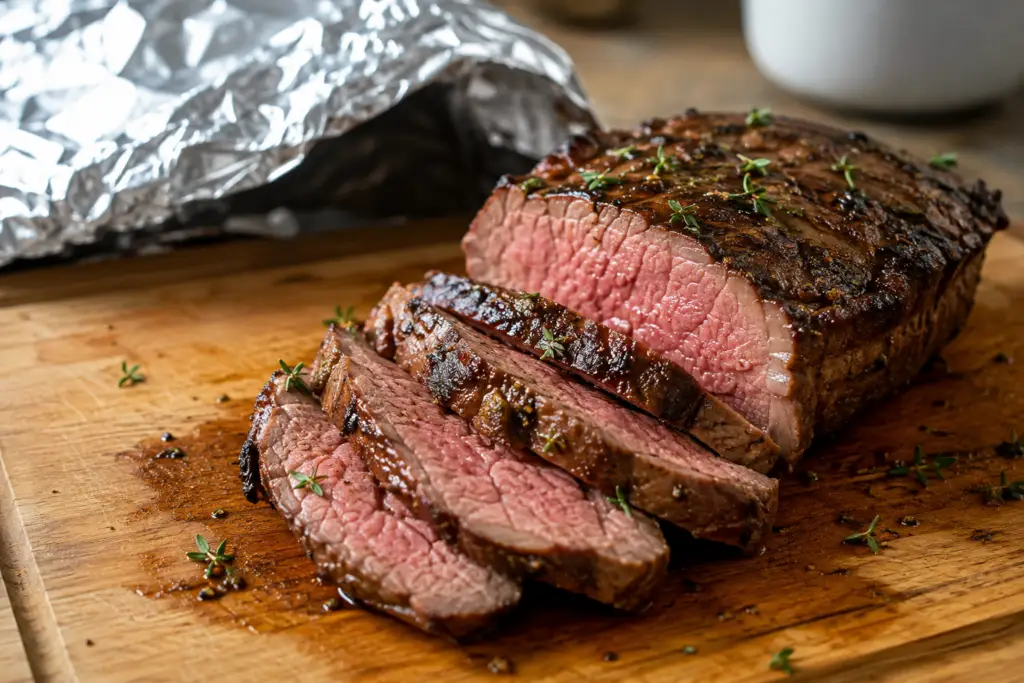
How Long Should Steak Rest?
For most steaks, 5 to 10 minutes is a good starting point.
Very thick steaks may benefit from closer to 10 to 15 minutes.
You do not need to follow complicated formulas or stand beside the steak with a stopwatch. Thickness matters more than trying to calculate an exact resting period.
A thinner steak needs less time.
A thick ribeye or filet needs more.
Why Does Steak Leak Juice When You Cut It?
Some juice on the plate is normal.
But if you slice a steak immediately after cooking and your cutting board suddenly looks like a small swimming pool, you probably cut too soon.
Let the steak sit while you plate everything else.
Those few minutes are also the perfect time to add butter, herbs, or a finishing sprinkle of salt if that is how you like to serve it.
Does Steak Get Cold While Resting?
This is one of the biggest reasons people skip the resting step.
Nobody wants cold steak.
Fortunately, a properly cooked steak does not instantly become cold because it sits for 5 or 10 minutes. Thick meat holds heat surprisingly well.
You can place it somewhere warm and away from a cold draft. A loose piece of foil can also help, but avoid wrapping it tightly.
Another trick is warming your dinner plates. Putting rested steak onto an ice-cold plate can cool it faster than the resting period itself.
How Long Should Beef Roast Rest?
Large beef roasts need more time than individual steaks.
Plan on approximately 15 to 30 minutes, depending on the size of the roast.
Very large cuts may need even longer.
Resting is particularly helpful here because carving a roast takes time. Giving the meat a proper rest first can make cleaner slices and help keep more moisture in each serving.
How Long Should Pork Rest?
- Pork Chops
Let pork chops rest for approximately 5 to 10 minutes.
Thicker bone-in chops can sit toward the longer end of that range.
- Pork Tenderloin
Give pork tenderloin around 10 minutes before slicing.
I know it is tempting to immediately cut it into those pretty little medallions, but wait.
Rest it whole first and then slice.
- Pork Roast
Larger pork roasts usually benefit from 15 to 20 minutes of resting before carving.
Again, size matters. A very large roast may need additional time.
How Long Should Turkey Rest?
If you have ever carved a Thanksgiving turkey immediately after pulling it from the oven, you probably already know where this is going.
Wait.
A whole turkey generally benefits from at least 20 to 30 minutes of resting, and larger birds may rest longer.
A turkey breast can usually rest for approximately 15 to 20 minutes.
The resting period is actually convenient because you need time to finish gravy, warm side dishes, arrange serving platters, and get everything else onto the table anyway.
How Long Should Lamb Rest?
Lamb chops can generally rest for 5 to 10 minutes, while larger lamb roasts may need 15 to 20 minutes.
As with beef, thickness makes a difference.
Keep smaller portions on the shorter end and give large roasts more time.
Should Meat Rest Covered or Uncovered?
This depends on what you cooked.
If maintaining a crisp exterior matters, leave the meat uncovered or use a very loose foil tent.
If you are resting a large roast and want to slow heat loss, loosely tenting it with foil makes sense.
What I would avoid is tightly wrapping freshly cooked meat.
Tight foil traps steam. That can soften crispy chicken skin, steak crust, breading, and other browned surfaces.
Think tent, not package.
Where Should Meat Rest?
A clean cutting board, platter, or warm plate works well.
Do not put cooked meat back onto a plate or tray that held raw meat unless it has been thoroughly washed first.
For larger roasts, a cutting board with a juice groove is especially handy because some liquid will still escape during resting and carving.
Can Meat Rest Too Long?
Yes.
There is a point where resting stops helping dinner and simply gives you cold food.
A chicken breast does not need to sit for 30 minutes. A normal steak does not need an hour.
Resting time should roughly match the size of the meat.
Smaller cuts need minutes. Large roasts need considerably longer.
Food safety matters too. Do not leave cooked meat sitting at room temperature for extended periods.
Do Burgers Need to Rest?
Yes, but they do not need nearly as much time as a large steak or roast.
A burger can benefit from a few minutes of resting before you bite into it.
This is especially helpful with thick burgers.
Resting also keeps all that hot liquid from immediately soaking into the bottom bun.
Do Meatballs Need to Rest?
A short rest can help meatballs too.
You do not need to wait 10 or 15 minutes. Giving them a few minutes after baking or pan cooking is usually enough.
If they are going directly into sauce, this is less noticeable because they will continue sitting in a moist environment.
What About Ground Beef?
You do not need to rest loose ground beef after browning it for tacos, pasta, casseroles, or similar dishes.
Resting is most useful when meat is cooked as an intact piece that you plan to slice, carve, or bite into.
Think steak, chicken breast, pork chop, tenderloin, roast, burger, and whole poultry.
Does Resting Meat Make It More Tender?
Resting does not turn a tough cut of meat into a tender one.
Tenderness depends on the cut, cooking method, temperature, connective tissue, fat, slicing direction, and several other factors.
What resting can do is improve the eating experience because you are giving the cooked meat time before slicing into it.
If your steak is tough because it was overcooked, resting will not reverse that.
If your roast is tough because it needed several more hours of slow cooking, resting will not fix that either.
Resting Meat vs. Letting Meat Come to Room Temperature
These are two different things and they are sometimes confused.
Resting meat happens after cooking.
Bringing meat out of the refrigerator before cooking happens before cooking.
They serve different purposes and should not be treated as interchangeable cooking steps.
When you see a recipe telling you to rest chicken for 10 minutes, it means after the chicken has finished cooking.
Do You Rest Meat Before or After Slicing?
Before.
This is probably the most important part of the entire process.
Rest the chicken breast whole.
Rest the steak whole.
Rest the pork tenderloin whole.
Rest the roast before carving it.
Once you slice the meat, you create many more places for liquid to escape.
If you are meal prepping chicken for the week, this is an easy habit to start. Cook it, rest it, and then slice or cube it for your containers.
How to Rest Meat Properly
You do not need a special method. I follow the same basic process for almost everything I cook:
- Check the meat’s internal temperature with a thermometer.
- Remove it from the heat.
- Transfer it to a clean plate, platter, or cutting board.
- Leave small cuts alone for about 5 to 10 minutes.
- Give whole poultry and larger roasts more time.
- Loosely tent with foil only when needed.
- Slice or carve after the resting period.
- Serve right away.
That is it.
Sometimes better cooking really is about doing less.
One Mistake That Can Ruin a Good Rest
You rested your steak perfectly for 10 minutes.
Then you sliced it the wrong way.
For many cuts of meat, slicing against the grain can make each bite easier to chew.
Look for the direction the muscle fibers are running and cut across them rather than parallel to them.
This is especially helpful with cuts such as flank steak and skirt steak.
Rest first. Slice second. Pay attention to the grain third.
Those three habits can make a noticeable difference without changing the recipe itself.
Resting Meat for Meal Prep
This is one place where I think resting meat gets overlooked.
If you make several chicken breasts on Sunday and immediately chop them into small pieces while they are piping hot, you may end up with more moisture on your cutting board and chicken that feels drier once reheated.
Instead:
- Cook the chicken completely.
- Let the whole breasts rest for 5 to 10 minutes.
- Slice, cube, or shred after resting.
- Allow food to cool appropriately before refrigerating.
- Store in airtight meal-prep containers.
The same idea works with pork tenderloin and steak.
If you know you will be reheating the meat later, avoiding unnecessary overcooking in the first place matters just as much.
My Best Tips for Juicier Meat
Resting helps, but it works best alongside good cooking habits.
- Use a meat thermometer. Guessing based only on cooking time makes overcooking much easier.
- Consider thickness. Two chicken breasts can weigh the same but cook differently if one is much thicker.
- Rest before slicing. Cutting first defeats the purpose.
- Do not tightly wrap crispy meat. Steam can soften the exterior.
- Slice against the grain when appropriate.
- Keep the resting time reasonable. You want rested meat, not cold meat.
- Remember carryover cooking. Larger cuts can continue increasing in temperature after leaving the heat.
Is Resting Meat Really Worth It?
Yes, especially considering how little work it requires.
You already spent time buying, seasoning, and cooking the meat. Waiting another 5 or 10 minutes is one of the easiest things you can do before serving it.
I notice it most with chicken breasts, thick steaks, pork tenderloin, and large roasts.
It is also one of those kitchen habits that becomes automatic once you start doing it.
Take the meat off the heat.
Set the timer.
Finish the sides.
Then slice.
More Chicken and Meat Cooking Guides to Try
Once you get comfortable with resting times, the next step is getting your cooking times and temperatures right.
Here are a few cooking topics that pair well with this guide:
- How long to boil chicken breast
- How to cook a steak perfectly every time
- How long to marinate chicken
- Air fryer vs. oven chicken
- Chicken wing marinades
- Chicken wing seasoning
These types of simple cooking questions can completely change how your everyday dinners turn out.
Before You Go
If there is one habit I wish more home cooks would add to their routine, it is this: stop slicing meat the second it comes off the heat.
Give chicken breast 5 to 10 minutes. Let that steak sit while you finish the vegetables. Give a whole chicken or roast enough time before you start carving.
You do not need another ingredient or another kitchen gadget.
Sometimes the thing standing between dinner coming off the stove and dinner tasting better is simply a few minutes of patience.