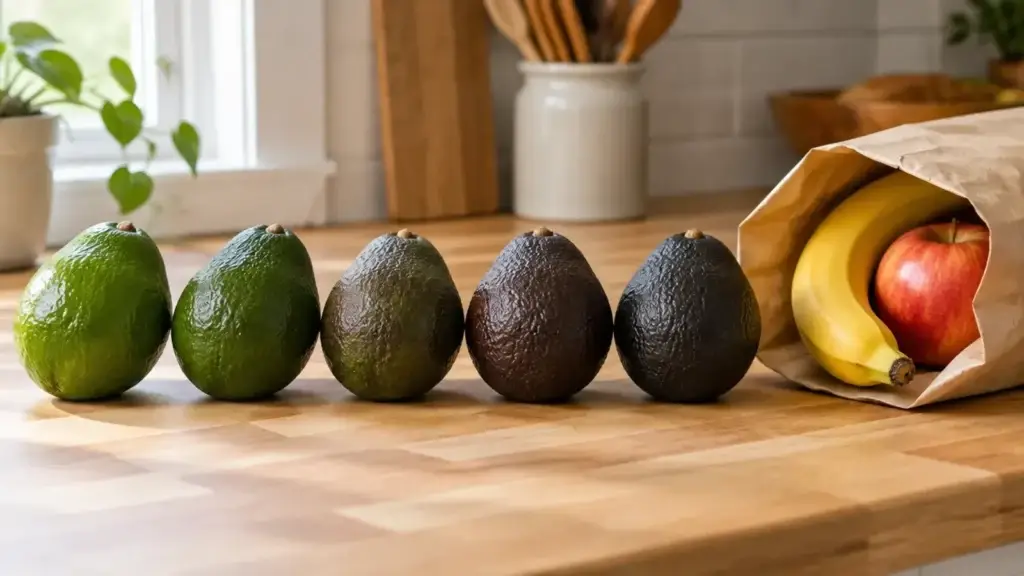
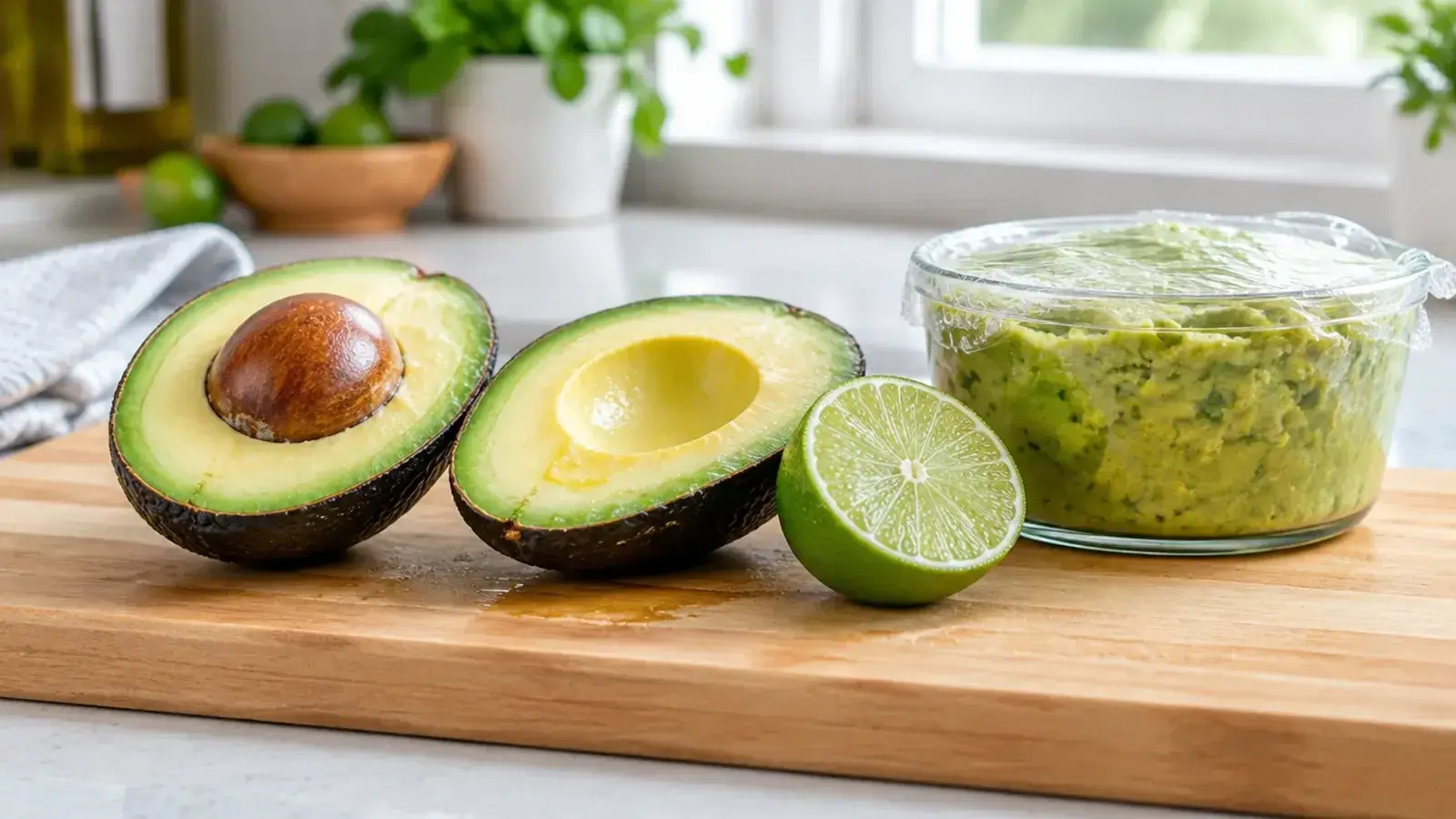
To keep avocados from browning once they're cut, brush the flesh with lemon or lime juice, press plastic wrap onto it, and refrigerate. Browning starts when cut flesh meets air, so the tighter the seal, the greener it stays. A thin brown layer is safe to eat. Just scrape it off.
Halves, slices, and guacamole all follow the same three rules: a little acid, no air, and cold.
Why Avocados Turn Brown
Cutting an avocado breaks open its cells.
An enzyme inside (polyphenol oxidase) meets oxygen and turns natural compounds in the flesh brown.
Food scientists call it enzymatic browning.
It's the same thing that happens to a cut apple.
Every fix does one of two things.
It keeps air off the flesh, or it slows the enzyme down with acid or cold.
How to Keep Avocados From Browning After Cutting
These are the methods that work, best first.
1. Press Plastic Wrap Onto the Flesh (My Pick)
I recommend this one above everything else.
Don't just cover the container.
Press the wrap right onto the cut surface so no air pocket sits against the flesh.
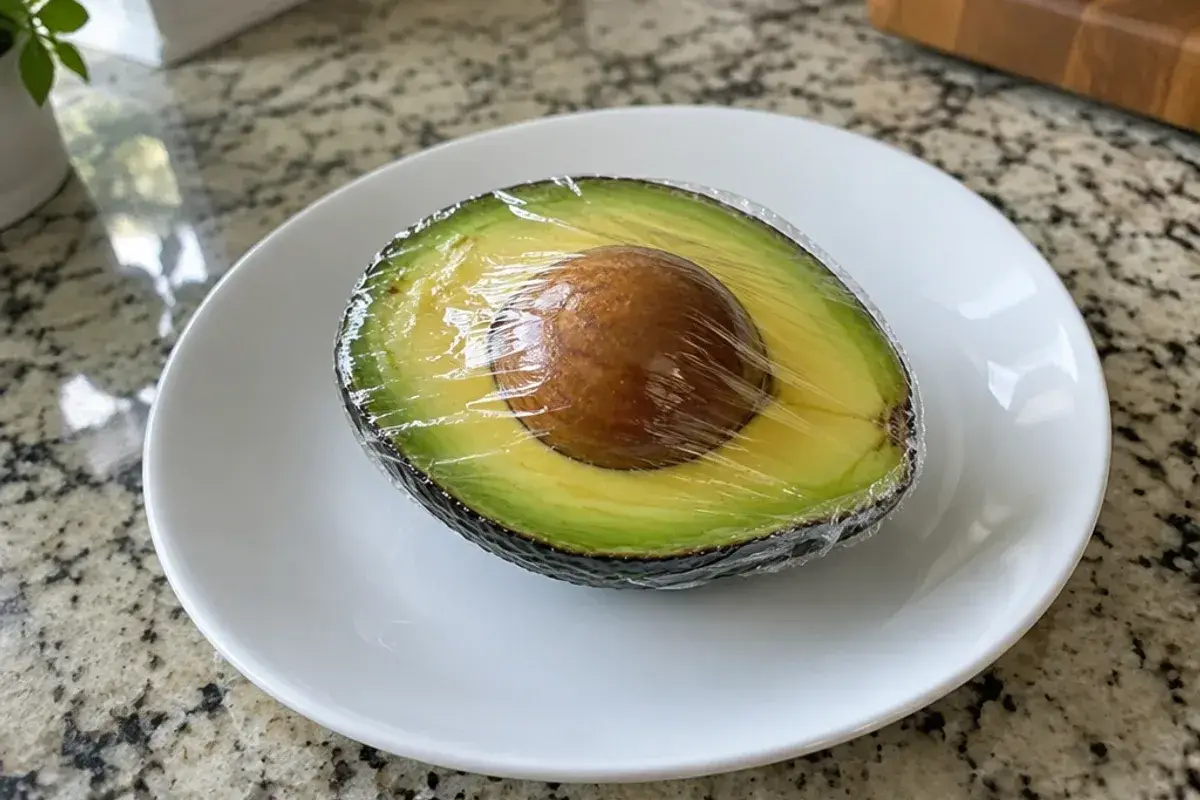
The California Avocado Commission gives the same advice for mashed avocado.
2. Add Lemon or Lime Juice
Acid slows the browning enzyme, so browning takes longer to start.
Citrus alone still lets air reach the flesh.
Pair it with plastic wrap.
3. Chill It Right Away
Cold slows the enzyme too.
A cut avocado on the counter browns faster than one in the fridge, so wrap it and put it away as soon as you're done.
4. Brush on a Little Olive Oil
A thin coat of oil puts a barrier between the flesh and the air.
It's a good swap when you don't want a citrus taste on your avocado toast.
The Pit Only Covers What It Touches
Leaving the pit in keeps the flesh under it green, because that flesh never meets air.
The rest of the cut surface browns at the usual speed.
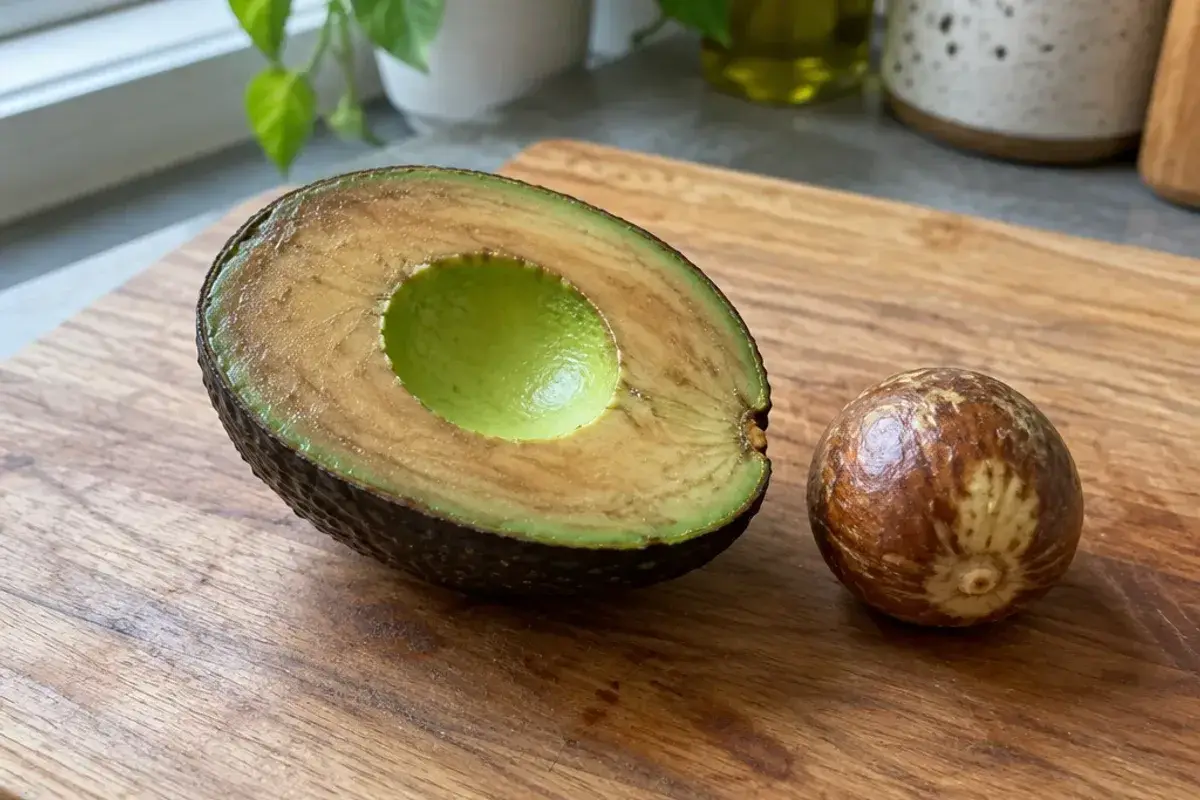
A University of California Cooperative Extension adviser explained this to Live Science: the pit is a physical cover, not a chemical fix.
Keep it in, but wrap the half too.
Onion and Water Tricks
Storing cut avocado with a chunk of red onion is a popular trick.
Even when it helps, your avocado ends up tasting like onion.
Save it for avocado that's headed into guacamole or tacos anyway.
Skip the jar of water. The FDA has said it doesn't recommend storing avocados submerged in water, because of Listeria concerns.
| Method | What it does | How well it works |
|---|---|---|
| Plastic wrap pressed onto the flesh | Blocks air | Best single method |
| Lemon or lime juice | Slows the enzyme | Good, best with wrap |
| Refrigerating right away | Slows the enzyme | Good, use with wrap |
| Olive oil | Blocks some air | Good when you don't want citrus |
| Leaving the pit in | Covers some flesh | Only helps the flesh under the pit |
| Red onion in the container | Unclear | Adds onion flavor |
| Submerged in water | Blocks air | Not recommended by the FDA |
How to Store Half an Avocado
For a leftover half, this is the routine.
- Leave the pit in the half that has it.
- Brush the cut side with lemon or lime juice.
- Press plastic wrap onto the flesh, or set the half cut side down in a small airtight container.
- Refrigerate it right away.
The good news? The steps are the same without a pit.
The wrap does the real work.
Use it soon.
Every method here slows browning, and none of them stops it.
How to Keep Guacamole From Turning Brown
Guacamole browns on top first, because that's where the air is.
- Mix in the lime juice your recipe calls for.
- Use the smallest container that fits, so there's less air inside.
- Smooth the top flat with the back of a spoon.
- Press plastic wrap onto the surface, pushing out any bubbles.
- Refrigerate it.
Some cooks add a thin layer of water or oil on top before wrapping.
Pour it off and stir before serving.
Dropping the pit in the bowl doesn't do much.
You get a green circle under it and brown everywhere else.
How Restaurants Keep Guacamole Green Overnight
There's no magic ingredient.
A kitchen holding guacamole overnight has the same three tools you do: acid, no air, and cold.
Before serving, scrape off any brown on top and give it a stir.
Can You Freeze Avocado?
Yes.
It goes soft once it thaws, so frozen avocado works best in guacamole, smoothies, and spreads, not as slices. Mashed avocado can also stand in for half the mayo in my easy chicken salad.
K-State Research and Extension gives two ways:
- Halves or slices: Brush every surface with lemon juice. Wrap tightly, including the pit cavity, press out the air, and freeze in a resealable bag.
- Mashed: Drizzle with lemon juice, mash, scoop into a resealable bag, squeeze out the air, and freeze.
For a puree, UC Master Food Preservers use 1 tablespoon of lemon juice for every 2 avocados.
Is Brown Avocado Safe to Eat?
Yes, when the brown is only on the surface.
That layer is oxidation, not spoilage.
Live Science notes it's safe to eat, though it can taste a little bitter.
Scrape it off and use the green underneath.
Real spoilage looks different.
The California Avocado Commission says to cut away black spots, stringy flesh, or bruises.
Throw out an avocado that smells sour or shows mold.
Stacie's Tricks & Tips
- Cut Only What You Need: Slice from one half and leave the other half intact, pit and all.
- Scrub First: Rinse and scrub the skin under running water before you cut, as the FDA advises.
- Lime or Lemon: Lime fits tacos and guacamole. Lemon is milder on avocado toast.
- Smallest Container Wins: Less air in the container = less browning.
- Use It Up: A leftover half is perfect sliced into my healthy chicken wrap or a southwest chicken wrap, diced over taco ground beef, or mashed onto cottage cheese toast.
Once the wrap-and-chill habit sticks, a leftover half never goes to waste again!