
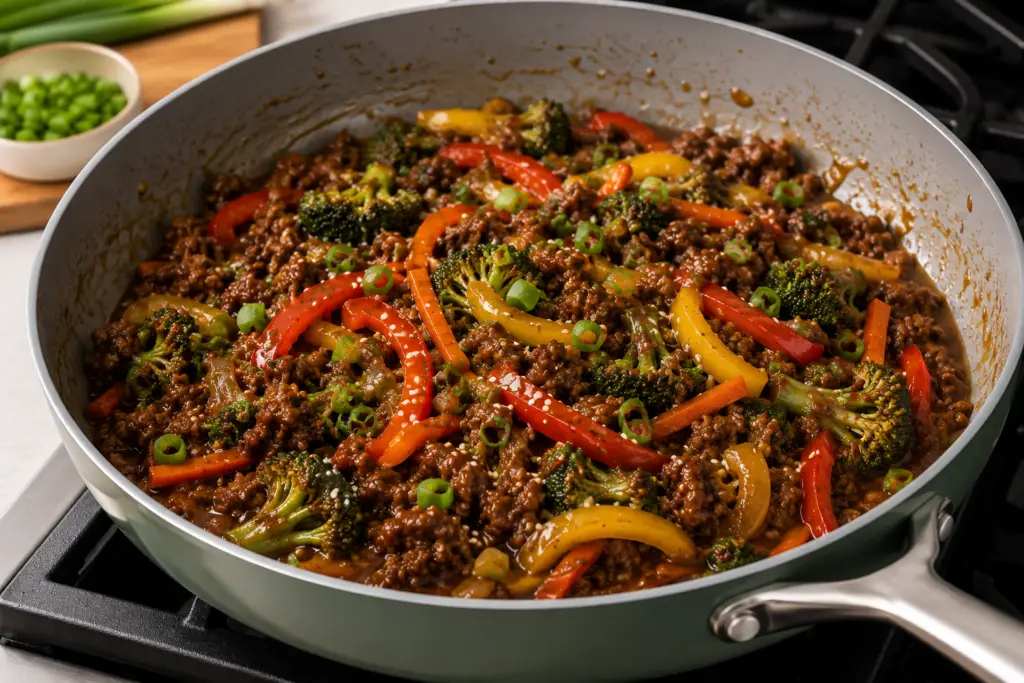
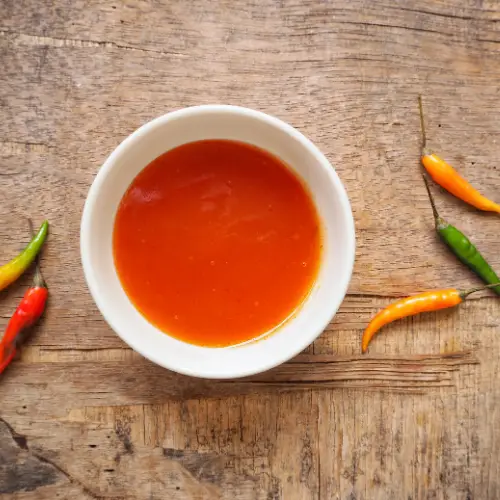
Sriracha is the Thai-American chili sauce made from red jalapeños, garlic, vinegar, sugar, and salt. Huy Fong’s rooster-bottle version is the American standard, but the original Si Racha sauce from Thailand is thinner and less garlicky. Sriracha sits between a hot sauce and a chili paste: thicker than Tabasco, thinner than gochujang, and more versatile than either in American cooking. The clearest recipe on this site that uses sriracha is Korean Ground Beef Bowl where the sauce provides sweet heat balanced against soy and sesame flavors.
Sriracha and hot sauce are not interchangeable. Sriracha is thicker, garlicky, and slightly sweet from the sugar in the blend. Standard hot sauces like Tabasco and Frank’s are thin, vinegar-forward, and have no sweetness. The distinction matters in recipes: sriracha builds body in a sauce, while hot sauce adds brightness and sharpness. honey balanced against sriracha is the most common pairing in American-style Asian cooking, because the honey counters the garlic heat and produces a glossy glaze.
For sriracha mayo, the technique is simple: 3 parts mayonnaise to 1 part sriracha, stirred together. A squeeze of lime juice brightens it; a pinch of garlic powder deepens the savory base. Sriracha mayo works as a burger sauce, a dipping sauce for sweet potato fries, a drizzle on tacos, and a spread for sandwiches. It keeps in the refrigerator for 2 weeks in a sealed jar and is more useful than either ingredient used separately.
For glazes and stir-fry sauces, sriracha works with soy sauce, sesame oil, and a touch of brown sugar as a balanced sauce base. The Fried Ground Beef Stir Fry uses sriracha as a finishing heat that plays against the savory soy glaze, and the Vegan Spicy Stir Fry with Rice shows how sriracha works across both meat-based and plant-based stir fry applications with equal effect. Finishing with green onions and sesame seed brings the dish to restaurant presentation. Browse cayenne, red pepper flakes, and chili powder for closely related heat-building applications.
For storage, sriracha keeps at room temperature for up to 9 months after opening and indefinitely in the refrigerator. The color will darken over time but the flavor stays intact. The Huy Fong factory periodically faces supply constraints due to jalapeño crop issues, so keeping a backup bottle is a reasonable pantry strategy.
Sriracha has a garlicky, moderately spicy, and slightly sweet flavor profile. The heat is forward but not sharp like a pure vinegar hot sauce. The garlic is prominent and the sugar in the blend rounds out the spice so it does not linger as long as cayenne-based sauces. It reads as sweet heat rather than pure heat, which is why it works well in glazes and dipping sauces.
Stir together 3 tablespoons of mayonnaise and 1 tablespoon of sriracha until smooth. Add a small squeeze of lime juice and a pinch of garlic powder if you want more depth. Taste and adjust the sriracha up or down depending on your heat preference. The ratio is flexible: more sriracha makes it spicier, more mayo makes it milder. It keeps in the refrigerator for up to 2 weeks.
Sambal oelek is the closest substitute — it is a chili paste with similar heat but no garlic or sweetness, so add a small pinch of sugar and a tiny amount of garlic powder to approximate sriracha’s flavor. Gochujang works in Korean-inspired applications. For a simple heat substitute, any chili garlic sauce plus a pinch of sugar replicates the basic flavor profile reasonably well.
No. Sriracha is a thick, garlic-forward chili paste with added sugar. Standard hot sauces like Tabasco are thin, vinegar-dominant, and have no sweetness. Sriracha builds body in a sauce and glazes proteins. Hot sauce adds brightness and sharpness. They are both spicy but serve different functions in cooking and are not directly interchangeable in most recipes.