
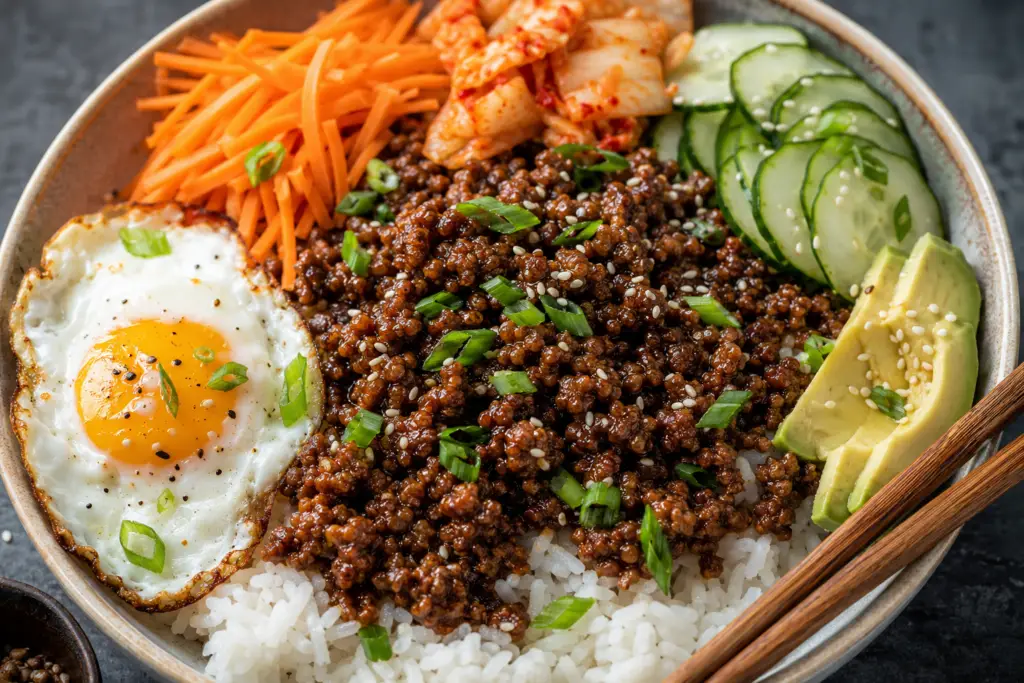
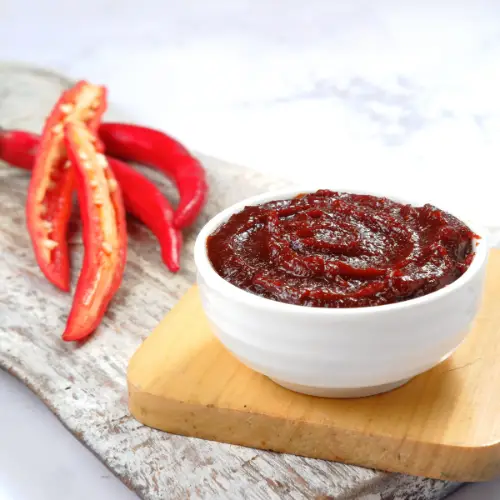
Gochujang is the Korean fermented chili paste made from gochugaru (Korean red pepper flakes), fermented soybeans, glutinous rice, and salt. It delivers heat, sweetness, umami, and a deep fermented complexity that no other single condiment replicates. It is not interchangeable with sriracha or regular chili paste. Recipes on this site that use gochujang include Korean Ground Beef Bowl and Grilled Chicken Marinade where the paste provides the signature Korean heat and fermented depth.
Gochujang heat levels vary by brand and are indicated on the label from mild (1) to hot (5). CJ Haechandle and Sempio are the two most widely available brands in American Korean grocery stores; both produce reliable results. The paste keeps in the refrigerator for up to 1 year after opening. The flavor profile is simultaneously spicy, sweet, savory, and fermented, which is why it works in glazes, marinades, stews, and dipping sauces without needing much else added. Pairing with soy sauce and sesame oil creates the foundational Korean sauce base.
For gochujang glaze on chicken, the technique is to combine 2 tablespoons gochujang, 1 tablespoon honey, 1 tablespoon soy sauce, 1 teaspoon sesame oil, and 1 minced garlic clove into a smooth sauce. The Grilled Chicken Marinade on this site uses this gochujang-honey-soy combination as a Korean variation that produces a sticky, caramelized glaze after 25 to 30 minutes in a 400°F oven, and the technique transfers directly to chicken thighs, drumsticks, and even salmon.
For bibimbap sauce and rice bowl applications, the Korean Ground Beef Bowl is the site’s clearest demonstration: gochujang goes into the ground beef seasoning base and produces the characteristic Korean heat that the dish is built around. The Fried Ground Beef Stir Fry uses gochujang as a finishing sauce element that adds both heat and body to the stir fry sauce. Spoon over a bowl of rice, vegetables, and egg or beef and toss to combine. Browse kimchi, sriracha, and soy sauce for closely related Korean and Asian heat applications.
For tteokbokki (Korean spicy rice cakes), gochujang is the dominant flavoring: 3 tablespoons gochujang, 1 tablespoon sugar, 1 tablespoon soy sauce, and 2 cups water or stock simmered until the rice cakes are soft and the sauce thickens. Adding fish cakes and green onions completes the dish.
Gochujang tastes spicy, sweet, savory, and deeply fermented all at once. The heat is forward but rounded by the natural sweetness from the rice in the fermentation. The fermented soybean component adds umami depth that makes the paste taste far more complex than a straight chili sauce. It does not taste like sriracha or standard hot sauce; it is richer, stickier, and has a more layered flavor profile.
The closest substitute is a mix of red miso paste, chili flakes, and a pinch of sugar, which replicates the fermented, spicy, and slightly sweet character. Sambal oelek with a small amount of miso and sugar also works in a pinch. Sriracha is commonly listed as a substitute but it is thinner, lacks the fermented depth, and produces a noticeably different result in Korean-specific dishes. For authentic Korean flavor, gochujang from a Korean grocery is worth seeking out.
Gochujang heat levels range from mild to hot depending on the brand and product. The scale typically runs from 1 (mild) to 5 (very hot). Most widely available products in American stores are in the 1 to 3 range. The heat is present but rounded and less sharp than cayenne-based hot sauces because the natural sugars in the fermentation process temper the spice. Most people who eat moderately spicy food can handle gochujang at standard recipe quantities.
Gochujang is available at Korean grocery stores, Asian supermarkets, and increasingly at mainstream grocery stores in the international foods aisle. It comes in a distinctive red tub or squeeze bottle. Hmart and 99 Ranch are common chains that carry it. Online retailers also stock it. The CJ Haechandle and Sempio brands are reliable and widely recommended for everyday cooking.