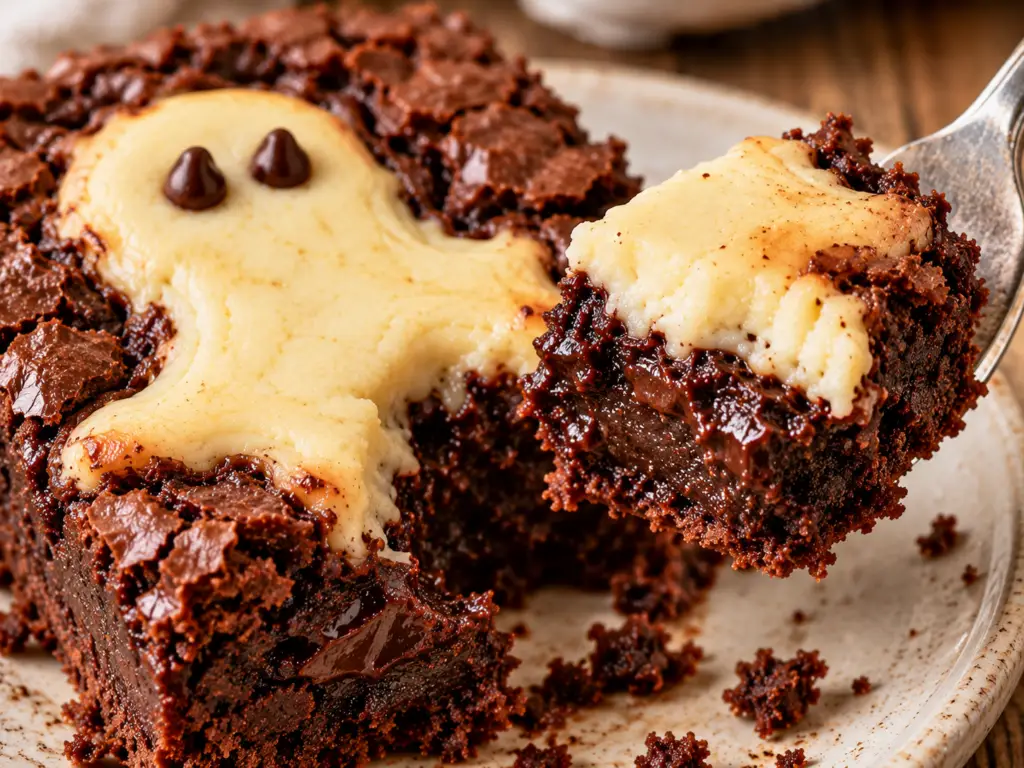
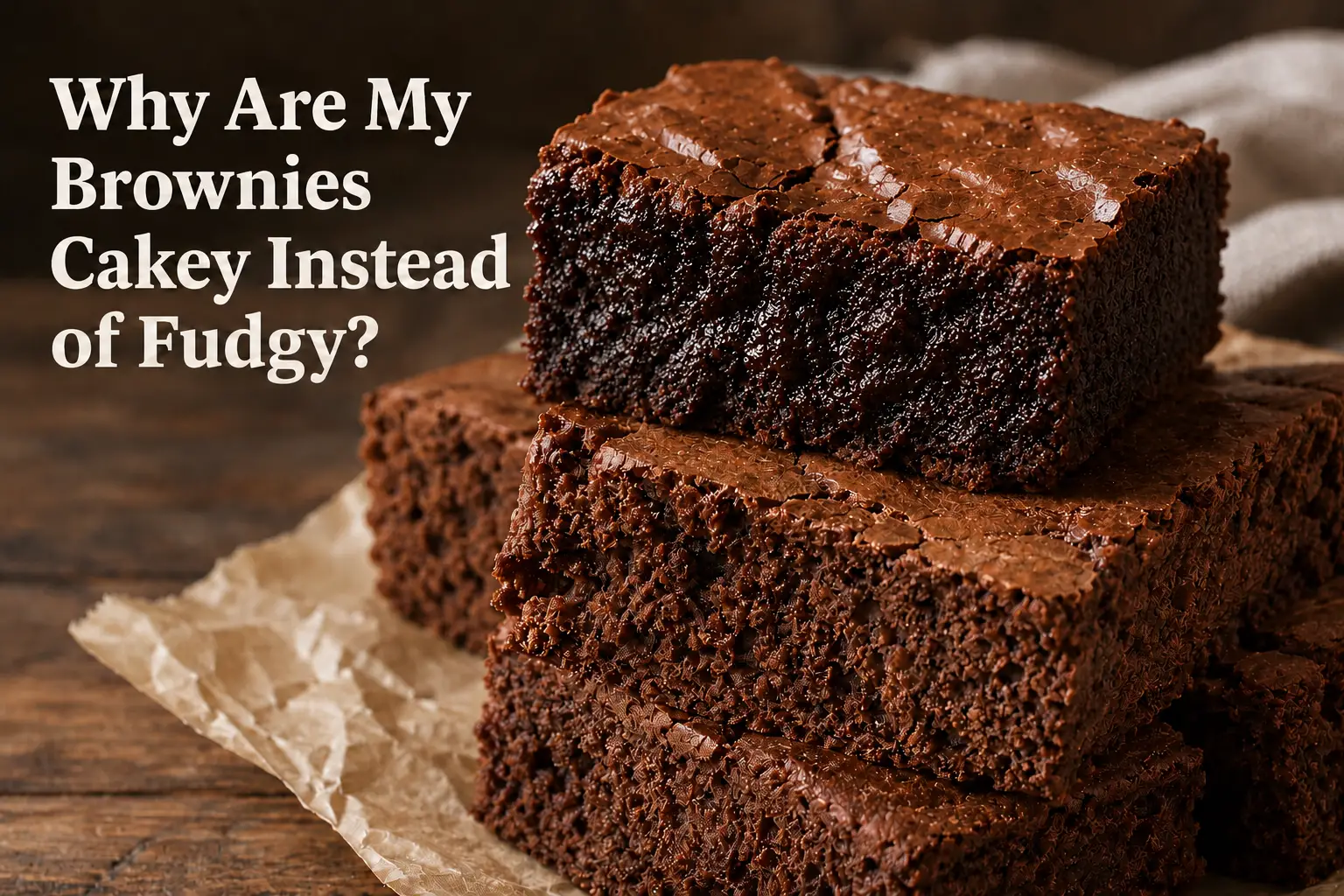
You mixed the batter, waited for the kitchen to fill with the smell of chocolate, and pulled a beautiful pan of brownies from the oven. Then you cut into them and found a light, fluffy center that looked more like chocolate cake.
So, why are your brownies cakey instead of fudgy?
Cakey brownies usually happen when the batter contains too much flour, too little fat, too many eggs, or too much air. Overbaking can also dry out the center and take away the dense, moist texture you wanted.
The good news is that cakey brownies are rarely caused by one mysterious baking failure. A few small changes to your ingredients, mixing method, and baking time can give you thick, rich, fudgy brownies next time.
Quick Answer: Why Did My Brownies Turn Out Cakey?
Your brownies may be cakey because you:
- Added too much flour
- Used too little butter or oil
- Added an extra egg
- Beat too much air into the batter
- Used baking powder or baking soda
- Baked them too long
- Used a pan that was too large
- Changed the type of chocolate in the recipe
- Measured the ingredients incorrectly
Fudgy brownies depend on a higher ratio of fat and chocolate to flour. Cakey brownies contain more flour and often more eggs or chemical leavening, giving them a lighter crumb.
What Makes a Brownie Fudgy Instead of Cakey?
A fudgy brownie has a dense, moist center with plenty of chocolate flavor. It may look slightly underdone when it first comes out of the oven, but it firms as it cools.
A cakey brownie has a lighter, more open crumb. It rises higher and may have small air pockets throughout the center, much like a piece of chocolate cake.
The final texture comes down to the balance between four main parts of the recipe:
- Fat: Butter, oil, egg yolks, and chocolate add richness and moisture.
- Flour: Flour provides structure. More flour creates a firmer, more cake-like brownie.
- Eggs: Eggs bind the batter, but they can also add lift when beaten.
- Sugar: Sugar adds sweetness, holds moisture, and helps create a shiny, crackly top.
For fudgy brownies, you generally want plenty of fat and chocolate with just enough flour to hold everything together.
1. You Added Too Much Flour
Too much flour is one of the most common reasons brownies turn out cakey or dry.
Even one or two extra tablespoons can change the texture, especially in a recipe that uses a small amount of flour to begin with. Flour absorbs moisture and gives the brownies structure. The more you add, the firmer and lighter the center can become.
How to measure flour correctly
The most accurate method is to weigh it with a kitchen scale. One cup of all-purpose flour usually weighs about 120 to 125 grams, depending on the recipe.
If you do not have a scale:
- Stir the flour in its container.
- Spoon it lightly into the measuring cup.
- Level the top with a flat knife.
- Do not scoop flour directly from the bag with the measuring cup.
Scooping can pack extra flour into the cup, sometimes adding several tablespoons without you realizing it.
How to fix it next time
Use the exact amount listed in the recipe and avoid adding extra flour because the batter looks thick. Brownie batter is often much thicker than cake batter.
2. You Did Not Use Enough Fat
Fudgy brownies need enough fat to create their dense, moist center. That fat may come from butter, oil, melted chocolate, or egg yolks.
Reducing the butter to make brownies lighter can change more than the calorie count. It also changes the texture. The flour then makes up a larger portion of the batter, which can leave the brownies cakey or dry.
Butter versus oil in brownies
Butter gives brownies a richer flavor and helps create slightly firmer edges. Oil stays liquid at room temperature, so brownies made with oil often remain soft and moist longer.
Some recipes use both. Butter provides flavor, while a small amount of oil helps maintain a fudgy texture.
How to fix it next time
Do not reduce the butter or oil unless the recipe was written and tested with that change. If you want a very fudgy brownie, choose a recipe that uses melted chocolate along with butter or oil.
3. You Added Too Many Eggs
Eggs give brownies structure, but adding too many can make the batter rise and set more like cake.
The egg whites contain proteins that firm as they bake. They also trap air when mixed, which can create a lighter crumb. Egg yolks bring fat and richness, so they tend to support a denser texture.
If a recipe calls for two large eggs, adding three will not simply make the brownies richer. It may make them taller, springier, and more cake-like.
How to fix it next time
Use the number and size of eggs listed in the recipe. If you want added richness without as much lift, look for a recipe that includes an extra egg yolk instead of another whole egg.
4. You Beat Too Much Air Into the Batter
Brownie batter does not need the same mixing method as cake batter.
Beating butter and sugar together until pale and fluffy is useful when you want a light cake. For brownies, that extra air can lead to a softer, more open crumb.
Whipping the eggs for several minutes can have a similar effect. The air bubbles expand in the oven, causing the brownies to rise before they set.
How much should you mix brownie batter?
Mix the eggs and sugar only as directed. Once you add the flour, stir gently until the dry streaks disappear.
You do not need to beat the batter until it is perfectly smooth. A few small lumps are better than an overmixed batter.
A note about crackly brownie tops
Some brownie recipes ask you to whisk the eggs and sugar well to create a shiny top. That can work, but the rest of the recipe must have the right fat-to-flour ratio.
Whisking alone does not automatically make brownies cakey. Problems usually happen when vigorous mixing is paired with too much flour or too many eggs.
5. You Used Baking Powder or Baking Soda
Traditional fudgy brownie recipes usually contain little or no baking powder or baking soda.
These ingredients create gas bubbles that make baked goods rise. That is helpful for cakes, muffins, and quick breads, but it can move brownies away from their dense texture.
Some cakey brownie recipes purposely include baking powder. If you accidentally added it to a fudgy recipe, even a small amount can change the crumb.
How to fix it next time
Read the ingredient list carefully before you begin. If your goal is a dense brownie, choose a recipe without chemical leavening or one that uses only a very small amount.
6. You Overbaked the Brownies
Brownies continue baking after you remove the pan from the oven. The hot pan and hot center hold enough heat to keep cooking them for several minutes.
If you wait until the center looks completely dry, the brownies may already be overbaked.
Overbaking removes moisture and makes the crumb firmer. A properly fudgy brownie may look slightly soft in the center when it first comes out.
How do you know when fudgy brownies are done?
Look for these signs:
- The edges appear set.
- The center no longer looks wet or liquid.
- The top has a thin crust.
- A toothpick comes out with moist crumbs.
- The center does not jiggle when the pan is moved gently.
A toothpick coated in raw batter means they need more time. A completely clean toothpick may mean they have baked too long, depending on the recipe.
Start checking the brownies several minutes before the listed baking time. Ovens can run hotter than the temperature shown on the display.
7. Your Oven Temperature Was Too High
An oven that runs hot can set the outside of the brownies before the center has time to bake evenly.
This can create raised edges, a dry crumb, or a center that rises and then sinks. It may also cause you to leave the brownies in longer because the middle looks unfinished.
An inexpensive oven thermometer can tell you whether your oven temperature is accurate. A setting of 350°F does not always mean the oven is actually holding at 350°F.
How to fix it next time
- Preheat the oven fully.
- Place the pan on the center rack.
- Check the temperature with an oven thermometer.
- Avoid opening the door repeatedly.
- Begin checking early if your oven tends to run hot.
8. You Used the Wrong Pan Size
Pan size changes the depth of the batter and the amount of time the brownies need to bake.
Pouring an 8-inch square brownie recipe into a 9-by-13-inch pan spreads the batter into a much thinner layer. Thin brownies bake quickly and can dry out before you expect them to.
Using a smaller pan creates thicker brownies that need more time.
How to fix it next time
Use the pan size listed in the recipe. If you change it, watch the brownies closely and adjust the baking time.
A light-colored metal pan is usually a dependable choice. Glass and dark metal pans absorb and transfer heat differently, which may change the baking time and edge texture.
9. You Used Cocoa Powder and Melted Chocolate Interchangeably
Cocoa powder and melted chocolate do not behave the same way in brownie batter.
Melted chocolate contains cocoa solids and cocoa butter. That cocoa butter adds fat and helps create a dense texture.
Cocoa powder contains very little fat. If you replace melted chocolate with cocoa powder without adding more fat, your brownies may turn out drier or more cake-like.
Natural cocoa powder and Dutch-process cocoa powder also have different acidity levels. This matters even more when baking soda is included.
How to fix it next time
Use the type of chocolate listed in the recipe. Do not replace melted chocolate with cocoa powder in equal amounts unless the recipe provides tested directions.
10. You Changed the Sugar Amount
It can be tempting to cut the sugar in a brownie recipe, especially when the amount looks high. Sugar, however, does more than make brownies sweet.
Sugar attracts and holds moisture. It also helps soften the crumb and contributes to the shiny top.
Reducing it may leave brownies drier, firmer, and more cake-like. The chocolate may also taste more bitter.
How to fix it next time
Avoid large sugar reductions. If you prefer less-sweet brownies, use darker chocolate or choose a recipe written with less sugar.
11. You Used Cold Ingredients
Cold eggs added to warm melted butter and chocolate can cause the mixture to thicken or separate. This does not always ruin the brownies, but it can make the batter harder to combine evenly.
Cold ingredients may also encourage overmixing because you have to work harder to bring the batter together.
How to fix it next time
Let the eggs sit at room temperature for about 20 to 30 minutes. You can also place whole eggs in a bowl of warm water for 5 to 10 minutes.
Make sure melted butter and chocolate are warm, not hot, before adding the eggs.
Can You Fix Cakey Brownie Batter Before Baking?
Sometimes you can correct the batter before it goes into the oven.
If you know you accidentally added a small amount of extra flour, you may be able to add one or two tablespoons of melted butter or neutral oil. This can help restore some of the missing moisture and fat.
If you added an extra egg, fixing the ratio becomes harder. You would need to increase the other ingredients as well, which may leave you with more batter than your pan can hold.
If you added baking powder by accident, you cannot remove it once it is mixed in. Bake the brownies and enjoy them as a lighter chocolate dessert.
Try not to make several untested changes at once. One small adjustment is safer than guessing at a completely new formula.
Can You Fix Cakey Brownies After Baking?
You cannot turn baked cakey brownies into true fudgy brownies, but you can make them taste softer and richer.
Try one of these ideas:
- Warm each brownie for 10 to 15 seconds in the microwave.
- Serve with chocolate sauce or hot fudge.
- Add a scoop of vanilla ice cream.
- Spread chocolate ganache over the top.
- Layer brownie pieces into a chocolate trifle.
- Crumble them over ice cream.
- Turn them into brownie cake pops.
- Store them with a slice of sandwich bread for several hours to soften them.
Do not place the bread directly on top of the brownies. Put it in the same sealed container and replace it if it becomes hard.
The Best Ingredient Ratio for Fudgy Brownies
There is no single ratio used by every brownie recipe, but fudgy versions tend to share a few traits:
- A generous amount of butter, oil, or melted chocolate
- Less flour than a cakey brownie recipe
- No baking powder, or only a tiny amount
- Two whole eggs or a mix of whole eggs and yolks
- Enough sugar to retain moisture
- A relatively short baking time
If a recipe contains nearly as much flour as sugar, uses several eggs, and includes baking powder, it will probably lean cakey.
If it uses plenty of chocolate and butter with a modest amount of flour, it will probably be denser and fudgier.
Cocoa Brownies Versus Melted Chocolate Brownies
Both methods can make fudgy brownies, but the recipes need to be balanced differently.
Cocoa powder brownies
Cocoa powder brownies get most of their fat from butter or oil. They can have a strong chocolate flavor and a chewy texture. Because cocoa powder absorbs moisture, accurate measuring matters.
Melted chocolate brownies
Melted chocolate adds both cocoa solids and fat. These brownies often have a rich, dense texture that becomes even firmer after cooling.
One method is not automatically better. The best choice depends on whether you prefer a chewy cocoa brownie or a dense, truffle-like chocolate brownie.
How to Make Brownies More Fudgy
Use these tips the next time you bake:
- Weigh the flour if possible.
- Use the exact pan size in the recipe.
- Do not reduce the butter, oil, chocolate, or sugar.
- Avoid adding baking powder unless it is listed.
- Mix only until the flour disappears.
- Bake on the center rack.
- Start checking the brownies early.
- Remove them when a toothpick has moist crumbs.
- Let them cool fully before slicing.
- Refrigerate cooled brownies if you like a very dense texture.
Why Cooling Brownies Matters
Fresh brownies are still setting when they come out of the oven. Cutting them immediately can make the center look raw, even when they are properly baked.
Let the pan cool on a wire rack for at least one hour. For clean slices, wait until the brownies are completely cool.
You can also refrigerate the cooled pan for 30 to 60 minutes before cutting. This gives fudgy brownies a firmer texture and makes the edges easier to slice.
Use a sharp knife and wipe it clean between cuts.
Common Brownie Mistakes at a Glance
| Brownie problem | Likely cause | What to do next time |
|---|---|---|
| Cakey center | Too much flour or too many eggs | Measure carefully and follow the egg count |
| Dry brownies | Overbaking or too little fat | Check early and keep the full amount of fat |
| Brownies rise like cake | Too much air or baking powder | Mix gently and check the leavening |
| Hard edges | Dark pan or long baking time | Use light metal and check sooner |
| Raw center | Pan too small or oven too hot | Use the listed pan and check oven temperature |
| Greasy brownies | Too much fat or batter not mixed evenly | Measure carefully and combine the batter well |
| Brownies fall apart | Underbaked or cut while hot | Bake until set and cool before cutting |
| No shiny top | Sugar did not dissolve or recipe ratio was changed | Use the listed sugar and whisk as directed |
How to Store Brownies So They Stay Fudgy
Once the brownies are completely cool, store them in an airtight container at room temperature for up to four days.
For longer storage, wrap individual brownies tightly and freeze them for up to two months. Let them thaw at room temperature or warm them briefly in the microwave.
Refrigeration makes brownies firmer. If you store them in the refrigerator, let them sit at room temperature for 15 to 20 minutes before serving, unless you prefer a chilled, dense brownie.
More Baking Guides to Try
If you enjoy learning why recipes work, try these baking guides next:
- Butter vs. Oil in Baking
- Brown Sugar vs. White Sugar in Baking
- All-Purpose Flour vs. Cake Flour
- What Does Cottage Cheese Do in Baking?
- Salt and Chocolate: Why Dessert Recipes Need Both
- Baking Measurement Conversion Chart
- Complete Egg Substitute Guide for Baking
- Why Did My Cake Sink in the Middle?
Before You Go
If your brownies came out cakey instead of fudgy, start by checking the flour, eggs, fat, mixing method, and baking time. Those are the most common places where the texture changes.
For your next batch, measure the flour carefully, keep the full amount of butter or oil, skip unneeded leavening, and take the pan out while moist crumbs still cling to the toothpick.
Your brownies may look a little soft at first, but patience pays off. Let them cool, give the center time to set, and you should end up with the dense, chocolatey texture you were hoping for.