If you have ever looked at a chocolate chip cookie recipe and wondered why there is salt in something that is supposed to be sweet, there is a very good reason.
Salt makes desserts taste better.
Not saltier. Better.
A small amount of salt can make chocolate taste richer, vanilla taste warmer, caramel taste deeper, and an overly sweet dessert taste more balanced. It is one of those tiny ingredients that is easy to overlook until you bake something without it.
I have made enough cookies, brownies, cakes, cheesecakes, and other desserts to know that leaving out the salt can make a recipe taste strangely flat. Everything may technically be there, but the flavor just does not hit the same way.
And chocolate may be the best example of all.
So, why do you put salt in chocolate desserts? How much should you use? Does the type of salt matter? And why does salted chocolate taste so ridiculously good?
Here is what is actually happening.
Why Is Salt Used in Desserts?
Salt is usually associated with savory cooking, but it has an important job in baking too.
In desserts, salt helps:
- Balance sweetness
- Bring out chocolate flavor
- Make vanilla more noticeable
- Cut through rich butter and cream
- Reduce bitter or overly sugary notes
- Give caramel a stronger flavor
- Make individual ingredients easier to taste
Think about a chocolate chip cookie without salt. You still have brown sugar, butter, vanilla, flour, and chocolate, but those flavors can start blending into one big sweet bite.
Add the right amount of salt and suddenly you taste the browned edges, buttery dough, vanilla, caramel-like brown sugar, and chocolate separately.
That little pinch is doing much more than most people think.
Why Does Salt Make Chocolate Taste Better?
Chocolate naturally contains both bitter and sweet flavors.
Dark chocolate has more noticeable bitterness, while milk and white chocolate lean much sweeter. Salt can work with both ends of that spectrum.
With darker chocolate, salt helps soften some of the bitter notes so the cocoa flavor comes through more clearly.
With sweeter chocolate, salt helps keep all that sugar from becoming overwhelming.
That is why sea salt and chocolate have become such a classic pairing. The salt does not need to compete with the chocolate. Used correctly, it makes you notice the chocolate more.
Salt Can Make Chocolate Taste More Chocolatey
This is one of my favorite little baking tricks.
If a chocolate cake, brownie, or cookie tastes sweet but the chocolate flavor seems weak, adding more cocoa powder is not always the answer.
Sometimes the recipe simply needs enough salt.
Cocoa has natural bitter notes. A small amount of salt can tone down the perception of bitterness, allowing the richer cocoa flavors to stand out.
That can make brownies seem darker and fudgier or make chocolate cake taste richer without adding more chocolate.
What Does Salt Actually Do in Baking?
Salt has two different jobs in dessert recipes.
There is the flavor side, and there is the baking side.
1. Salt Balances Sweetness
Sugar should make a dessert sweet, but sweetness should not be the only thing you taste.
Salt creates contrast.
That contrast is especially helpful in recipes containing a lot of brown sugar, powdered sugar, frosting, caramel, sweetened condensed milk, or milk chocolate.
It is the same reason salted caramel works so well. A little salt keeps your palate interested instead of letting the sugar take over.
2. Salt Brings Out Other Flavors
Vanilla, cinnamon, peanut butter, nuts, coffee, caramel, fruit, and chocolate can all taste more noticeable when a dessert contains the right amount of salt.
This is why a tiny pinch can make such a big difference.
3. Salt Can Reduce Perceived Bitterness
Cocoa powder and dark chocolate naturally contain bitter compounds.
Bitterness is not necessarily bad. It is part of what makes chocolate taste like chocolate. But too much can make a dessert taste harsh.
Salt can help soften the way we perceive that bitterness.
This becomes particularly helpful when baking with unsweetened cocoa powder, bittersweet chocolate, espresso powder, or very dark chocolate.
4. Salt Affects Dough Structure
Salt is not only there for taste.
In yeast doughs and some baked goods, salt also affects gluten and dough behavior. It can strengthen the gluten network and help control yeast activity.
For your average brownie or chocolate chip cookie, however, flavor is probably the reason you will notice it most.
What Happens If You Forget Salt in a Dessert?
Your cake will not necessarily collapse.
Your brownies probably will not refuse to bake.
Your cookies may still look perfectly normal.
But something can taste off.
Desserts made without enough salt often taste:
- Flat
- Too sweet
- Less chocolatey
- Less buttery
- One-dimensional
- Slightly bland despite having plenty of sugar
It is one of those baking mistakes where you might take a bite and think, “This needs something,” without immediately knowing what that something is.
Very often, it is salt.
Why Salt Is So Good in Chocolate Chip Cookies
Chocolate chip cookies are one of the easiest places to taste the difference salt makes.
You have sweet chocolate, brown and white sugars, rich butter, vanilla, and toasted flavors created while the cookies bake.
Salt keeps all of those flavors from disappearing underneath the sugar.
This is also why flaky sea salt sprinkled over freshly baked chocolate chip cookies works so well.
Instead of mixing completely into the dough, those larger crystals create occasional salty bites.
Sweet.
Buttery.
Chocolatey.
Then salty.
That contrast makes you want another bite.
Salt in Brownies Makes a Bigger Difference Than You Think
Brownies contain some very strong ingredients.
Cocoa powder, melted chocolate, butter, sugar, vanilla, and sometimes espresso are all fighting for your attention.
Salt helps pull them together.
Without enough salt, brownies can taste intensely sweet while somehow still lacking flavor.
With enough salt, the chocolate usually tastes darker and fuller.
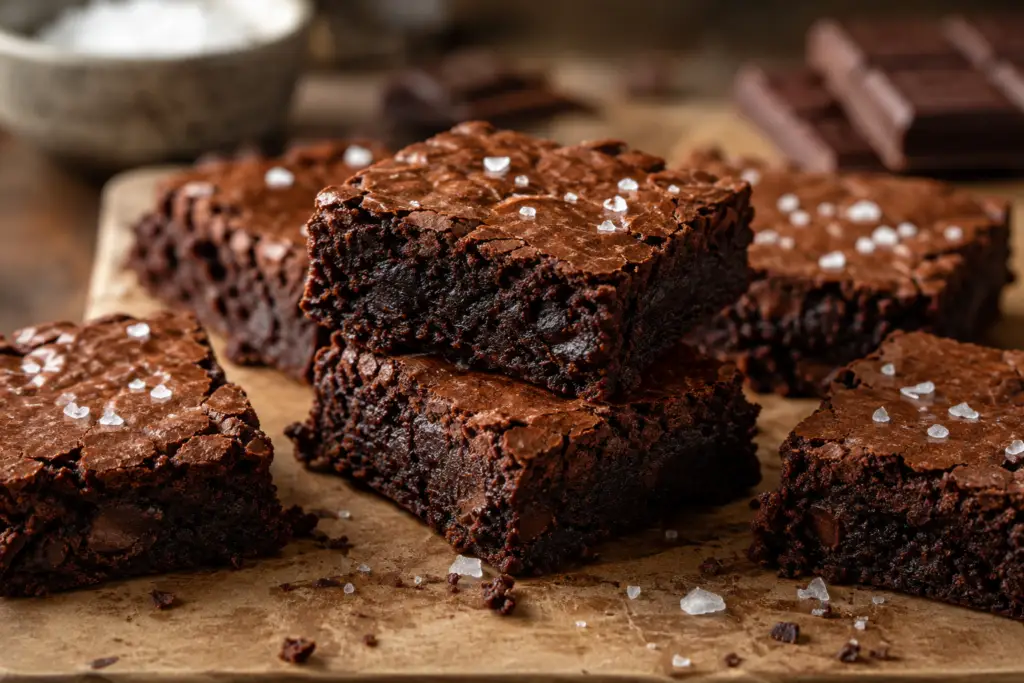
For an extra fudgy brownie, I also love a very light sprinkle of flaky salt on top. You do not need enough to make the brownie taste salty. A few flakes per bite are plenty.
Why Salted Caramel Works So Well
Salted caramel may be the clearest example of what salt can do for a dessert.
Caramel is essentially concentrated sweetness combined with deep toasted sugar flavors. Add butter and cream and it becomes even richer.
Then comes the salt.
Salt cuts through some of that sweetness and richness, which makes the caramel taste more balanced.
Interestingly, the caramel does not necessarily seem less indulgent.
It often tastes even richer.
That sweet-salty contrast is exactly why salted caramel works in brownies, cheesecake, cookies, ice cream, cupcakes, and chocolate desserts.
Should You Put Salt in Every Dessert?
Almost every dessert benefits from at least a little salt.
Cookies, brownies, cakes, muffins, quick breads, cheesecakes, frostings, caramel, puddings, chocolate sauces, pie fillings, and even homemade whipped cream can benefit from it.
There are exceptions.
If a recipe contains a salty ingredient such as salted butter, pretzels, salted nuts, peanut butter, or another ingredient with a noticeable sodium content, you may need less added salt.
The goal is balance.
You should not automatically dump extra salt into every recipe. You want enough to bring out the other flavors without turning your chocolate cake into a salty chocolate cake.
How Much Salt Should You Add to Dessert Recipes?
This depends on the recipe, batch size, and other ingredients.
For many standard home baking recipes, somewhere around 1/4 to 1 teaspoon of salt is common.
A small batch of cookies may only need 1/4 teaspoon, while a larger cake, loaf, or batch of brownies may call for 1/2 teaspoon or more.
Always start with the amount written in a tested recipe.
If you are developing your own recipe, start conservatively. You can always adjust during testing.
And remember that different salts are not interchangeable by volume.
Table Salt vs Kosher Salt vs Sea Salt for Baking
This is where things can get confusing.
- Table Salt
Table salt has very small, fine crystals.
Because those crystals pack closely together, a teaspoon of table salt can contain more salt by weight than a teaspoon of a coarse salt.
It dissolves easily, which makes it useful for cake batters, brownies, cookie doughs, and other recipes where you want the salt evenly distributed.
Kosher salt has larger crystals and is popular with cooks and bakers because it is easy to pinch and control.
The catch is that kosher salt brands can have different crystal sizes.
That means one teaspoon of one brand may not contain the same amount of salt as one teaspoon of another.
If you are making a recipe where precision matters, weighing your salt is the safest choice.
- Fine Sea Salt
Fine sea salt works well inside batters and doughs because it distributes easily.
It can be a good everyday baking salt.
- Flaky Sea Salt
This is the finishing salt.
Flaky salt is wonderful sprinkled over chocolate chip cookies, brownies, chocolate bark, caramel, fudge, and other finished desserts.
Rather than disappearing into the recipe, the crystals stay noticeable.
That gives you those little pops of salt that work so well against chocolate.
Fine Salt vs Flaky Salt: They Have Different Jobs
This distinction matters.
Fine salt goes into the dessert. Flaky salt usually goes on the dessert.
Fine salt spreads throughout your batter or dough and helps balance the flavor of the entire recipe.
Flaky sea salt creates contrast at the surface.
Sometimes I use both.
For example, a chocolate chip cookie can have fine salt mixed into the dough and a few flakes of sea salt added after baking.
They are doing two different jobs.
When Should You Add Flaky Sea Salt to Chocolate Desserts?
Timing matters.
For cookies and brownies, sprinkle flaky sea salt over the top while they are still warm. This helps the flakes stick without completely dissolving.
For chocolate bark or dipped chocolate, add the salt while the chocolate is still wet.
For caramel, you can stir fine salt into the caramel and then add a few flakes on top when serving.
With frosting, ganache, or cheesecake, I usually add flaky salt shortly before serving so the crystals stay visible and keep their texture.
Can You Use Salted Butter Instead of Unsalted Butter?
Yes, but you have less control over the total salt in the recipe.
Different brands of salted butter contain different amounts of salt.
That is why many baking recipes call for unsalted butter and then list salt separately. You control exactly how much goes into the recipe.
If salted butter is what you have, you can usually still bake with it. Consider reducing the added salt, particularly if the recipe already contains other salty ingredients.
The Chocolate and Salt Trick I Use When a Dessert Tastes Too Sweet
If I am testing a chocolate dessert and it tastes sugary rather than chocolatey, I do not immediately start cutting sugar.
I look at the whole recipe first.
Is there enough cocoa?
Is the chocolate strong enough?
Is there vanilla?
And is there enough salt?
Sometimes a tiny increase in salt is enough to balance the sweetness and make the chocolate flavor much more noticeable.
This is especially helpful with chocolate frosting.
Powdered sugar-based frosting can become very sweet very quickly. A pinch of salt can make a surprising difference.
Salt and Vanilla Work Together Too
Vanilla is another ingredient that can disappear when a dessert is extremely sweet.
Salt helps create enough contrast for vanilla to come through.
Try tasting vanilla buttercream before and after adding a small pinch of salt. The difference can be surprisingly noticeable.
The frosting still tastes sweet, but now you can actually taste the butter and vanilla too.
Does Salt Make Dessert Less Sweet?
Not exactly.
Salt does not remove sugar from a recipe.
Instead, it changes how you experience the flavors.
A properly salted dessert can taste more balanced even though it contains exactly the same amount of sugar.
That distinction is helpful when developing recipes.
Sometimes reducing sugar is the right move. Other times, the recipe simply needs better balance.
Does Salt Make Chocolate Sweeter?
Salt can make chocolate seem sweeter in certain situations because it reduces the way we perceive bitterness.
At the same time, it can keep very sweet chocolate from tasting sugary.
That sounds contradictory, but it is exactly what makes salt so useful.
It helps bring the flavors into balance rather than simply making everything taste salty.
Best Desserts to Finish With Flaky Sea Salt
If you want to start experimenting with salt and chocolate, try a light sprinkle on:
- Chocolate chip cookies
- Bakery-Style peanut butter cookies
- Fudgy brownies
- Chocolate fudge
- Chocolate caramel bars
- Chocolate bark
- Chocolate-covered pretzels
- Chocolate cheesecake
- Salted caramel cheesecake
- Chocolate ganache
- Chocolate cupcakes
- Peanut butter chocolate cookies
- Chocolate tart
- Chocolate-dipped strawberries
- Homemade chocolate sauce
- No-Churn Snickers ice cream
Start lightly.
You can always add another flake or two. You cannot remove them once they have dissolved into your dessert.
Common Mistakes When Adding Salt to Desserts
- Adding Too Much
Salt should support the dessert unless you intentionally want a strong salted flavor.
There is a difference between a salted caramel brownie and a brownie that accidentally tastes like salt.
- Forgetting About Other Salty Ingredients
Salted butter, peanut butter, pretzels, nuts, crackers, cream cheese, and other packaged ingredients may already contain sodium.
Consider the entire recipe before adding more.
- Measuring Different Salts the Same Way
One teaspoon is not always one teaspoon when you switch salt varieties.
Crystal size changes how much salt fits into a measuring spoon.
If you regularly develop recipes or want very consistent results, weighing salt gives you much better control.
- Using Flaky Salt Inside the Batter
You can, but it is usually a waste of good flaky salt.
Save those pretty flakes for finishing and use fine salt inside the batter.
- Skipping Salt Because You Are Using Salted Butter
Salted butter may provide enough salt in some recipes, but not always.
Butter and added salt serve slightly different purposes when you are trying to control flavor. If you are changing a recipe from unsalted to salted butter, consider the rest of the ingredients before automatically removing all additional salt.
My Simple Rule for Salt and Chocolate
When I am baking with chocolate, I want enough salt that the chocolate tastes rich but not enough that someone takes a bite and immediately thinks, “salt.”
Unless, of course, I am making something intentionally salted.
For everyday brownies, chocolate cakes, cookies, and frostings, salt should mostly stay in the background.
For salted caramel, chocolate bark, or sea salt chocolate chip cookies, I want those occasional salty bites.
That small distinction can completely change the finished dessert.
More Baking Tips to Try
Once you understand what individual ingredients are doing, baking becomes much less mysterious. If you are learning how ingredients affect your cookies, cakes, muffins, brownies, and quick breads, these are good topics to read next:
- Brown Sugar vs. White Sugar in Baking: What Changes?
- Butter vs. Oil in Baking: Which Makes Better Muffins and Cakes?
- All-Purpose Flour vs. Cake Flour: When Does It Actually Matter?
- Cottage Cheese vs. Greek Yogurt in Baking: Which Should You Use?
- What Does Cottage Cheese Do in Baking?
- Baking Tips for Complete Beginners: 10 Things I Wish Someone Told Me
Before You Go
Salt may be one of the smallest measurements in your dessert recipe, but skipping it can change the entire bite.
It balances sweetness, helps chocolate stand out, softens the perception of bitterness, and makes ingredients like vanilla, butter, caramel, nuts, and cocoa easier to taste.
And when it comes to chocolate, a little salt can be the difference between something that simply tastes sweet and something you immediately want another bite of.
So when a brownie recipe calls for 1/2 teaspoon of salt, do not treat it like an optional ingredient.
That tiny spoonful has a job.