
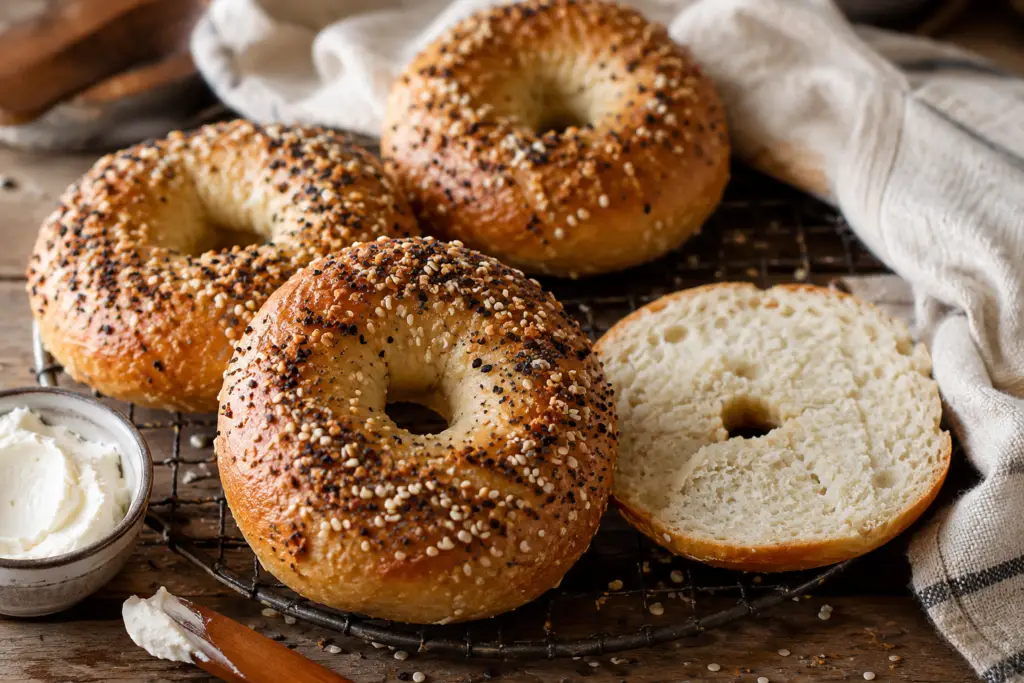
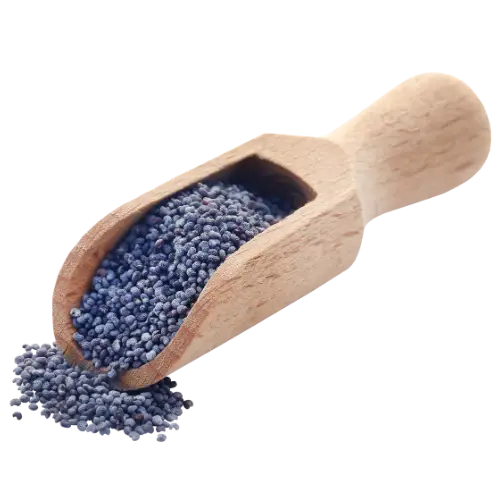
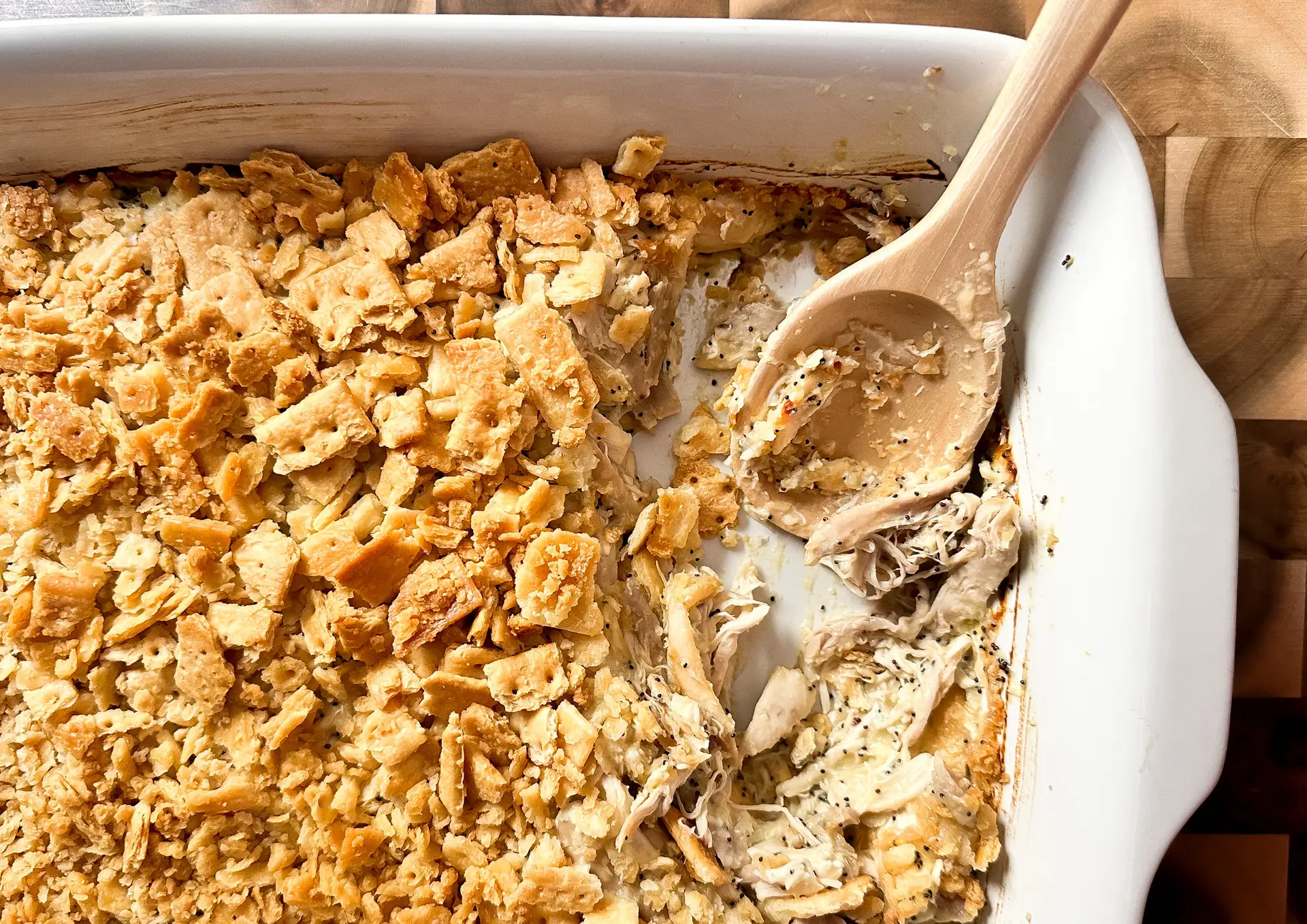
Poppy seeds are the tiny blue-gray seeds with a mild nutty flavor that appear in both sweet (lemon poppy seed muffins, dressings) and savory (poppy seed chicken casserole) applications on this site. The seeds are roughly the size of a pinhead, with a crunchy texture and a slightly oily mouthfeel that distinguishes them from sesame seeds and other small seeds. The reader favorite built on them is Poppy Seed Chicken where the poppy seeds sit on top of the cream-and-chicken casserole alongside the cracker topping. Related tags include sesame seed, lemon, and butter, the closely associated ingredients commonly paired with this one.
Poppy seeds have a higher fat content than most baking seeds (about 45% oil by weight), which is what makes them rancid faster than other pantry ingredients. Fresh poppy seeds taste mildly nutty and slightly sweet; rancid poppy seeds taste bitter and slightly fishy. The signal for rancidity is a strong oily or paint-like smell when you open the container. Buying poppy seeds in smaller quantities and using them within 6 months is the right approach; bulk-buying a large container and using it over years almost always produces rancid seeds by the end.
For lemon poppy seed muffins and similar baked goods, the poppy seeds contribute texture (the tiny crunch in each bite) and visual interest (the blue-gray flecks against the pale batter) more than flavor. A standard recipe uses 2-3 tablespoons of poppy seeds per batch of 12 muffins, folded into the batter with the dry ingredients. Pairing them with lemon juice (as in Lemon Raspberry Muffins and Halal Chicken and Rice) and lemon zest amplifies the slight nutty flavor that the seeds bring; the lemon-poppy combination is the most-used flavor pairing in American baking with this ingredient.
For casserole toppings, poppy seeds work as a visual and textural finish that distinguishes restaurant-style presentation from generic home cooking. Scatter 1-2 tablespoons of poppy seeds over the top of cream-based casseroles in the last 5 minutes of baking, where they toast slightly without burning. The same finishing technique works on roasted vegetables, breads, and savory pastries where the seeds add visual contrast and subtle crunch. Pairing the poppy-seed topping with melted butter brushed over the top before adding the seeds produces a richer, more golden finish.
For poppy seed dressings (the sweet, slightly tangy dressing that appears on fruit salads and slaws), the standard recipe is 1/4 cup olive oil (used in Baked Ziti with Ground Beef and Homemade Hamburger Helper), 1/4 cup apple cider vinegar (seen in Roasted Red Pepper and Cilantro Dressing and Gut Friendly Honey Mustard Dressing), 1/4 cup honey, 1 tablespoon poppy seeds, and salt to taste, whisked together until emulsified. The dressing keeps 2 weeks refrigerated and works particularly well on spinach salads with strawberries, on coleslaw, and as a dipping sauce for chicken tenders. For storage of dry poppy seeds, refrigeration extends the shelf life from 6 months to 12 months by slowing the oxidation that produces rancidity; freezing extends it further to 18 months.
Poppy seeds can be used in baked goods like muffins, breads, and cakes, as well as in salad dressings, sauces, and savory dishes to add texture and flavor.
Popular poppy seed recipes include lemon poppy seed muffins, poppy seed bread, cakes, cookies, and poppy seed salad dressings. These recipes highlight their flavor and texture.
Poppy seeds are usually mixed into batters, doughs, or dressings. They do not require special cooking but are baked or combined with other ingredients during preparation.
Poppy seeds contain nutrients like fiber, minerals, and healthy fats. When used in recipes, they can contribute to overall nutrition and add texture to meals.