If you have ever made homemade gravy, creamy macaroni and cheese, gumbo, or béchamel sauce, you have probably made a roux. It is one of the simplest ways to thicken a sauce, yet it can feel confusing when a recipe does not explain what it should look or smell like.
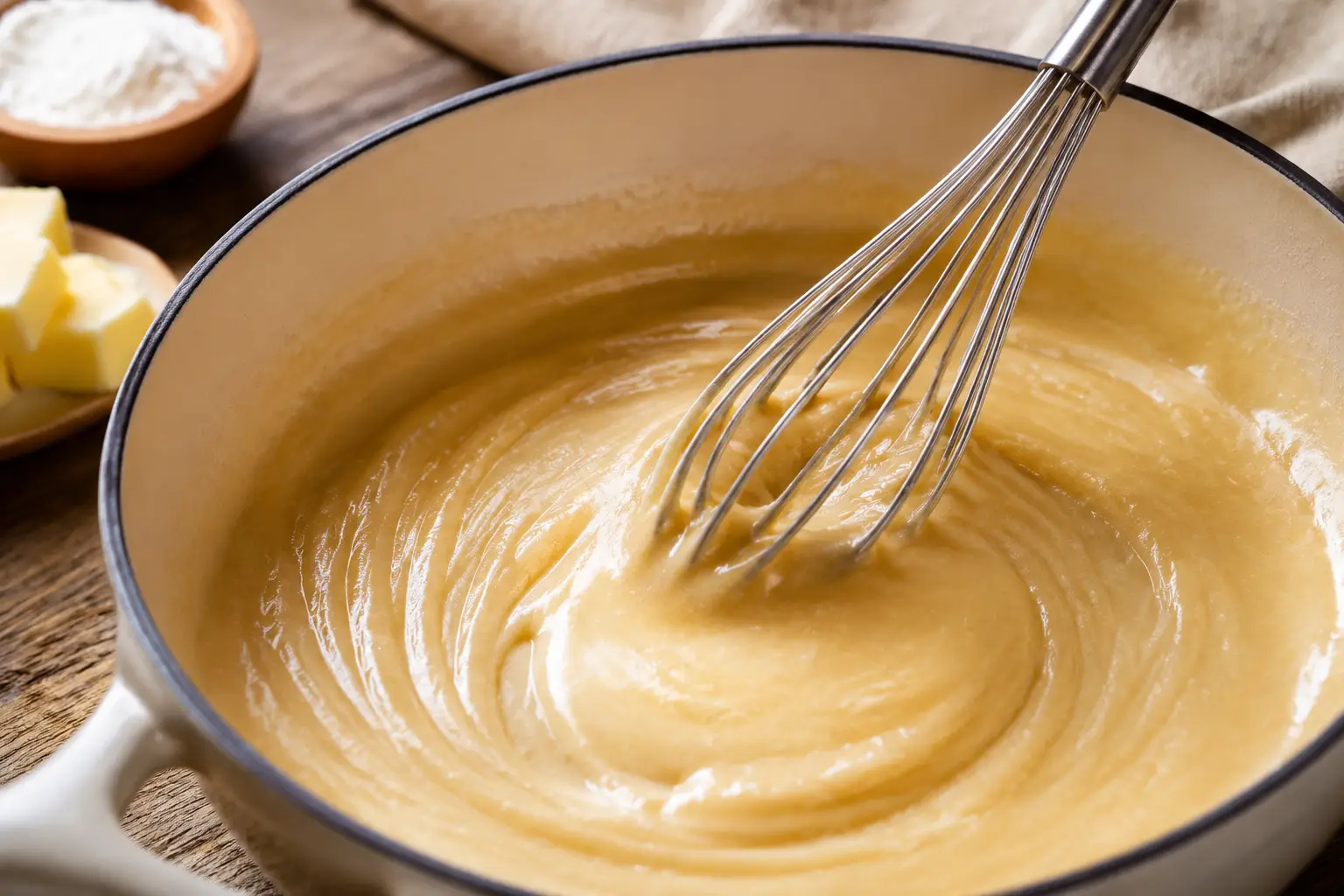
A roux is made by cooking equal parts fat and flour together. The fat coats the flour, while heat removes the flour’s raw taste. Liquid is then slowly whisked into the mixture to create a smooth sauce, soup, or gravy.
The cooking time determines the roux’s color, flavor, and thickening strength. A pale roux has a mild flavor and strong thickening power. A dark roux brings a toasted, nutty flavor but does not thicken as much.
Once you learn how to make a roux, you can use the method for everything from sausage gravy and cheese sauce to chicken pot pie filling.
What Is a Roux?
A roux is a cooked mixture of flour and fat used to thicken sauces, gravies, soups, and stews. It is commonly associated with French and Cajun cooking, but versions of the method appear in many types of home cooking.
The basic roux ratio is equal parts fat and flour by weight. Since most home cooks measure with cups and spoons, you can also use a simple ratio of one tablespoon of fat to one tablespoon of all-purpose flour.
For a medium-thick sauce, use:
- 2 tablespoons butter or another fat
- 2 tablespoons all-purpose flour
- 1 cup liquid
The exact amount of liquid can be changed depending on how thick you want the finished sauce. Use less liquid for a thick pot pie filling or more liquid for a thinner gravy.
How Do You Pronounce Roux?
Roux is pronounced “roo.” The word is French and refers to the mixture of flour and fat used as the base for many sauces.
What Is Roux Made From?
A traditional roux contains two ingredients:
- Fat
- Flour
Butter and all-purpose flour are the most common choices for white sauces, cheese sauces, and many gravies. You can also use oil, bacon grease, sausage drippings, chicken fat, or rendered beef fat.
Best Fats for Making a Roux
The type of fat changes the flavor and determines how long the roux can cook without burning.
Butter: Best for béchamel, cheese sauce, cream soups, and lighter gravies. Butter adds flavor, but its milk solids can burn during long cooking.
Vegetable oil: Often used for dark Cajun and Creole roux because it can handle higher temperatures.
Bacon grease: Adds smoky flavor to country gravy, bean dishes, soups, and pan sauces.
Sausage drippings: A natural choice for sausage gravy. The flour is stirred directly into the rendered fat left in the skillet.
Chicken or turkey drippings: Perfect for poultry gravy, especially during holiday cooking.
Beef drippings: Adds rich flavor to brown gravy and sauces served with roasted beef.
Avocado oil: Its mild flavor and higher smoke point make it suitable for a darker roux.
What Flour Is Best for Roux?
All-purpose flour is the standard choice because it thickens reliably and creates a smooth texture.
Bread flour contains more protein and may produce a slightly heavier texture. Cake flour can work, but you may need more of it because it contains less protein. Self-rising flour is not recommended because it contains baking powder and salt.
Whole wheat flour can be used, although it gives the sauce a grainier texture and stronger flavor. For most sauces and gravies, all-purpose flour gives the most consistent results.
The Four Types of Roux
Roux is often grouped into four stages based on color. Each stage has a different cooking time, flavor, and best use.
White Roux
White roux cooks for about 1 to 2 minutes. It should look pale and slightly foamy, without taking on much color.
The goal is to cook away the raw flour taste while keeping the flavor mild. White roux has the strongest thickening power of the four types.
Use white roux for:
- Béchamel sauce
- Homemade macaroni and cheese
- Cream soups
- Sausage gravy
- Chicken pot pie filling
- Creamed vegetables
Blond Roux
Blond roux cooks for about 3 to 5 minutes. It develops a light golden color and a gentle toasted aroma.
It still thickens well but has more flavor than a white roux.
Use blond roux for:
- Chicken gravy
- Turkey gravy
- Velouté sauce
- Creamy casseroles
- Chowders
- Light pan sauces
Brown Roux
Brown roux cooks longer, usually 10 to 20 minutes over moderate or medium-low heat. It turns the color of peanut butter and develops a nutty aroma.
As roux becomes darker, its ability to thicken decreases. You may need a little more brown roux than white roux to get the same thickness.
Use brown roux for:
- Brown gravy
- Beef stew
- Étouffée
- Rich pan sauces
- Some gumbo recipes
Dark Roux
Dark roux ranges from deep brown to the color of dark chocolate. Depending on the heat and cooking method, it can take 20 to 45 minutes to prepare.
Dark roux is used mainly for its toasted flavor rather than its thickening power. It is common in Cajun gumbo and other deeply flavored dishes.
Oil is often a better choice than butter for dark roux because butter’s milk solids may burn before the flour reaches the right color.
A dark roux needs close attention. It can go from properly toasted to burned very quickly.
How to Make a Roux
Making a roux takes only a few steps, but timing and temperature matter.
Ingredients
- 2 tablespoons butter, oil, or rendered fat
- 2 tablespoons all-purpose flour
Instructions
- Place a saucepan or skillet over medium-low heat.
- Add the butter or other fat and allow it to melt.
- Sprinkle in the flour.
- Whisk until the fat and flour form a smooth paste.
- Continue cooking and stirring until the roux reaches the color needed for your recipe.
- Slowly add your liquid while whisking constantly.
- Bring the mixture to a gentle simmer and cook until it reaches the desired thickness.
Do not pour all the liquid into the pan at once. Adding it gradually makes it easier to create a smooth sauce without lumps.
How Long Should You Cook Roux?
The cooking time depends on the type of roux you need.
- White roux: 1 to 2 minutes
- Blond roux: 3 to 5 minutes
- Brown roux: 10 to 20 minutes
- Dark roux: 20 to 45 minutes
These are general ranges. The pan, burner, fat, and amount of roux can all affect the timing. Watch the color and smell instead of relying only on the clock.
A finished white roux should no longer smell like raw flour. A darker roux should smell toasted and nutty, never sharp, bitter, or burned.
How to Add Liquid to a Roux Without Lumps
Lumpy sauce usually happens when liquid is added too quickly or the mixture is not whisked well enough.
For a smooth sauce:
- Remove the pan from the heat or lower the burner.
- Add a small splash of liquid to the roux.
- Whisk until completely smooth.
- Add another small amount and whisk again.
- Continue until about half of the liquid has been added.
- Pour in the remaining liquid gradually while whisking.
- Return the pan to gentle heat and allow the sauce to simmer.
The mixture may look very thick after the first addition of liquid. This is normal. Keep whisking as you slowly add more.
Warm liquid can be easier to blend into a hot roux, but cold liquid can also work when it is added gradually. Temperature matters less than steady whisking and slow pouring.
How Much Roux Do You Need?
The amount of roux needed depends on how thick you want the finished dish.
For every 1 cup of liquid, use:
- Thin sauce: 1 tablespoon fat and 1 tablespoon flour
- Medium sauce: 2 tablespoons fat and 2 tablespoons flour
- Thick sauce: 3 tablespoons fat and 3 tablespoons flour
A thin sauce works well for light gravy or a pourable pan sauce. A medium sauce is a good starting point for cheese sauce. A thick sauce works well for casseroles, soufflé bases, and pot pie filling.
Remember that sauces continue to thicken as they simmer and may become thicker as they cool.
How Roux Thickens a Sauce
Flour contains starch. When liquid is added and heated, the starch absorbs moisture and swells. This changes a thin liquid into a thicker sauce.
Cooking the flour in fat first helps distribute the starch throughout the liquid. It also removes the unpleasant raw flour taste that can remain when flour is stirred directly into a hot sauce.
The sauce needs to reach a gentle simmer before you judge its final consistency. If you remove it from the heat too early, it may look thinner than it actually is.
How to Use Roux for Gravy
Roux makes a dependable base for chicken, turkey, beef, sausage, and country gravy.
For about 2 cups of gravy, use:
- 4 tablespoons fat or pan drippings
- 4 tablespoons all-purpose flour
- 2 cups broth, milk, or a mixture of both
Cook the fat and flour together for 2 to 5 minutes, depending on the color and flavor you want. Slowly whisk in the liquid, bring it to a simmer, and cook until thickened.
Season the gravy only after adding the broth or milk. Pan drippings and store-bought broth may already contain salt, so tasting first helps prevent an overly salty gravy.
How to Make Gravy From Pan Drippings
Pan drippings contain both fat and concentrated cooking juices. Separating them makes it easier to measure the proper roux ratio.
- Pour the drippings into a heat-safe measuring cup.
- Allow the fat to rise to the top.
- Spoon off the fat and measure it.
- Add enough butter if you do not have the amount of fat needed.
- Cook the measured fat with an equal amount of flour.
- Slowly whisk in the remaining cooking juices and enough broth to reach the desired amount.
- Simmer until thickened, then season to taste.
Scraping the browned bits from the roasting pan into the gravy adds plenty of flavor.
How to Use Roux for Cheese Sauce
A blond or white roux is the starting point for a smooth homemade cheese sauce.
For a basic cheese sauce, use:
- 2 tablespoons butter
- 2 tablespoons all-purpose flour
- 1 cup milk
- 1 to 1½ cups shredded cheese
- Salt and pepper to taste
Make a white roux with the butter and flour. Slowly whisk in the milk and simmer until the mixture coats the back of a spoon. Remove the pan from the heat before stirring in the cheese.
Adding cheese over high heat can cause the sauce to turn grainy or oily. Freshly grated cheese usually melts more smoothly than packaged shredded cheese, which often contains powder that prevents clumping.
How to Use Roux in Soup
Roux can thicken creamy soups, chowders, and hearty stews. There are two common ways to add it.
You can start the soup with a roux, then gradually add broth and the remaining ingredients. You can also prepare the roux in a separate pan and whisk it into a soup that is already cooking.
When adding prepared roux to soup, whisk it into a small amount of warm broth first. Once smooth, stir that mixture into the full pot.
Roux works especially well in:
- Broccoli cheddar soup
- Potato soup
- Chicken and wild rice soup
- Corn chowder
- Seafood chowder
- Cream of mushroom soup
- Gumbo
How to Use Roux in Gumbo
Roux is an important part of many gumbo recipes. It contributes color, body, and a deep toasted flavor.
Gumbo roux is usually cooked until brown or dark brown. Oil is often used because it can tolerate longer cooking without the milk solids found in butter.
Stir the roux continuously, scraping across the bottom and corners of the pot. If black specks appear or the mixture smells burned, discard it and start again. Burned roux cannot be repaired and will make the entire pot taste bitter.
Once the roux reaches the desired color, adding chopped onion, celery, and bell pepper helps slow the cooking. Be careful because the roux will be extremely hot.
Common Roux Mistakes
- Using Heat That Is Too High
High heat may brown the flour unevenly or burn it. Medium-low heat offers more control, especially when you are learning.
- Walking Away From the Pan
Roux needs frequent stirring. Dark roux should be stirred almost constantly.
- Adding Liquid Too Quickly
Pouring in all the liquid at once can create flour lumps. Add it in small amounts at first and whisk until smooth after each addition.
- Not Cooking the Flour Long Enough
A roux that has not cooked long enough may leave the finished sauce tasting like raw flour. Even a white roux needs at least a minute or two of cooking.
- Judging the Thickness Too Soon
A roux-based sauce thickens as it reaches a simmer. Give it a few minutes before adding more roux or reducing the liquid.
- Adding Too Much Flour
Extra flour can make a sauce pasty or gummy. Begin with the recommended ratio and allow the sauce time to simmer.
- Burning the Roux
Burned roux may contain dark flecks and have a bitter smell. The best fix is to discard it, clean the pan, and begin again.
How to Fix Lumpy Roux or Gravy
If your sauce has a few small lumps, whisk it firmly while it simmers. A silicone-coated whisk is helpful when using a nonstick pan.
For stubborn lumps, pour the sauce through a fine-mesh strainer. You can also use an immersion blender when the recipe allows for it.
Avoid blending gravy that contains ingredients you want to keep whole, such as pieces of sausage, mushrooms, or onions.
How to Fix Gravy That Is Too Thick
Whisk in more broth, milk, or water, a small amount at a time. Allow the gravy to warm through before deciding whether it needs more liquid.
Use a liquid that matches the recipe. Broth works well for meat gravy, while milk is a better choice for sausage gravy or white sauce.
How to Fix Gravy That Is Too Thin
First, let the gravy simmer for several minutes. It may simply need more time for the starch to thicken.
If it is still too thin, make a small amount of roux in a separate pan. Whisk some of the thin gravy into the new roux, then return the smooth mixture to the main pan.
Do not sprinkle dry flour directly into the gravy. It is likely to clump and may leave a raw taste.
Can You Make Roux Ahead of Time?
Yes. Roux can be prepared ahead and stored for later use.
Allow it to cool, then transfer it to an airtight container. Store it in the refrigerator for up to one month or freeze it for up to six months.
For easy portions, freeze cooled roux in an ice cube tray. Once solid, transfer the cubes to a freezer-safe container. You can add a cube to soup, stew, or gravy as needed.
Always label the container with the type of fat used and the date it was prepared.
Can You Make Gluten-Free Roux?
Yes. A gluten-free roux can be made with a cup-for-cup gluten-free flour blend or sweet rice flour.
Sweet rice flour is a good option because it creates a smooth sauce without a sandy texture. Avoid using coconut flour as a direct replacement because it absorbs far more liquid than all-purpose flour.
Use the same basic ratio of fat to gluten-free flour, then adjust the liquid as needed. Different flour blends may thicken at slightly different rates.
Cornstarch is another gluten-free thickener, but it is used as a slurry rather than a roux. Mix cornstarch with cold water before adding it to a simmering liquid.
Roux vs. Cornstarch Slurry
Roux and cornstarch can both thicken liquids, but they produce different results.
Roux creates an opaque sauce with a rich, creamy feel. It works well in gravies, cheese sauces, soups, and casseroles.
A cornstarch slurry creates a shinier sauce and works quickly. It is often used in stir-fries, fruit sauces, and dishes where a clear finish is preferred.
Roux needs to cook before the liquid is added. Cornstarch should be mixed with cold liquid and stirred into a sauce near the end of cooking.
Roux vs. Beurre Manié
Beurre manié is a paste made from softened butter and flour. Unlike roux, the flour and butter are not cooked together before they are added to the liquid.
Small pieces of beurre manié are whisked into a simmering sauce to thicken it. The sauce must then cook long enough to remove the raw flour taste.
This method can help when a sauce needs last-minute thickening, while roux is usually prepared near the beginning of a recipe.
Roux vs. Flour Slurry
A flour slurry is made by mixing flour with cold water until smooth. It can thicken gravy or soup, but it does not provide the same richness as flour cooked in fat.
A slurry is convenient when you do not have enough fat to make a roux. It also needs several minutes of simmering so the finished dish does not taste like raw flour.
Best Pan for Making Roux
A heavy-bottomed saucepan, skillet, or Dutch oven helps distribute heat evenly. Stainless steel and enameled cast iron make it easy to watch the roux change color.
A light-colored interior is especially helpful when making brown or dark roux. It allows you to see the exact shade and spot any burned areas quickly.
Use a whisk for white sauce and gravy. A wooden spoon or flat-edged spatula works well for dark roux because it can scrape the bottom and corners of the pan.
Tips for Making a Smooth Roux Every Time
- Measure the fat and flour before heating the pan.
- Use equal amounts by weight for the most accurate ratio.
- Keep the heat moderate so the flour cooks evenly.
- Stir continuously when making brown or dark roux.
- Add liquid slowly at first.
- Whisk each addition until smooth before adding more.
- Let the sauce reach a gentle simmer before checking its thickness.
- Remember that darker roux has less thickening power.
- Remove cheese sauce from direct heat before adding the cheese.
- Taste gravy before adding salt.
Easy Basic Roux Recipe
Recipe Summary
This easy roux recipe uses butter and flour to create a smooth base for homemade gravy, cheese sauce, soup, and casserole filling. Cook it briefly for a pale, thickening roux or longer for a deeper toasted flavor.
Prep Time
1 minute
Cook Time
2 to 20 minutes
Total Time
3 to 21 minutes
Yield
Enough roux to thicken about 1 cup of liquid
Ingredients
- 2 tablespoons unsalted butter or preferred cooking fat
- 2 tablespoons all-purpose flour
- 1 cup broth, milk, or other liquid, if making a sauce
- Salt and pepper to taste, if making a sauce
Instructions
- Melt the butter in a saucepan over medium-low heat.
- Sprinkle the flour over the melted butter.
- Whisk until smooth and continue cooking until the roux reaches the desired color.
- For a white roux, cook for 1 to 2 minutes. For a blond roux, cook for 3 to 5 minutes. For a brown roux, continue cooking and stirring until it reaches a peanut butter color.
- If making a sauce, slowly pour in the liquid while whisking constantly.
- Bring the mixture to a gentle simmer.
- Cook for 3 to 5 minutes, stirring often, until thickened.
- Season to taste and use as directed in your recipe.
Notes
- Use oil instead of butter when preparing a very dark roux.
- Double the fat and flour if thickening 2 cups of liquid.
- The roux will be extremely hot, especially after longer cooking.
- If the roux develops black specks or smells burned, start over.
Nutrition Information
The following estimate is for the roux made with butter and flour, divided into four servings. It does not include added broth, milk, cheese, meat, or seasonings.
- Calories: 75
- Total fat: 6 grams
- Saturated fat: 4 grams
- Carbohydrates: 5 grams
- Protein: 1 gram
- Fiber: 0 grams
- Sugar: 0 grams
- Sodium: 1 milligram
Nutrition will vary based on the fat, flour, liquid, and serving size used.
More Cooking Guides to Try
Once you know how to make a roux, these kitchen guides can help with other common cooking questions:
- Every Way to Thicken a Sauce
- What Is the Maillard Reaction?
- What Is Brine and How Do You Brine Chicken?
- Baking Measurement Conversion Chart
- Recipe Scaling Guide
- Kitchen Pantry Staples List
Before You Go
A roux is simply flour cooked with fat, but this basic method can turn broth, milk, or pan drippings into a smooth sauce or gravy. The main things to remember are to use the right ratio, cook away the raw flour taste, add liquid gradually, and keep whisking.
Start with a white or blond roux if you are new to the method. Once you are comfortable watching the mixture change color, you can try brown and dark roux for dishes that need a deeper toasted flavor.