Have you ever doubled a recipe only to end up with dry cake, bland soup, or a casserole that took much longer to cook than expected? Changing a recipe is not always as simple as multiplying or dividing every number.
Most ingredients can be adjusted with basic math, but baking pans, cooking times, seasonings, eggs, and leavening agents need a little more care. Once you know what to watch for, you can make a smaller batch for two people, double dinner for guests, or prepare several trays of food without guessing.
This recipe scaling guide explains how to double a recipe, how to halve a recipe, which measurements are easy to change, and which ingredients should be adjusted slowly.
What Does It Mean to Scale a Recipe?
Scaling a recipe means changing the amount of food it makes while keeping the ingredient ratios as close to the original as possible.
You can scale a recipe up to make more servings or scale it down to make fewer servings. The number used to adjust the recipe is called the scaling factor.
For example:
- To double a recipe, multiply every ingredient by 2.
- To triple a recipe, multiply every ingredient by 3.
- To halve a recipe, multiply every ingredient by 0.5.
- To make one-fourth of a recipe, multiply every ingredient by 0.25.
The math is easy when you are working with whole cups and tablespoons. It becomes harder when a recipe calls for measurements such as ⅔ cup, ¾ teaspoon, or three eggs.
Recipe Scaling Formula
Use this basic formula to calculate a new ingredient amount:
Original ingredient amount × scaling factor = new ingredient amount
If a soup recipe serves 4 and you need it to serve 10, divide the number of servings you need by the original number of servings:
10 ÷ 4 = 2.5
Your scaling factor is 2.5. Multiply every ingredient by 2.5.
If the original recipe calls for 2 cups of broth:
2 cups × 2.5 = 5 cups of broth
This method works for almost any recipe, including soups, sauces, casseroles, cookies, breads, and side dishes.
Quick Recipe Scaling Chart
| Desired Recipe Size | Scaling Factor |
|---|---|
| One-fourth of the recipe | 0.25 |
| One-third of the recipe | 0.33 |
| Half of the recipe | 0.5 |
| Original recipe | 1 |
| One and a half batches | 1.5 |
| Double the recipe | 2 |
| Triple the recipe | 3 |
| Four times the recipe | 4 |
How to Double a Recipe
To double a recipe, multiply each ingredient by two.
Examples:
- ½ cup becomes 1 cup
- ⅔ cup becomes 1⅓ cups
- ¾ cup becomes 1½ cups
- 1 teaspoon becomes 2 teaspoons
- 1½ tablespoons become 3 tablespoons
- 2 eggs become 4 eggs
Write down every new measurement before you begin cooking. Trying to double ingredients in your head while measuring makes it easy to lose track of what has already gone into the bowl.
Double Recipe Measurement Chart
| Original Measurement | Doubled Measurement |
|---|---|
| ⅛ teaspoon | ¼ teaspoon |
| ¼ teaspoon | ½ teaspoon |
| ⅓ teaspoon | ⅔ teaspoon |
| ½ teaspoon | 1 teaspoon |
| ¾ teaspoon | 1½ teaspoons |
| 1 teaspoon | 2 teaspoons |
| 1½ teaspoons | 1 tablespoon |
| 1 tablespoon | 2 tablespoons |
| 2 tablespoons | ¼ cup |
| ¼ cup | ½ cup |
| ⅓ cup | ⅔ cup |
| ½ cup | 1 cup |
| ⅔ cup | 1⅓ cups |
| ¾ cup | 1½ cups |
| 1 cup | 2 cups |
How to Halve a Recipe
To halve a recipe, divide each ingredient by two or multiply it by 0.5.
Examples:
- 1 cup becomes ½ cup
- ¾ cup becomes 6 tablespoons
- ⅔ cup becomes ⅓ cup
- ½ cup becomes ¼ cup
- 1 tablespoon becomes 1½ teaspoons
- 1 teaspoon becomes ½ teaspoon
Small measurements can be difficult to divide accurately. Measuring spoons marked with ⅛ teaspoon and ¾ teaspoon are useful when you often make smaller batches.
Half Recipe Measurement Chart
| Original Measurement | Half Measurement |
|---|---|
| ¼ teaspoon | ⅛ teaspoon |
| ½ teaspoon | ¼ teaspoon |
| ¾ teaspoon | ⅜ teaspoon |
| 1 teaspoon | ½ teaspoon |
| 1½ teaspoons | ¾ teaspoon |
| 2 teaspoons | 1 teaspoon |
| 1 tablespoon | 1½ teaspoons |
| 2 tablespoons | 1 tablespoon |
| ¼ cup | 2 tablespoons |
| ⅓ cup | 2 tablespoons plus 2 teaspoons |
| ½ cup | ¼ cup |
| ⅔ cup | ⅓ cup |
| ¾ cup | 6 tablespoons |
| 1 cup | ½ cup |
How to Measure Half of ⅓ Cup
Half of ⅓ cup is ⅙ cup. Most measuring cup sets do not include a ⅙-cup measure, so use:
2 tablespoons plus 2 teaspoons
You can also weigh the ingredient and divide its weight by two. This is usually the easiest option for flour, sugar, butter, and other baking ingredients.
How to Measure Half of ¾ Cup
Half of ¾ cup is ⅜ cup. Measure it as:
¼ cup plus 2 tablespoons
You can also use 6 tablespoons.
How to Measure Half of One Tablespoon
One tablespoon equals 3 teaspoons. Half of one tablespoon is:
1½ teaspoons
This conversion is handy for oils, sauces, extracts, and other liquid ingredients.
How to Halve an Egg
One large egg contains about 3 tablespoons of beaten egg without the shell.
To use half an egg:
- Crack the egg into a small bowl.
- Whisk the yolk and white together until fully blended.
- Measure 1½ tablespoons of the beaten egg.
A kitchen scale gives you an even more exact amount. A large egg without its shell usually weighs about 50 grams, so half is approximately 25 grams.
Do not separate the egg and use only the white or yolk unless the recipe calls for one of them. The yolk adds fat and richness, while the white provides liquid and structure.
What If the Recipe Calls for Three Eggs?
If you are halving a recipe that calls for three eggs, you need 1½ eggs.
Use one whole egg, then whisk a second egg and measure half of it. Another option is to whisk all three eggs together and weigh or measure half of the mixture.
Use a Kitchen Scale for Better Results
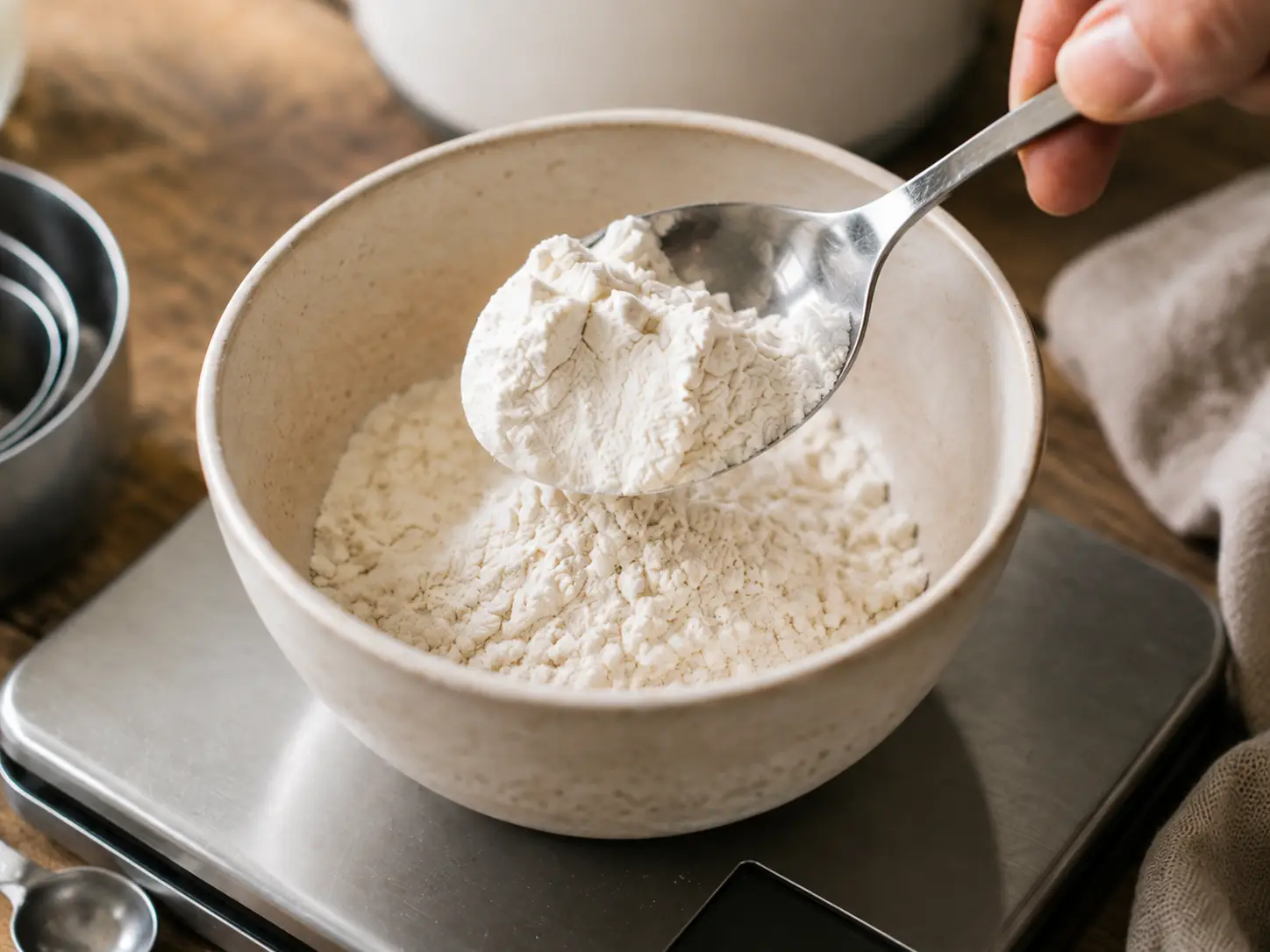
A digital kitchen scale is the easiest way to scale recipes accurately, especially when baking.
Volume measurements can vary based on how an ingredient is placed in the cup. One person may scoop flour firmly while another lightly spoons it into the cup. Those two cups can contain very different amounts of flour.
Weight measurements remove much of that variation.
If a recipe uses grams, multiply or divide each weight by your scaling factor.
For example, if the original recipe calls for 240 grams of flour:
- Half batch: 120 grams
- Double batch: 480 grams
- Triple batch: 720 grams
Set a bowl on the scale, press the tare button to return the display to zero, and add the ingredient until you reach the needed weight.
Should Every Ingredient Be Doubled or Halved?
Most ingredients can be scaled using direct math, but a few need extra attention.
Ingredients that usually scale well include:
- Flour
- Sugar
- Butter
- Milk
- Broth
- Meat
- Rice
- Pasta
- Chopped vegetables
- Chocolate chips
- Oats
- Canned beans
Ingredients that may need a slower adjustment include: - Salt
- Black pepper
- Hot peppers
- Cayenne pepper
- Hot sauce
- Strong extracts
- Liquid smoke
- Garlic
- Fresh herbs
- Baking soda
- Baking powder
- Yeast
- Alcohol
Taste is the best guide for many savory ingredients. Start with less than the calculated amount, cook briefly, taste, and add more if needed.
How to Scale Salt and Seasonings
Salt, herbs, and spices can become too strong when a recipe is doubled or tripled. This is especially true in soups, sauces, chili, and slow cooker recipes because flavors can become stronger as liquid cooks down.
When doubling a savory recipe, begin with about 1½ times the original amount of seasoning instead of adding twice as much immediately.
If the original recipe calls for 1 teaspoon of salt, start with 1½ teaspoons. Taste the food near the end of cooking and add more as needed.
This does not mean that seasonings can never be doubled. It simply gives you more control. You can always add more salt, but removing it is much harder.
For raw meat mixtures, such as meatballs or meatloaf, cook a small test portion in a skillet. Taste it before shaping and cooking the full batch.
How to Scale Baking Powder and Baking Soda
For a simple double or half batch, multiplying baking powder or baking soda by the same factor will often work. Problems are more likely when making very large batches.
Too much leavening can cause cakes, muffins, and quick breads to rise quickly and then collapse. It can also leave a bitter or soapy taste.
A common starting range is:
- About 1 teaspoon of baking powder per cup of flour
- About ¼ teaspoon of baking soda per cup of flour when the batter contains enough acidic ingredients
These are general ranges, not replacements for a tested recipe. The amount needed depends on the other ingredients, the type of baked good, and the acidity of the batter.
For a double batch of cake or quick bread, use the calculated amount but divide the batter between the proper number of pans. For batches larger than double, it is safer to mix separate batches.
How to Scale Yeast
Yeast does not always need to increase at the exact same rate as flour.
When doubling a bread recipe, you can often use less than twice the amount of yeast and allow the dough more time to rise. A larger mass of dough may also stay warmer and ferment differently.
For dependable results:
- Double the flour, water, salt, and other main ingredients.
- Begin with 1½ times the yeast.
- Watch the dough instead of relying only on the clock.
- Allow it to rise until it reaches the size or texture described in the recipe.
- Divide large amounts of dough into separate bowls if needed.
Making several separate batches may work better than mixing one very large batch in a home stand mixer.
Do You Double the Cooking Time When You Double a Recipe?
No. Doubling the ingredients does not mean doubling the cooking time.
Cooking time depends on the depth, thickness, density, temperature, and pan size of the food.
If you double cookie dough and bake it on two sheet pans, each tray should take about the same amount of time as the original recipe. If you place twice as much casserole filling into one deep dish, it will take longer because the center needs more time to heat.
Begin checking the food at the original recipe’s suggested time. Continue cooking until it reaches the proper texture and safe internal temperature.
General Cooking Time Guidelines
- Cookies: Baking time usually stays the same when the cookies remain the same size.
- Muffins and cupcakes: Baking time usually stays close to the original when using the same pan and fill level.
- Cakes: Time stays similar when batter is divided among the same size pans.
- Casseroles: A deeper casserole may need 10 to 30 additional minutes.
- Roasted meat: Use weight and internal temperature to judge doneness.
- Soups and sauces: Larger batches may need more time to reach a simmer.
- Stovetop meals: An overcrowded pan may cook more slowly and cause food to steam.
- Slow cooker meals: Do not fill a slow cooker beyond the manufacturer’s recommended level.
Pan Size Matters When Scaling a Recipe
The amount of food in a pan affects how quickly and evenly it cooks. When you double a baked recipe, use twice the pan area whenever possible.
For example, if a cake recipe fills one 9-inch round pan, a double batch should generally be divided between two 9-inch round pans. Pouring all the batter into one pan can leave the edges overdone while the center remains wet.
Common Baking Pan Capacities
| Pan Size | Approximate Capacity |
|---|---|
| 8 × 4-inch loaf pan | 4 cups |
| 9 × 5-inch loaf pan | 8 cups |
| 8 × 8-inch square pan | 8 cups |
| 9 × 9-inch square pan | 10 cups |
| 9-inch round pan, 2 inches deep | 8 cups |
| 9 × 13-inch baking pan | 14 to 16 cups |
| 10-inch Bundt pan | 10 to 12 cups |
| Pan capacities can vary by brand and depth. To check your pan, fill it with measured cups of water. For cakes and quick breads, leave room for the batter to rise. Most pans should be filled only one-half to two-thirds full unless the recipe says otherwise. |
Can You Halve a Recipe and Use the Same Pan?
Sometimes, but the finished food will be thinner and may cook much faster.
If you halve brownie batter made for a 9 × 13-inch pan and spread it across the same pan, the brownies may become thin, dry, and overbaked. Use a smaller pan that keeps the batter close to its original depth.
A half batch from a 9 × 13-inch recipe often fits well in an 8 × 8-inch or 9 × 9-inch pan. Start checking earlier because the pan material and exact batter depth can still change the cooking time.
Oven Space and Airflow
Doubling a recipe may require more pans, but overcrowding the oven can block hot air and cause uneven baking.
Leave space between pans and between the pans and oven walls. If you bake two cookie sheets at once, place the racks in the upper and lower thirds of the oven. Switch the pans from top to bottom and rotate them from front to back about halfway through baking.
Opening the oven lowers its temperature, so work quickly when rotating pans.
For cakes and other baked goods that need steady heat, baking in separate rounds may give you better results.
Scaling Recipes for a Stand Mixer
A home mixer has a set bowl and motor capacity. Doubling a thick cookie dough or bread dough may overload the mixer even when the ingredients technically fit inside the bowl.
Check your mixer’s manual before making a large batch. Stop if the motor sounds strained, the mixer becomes hot, or dough climbs above the attachment.
Mixing separate batches is usually safer for:
- Thick cookie dough
- Bagel dough
- Pizza dough
- Large bread recipes
- Heavy fruitcake batter
- Recipes with several pounds of flour
Separate batches also make it easier to mix each one evenly.
Scaling Slow Cooker Recipes
Slow cooker recipes cannot always be doubled in the same appliance. A slow cooker should usually be between one-half and two-thirds full for even cooking.
If it is too full, the food can take much longer to reach a safe temperature. If it is nearly empty, food may cook faster or dry out.
When doubling a slow cooker recipe:
- Use a larger slow cooker or two separate cookers.
- Keep meat pieces close to the original size.
- Do not double the cooking time.
- Check meat with a food thermometer.
- Add dairy near the end if the original recipe directs you to do so.
- Make sure the lid closes fully.
Scaling Soup, Chili, and Sauce Recipes
Soups, chili, and sauces are some of the easiest foods to scale, but your pot must be large enough to allow stirring and simmering.
Double the main ingredients, but hold back some of the salt, broth, and strong seasonings. You can add more broth if the mixture is too thick or simmer it uncovered if it is too thin.
A larger batch may take longer to come to a boil. Once it reaches the proper temperature, the remaining cooking time may be close to the original.
Keep an eye on sauces containing dairy. Heating a large amount too quickly can cause scorching or separation.
Scaling Rice and Pasta
Rice and pasta require enough water and enough room to cook evenly.
When doubling rice, use the liquid ratio listed in the recipe rather than assuming every cooking method uses the same ratio. The needed amount can change based on the type of rice, cooking vessel, and whether the lid traps steam well.
For pasta, use a large pot and plenty of water. Avoid packing twice the pasta into a pot that was barely large enough for the original amount. Stir soon after adding it to prevent sticking.
Sauce can usually be doubled, but add salt gradually and taste before serving.
Scaling Meat and Poultry Recipes
The size and thickness of each piece matter more than the total weight.
If you double a chicken breast recipe by cooking eight breasts instead of four, the cooking time may remain similar as long as the pieces have the same thickness and are not crowded. If they overlap or fill the pan tightly, they may release liquid and steam instead of brown.
Cook in batches when needed. Use a food thermometer to confirm doneness rather than adding a set number of minutes.
Use Internal Temperature Instead of Guessing
A food thermometer is especially helpful when changing batch sizes.
Common safe minimum internal temperatures include:
- Poultry: 165°F
- Ground meats: 160°F
- Ground poultry: 165°F
- Whole cuts of beef, pork, lamb, and veal: 145°F followed by a 3-minute rest
- Fish: 145°F
Check the thickest part of the food and avoid touching bone with the thermometer.
How to Scale a Recipe to a Specific Number of Servings
You do not have to limit yourself to half, double, or triple batches.
Suppose a recipe makes 6 servings and you need 15 servings:
- Divide the desired servings by the original servings.
- Multiply each ingredient by that number.
15 ÷ 6 = 2.5
Multiply every ingredient by 2.5.
If the original recipe uses:
- 1 pound of chicken, use 2½ pounds.
- 2 cups of rice, use 5 cups.
- ½ cup of sauce, use 1¼ cups.
- 1 teaspoon of salt, calculate 2½ teaspoons but begin with less and adjust after tasting.
When the result produces an awkward measurement, weighing the ingredient is often easier than converting it to cups or spoons.
Convert Fractions to Decimals
Decimals make recipe calculations easier, especially when using a calculator.
| Fraction | Decimal |
|---|---|
| ⅛ | 0.125 |
| ¼ | 0.25 |
| ⅓ | 0.333 |
| ⅜ | 0.375 |
| ½ | 0.5 |
| ⅝ | 0.625 |
| ⅔ | 0.667 |
| ¾ | 0.75 |
| ⅞ | 0.875 |
| For example, to make 1½ batches of a recipe that calls for ¾ cup of sugar: | |
| 0.75 × 1.5 = 1.125 cups | |
| That equals 1⅛ cups. |
Common Recipe Scaling Mistakes
- Changing the Ingredients but Not the Pan
A larger amount of batter in the same pan creates a thicker layer that takes longer to cook. A smaller amount creates a thinner layer that cooks faster.
- Doubling the Cooking Time
Cooking time does not increase at the same rate as ingredient amounts. Check the food based on appearance, texture, and internal temperature.
- Adding All the Salt at Once
Salt and strong seasonings can take over a larger batch. Begin with less and adjust near the end.
- Overcrowding the Pan
Crowded meat and vegetables release moisture and steam. Use two pans or cook in batches when browning matters.
- Losing Track While Measuring
Rewrite the complete ingredient list with the new amounts before starting. Mark off each item as you add it.
- Using the Wrong Measuring Tools
Use dry measuring cups for flour, sugar, and other dry ingredients. Use a liquid measuring cup for water, milk, oil, and broth. Measuring spoons work for both.
- Rounding Too Early
Keep the full calculated amount until the end. Rounding every step can throw off the ingredient ratio, especially in baking.
- Making Too Much Dough for the Mixer
Large batches of stiff dough can strain the mixer and may not combine evenly. Make separate batches when needed.
Tips for Scaling Recipes Accurately
- Read the full recipe before changing any measurements.
- Calculate every new ingredient amount before cooking.
- Weigh baking ingredients when possible.
- Keep batter and food depth close to the original.
- Use more pans instead of overfilling one.
- Leave enough room in pots, skillets, mixers, and slow cookers.
- Begin checking for doneness at the original cooking time.
- Taste savory food before adding the full amount of salt or spice.
- Use an instant-read thermometer for meat and poultry.
- Record any changes that worked so you can repeat them.
When You Should Not Scale a Recipe
Some recipes do not respond well to very large changes.
Candy, caramel, jam, jelly, fermented foods, soufflés, delicate cakes, macarons, and some yeast breads depend on temperature, timing, surface area, or chemical balance. Making four or five times the original recipe in one batch may produce a different result.
For these foods, make separate batches or use a recipe already written and tested for the amount you need.
Home canning recipes should not be casually changed. Ingredient ratios, acidity, jar size, and processing time affect food safety. Follow a tested canning recipe from a trusted food-safety source.
Recipe Scaling Example: Halving a Pancake Recipe
Original recipe:
- 2 cups all-purpose flour
- 2 tablespoons sugar
- 1 tablespoon baking powder
- ½ teaspoon salt
- 2 large eggs
- 1½ cups milk
- 4 tablespoons melted butter
Half batch: - 1 cup all-purpose flour
- 1 tablespoon sugar
- 1½ teaspoons baking powder
- ¼ teaspoon salt
- 1 large egg
- ¾ cup milk
- 2 tablespoons melted butter
The pancakes should remain the same size, so the cooking time per pancake stays about the same.
Recipe Scaling Example: Doubling a Casserole
Original recipe:
- 1 pound ground beef
- 1 diced onion
- 2 cups cooked rice
- 1 can diced tomatoes
- 1 cup shredded cheese
- 1 teaspoon seasoning
Double batch: - 2 pounds ground beef
- 2 diced onions
- 4 cups cooked rice
- 2 cans diced tomatoes
- 2 cups shredded cheese
- Start with 1½ teaspoons seasoning, then taste and add more if needed
Divide the mixture between two pans that match the size listed in the original recipe. Begin checking both casseroles at the original baking time.
Recipe Scaling Example: Making 1½ Batches of Cookies
Original recipe:
- 2 cups flour
- 1 cup butter
- ¾ cup brown sugar
- ½ cup granulated sugar
- 2 eggs
- 1 teaspoon vanilla
One-and-a-half batch: - 3 cups flour
- 1½ cups butter
- 1⅛ cups brown sugar
- ¾ cup granulated sugar
- 3 eggs
- 1½ teaspoons vanilla
Keep the cookie dough portions the same size and bake for the original amount of time. You will simply have more trays to bake.
More Cooking and Baking Guides to Try
If this recipe scaling guide helped, these kitchen guides can make measuring and baking easier:
- Baking Measurement Conversion Chart
- Butter Measurement Guide
- Oven Temperature Conversion Chart
- Every Type of Flour Explained
- Egg Substitute Guide for Baking
- Baking Tips for Complete Beginners
Final Tips for Doubling or Halving Recipes
Recipe scaling starts with simple math, but good results also depend on pan size, ingredient depth, equipment capacity, cooking temperature, and taste.
Multiply or divide the main ingredients first. Then look closely at eggs, salt, spices, leavening, yeast, and cooking vessels. Keep the food at roughly the same depth, check it at the original cooking time, and use visual signs or internal temperature to decide when it is done.
Once you begin writing down your adjusted measurements and using a kitchen scale, making half batches and double batches becomes much easier.