A well-stocked pantry makes cooking at home much easier. When you have the right basics on hand, you can pull together pasta, soup, tacos, stir-fry, baked goods, and quick snacks without making an extra trip to the grocery store.
The best kitchen pantry staples are not trendy ingredients you use once and forget about. They are dependable foods that work across many recipes. Think rice, pasta, canned tomatoes, beans, flour, sugar, cooking oils, herbs, spices, and a few sauces that can turn simple ingredients into a flavorful meal.
You do not need to purchase everything on this pantry staples list at once. Start with the items that match the way your household eats, then add more as your cooking habits grow. This guide covers the basic pantry ingredients every home cook should consider, plus storage tips, meal ideas, and a simple checklist you can use while shopping.
What Are Pantry Staples?
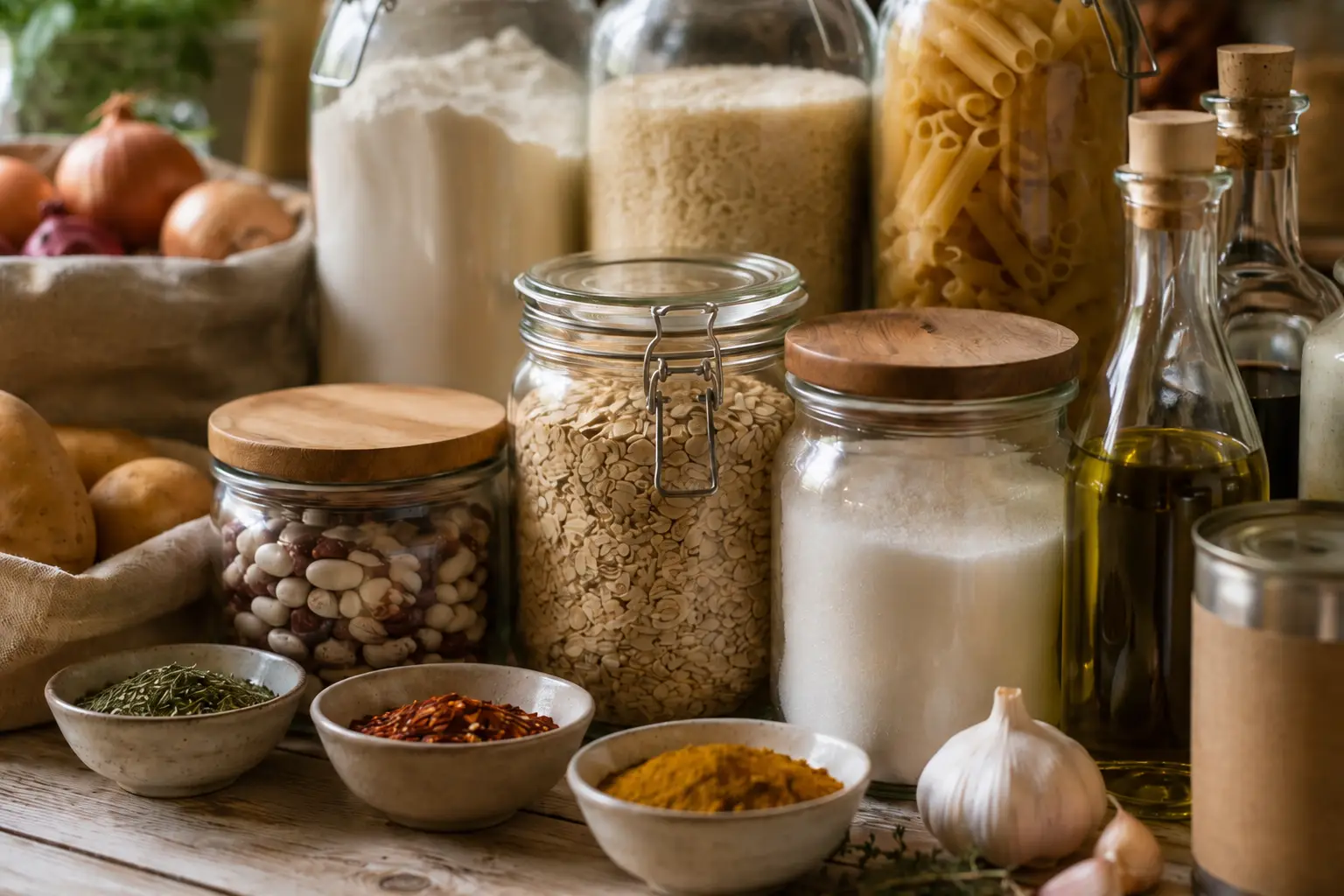
Pantry staples are shelf-stable ingredients that can be stored for weeks or months and used in many different meals. Most do not require refrigeration until they are opened, although storage instructions vary by product.
Common pantry staples include:
- Rice and other grains
- Pasta and noodles
- Canned beans and vegetables
- Baking ingredients
- Cooking oils and vinegars
- Herbs and spices
- Condiments and sauces
- Nuts, seeds, and dried fruit
- Shelf-stable snacks
Keeping these foods available gives you a starting point for breakfast, lunch, dinner, baking, and last-minute meals.
Why Every Home Cook Needs a Well-Stocked Pantry
A stocked pantry can save time, lower your grocery bill, and make meal planning less stressful. It also helps you use fresh foods before they spoil.
For example, leftover vegetables can become soup when you have broth, canned tomatoes, and rice available. A box of pasta can become dinner with olive oil, garlic, Parmesan, and red pepper flakes. Canned beans can turn into tacos, chili, salad, or a quick dip.
Pantry staples also make it easier to:
- Cook when you have not planned dinner
- Stretch meat and fresh produce across more meals
- Prepare food during bad weather or busy weeks
- Replace a missing recipe ingredient
- Make quick meals instead of ordering takeout
- Keep familiar foods available for picky eaters
The goal is not to fill every shelf. It is to keep a practical selection of foods you actually use.
Complete Kitchen Pantry Staples List
Use this list as a starting point, then adjust it for your household, dietary needs, storage space, and budget.
Rice, Grains, and Other Dry Goods
Rice and grains are affordable, filling, and easy to pair with meat, seafood, beans, or vegetables.
- White Rice
White rice cooks quickly and works in burrito bowls, casseroles, fried rice, soups, and side dishes. Long-grain white rice is a good all-purpose choice.
- Brown Rice
Brown rice has a chewy texture and slightly nutty flavor. It takes longer to cook than white rice, but it works well for meal-prep bowls, stuffed peppers, and grain salads.
- Quinoa
Quinoa cooks faster than many whole grains and can be served warm or cold. Use it in salads, bowls, soups, and stuffed vegetables.
- Oats
Old-fashioned rolled oats are useful for oatmeal, overnight oats, granola, muffins, cookies, and fruit crisps. Quick oats are convenient for fast breakfasts, but rolled oats are more flexible for cooking and baking.
- Couscous
Couscous is one of the fastest pantry side dishes. Add hot broth, cover it, and let it sit until tender. Serve it with roasted vegetables, chicken, fish, or chickpeas.
- Breadcrumbs
Keep plain or Italian-style breadcrumbs for meatballs, meatloaf, breaded chicken, casseroles, and vegetable toppings. Panko breadcrumbs are useful when you want a lighter, crispier coating.
- Cornmeal
Cornmeal can be used for cornbread, muffins, breading, pizza crusts, and coating a baking sheet before adding homemade dough.
Pasta and Noodles
Pasta is one of the easiest foods to build into a fast dinner. Keep two or three shapes rather than buying every variety.
Helpful options include:
- Spaghetti or linguine for tomato, meat, and cream sauces
- Penne or rigatoni for baked pasta and thick sauces
- Elbow macaroni for macaroni and cheese or pasta salad
- Egg noodles for soups, stroganoff, and casseroles
- Lasagna noodles for traditional or vegetable lasagna
- Rice noodles for stir-fry, noodle bowls, and soups
Choose gluten-free, chickpea, lentil, or whole-wheat pasta if that better fits your household.
Canned Beans and Legumes
Canned beans are affordable, filling, and ready to use after draining and rinsing. They can add protein and fiber to meals without much preparation.
Useful varieties include:
- Black beans for tacos, burrito bowls, chili, and salsa
- Chickpeas for salads, hummus, soups, and roasted snacks
- Kidney beans for chili and bean salads
- Cannellini beans for pasta, soup, and white bean dip
- Pinto beans for tacos, nachos, and refried beans
- Lentils for soup, curry, salads, and meatless meals
Dried beans are often less expensive per serving, but they require soaking or a longer cooking time. It can be helpful to keep both canned and dried options.
Canned Tomatoes and Vegetables
Canned tomatoes form the base of countless sauces, soups, stews, and casseroles.
Keep a few of these varieties on hand:
- Diced tomatoes
- Crushed tomatoes
- Tomato sauce
- Tomato paste
- Whole peeled tomatoes
- Fire-roasted tomatoes
Tomato paste in a tube is convenient when a recipe only needs one or two tablespoons. If you purchase it in a can, freeze leftover portions for later.
Other useful canned vegetables include: - Corn
- Green beans
- Peas
- Pumpkin puree
- Artichoke hearts
- Green chiles
- Mushrooms
- Beets
Look for no-salt-added or lower-sodium versions when possible. You can always add salt while cooking.
Canned Fish and Meat
Shelf-stable proteins can turn salad, pasta, crackers, or bread into a quick meal.
Consider keeping:
- Tuna
- Salmon
- Sardines
- Canned chicken
- Anchovies
Tuna works well in sandwiches, casseroles, salads, and pasta. Canned salmon can be used for salmon patties or grain bowls. Anchovies melt into sauces and dressings, adding a savory flavor without making the finished dish taste strongly like fish.
Broth and Soup Bases
Broth adds flavor to rice, soup, gravy, sauces, stuffing, and casseroles.
Common choices include:
- Chicken broth
- Beef broth
- Vegetable broth
- Bouillon cubes
- Broth concentrate or paste
Cartons are convenient, while bouillon and concentrates take up less room. Check the sodium level before adding extra salt to your recipe.
Flour and Everyday Baking Staples
Even if you do not bake often, a few basic baking ingredients are useful for thickening sauces, coating meat, making pancakes, and preparing simple desserts.
- All-Purpose Flour
All-purpose flour works for cookies, muffins, cakes, breading, gravy, biscuits, pancakes, and many other recipes.
- Granulated Sugar
White sugar is used in baking, sauces, marinades, drinks, and homemade dressings.
- Brown Sugar
Brown sugar adds moisture and a light molasses flavor to cookies, quick breads, barbecue sauce, and glazes.
- Powdered Sugar
Powdered sugar is mainly used for frosting, glaze, whipped cream, and dusting desserts.
- Baking Powder
Baking powder helps cakes, biscuits, pancakes, muffins, and quick breads rise.
- Baking Soda
Baking soda is used in recipes that contain an acidic ingredient such as buttermilk, yogurt, brown sugar, lemon juice, or natural cocoa powder.
- Cornstarch
Cornstarch thickens sauces, gravy, soup, pie filling, and pudding. It can also help create crisp coatings for chicken, tofu, and vegetables.
- Cocoa Powder
Unsweetened cocoa powder is helpful for brownies, chocolate cake, frosting, cookies, and hot cocoa.
- Vanilla Extract
Vanilla adds flavor to cookies, cakes, muffins, pancakes, oatmeal, frosting, and whipped cream. Pure vanilla extract offers a rich flavor, but imitation vanilla can be a practical lower-cost choice.
- Chocolate Chips
Chocolate chips are useful for cookies, muffins, pancakes, snack mixes, and quick chocolate desserts.
- Yeast
If you make bread, rolls, pizza dough, or cinnamon rolls, keep active dry or instant yeast in your pantry. Store opened yeast in the refrigerator or freezer to help it last longer.
Cooking Oils
Most kitchens only need two or three cooking oils.
- Olive Oil
Olive oil works well in salad dressings, marinades, pasta, dips, and lower-temperature cooking. Extra-virgin olive oil has a stronger flavor that is especially good in uncooked recipes.
- Neutral Cooking Oil
Avocado, canola, vegetable, grapeseed, or sunflower oil can be used for roasting, sautéing, frying, and baking. Choose one based on your budget and cooking preferences.
- Toasted Sesame Oil
Toasted sesame oil adds a deep, nutty flavor to stir-fry, noodles, fried rice, marinades, and dipping sauces. A little goes a long way.
- Vinegars
Vinegar brings acidity to dressings, sauces, soups, marinades, and cooked vegetables. It can make a dish taste brighter when it seems flat.
Good pantry choices include:
- Apple cider vinegar
- White vinegar
- Red wine vinegar
- Balsamic vinegar
- Rice vinegar
You do not need every type. Apple cider vinegar and white vinegar cover many basic cooking and household uses. Add balsamic, red wine, or rice vinegar if you regularly prepare recipes that call for them.
Herbs and Spices
Spices make simple ingredients taste completely different from one meal to the next. A large spice collection is unnecessary if half the jars sit untouched for years.
Start with:
- Kosher salt
- Black pepper
- Garlic powder
- Onion powder
- Paprika
- Smoked paprika
- Ground cumin
- Chili powder
- Cinnamon
- Italian seasoning
- Dried oregano
- Dried basil
- Crushed red pepper flakes
Add these if they match the foods you cook: - Ground ginger
- Turmeric
- Curry powder
- Cayenne pepper
- Ground coriander
- Thyme
- Rosemary
- Dill
- Bay leaves
- Nutmeg
- Pumpkin pie spice
Whole spices tend to retain their flavor longer than ground spices, but ground spices are convenient for everyday cooking. Label refill containers with the purchase date so you know how old they are.
Condiments and Sauces
A few sauces can turn plain rice, noodles, meat, or vegetables into a complete meal.
Useful options include:
- Soy sauce or tamari
- Worcestershire sauce
- Hot sauce
- Ketchup
- Mustard
- Mayonnaise
- Barbecue sauce
- Salsa
- Honey
- Maple syrup
- Peanut butter
- Tahini
- Pasta sauce
- Coconut milk
- Curry paste
Some of these items must be refrigerated after opening. Always follow the storage directions on the package.
Garlic, Onions, and Potatoes
These fresh ingredients are often treated like pantry staples because they keep longer than many other types of produce.
- Garlic
Garlic adds flavor to pasta, soup, roasted vegetables, meat, sauces, and dressings. Store whole bulbs in a cool, dry place with good air circulation.
- Onions
Yellow onions are the most flexible choice for everyday cooking. Red onions work well in salads, salsa, sandwiches, and pickled recipes. Store onions away from potatoes.
- Potatoes
Potatoes can become baked potatoes, soup, fries, hash, mashed potatoes, or a simple side dish. Keep them in a cool, dark, ventilated place and discard potatoes that are green or badly sprouted.
Nuts, Seeds, and Dried Fruit
Nuts, seeds, and dried fruit add texture and flavor to oatmeal, salads, baked goods, snack mixes, and grain bowls.
Consider keeping:
- Almonds
- Walnuts
- Pecans
- Peanuts
- Pumpkin seeds
- Sunflower seeds
- Chia seeds
- Ground flaxseed
- Raisins
- Dried cranberries
- Dates
Because nuts and seeds contain natural oils, they can become rancid. Refrigerate or freeze them if your kitchen is warm or you do not use them often.
Shelf-Stable Snacks
A pantry should include a few easy foods for busy days, packed lunches, and after-school snacks.
Possible choices include:
- Crackers
- Popcorn kernels
- Pretzels
- Granola bars
- Applesauce
- Fruit cups
- Nut or seed butter
- Rice cakes
- Trail mix
- Shelf-stable pudding
- Cereal
Choose snacks your household already enjoys so they do not sit unused.
Basic Refrigerator and Freezer Staples
These foods are not stored in the pantry, but they work with pantry ingredients to make fast meals.
Refrigerator Basics
- Eggs
- Butter
- Milk or nondairy milk
- Plain Greek yogurt
- Cheese
- Parmesan
- Lemons
- Carrots
- Celery
- Tortillas
Freezer Basics
- Frozen vegetables
- Frozen fruit
- Bread
- Ground beef or turkey
- Chicken
- Fish
- Cooked rice
- Shredded cheese
- Homemade broth
- Extra tomato paste
- Butter
With pasta, canned tomatoes, frozen vegetables, and Parmesan, dinner is already within reach. Eggs, rice, and frozen vegetables can become fried rice. Tortillas, beans, cheese, and salsa can become quesadillas or tacos.
Best Pantry Staples for Quick Meals
If your main goal is making easy dinners, begin with ingredients that can be combined in several ways.
A useful starter collection includes:
- Pasta
- Rice
- Canned tomatoes
- Canned black beans
- Canned chickpeas
- Tuna
- Chicken or vegetable broth
- Olive oil
- All-purpose flour
- Breadcrumbs
- Garlic
- Onions
- Potatoes
- Soy sauce
- Pasta sauce
- Taco seasoning
- Italian seasoning
- Salt and pepper
- Frozen vegetables
- Eggs
- Cheese
These basics can make dozens of meals without taking up your entire kitchen.
Easy Meals You Can Make from Pantry Staples
- Tomato Pasta
Cook pasta and toss it with canned tomatoes, garlic, olive oil, Italian seasoning, salt, and pepper. Add red pepper flakes or Parmesan if you have them.
- Black Bean Tacos
Warm black beans with cumin, garlic powder, chili powder, and salsa. Spoon the beans into tortillas and add cheese or any fresh toppings you have.
- Chickpea Curry
Simmer chickpeas with coconut milk, curry powder or curry paste, canned tomatoes, and frozen vegetables. Serve over rice.
- Tuna Pasta
Mix cooked pasta with tuna, olive oil, lemon juice, black pepper, and Parmesan. Add peas or spinach if available.
- Simple Vegetable Soup
Combine broth, canned tomatoes, beans, pasta or rice, frozen vegetables, and dried herbs. Simmer until everything is tender.
- Fried Rice
Cook cold rice with frozen vegetables, eggs, soy sauce, and a small amount of sesame oil.
- Baked Potatoes
Bake potatoes and top them with beans, cheese, broccoli, chili, salsa, or leftover meat.
- Pantry Chili
Simmer beans, canned tomatoes, tomato sauce, chili powder, cumin, garlic powder, and onion powder. Add ground meat if desired.
- Peanut Noodles
Whisk peanut butter with soy sauce, warm water, vinegar, honey, and garlic powder. Toss with cooked noodles and add vegetables.
- Homemade Pancakes
Combine flour, baking powder, sugar, salt, milk, eggs, and melted butter or oil for an easy breakfast or breakfast-for-dinner meal.
How to Build a Pantry on a Budget
A useful pantry does not need to be expensive. Begin with a short list and add items over several grocery trips.
- Shop Your Kitchen First
Check every shelf, cabinet, freezer drawer, and spice jar before shopping. You may already have more ingredients than you think.
- Buy Store Brands
Store-brand flour, sugar, rice, pasta, canned beans, and canned vegetables often work just as well as higher-priced versions.
- Focus on Multipurpose Ingredients
Choose foods that work in several recipes. Rice, canned tomatoes, beans, oats, flour, olive oil, and broth are good places to start.
- Compare Unit Prices
The largest package is not always the best deal, especially if part of it will spoil before you use it. Compare the price per ounce or pound.
- Stock Up During Sales
Buy extra pasta, canned tomatoes, beans, broth, and baking supplies when prices are low, but only if you have room and will use them before their best-by dates.
- Skip Ingredients You Rarely Use
A pantry list should fit your cooking style. If your family never eats lentils, sardines, or quinoa, leave them off your list.
How to Organize Pantry Staples
Organizing ingredients makes it easier to see what you have and prevents duplicate purchases.
Group similar foods together:
- Baking supplies
- Pasta, rice, and grains
- Canned beans and vegetables
- Breakfast foods
- Snacks
- Oils and vinegars
- Sauces and condiments
- Herbs and spices
Place foods you use most often at eye level. Keep heavier items on lower shelves and lighter packages above them.
Clear containers can be helpful, but they are not required. If you transfer food from its original package, add a label with the ingredient name, expiration date, and cooking instructions.
How Long Do Pantry Staples Last?
Shelf life depends on the food, packaging, temperature, moisture, and whether the package has been opened.
As a general guide:
- White rice lasts longer than brown rice
- Dry pasta can last one to two years when stored properly
- Canned foods often remain usable past the printed date if the cans are undamaged and stored correctly
- Flour stays fresher when kept in an airtight container
- Whole-wheat flour spoils faster than all-purpose flour
- Ground spices gradually lose their flavor
- Oils can turn rancid after exposure to heat, air, and light
- Nuts last longer in the refrigerator or freezer
A best-by date usually refers to quality, not an automatic safety deadline. Always check for unusual odors, discoloration, mold, insects, leaking cans, bulging lids, or damaged packaging.
Pantry Storage Tips
Keep dry goods in a cool, dark, and dry area. Heat and moisture can shorten their shelf life.
For better storage:
- Close bags tightly after each use
- Use airtight containers for flour, sugar, grains, and opened packages
- Keep oils away from the stove and direct sunlight
- Store new groceries behind older products
- Write the opening date on sauces and baking supplies
- Check your pantry once a month
- Clean spills quickly to avoid pantry pests
- Do not keep food in swollen, leaking, or badly dented cans
The “first in, first out” method is simple. Use the oldest package first and place newer purchases behind it.
Printable Kitchen Pantry Staples Checklist
Use this basic checklist during your next grocery trip.
Grains and Pasta
- White rice
- Brown rice
- Quinoa
- Oats
- Couscous
- Pasta
- Egg or rice noodles
- Breadcrumbs
- Cornmeal
Canned and Jarred Foods
- Diced tomatoes
- Crushed tomatoes
- Tomato sauce
- Tomato paste
- Black beans
- Chickpeas
- Kidney beans
- Cannellini beans
- Corn
- Green beans
- Pumpkin puree
- Tuna or salmon
- Pasta sauce
- Salsa
- Coconut milk
Baking Ingredients
- All-purpose flour
- Granulated sugar
- Brown sugar
- Powdered sugar
- Baking powder
- Baking soda
- Cornstarch
- Cocoa powder
- Vanilla extract
- Chocolate chips
- Yeast
Oils and Vinegars
- Olive oil
- Neutral cooking oil
- Sesame oil
- Apple cider vinegar
- White vinegar
- Balsamic or red wine vinegar
- Rice vinegar
Herbs and Spices
- Salt
- Black pepper
- Garlic powder
- Onion powder
- Paprika
- Cumin
- Chili powder
- Cinnamon
- Italian seasoning
- Oregano
- Crushed red pepper flakes
- Bay leaves
Sauces and Condiments
- Soy sauce
- Worcestershire sauce
- Hot sauce
- Mustard
- Ketchup
- Mayonnaise
- Barbecue sauce
- Honey
- Maple syrup
- Peanut butter
Produce and Other Basics
- Garlic
- Onions
- Potatoes
- Nuts
- Seeds
- Dried fruit
- Crackers
- Popcorn
More Cooking Guides to Try
Once your pantry is stocked, these helpful kitchen guides can make everyday cooking easier:
- Baking Measurement Conversion Chart
- Oven Temperature Conversion Chart
- Every Type of Flour Explained
- All the Ways to Cook Eggs
- Every Way to Thicken a Sauce
- Buttermilk Substitute Guide
- Weekly Dinner Planning Template
- First Kitchen Essentials for Beginner Cooks
Before You GO
The best kitchen pantry staples list is one built around the way you actually cook. Begin with basic grains, canned foods, baking supplies, oils, seasonings, and sauces, then adjust the list as you learn which ingredients your household uses most.
A practical pantry gives you more meal choices without requiring a packed refrigerator or a last-minute grocery trip. Keep it organized, rotate older foods forward, and restock the ingredients that repeatedly earn their place on your shelves.