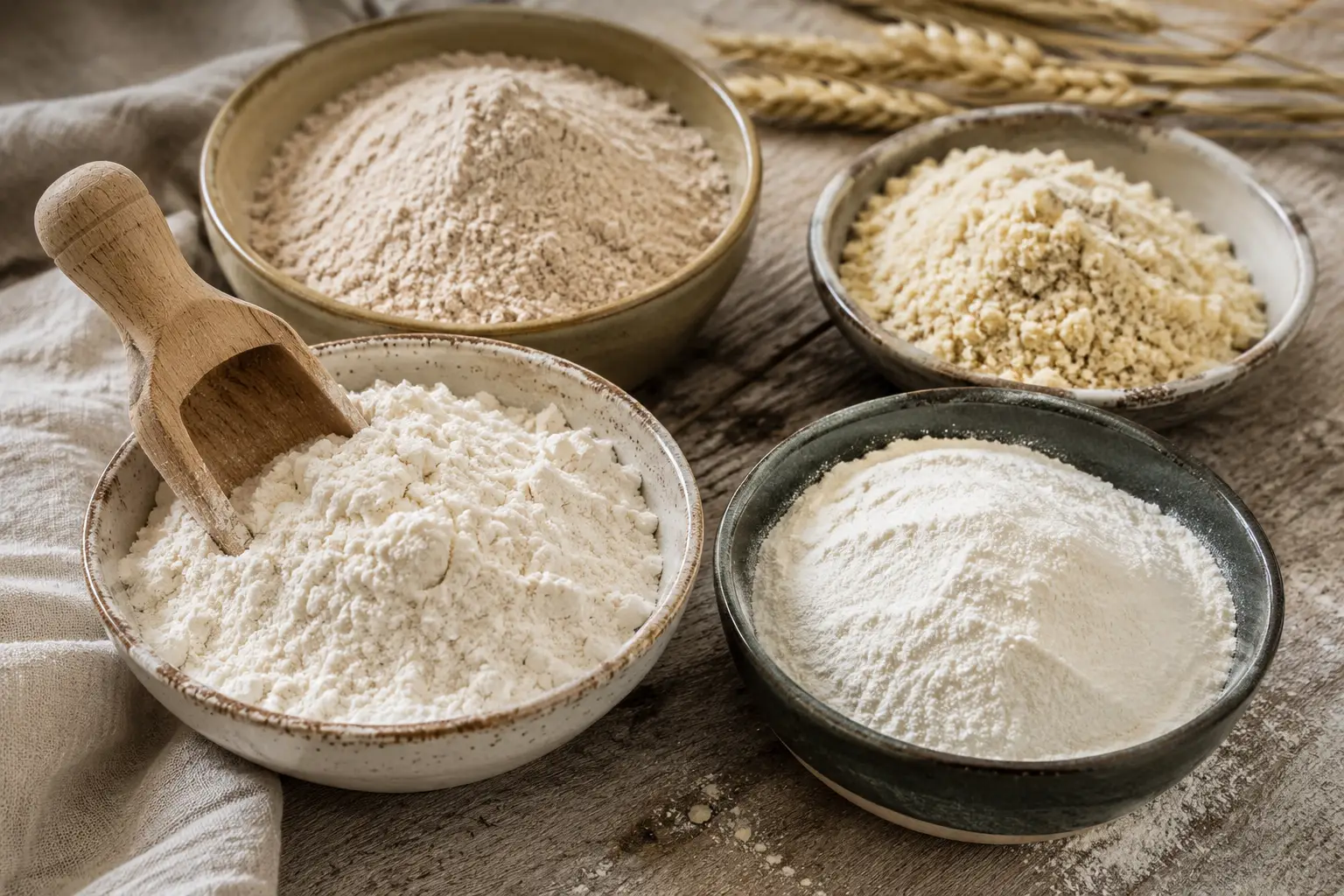
Walk into the baking aisle and you will find shelves packed with flour. All-purpose flour, bread flour, cake flour, pastry flour, whole wheat flour, almond flour, oat flour, and more.
They may look similar in the bag, but each one behaves differently once it is mixed with liquid and baked.
Choosing the right flour can be the difference between a tall loaf of bread, a tender cake, a chewy cookie, or a batch of muffins that feels heavy and dry. The good news is that you do not need to keep every flour in your pantry. Once you understand how each type works, it becomes much easier to choose the best flour for your recipe.
This guide covers the most common types of flour used in baking, how much protein they contain, what they taste like, and when you should use each one.
What Makes One Flour Different From Another?
Most traditional baking flours are made by grinding wheat berries. A wheat berry has three main parts:
- The bran is the protective outer layer. It contains fiber, minerals, and B vitamins.
- The germ is the part that can grow into a new plant. It contains fats, vitamins, and a slightly nutty flavor.
- The endosperm is the starchy center. It contains carbohydrates and protein.
White flour is made mostly from the endosperm. Whole wheat flour includes the bran, germ, and endosperm.
The type of wheat used and how the grain is milled determine the flour’s texture, flavor, color, and protein content.
Why Protein Content Matters in Flour
Protein content tells you how much gluten a wheat flour can form. When flour is mixed with water, two proteins called glutenin and gliadin connect and form gluten.
Gluten gives baked goods structure. It helps bread hold the gas produced by yeast, gives pizza dough its chew, and keeps cakes from collapsing.
Higher-protein flour forms more gluten. Lower-protein flour forms less gluten.
Here is a quick way to think about it:
- Low-protein flour produces soft, tender baked goods.
- Medium-protein flour works well in everyday baking.
- High-protein flour creates stronger, chewier dough.
Protein percentages vary slightly by brand, wheat crop, and region, so check the package when an exact percentage matters.
Flour Protein Comparison Chart
| Type of flour | Approximate protein content | Best used for |
|---|---|---|
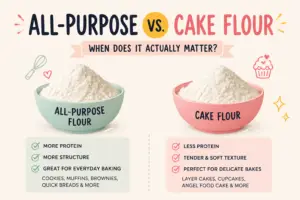
| Cake flour | 7% to 9% | Cakes, cupcakes, soft cookies |
| Pastry flour | 8% to 10% | Pie crust, biscuits, scones |
| All-purpose flour | 10% to 12% | Cookies, muffins, cakes, quick breads |
| Whole wheat pastry flour | 8% to 10% | Muffins, pancakes, tender whole-grain baking |
| Bread flour | 12% to 14% | Yeast bread, pizza dough, bagels |
| Whole wheat flour | 13% to 15% | Whole-grain bread, muffins, hearty cookies |
| High-gluten flour | 13% to 15% or more | Bagels, pretzels, sturdy pizza crust |
| Rye flour | Varies | Rye bread, crackers, sourdough |
| Semolina flour | About 12% to 15% | Pasta, bread, pizza dough |
All-Purpose Flour
All-purpose flour is the most flexible flour to keep in your kitchen. It has a moderate protein level, so it can produce enough gluten for cookies and bread while remaining soft enough for cakes, muffins, and biscuits.
Best uses for all-purpose flour
Use all-purpose flour for:
- Chocolate chip cookies
- Brownies
- Muffins
- Quick breads
- Pancakes and waffles
- Pie crust
- Biscuits
- Cakes
- Dinner rolls
- Thickening sauces and gravies
All-purpose flour may be bleached or unbleached. Either one will work in most home baking recipes.
Bleached vs. unbleached all-purpose flour
Bleached flour is treated to speed up the aging process. It is whiter, softer, and sometimes produces a slightly finer crumb.
Unbleached flour ages naturally after milling. It has an off-white color and a slightly firmer texture.
The difference is usually small in cookies, brownies, muffins, and quick breads. For delicate cakes, bleached flour can sometimes create a softer result. If a recipe names one type, use that type when possible.
Bread Flour
Bread flour is made from hard wheat and contains more protein than all-purpose flour. That extra protein allows it to create a stronger gluten network.
A strong gluten network helps dough stretch without tearing and traps the carbon dioxide produced by yeast. This gives bread a higher rise and chewier texture.
Best uses for bread flour
Bread flour is a good choice for:
- Sandwich bread
- Artisan bread
- Sourdough
- Pizza dough
- Cinnamon rolls
- Soft pretzels
- Yeast rolls
- Focaccia
- Chewy cookies
Bread flour can make cookies thicker and chewier, but it may make cakes, muffins, or biscuits too firm.
Can you substitute all-purpose flour for bread flour?
Yes, in many recipes. Replace bread flour with the same amount of all-purpose flour by weight.
The finished bread may be slightly softer, shorter, and less chewy. You may also need a little less liquid because all-purpose flour does not always absorb as much water as bread flour.
Cake Flour
Cake flour has the lowest protein content among common wheat flours. It is milled very finely and is often bleached, which changes how the starch and protein behave during baking.
Cake flour absorbs liquid and sugar well while forming less gluten. This helps produce cakes with a soft crumb, light texture, and fine structure.
Best uses for cake flour
Use cake flour for:
- Angel food cake
- Chiffon cake
- Sponge cake
- White cake
- Vanilla layer cake
- Cupcakes
- Tender sheet cakes
- Soft sugar cookies
Cake flour is not a good choice for yeast bread or recipes that need a sturdy, chewy structure.
How to make a cake flour substitute
For every cup of cake flour called for:
- Measure 1 cup of all-purpose flour.
- Remove 2 tablespoons of the flour.
- Add 2 tablespoons of cornstarch.
- Whisk well and sift the mixture.
This substitute can work in a pinch, although store-bought cake flour usually produces a finer and more consistent crumb.
Pastry Flour
Pastry flour sits between cake flour and all-purpose flour in protein content. It forms enough gluten to hold a baked good together but not so much that the finished texture becomes tough.
It is especially useful in recipes where you want a tender texture with enough strength to hold its shape.
Best uses for pastry flour
Use pastry flour for:
- Pie crust
- Biscuits
- Scones
- Tart shells
- Shortbread
- Muffins
- Soft cookies
- Danish pastry
Pastry flour is not always stocked in smaller grocery stores, but it is often available in baking shops or online.
How to make a pastry flour substitute
Combine:
- 1/2 cup all-purpose flour
- 1/2 cup cake flour
Use this mixture as a one-to-one replacement by volume for pastry flour.
Self-Rising Flour
Self-rising flour is a mixture of flour, baking powder, and salt. It is commonly used in Southern baking and British recipes.
Because the leavening and salt are already added, self-rising flour should not be swapped directly with all-purpose flour unless you also adjust the remaining ingredients.
Best uses for self-rising flour
Use it for:
- Biscuits
- Scones
- Pancakes
- Cobblers
- Simple cakes
- Quick breads
Self-rising flour is not usually used for yeast bread.
How to make self-rising flour
For every cup needed, combine:
- 1 cup all-purpose flour
- 1 1/2 teaspoons baking powder
- 1/4 teaspoon fine salt
Whisk the ingredients thoroughly before adding them to the recipe.
Different brands use different protein levels and leavening ratios, so homemade self-rising flour may not behave exactly like a packaged version.
Whole Wheat Flour
Whole wheat flour contains all three parts of the wheat berry. It has more fiber, a darker color, and a stronger wheat flavor than white flour.
Although whole wheat flour often contains plenty of protein, the bran can cut through forming gluten strands. This can cause bread to rise less and feel denser than bread made with white flour.
Whole wheat flour also absorbs more liquid. A dough made with it may look dry at first and then soften as it rests.
Best uses for whole wheat flour
Use whole wheat flour for:
- Whole wheat bread
- Sandwich bread
- Dinner rolls
- Muffins
- Banana bread
- Pancakes
- Crackers
- Hearty cookies
For a lighter result, replace only 25% to 50% of the all-purpose flour with whole wheat flour. This adds whole-grain flavor without making the baked good too heavy.
White whole wheat flour
White whole wheat flour is made from hard white wheat rather than hard red wheat. It is still a true whole-grain flour, but it has a paler color and milder taste.
It works well for people who want whole-grain nutrition without the stronger flavor of regular whole wheat flour.
Use it in muffins, pancakes, sandwich bread, pizza dough, and cookies.
Whole Wheat Pastry Flour
Whole wheat pastry flour is made from soft wheat. It contains the entire grain but has less protein than standard whole wheat flour.
It creates softer baked goods while adding a mild whole-grain flavor.
Best uses for whole wheat pastry flour
Use it for:
- Muffins
- Pancakes
- Waffles
- Scones
- Pie crust
- Cookies
- Quick breads
It is not the best choice for tall yeast bread because it does not create the same strong structure as whole wheat bread flour.
High-Gluten Flour
High-gluten flour contains even more protein than most bread flour. It creates strong, elastic dough and a dense, chewy bite.
This flour is more common in restaurant kitchens and commercial bakeries, but home bakers can purchase it online or from restaurant supply stores.
Best uses for high-gluten flour
Use it for:
- Bagels
- New York-style pizza crust
- Soft pretzels
- Hard rolls
- Dense artisan bread
It is usually too strong for cakes, muffins, pie crust, or tender cookies.
00 Flour
Italian 00 flour gets its name from the fineness of the milling, not its protein level. The double-zero label means the flour is very finely ground.
Protein content varies by brand. Some 00 flours are made for pasta, while others are designed for pizza.
Pizza-style 00 flour produces smooth, stretchy dough that bakes well at very high temperatures. It can create a thin crust with a tender center and blistered edges.
Best uses for 00 flour
Use it for:
- Neapolitan-style pizza
- Fresh pasta
- Flatbreads
- Certain Italian breads
Check the package before buying. A 00 flour intended for pasta may behave differently from one made for pizza.
Semolina Flour
Semolina is made from durum wheat, a hard wheat with a golden color. It has a slightly coarse texture and a mild, earthy flavor.
It contains plenty of protein, but its gluten behaves differently from the gluten in traditional bread flour.
Best uses for semolina flour
Use it for:
- Homemade pasta
- Semolina bread
- Pizza dough
- Flatbread
- Dusting pizza peels
- Some cakes and puddings
Finely ground durum flour is usually better for soft pasta dough. Coarser semolina adds texture and is often used to keep pizza dough from sticking.
Rye Flour
Rye flour is made from rye grain rather than wheat. It has an earthy, slightly tangy flavor and is commonly used in European-style bread.
Rye contains gluten-forming proteins, but it cannot build the same strong network as wheat flour. Bread made with a large amount of rye tends to be denser.
Types of rye flour
- Light rye contains less bran and germ and has the mildest flavor.
- Medium rye has more of the grain and a darker color.
- Dark rye has a stronger flavor, although labeling varies by brand.
- Whole rye or pumpernickel flour contains the whole rye kernel and may be coarsely ground.
Best uses for rye flour
Use rye flour for:
- Rye bread
- Sourdough
- Pumpernickel bread
- Crackers
- Cookies
- Brownies
- Gingerbread
Replacing 10% to 25% of the wheat flour with rye can add flavor without making the baked good overly dense.
Spelt Flour
Spelt is an older variety of wheat with a mild, nutty, slightly sweet flavor. It contains gluten, so it is not safe for anyone with celiac disease or a wheat allergy.
The gluten in spelt is more fragile than the gluten in standard wheat flour. Spelt dough can become loose or weak if it is mixed too long.
Best uses for spelt flour
Use it for:
- Muffins
- Quick breads
- Pancakes
- Cookies
- Crackers
- Rustic bread
Start by replacing 25% to 50% of the all-purpose flour with spelt flour. Spelt often absorbs liquid differently, so check the dough or batter before adding all the liquid.
Einkorn Flour
Einkorn is an ancient type of wheat. It has a golden color and a rich, slightly nutty taste.
It contains gluten and should not be treated as a gluten-free flour. Its gluten structure is weaker than that of modern bread wheat, which can make einkorn dough sticky and harder to shape.
Best uses for einkorn flour
Use it for:
- Pancakes
- Muffins
- Cookies
- Quick breads
- Rustic loaves
- Pie crust
Einkorn recipes often need less liquid and gentler mixing. For the most reliable result, use a recipe written specifically for einkorn flour.
Buckwheat Flour
Despite its name, buckwheat is not related to wheat. It is naturally gluten-free and has a dark color with an earthy, slightly bitter flavor.
Buckwheat flour is often blended with a milder flour because its flavor can become strong when used alone.
Best uses for buckwheat flour
Use it for:
- Pancakes
- Crêpes
- Waffles
- Quick breads
- Cookies
- Soba-style noodles
- Rustic cakes
When baking gluten-free food for someone with celiac disease, choose buckwheat flour that is labeled certified gluten-free.
Almond Flour
Almond flour is made from finely ground blanched almonds. It contains fat and protein but does not contain gluten.
Because almond flour is high in fat, it produces moist, tender baked goods. It cannot be exchanged cup for cup with wheat flour in every recipe. It absorbs liquid differently and cannot create the same structure.
Almond flour vs. almond meal
Almond flour is usually made from blanched almonds with the skins removed. It has a finer texture and lighter color.
Almond meal may include the skins and is often more coarsely ground. It works well in rustic cookies, crumb toppings, and crusts but can make delicate cakes feel grainy.
Best uses for almond flour
Use almond flour for:
- Macarons
- Financiers
- Cookies
- Brownies
- Cakes
- Muffins
- Tart crusts
- Gluten-free quick breads
For dependable results, choose a recipe developed for almond flour instead of making a direct substitution.
Coconut Flour
Coconut flour is made from dried coconut meat after much of the fat has been removed. It is naturally gluten-free and extremely absorbent.
A small amount can soak up a surprising amount of liquid. Recipes made with coconut flour often contain several eggs to provide moisture and structure.
Best uses for coconut flour
Use it for:
- Pancakes
- Muffins
- Snack cakes
- Cookies
- Grain-free quick breads
Do not replace wheat flour with an equal amount of coconut flour. In many recipes, only 1/4 to 1/3 cup of coconut flour is needed for every cup of wheat flour, but there is no dependable formula for every baked good.
Use recipes created and tested for coconut flour.
Oat Flour
Oat flour is made from finely ground oats. It has a mild flavor and can help baked goods stay soft and moist.
Oats do not form gluten, so oat flour usually needs eggs, starch, xanthan gum, or another flour to help provide structure.
Best uses for oat flour
Use it for:
- Pancakes
- Muffins
- Cookies
- Banana bread
- Snack cakes
- Crumble toppings
You can make oat flour at home by blending rolled oats in a high-powered blender or food processor until powdery. Homemade oat flour may be coarser than packaged flour.
Use certified gluten-free oat flour when preparing food for someone who must avoid gluten.
Rice Flour
Rice flour may be made from white rice or brown rice. It is naturally gluten-free and commonly used as part of a gluten-free flour blend.
White rice flour has a mild taste, while brown rice flour has more flavor and a slightly heavier texture. Rice flour can feel gritty if the grind is coarse or if the batter is not given time to hydrate.
Best uses for rice flour
Use it for:
- Gluten-free flour blends
- Cookies
- Cakes
- Pancakes
- Tempura batter
- Shortbread
- Rice noodles
Rice flour often works better when combined with starches such as tapioca starch, cornstarch, or potato starch.
Corn Flour and Cornmeal
Corn flour is finely ground whole corn. Cornmeal has a coarser texture. Both are naturally gluten-free when processed in a gluten-free facility.
Do not confuse corn flour with cornstarch. In the United States, cornstarch is the fine white starch taken from corn. In the United Kingdom, “cornflour” often means cornstarch.
Best uses for corn flour and cornmeal
Use them for:
- Cornbread
- Muffins
- Pancakes
- Tortillas
- Cookies
- Crusts and coatings
- Dusting baking surfaces
Cornmeal adds a more noticeable texture, while finely ground corn flour blends more smoothly into batter.
Chickpea Flour
Chickpea flour is made from ground dried chickpeas. It is naturally gluten-free and has a noticeable earthy flavor.
It is high in protein and absorbs a fair amount of liquid. The raw batter can taste bitter, but that flavor softens as it cooks.
Best uses for chickpea flour
Use it for:
- Flatbreads
- Savory pancakes
- Crackers
- Pizza crust
- Fritters
- Savory muffins
Chickpea flour is better suited to savory baking than delicate vanilla cakes.
Cassava Flour
Cassava flour is made from the whole cassava root. It is naturally gluten-free and has a mild flavor.
It is often marketed as a one-to-one wheat flour replacement, but results vary. It may absorb more liquid than all-purpose flour and can create a gummy texture if too much is used.
Best uses for cassava flour
Use it for:
- Tortillas
- Flatbreads
- Cookies
- Brownies
- Pancakes
- Grain-free baking
For cakes and yeast-free breads, use a recipe tested specifically with cassava flour.
Gluten-Free All-Purpose Flour Blends
Gluten-free all-purpose flour is usually a mixture of rice flour, starches, and sometimes sorghum flour or another whole-grain flour.
Some blends contain xanthan gum, while others do not. Xanthan gum helps replace some of the binding and elasticity that gluten normally provides.
Best uses for gluten-free flour blends
Depending on the brand, use them for:
- Cookies
- Brownies
- Cakes
- Muffins
- Quick breads
- Pancakes
- Pie crust
A gluten-free blend labeled “measure for measure” or “one to one” is designed to replace all-purpose flour in many recipes. It does not always work well in yeast bread, which may need a blend made specifically for bread.
Check whether the blend already contains xanthan gum before adding more.
Flour vs. Starch
Flours are ground from grains, nuts, seeds, legumes, or roots. Starches are extracted from plants and contain little protein or fiber.
Common baking starches include:
- Cornstarch
- Tapioca starch
- Potato starch
- Arrowroot starch
Starches can soften cakes, thicken fillings, and improve the texture of gluten-free baked goods. They generally cannot replace flour by themselves because they do not provide enough structure.
Potato starch and potato flour are also different products. Potato starch is a light white powder. Potato flour is made from whole dried potatoes and has a stronger potato flavor.
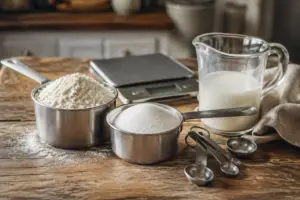
How to Measure Flour Correctly
Using the right flour will not help if too much ends up in the bowl. Flour packs easily, which is why measuring directly from the bag with a cup can lead to dry cookies, dense muffins, and crumbly cake.
A kitchen scale provides the most consistent measurement.
One cup of all-purpose flour usually weighs about 120 to 125 grams, depending on the brand and recipe source.
If you are using measuring cups:
- Stir the flour to loosen it.
- Spoon it lightly into the measuring cup.
- Do not press it down.
- Level the top with a straight edge.
Do not scoop the flour directly from the bag unless the recipe writer specifically uses that method.
Can You Substitute One Flour for Another?
Some flour substitutions work well, while others change the recipe too much.
Substitutions that often work
- All-purpose flour for bread flour: The result will usually be softer and less chewy.
- Bread flour for all-purpose flour: The result may be chewier and may need a little more liquid.
- White whole wheat flour for regular whole wheat flour: Usually an easy one-to-one swap.
- All-purpose flour for part of the whole wheat flour: This creates a lighter texture.
- Homemade cake flour substitute for cake flour: Works for many home baking recipes.
Substitutions that need a tested recipe
- Almond flour for wheat flour
- Coconut flour for wheat flour
- Gluten-free flour for bread flour
- Oat flour for all-purpose flour
- Cassava flour for all-purpose flour
- Rice flour used alone in place of wheat flour
These flours handle fat, liquid, eggs, and leavening differently. A recipe developed for the flour you want to use will give you a much better chance of success.
How to Store Flour
Flour can lose freshness or develop an unpleasant taste, especially when it contains the bran, germ, or natural oils from nuts and seeds.
White flour
Store all-purpose, bread, cake, and pastry flour in an airtight container in a cool, dry pantry. For longer storage, keep it in the refrigerator or freezer.
Whole-grain flour
Whole wheat, rye, spelt, and other whole-grain flours contain natural oils that can become rancid. Store them in an airtight container in the refrigerator or freezer.
Nut and seed flour
Almond flour and other nut-based flours should be refrigerated or frozen, especially after opening.
Gluten-free flour
Store gluten-free flour in an airtight container away from heat and moisture. If several people use your kitchen, label the container clearly to lower the chance of cross-contact.
Bring refrigerated or frozen flour to room temperature before using it in yeast dough. Cold flour can slow fermentation.
How to Tell if Flour Has Gone Bad
Fresh flour should smell mild and clean. Whole-grain and nut flours may have a light, pleasant nutty scent.
Throw the flour away if it:
- Smells sour, musty, waxy, or like old cooking oil
- Shows signs of insects
- Contains moisture or mold
- Has unusual clumps that do not break apart
- Tastes bitter or stale
Do not taste raw flour to test its freshness. Raw flour may contain harmful bacteria and should be cooked before eating.
Which Flour Should You Keep in Your Pantry?
Most home bakers do not need every flour listed in this guide.
For everyday baking, start with:
- All-purpose flour for cookies, muffins, brownies, cakes, and quick breads
- Bread flour if you regularly make pizza or yeast bread
- Cake flour if you often bake soft layer cakes or cupcakes
- Whole wheat flour for whole-grain bread and hearty baked goods
- A one-to-one gluten-free blend if you regularly make gluten-free recipes
Buy specialty flour when you have a specific recipe planned. This keeps rarely used flour from sitting in the pantry until it loses freshness.
The Bottom Line
The best flour depends on the texture you want.
Choose cake flour for a soft, fine crumb. Use pastry flour for tender pie crust and biscuits. Reach for all-purpose flour when you need a dependable option for everyday baking. Pick bread flour when you want height, strength, and chew.
Whole-grain and alternative flours bring their own flavors and textures, but they do not always work as direct replacements for wheat flour. When using almond, coconut, oat, cassava, or gluten-free flour, a recipe written for that flour is usually the safest choice.
Once you match the flour to the baked good, many common baking problems become much easier to prevent.