You are halfway through measuring ingredients when the recipe calls for buttermilk. There is none in the refrigerator, and buying a full carton for one batch of pancakes feels wasteful.
The good news is that you can make a buttermilk substitute in minutes using common ingredients. Milk and lemon juice is the best-known option, but it is not your only choice. Plain yogurt, sour cream, kefir, and even dairy-free milk can work in many baking recipes.
Below, I am sharing five easy buttermilk substitutes, the exact measurements for each one, and tips for choosing the right option for your recipe.
What Is the Best Substitute for Buttermilk?
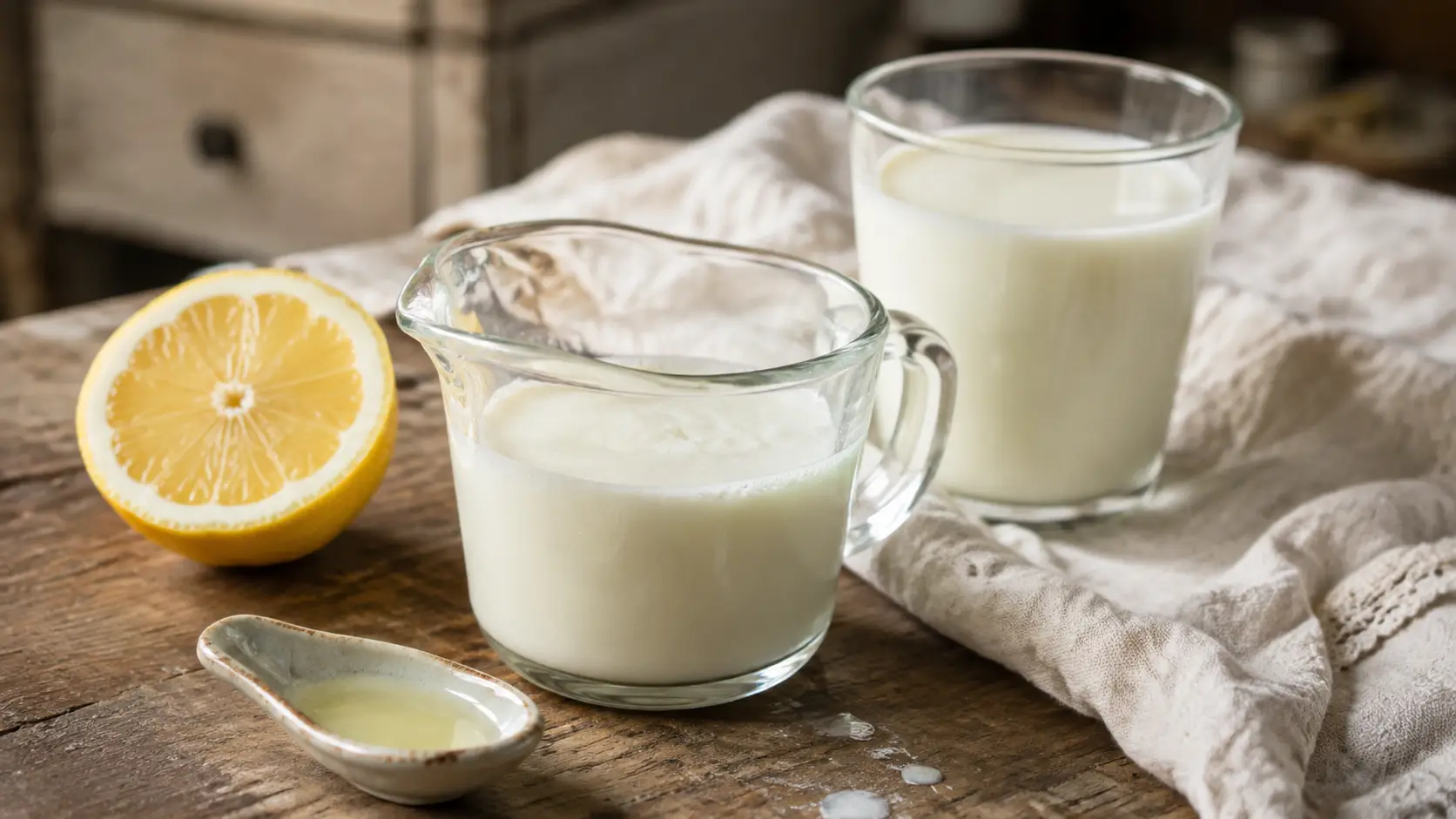
The easiest substitute for 1 cup of buttermilk is:
- 1 tablespoon lemon juice or white vinegar
- Enough milk to equal 1 cup
Stir the two ingredients together and let the mixture sit for 5 to 10 minutes. It may look slightly curdled when it is ready. Use the full mixture in place of 1 cup of buttermilk.
This homemade version does not have the same thickness or cultured flavor as real buttermilk, but it gives baked goods the acidity they need to rise and develop a tender texture.
Quick Buttermilk Substitute Chart
| If the recipe calls for | Lemon juice or vinegar | Milk |
|---|---|---|
| ¼ cup buttermilk | ¾ teaspoon | Enough to equal ¼ cup |
| ⅓ cup buttermilk | 1 teaspoon | Enough to equal ⅓ cup |
| ½ cup buttermilk | 1½ teaspoons | Enough to equal ½ cup |
| ¾ cup buttermilk | 2¼ teaspoons | Enough to equal ¾ cup |
| 1 cup buttermilk | 1 tablespoon | Enough to equal 1 cup |
| 2 cups buttermilk | 2 tablespoons | Enough to equal 2 cups |
What Is Buttermilk?
Traditional buttermilk was the liquid left behind after cream was churned into butter. Most buttermilk sold in grocery stores today is cultured buttermilk. It is made by adding live cultures to milk, which gives it a thicker texture and tangy flavor.
Buttermilk is more acidic than regular milk. That acidity matters in recipes containing baking soda because the two ingredients react and produce carbon dioxide. Those tiny bubbles help pancakes, biscuits, cakes, and muffins rise.
Buttermilk also adds moisture and helps soften gluten. That is one reason buttermilk biscuits and pancakes can feel especially tender.
What Does Buttermilk Do in Baking?
Buttermilk is not included only for flavor. It serves several purposes in a recipe.
- It reacts with baking soda
Baking soda needs an acidic ingredient to work properly. Buttermilk provides that acid and helps create the gas that lifts the batter or dough.
- It creates a softer texture
The acidity in buttermilk helps limit some gluten development. The result can be softer cakes, tender muffins, and flaky biscuits.
- It adds moisture
Buttermilk gives batters moisture without making them feel as thin as they might with regular milk.
- It balances sweetness
Its mild tang keeps sweet baked goods from tasting flat or overly sugary.
- It helps with browning
The milk sugars and proteins in buttermilk support the golden color you want on pancakes, biscuits, and quick breads.
5 Easy Buttermilk Substitutes
1. Milk and Lemon Juice
Milk and lemon juice is one of the easiest homemade buttermilk substitutes. It is a good all-purpose option for pancakes, waffles, muffins, cupcakes, cakes, and quick breads.
To replace 1 cup of buttermilk:
- Add 1 tablespoon of lemon juice to a liquid measuring cup.
- Pour in enough milk to reach the 1-cup line.
- Stir and let it sit for 5 to 10 minutes.
- Use the entire mixture in your recipe.
The milk may thicken slightly or develop a few small curds. It will not become as thick as store-bought buttermilk, and that is okay.
Whole milk or 2% milk will give you the richest result. Skim milk can work, but the finished recipe may be a little less tender.
Fresh or bottled lemon juice can be used. Fresh juice may add a cleaner flavor, but bottled juice is perfectly fine when you need a quick substitute.
Best for:
- Pancakes
- Waffles
- Muffins
- Cakes
- Cupcakes
- Quick breads
- Cornbread
2. Milk and White Vinegar
Milk and white vinegar works much like milk and lemon juice. White vinegar supplies the acid needed to react with baking soda, while the milk supplies moisture, protein, and fat.
To replace 1 cup of buttermilk:
- Add 1 tablespoon of white vinegar to a liquid measuring cup.
- Add enough milk to reach 1 cup.
- Stir the mixture.
- Let it stand for 5 to 10 minutes before using it.
White vinegar has a neutral flavor once it is mixed into a full recipe. Your cake or pancakes should not taste like vinegar.
Apple cider vinegar can also work, but it has a more noticeable flavor. I would use it in spice cakes, bran muffins, whole-wheat breads, or other recipes where its fruity tang will blend in.
Best for:
- Biscuits
- Pancakes
- Muffins
- Chocolate cake
- Cornbread
- Quick breads
3. Plain Yogurt and Milk
Plain yogurt is cultured and naturally tangy, so it is one of the closest substitutes for buttermilk. It is usually thicker, which is why adding a little milk helps create a better consistency.
To replace 1 cup of buttermilk:
- Combine ¾ cup plain yogurt with ¼ cup milk.
- Whisk until smooth.
- Use it as a one-for-one replacement.
Regular plain yogurt works especially well. Greek yogurt can also be used, but it needs more thinning.
For Greek yogurt, begin with ⅔ cup yogurt and ⅓ cup milk. Add another splash of milk if the mixture is still much thicker than buttermilk.
Use unsweetened yogurt whenever possible. Sweetened or flavored yogurt can change the flavor and sugar level of the recipe.
Best for:
- Cakes
- Muffins
- Biscuits
- Scones
- Pancakes
- Quick breads
- Marinades
4. Sour Cream and Milk
Sour cream has the acidity and rich dairy flavor needed to stand in for buttermilk. Since it is much thicker, it must be diluted before being added to most batters.
To replace 1 cup of buttermilk:
- Combine ¾ cup sour cream with ¼ cup milk.
- Whisk until smooth and pourable.
- Use the mixture in place of 1 cup of buttermilk.
If your sour cream is especially thick, add another tablespoon or two of milk. The goal is a consistency similar to a thick but pourable cream.
This option adds richness and works well in recipes where a moist, tender crumb is the goal.
Best for:
- Coffee cake
- Pound cake
- Muffins
- Banana bread
- Cornbread
- Biscuits
- Rich pancakes
5. Plain Kefir
Plain kefir is a cultured milk drink with a tangy flavor and a consistency close to drinkable yogurt. Because it is already acidic and pourable, it can usually replace buttermilk without any mixing or waiting.
To replace 1 cup of buttermilk:
- Use 1 cup of plain, unsweetened kefir.
Kefir is one of my favorite direct substitutes because its cultured flavor is closer to true buttermilk than the milk-and-lemon method.
Check the label before using it. Flavored kefir usually contains added sugar and may change the taste of your recipe.
Best for:
- Pancakes
- Waffles
- Muffins
- Cakes
- Biscuits
- Quick breads
- Chicken marinades
How to Make a Dairy-Free Buttermilk Substitute
You can make dairy-free buttermilk with unsweetened plant milk and an acid.
To replace 1 cup of buttermilk:
- Add 1 tablespoon lemon juice or white vinegar to a measuring cup.
- Pour in enough unsweetened plant milk to reach 1 cup.
- Stir and let it stand for 5 to 10 minutes.
Unsweetened soy milk usually gives the closest result because it contains more protein than many other plant milks. Oat milk is another good choice for cakes, muffins, and pancakes.
Almond milk can work, but it is thinner and may produce a slightly lighter texture. Canned coconut milk is usually too rich and thick unless it is diluted first. Coconut milk may also add a noticeable coconut flavor.
Avoid sweetened or vanilla-flavored milk unless those flavors fit the recipe.
Can You Use Regular Milk Instead of Buttermilk?
Regular milk can sometimes replace buttermilk, but it is not always a direct swap.
If the recipe uses baking soda, plain milk may not contain enough acid to activate it properly. The baked good could rise less, brown differently, or have a heavier texture.
Adding lemon juice or vinegar to the milk is a quick way to correct that problem. If the recipe contains only baking powder, plain milk may work more easily because baking powder already contains the acid it needs.
When possible, use one of the substitutes above instead of making a plain milk swap.
Which Buttermilk Substitute Is Best for Baking?
The best option depends on what you are making.
| Recipe | Recommended substitute |
|---|---|
| Pancakes and waffles | Milk with lemon juice, milk with vinegar, or kefir |
| Biscuits | Yogurt with milk, sour cream with milk, or kefir |
| Cakes and cupcakes | Milk with lemon juice or plain yogurt with milk |
| Muffins and quick breads | Any of the five substitutes |
| Cornbread | Milk with vinegar, yogurt with milk, or sour cream with milk |
| Fried chicken marinade | Kefir, thinned yogurt, or thinned sour cream |
| Dairy-free baking | Soy or oat milk with lemon juice or vinegar |
Buttermilk Substitute for Pancakes
For pancakes, use 1 tablespoon lemon juice or white vinegar plus enough milk to make 1 cup.
Let it sit for about 5 minutes before adding it to the batter. Do not worry if it does not become very thick. The acidity is more important than visible curdling.
Once the batter is mixed, let it rest for 5 to 10 minutes if the recipe allows. This gives the flour time to absorb the liquid and can help produce softer pancakes.
Avoid overmixing. A few small lumps are normal.
Buttermilk Substitute for Biscuits
Biscuits benefit from a thicker substitute. Plain yogurt or sour cream diluted with milk can give the dough a texture closer to one made with cultured buttermilk.
Use ¾ cup yogurt or sour cream mixed with ¼ cup milk for every cup of buttermilk.
Keep the mixture cold, just as you would keep regular buttermilk cold. Cold ingredients help the butter remain solid until the biscuits enter the oven, which supports flaky layers.
Buttermilk Substitute for Cake
Milk with lemon juice is an easy choice for most cakes. Plain yogurt and milk may be even better for cakes that need a moist, plush crumb.
When using thick yogurt or sour cream, whisk the substitute until no lumps remain. A smooth mixture blends into the batter more evenly.
Measure carefully. Adding too much liquid can make a cake dense in the middle or cause it to take longer to bake.
Buttermilk Substitute for Fried Chicken
For fried chicken, use plain kefir or yogurt thinned with milk. These cultured options cling to the chicken better than thin milk mixed with lemon juice.
For a simple marinade, combine:
- ¾ cup plain yogurt
- ¼ cup milk
- Your preferred salt and seasonings
Marinate the chicken in the refrigerator, not on the counter. Discard any leftover marinade that has touched raw chicken.
Does Homemade Buttermilk Need to Look Curdled?
Not necessarily. Some milk develops visible curds after lemon juice or vinegar is added, while other milk only thickens a little.
The reaction can vary based on the milk’s temperature, fat content, processing, and freshness. If you used the correct ratio and allowed it to sit for 5 to 10 minutes, you can use it even if it still looks mostly smooth.
Should the Milk Be Warm or Cold?
Room-temperature milk reacts with lemon juice or vinegar a little faster, but cold milk works too.
For cakes and cupcakes, room-temperature ingredients often blend more evenly. For biscuits, scones, and pastry-style doughs, cold ingredients are usually the better choice.
Follow the temperature directions in the original recipe whenever they are provided.
Can You Make Buttermilk With Heavy Cream?
Heavy cream mixed with lemon juice becomes very thick and is not the best general substitute. Its high fat content can change the texture of the finished recipe.
If heavy cream is all you have, dilute it first. Combine ½ cup heavy cream with ½ cup water, then use 1 tablespoon lemon juice or vinegar for the full cup of diluted cream.
This can work in a pinch, but regular milk, yogurt, sour cream, or kefir will usually give you a more predictable result.
Can You Make Buttermilk With Half-and-Half?
Yes, but half-and-half produces a richer substitute.
Add 1 tablespoon lemon juice or white vinegar to a measuring cup, then pour in enough half-and-half to reach 1 cup. Let it sit for 5 to 10 minutes.
This is a good option for pancakes, muffins, and rich cakes. In delicate recipes, the extra fat may make the crumb slightly heavier.
Common Mistakes When Making a Buttermilk Substitute
- Adding one full cup of milk
Place the lemon juice or vinegar in the measuring cup first. Add only enough milk to bring the total amount to 1 cup. Adding 1 tablespoon of acid to a full cup of milk gives you more liquid than the recipe requests.
- Using too much acid
More lemon juice will not make a better substitute. Too much can give baked goods a sharp flavor and affect how they rise.
- Using flavored yogurt
Vanilla or fruit yogurt can add sugar and flavor that the recipe was not designed to include. Plain, unsweetened yogurt is the safer choice.
- Forgetting to thin thick ingredients
Replacing buttermilk with a full cup of sour cream or Greek yogurt can make the batter too thick. Thin it with milk before measuring it into the recipe.
- Expecting homemade buttermilk to become very thick
Milk and lemon juice will not have the same consistency as cultured buttermilk. A little thickening is enough.
- Changing several ingredients at once
If you are already substituting the buttermilk, try to keep the other ingredients the same. Multiple swaps make it harder to predict the final texture.
Tips for the Best Results
- Measure the acid before adding the milk.
- Use plain, unsweetened dairy products.
- Give milk and acid 5 to 10 minutes to rest.
- Match the temperature requested in the recipe.
- Whisk yogurt or sour cream mixtures until smooth.
- Use whole milk or 2% milk when you want a richer result.
- Choose kefir or thinned yogurt when thickness matters.
- Do not add extra baking soda unless the recipe specifically calls for it.
- Bake the batter soon after mixing when baking soda is involved.
How Long Does Homemade Buttermilk Last?
A milk-and-lemon or milk-and-vinegar substitute is best made when you need it. If you have extra, cover it and refrigerate it for up to three days, provided the milk was fresh when you started.
Yogurt, sour cream, and kefir substitutes should also stay refrigerated. Their storage time depends on the original use-by date of the dairy product.
Check the mixture before using it. Discard it if it smells unpleasant, shows mold, or has been left at room temperature for more than two hours.
Can You Freeze a Buttermilk Substitute?
Yes. Pour the substitute into an ice cube tray and freeze it until solid. Transfer the cubes to a labeled freezer-safe container.
Frozen buttermilk substitute is best used within about three months. Thaw it in the refrigerator and whisk it before adding it to a recipe. The texture may separate after freezing, but it should still work in cooked and baked dishes.
Measure the capacity of your ice cube tray so you know how many cubes equal the amount needed for a recipe.
More Baking Guides to Try
If you enjoy learning why baking ingredients work the way they do, these guides can help with your next recipe:
- Complete Egg Substitute Guide for Baking
- Butter Measurement Guide
- Butter vs. Oil in Baking
- All-Purpose Flour vs. Cake Flour
- Brown Sugar vs. White Sugar in Baking
- Cottage Cheese vs. Greek Yogurt in Baking
- Baking Tips for Complete Beginners