Have you ever started a recipe only to find that it lists butter in grams when your kitchen scale is nowhere in sight? Or maybe the recipe calls for half a cup, but all you have are unmarked blocks of butter.
This butter measurement guide gives you quick conversions for sticks, cups, tablespoons, teaspoons, ounces, and grams, so you can get back to baking without stopping to do the math.
In the United States, butter is often sold in sticks. Each stick usually has tablespoon and cup markings printed on the wrapper. Recipes from other countries are more likely to list butter by weight, most often in grams. Both methods work, but knowing how to move between them makes it much easier to use any recipe you find.
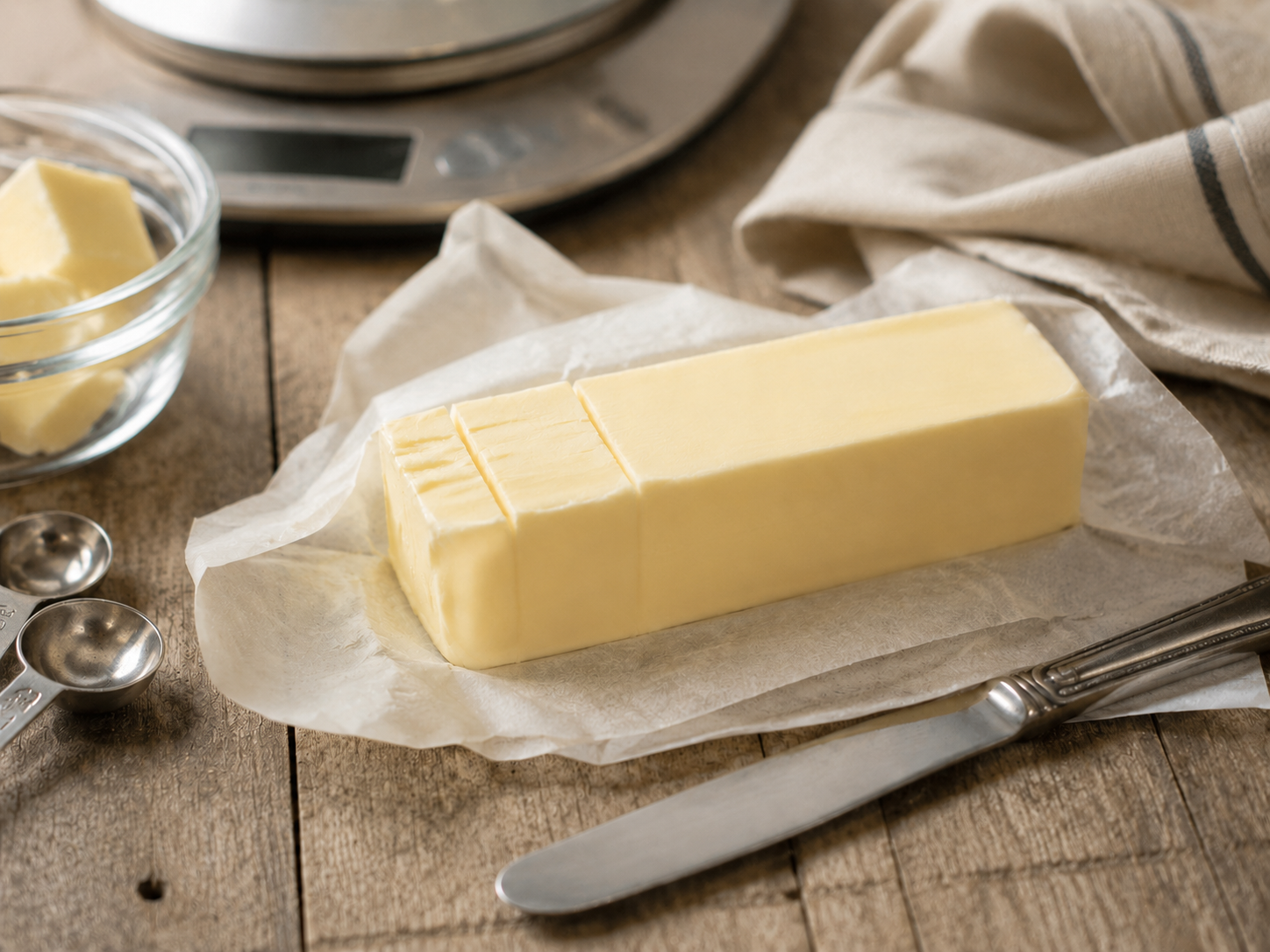
The conversion you will probably use most is simple: 1 stick of butter equals 1/2 cup, 8 tablespoons, 4 ounces, or about 113 grams.
Save or print the charts below for the next time you need a fast butter conversion.
Quick Butter Conversion Chart
| Butter | Cups | Tablespoons | Ounces | Grams |
|---|---|---|---|---|
| 1/4 stick | 1/8 cup | 2 tablespoons | 1 ounce | 28 grams |
| 1/2 stick | 1/4 cup | 4 tablespoons | 2 ounces | 57 grams |
| 1 stick | 1/2 cup | 8 tablespoons | 4 ounces | 113 grams |
| 1 1/2 sticks | 3/4 cup | 12 tablespoons | 6 ounces | 170 grams |
| 2 sticks | 1 cup | 16 tablespoons | 8 ounces | 227 grams |
| 3 sticks | 1 1/2 cups | 24 tablespoons | 12 ounces | 340 grams |
| 4 sticks | 2 cups | 32 tablespoons | 16 ounces | 454 grams |
These gram measurements are rounded to the amounts commonly used in home baking. One U.S. stick technically weighs about 113.4 grams, but most recipes round that number to 113 grams. Two sticks are commonly listed as 226 or 227 grams.
How Much Is One Stick of Butter?
One standard U.S. stick of butter equals:
- 1/2 cup
- 8 tablespoons
- 24 teaspoons
- 4 ounces
- About 113 grams
This is based on the standard 4-ounce butter stick sold in the United States. A box commonly contains four sticks, which adds up to 1 pound of butter.
Butter packaging is not the same everywhere. In some areas, butter may come in short, wide sticks. In others, it is sold as a 250-gram or 500-gram block. The shape does not change the weight, so read the package before assuming that one piece equals one U.S. stick.
Butter Sticks to Cups
Converting sticks of butter to cups is easy once you remember that one stick equals half a cup.
| Sticks of Butter | Cups |
|---|---|
| 1/4 stick | 1/8 cup |
| 1/2 stick | 1/4 cup |
| 1 stick | 1/2 cup |
| 1 1/2 sticks | 3/4 cup |
| 2 sticks | 1 cup |
| 2 1/2 sticks | 1 1/4 cups |
| 3 sticks | 1 1/2 cups |
| 4 sticks | 2 cups |
To convert sticks to cups, divide the number of sticks by two. For example, three sticks divided by two equals 1 1/2 cups.
Cups of Butter to Sticks
If a recipe gives the amount in cups and you want to know how many wrapped sticks to pull from the refrigerator, use this chart.
| Cups of Butter | Sticks |
|---|---|
| 1/8 cup | 1/4 stick |
| 1/4 cup | 1/2 stick |
| 1/3 cup | 2/3 stick |
| 1/2 cup | 1 stick |
| 2/3 cup | 1 1/3 sticks |
| 3/4 cup | 1 1/2 sticks |
| 1 cup | 2 sticks |
| 1 1/4 cups | 2 1/2 sticks |
| 1 1/2 cups | 3 sticks |
| 2 cups | 4 sticks |
To convert cups to sticks, multiply the number of cups by two. One and a half cups multiplied by two equals three sticks.
Butter Cups to Tablespoons and Grams
This chart is helpful when a recipe calls for a fraction of a cup that is not clearly marked on the butter wrapper.
| Cups | Sticks | Tablespoons | Grams |
|---|---|---|---|
| 1/8 cup | 1/4 stick | 2 tablespoons | 28 grams |
| 1/4 cup | 1/2 stick | 4 tablespoons | 57 grams |
| 1/3 cup | 2/3 stick | 5 tablespoons + 1 teaspoon | 76 grams |
| 1/2 cup | 1 stick | 8 tablespoons | 113 grams |
| 2/3 cup | 1 1/3 sticks | 10 tablespoons + 2 teaspoons | 151 grams |
| 3/4 cup | 1 1/2 sticks | 12 tablespoons | 170 grams |
| 1 cup | 2 sticks | 16 tablespoons | 227 grams |
For baking, a scale is the easiest way to measure amounts such as 1/3 cup or 2/3 cup. If you do not have one, the tablespoon and teaspoon measurements above will get you very close.
How Many Tablespoons Are in a Stick of Butter?
There are 8 tablespoons in one stick of butter.
Here are the most common stick-to-tablespoon conversions:
| Butter | Tablespoons |
|---|---|
| 1/8 stick | 1 tablespoon |
| 1/4 stick | 2 tablespoons |
| 1/2 stick | 4 tablespoons |
| 3/4 stick | 6 tablespoons |
| 1 stick | 8 tablespoons |
| 1 1/2 sticks | 12 tablespoons |
| 2 sticks | 16 tablespoons |
Most butter wrappers have lines showing each tablespoon. Keep the butter wrapped while you cut along the correct line. This keeps your hands clean and helps the butter hold its shape.
How Many Teaspoons Are in a Stick of Butter?
There are 24 teaspoons in one stick of butter because each tablespoon contains 3 teaspoons and each stick contains 8 tablespoons.
You will not often need a full stick measured in teaspoons, but this conversion helps when scaling a small recipe or adding a little more butter to a sauce.
- 1 tablespoon butter equals 3 teaspoons
- 2 tablespoons butter equals 6 teaspoons
- 4 tablespoons butter equals 12 teaspoons
- 8 tablespoons butter equals 24 teaspoons
Butter Sticks to Grams
Weight is the most accurate way to measure butter. It is also the method used in many recipes written outside the United States.
| Sticks of Butter | Grams |
|---|---|
| 1/4 stick | 28 grams |
| 1/2 stick | 57 grams |
| 3/4 stick | 85 grams |
| 1 stick | 113 grams |
| 1 1/2 sticks | 170 grams |
| 2 sticks | 227 grams |
| 3 sticks | 340 grams |
| 4 sticks | 454 grams |
If the original recipe was written in grams, use the gram amount whenever you can. Converting to a rounded cup measurement may introduce a small difference. That difference may not matter in a pan sauce, but it can affect cookies, pastry, and other baked goods where ingredient ratios matter.
Grams of Butter to Sticks, Cups, and Tablespoons
| Grams | Approximate Sticks | Approximate Cups | Approximate Tablespoons |
|---|---|---|---|
| 14 grams | 1/8 stick | 1 tablespoon | 1 tablespoon |
| 28 grams | 1/4 stick | 1/8 cup | 2 tablespoons |
| 57 grams | 1/2 stick | 1/4 cup | 4 tablespoons |
| 85 grams | 3/4 stick | 3/8 cup | 6 tablespoons |
| 100 grams | 0.88 stick | About 7/16 cup | About 7 tablespoons |
| 113 grams | 1 stick | 1/2 cup | 8 tablespoons |
| 170 grams | 1 1/2 sticks | 3/4 cup | 12 tablespoons |
| 200 grams | About 1 3/4 sticks | About 7/8 cup | About 14 tablespoons |
| 227 grams | 2 sticks | 1 cup | 16 tablespoons |
| 250 grams | About 2.2 sticks | About 1.1 cups | About 17 1/2 tablespoons |
| 454 grams | 4 sticks | 2 cups | 32 tablespoons |
Amounts such as 100, 200, and 250 grams do not convert neatly to U.S. cups or sticks. A digital kitchen scale is the better choice for those measurements.
Butter Ounces to Sticks and Cups
Butter can be listed in ounces, especially on American packaging. These are weight ounces, not fluid ounces.
| Ounces of Butter | Sticks | Cups |
|---|---|---|
| 1 ounce | 1/4 stick | 1/8 cup |
| 2 ounces | 1/2 stick | 1/4 cup |
| 4 ounces | 1 stick | 1/2 cup |
| 6 ounces | 1 1/2 sticks | 3/4 cup |
| 8 ounces | 2 sticks | 1 cup |
| 12 ounces | 3 sticks | 1 1/2 cups |
| 16 ounces | 4 sticks | 2 cups |
One pound of butter equals 16 ounces, 4 sticks, 2 cups, or about 454 grams.
How to Measure Butter Accurately
The best measuring method depends on the form of butter you have and the units used in your recipe.
Use the Wrapper Markings
For a standard stick, check the lines printed on the wrapper. They usually mark tablespoons, quarter cups, and half cups. Line up your knife with the needed mark and cut straight through the wrapped butter.
Wrapper lines are convenient, but they are not laboratory measurements. The butter may sit slightly off-center inside the wrapper, and a softened stick can shift. They work well for everyday cooking and most home baking, but use a scale when exact weight matters.
Use a Digital Kitchen Scale
Place a small bowl or piece of parchment paper on the scale, then press the tare or zero button. Add butter until the display reaches the required weight. This method works for cold, softened, cubed, or irregularly shaped butter.
A scale also means fewer dishes. You can often weigh butter and other ingredients directly into the mixing bowl, pressing tare between additions if the recipe allows it.
Use Measuring Spoons
Measuring spoons work well for small amounts. Cut butter from the stick using the wrapper lines, or soften it just enough to press it firmly into the spoon. Level the top with the flat side of a knife.
Use a Dry Measuring Cup
If your butter is soft or comes from a tub, press it into a dry measuring cup and remove air pockets. Level the top before scraping it into your bowl.
Do not melt the butter unless the recipe asks for melted butter. Melted butter acts differently from softened or cold butter in many baked goods.
Try the Water-Displacement Method
This old kitchen method can measure an irregular piece of cold butter. Fill a liquid measuring cup with 1 cup of cold water. Add butter until the water rises by the amount you need.
For example, if you need 1/2 cup of butter, add butter until the water reaches the 1 1/2-cup line. Remove the butter and pat it dry.
Use cold water so the butter does not soften or melt. This method is useful in a pinch, though a scale is faster and less messy.
Does Butter Temperature Change the Measurement?
Cold, softened, and melted butter weigh the same before anything is lost from the pan or bowl. One stick still weighs about 113 grams whether it is cold or soft.
Volume can be less dependable. Melted butter may leave a thin coating behind in the pan or measuring cup. Soft butter can also trap air if it is loosely packed into a cup. Weighing it avoids both problems.
Temperature does change how butter behaves in a recipe. Cold butter creates flaky pockets in biscuits and pie dough. Softened butter can hold air when creamed with sugar. Melted butter often makes cookies denser and chewier.
Measure the right amount, then use it at the temperature named in the recipe.
Salted Butter vs. Unsalted Butter Measurements
Salted and unsalted butter use the same basic conversions. One stick of either type equals 1/2 cup, 8 tablespoons, 4 ounces, or about 113 grams.
The salt content changes the flavor, not the standard measurement. Unsalted butter gives you more control over the salt in cakes, cookies, pie crusts, and frostings.
If you use salted butter in place of unsalted, consider reducing the added salt in the recipe. The exact amount of salt in salted butter varies by brand, so the final flavor may differ slightly.
American Butter Sticks vs. European Butter Blocks
American recipes often use sticks because butter in the United States is commonly packaged in 4-ounce portions. Many European and Australian recipes list butter in grams because it is sold in larger metric blocks.
A 250-gram block is not the same as two U.S. sticks. Two sticks weigh about 227 grams, leaving a difference of about 23 grams. That is more than 1 1/2 tablespoons, so it is worth measuring rather than using the whole block.
European-style butter may also contain more butterfat and less water than standard American butter. The measurement conversion is based on weight, but the higher fat content can change the texture of pastry, cookies, laminated dough, and buttercream.
Why Accurate Butter Measurement Matters in Baking
Butter affects flavor, tenderness, spread, browning, and structure. Too much can make cookies spread into thin puddles or leave a cake feeling greasy. Too little can make a bake dry, firm, or crumbly.
Small rounding differences are usually fine in cooking. When making a sauce or sautéing vegetables, an extra teaspoon of butter rarely causes a problem.
Baking depends more heavily on ratios, so it pays to measure carefully, especially when working with pastry, shortbread, buttercream, or a recipe you have not made before.
Common Butter-Measuring Mistakes
- Confusing ounces with fluid ounces: Butter ounces refer to weight. Use a scale or the package weight, not the fluid-ounce marks on a liquid measuring cup.
- Assuming every block is one stick: Check the net weight. A 250-gram block is larger than two standard U.S. sticks.
- Rounding too much: One stick is about 113 grams, not 100 grams. That 13-gram difference is close to a full tablespoon.
- Measuring melted butter when softened butter is requested: The amount may be similar, but the butter will behave differently in the batter or dough.
- Using a liquid cup for solid butter: A dry measuring cup or scale gives a cleaner reading.
- Forgetting to tare the scale: Zero the scale after placing your bowl or parchment on it so only the butter is counted.
- Trusting a shifted wrapper: If the butter is not lined up with the printed markings, adjust it or use a scale.
Tips for Cutting Butter into Even Amounts
Start with cold or cool butter so the stick stays firm while cutting. Leave the wrapper on, check that the butter is centered under the printed guide, and use a thin, sharp knife.
For an amount such as 1/3 cup, measure 5 tablespoons plus 1 teaspoon. If you need this amount often, weighing 76 grams is faster. For 2/3 cup, use 10 tablespoons plus 2 teaspoons or weigh about 151 grams.
When a recipe calls for cubed butter, measure the full amount first and then cut it into equal pieces. Small, even cubes soften or blend into flour at a similar rate, which helps keep the final texture consistent.
How to Scale Butter Up or Down
When halving or doubling a recipe, convert the butter to tablespoons or grams before doing the math. Smaller units make the calculation easier.
For example, if a recipe calls for 3/4 cup of butter, that equals 12 tablespoons or 170 grams:
- Half the recipe: 6 tablespoons or about 85 grams
- Double the recipe: 24 tablespoons, 3 sticks, or about 340 grams
If a calculation gives you half a tablespoon, remember that 1/2 tablespoon equals 1 1/2 teaspoons.
A Simple Butter Conversion Formula
Use these quick formulas when the exact amount is not listed in a chart:
- Sticks to cups: Divide sticks by 2
- Cups to sticks: Multiply cups by 2
- Sticks to tablespoons: Multiply sticks by 8
- Tablespoons to sticks: Divide tablespoons by 8
- Cups to tablespoons: Multiply cups by 16
- Tablespoons to grams: Multiply tablespoons by about 14.2
- Sticks to grams: Multiply sticks by about 113.4
For a home recipe, rounding a stick to 113 grams is usually fine. When scaling a large batch for bakery work, keep the decimal through your calculation and round only the final amount.
Keep This Butter Measurement Guide Handy
The easiest butter conversion to remember is 1 stick equals 1/2 cup, 8 tablespoons, 4 ounces, or about 113 grams. From there, you can quickly double, halve, or scale nearly any amount.
For casual cooking, wrapper markings and measuring spoons work well. For baking, a small digital scale gives you the most consistent result and makes metric recipes much easier to follow.