
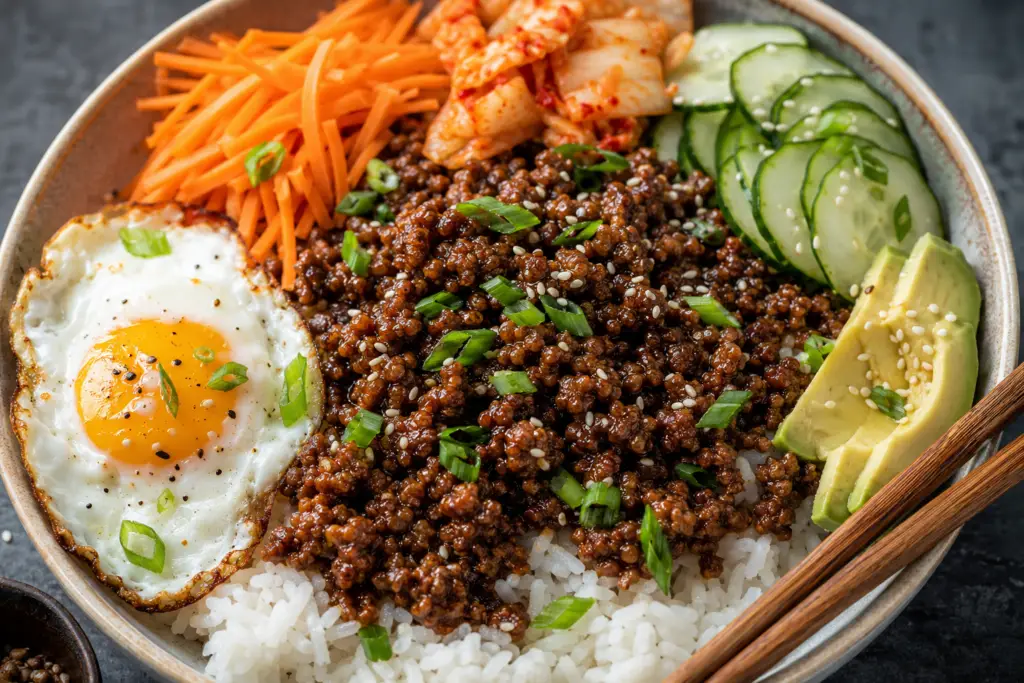
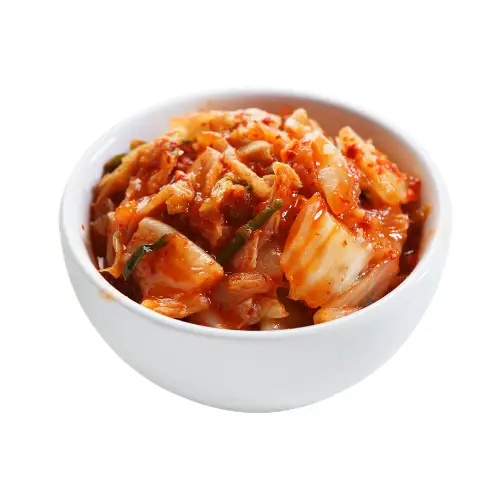
Kimchi is the Korean fermented vegetable condiment made most commonly from napa cabbage, gochugaru (Korean chili flakes), garlic, ginger, fish sauce, and salt. It is simultaneously a side dish, a cooking ingredient, and a fermented food with probiotic benefits. Store-bought kimchi from a Korean grocery produces better results than mass-market supermarket versions. Recipes on this site that use kimchi include Korean Ground Beef Bowl and Vegan Spicy Stir Fry with Rice where kimchi adds fermented depth and heat that no other single ingredient replicates.
Fresh kimchi and aged kimchi behave differently in cooking. Fresh kimchi (geotjeori) is crunchy, bright, and mildly spicy. It works best as a side dish or topping. Aged kimchi (pungent, deeply fermented, over 2 to 3 weeks old) is sour, complex, and assertive. It is the version that works best in cooked applications because its strong flavor stands up to heat. For kimchi fried rice, kimchi jjigae (stew), and kimchi pancakes, use older, more pungent kimchi. gochujang is a natural pairing since both are Korean fermented products with complementary heat profiles.
For kimchi fried rice, the technique is to cook day-old rice (fresh rice is too moist) in a hot wok or skillet with a small amount of sesame oil. Add chopped kimchi and a spoonful of the kimchi brine, toss over high heat for 2 to 3 minutes, then season with soy sauce and a drizzle of additional sesame oil. The Korean Ground Beef Bowl is the best gateway recipe for cooking with kimchi on this site: the kimchi is used as a topping that adds fermented contrast to the sweet-savory ground beef base, which is a lower-commitment entry point than building a full kimchi jjigae from scratch.
For kimchi jjigae (kimchi stew), the standard recipe is chopped aged kimchi, cubed tofu or pork belly, garlic, gochujang, soy sauce, and water or stock simmered together for 20 minutes. Adding a can of beef broth instead of water amplifies the savory base significantly. The Fried Ground Beef Stir Fry uses a similar high-heat technique where kimchi can be folded in during the last minute of cooking to add fermented depth without losing all its texture. Browse gochujang, sesame oil, and green onions for closely related Korean cooking applications.
For kimchi pancakes (kimchijeon), the batter is kimchi chopped into small pieces, all-purpose flour, water, and a pinch of salt mixed to a thick batter and pan-fried in oil over medium-high heat until crispy on both sides. The dipping sauce is soy sauce, rice vinegar, a pinch of sugar, and a drizzle of sesame oil. The pancakes are best served immediately since they lose crispness quickly.
Kimchi has a complex flavor that is simultaneously sour, spicy, savory, and slightly funky from fermentation. Fresh kimchi is crunchier and milder. Aged kimchi is more pungent, sour, and assertive. The gochugaru (Korean chili flakes) provides moderate heat, the garlic adds depth, and the fish sauce (in traditional recipes) adds umami. The sourness develops over time from lactic acid fermentation.
Store-bought and homemade kimchi both keep in the refrigerator for up to 3 to 6 months. Kimchi continues to ferment slowly even when refrigerated, which means it will get more sour and pungent over time. This is not spoilage; it is the natural progression of the product. Mold, sliminess, or an off smell that differs from the normal pungent fermented odor are the signs that kimchi has actually gone bad.
Yes. Store-bought kimchi from a Korean grocery or specialty market works well in all cooked applications. Avoid the mass-market versions sold in standard supermarkets since they tend to be milder and less complex than authentic kimchi. For kimchi fried rice, kimchi jjigae, and kimchi pancakes, older and more pungent kimchi produces better flavor than fresh kimchi since its intensity holds up during cooking.
The kimchi brine is the liquid at the bottom of the jar that accumulates from the fermentation process. It is packed with concentrated fermented flavor and should never be discarded. Add it to kimchi fried rice for an extra flavor boost, stir it into soups and stews for instant depth, or use it as a salad dressing base mixed with sesame oil and a touch of rice vinegar. It is one of the most underused flavor ingredients in a kimchi jar.