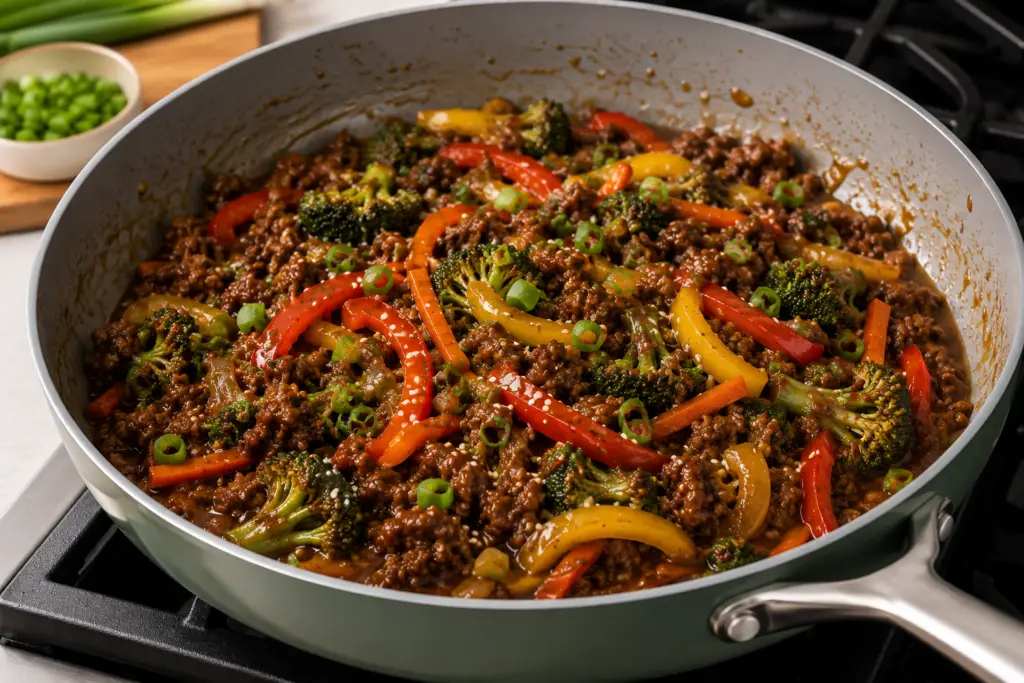
Green, red, yellow, and orange bell peppers are all the same plant at different ripeness stages. Green is unripe, slightly bitter, firmer, cheaper. Red is fully ripe, sweet, slightly softer, more nutritious (higher vitamin C). Yellow and orange sit between. For cooked applications where the pepper softens anyway, color matters less. For raw applications (salads, snacks, hummus dippers), red and yellow taste dramatically better.
Roasting bell peppers transforms the flavor entirely. The technique: char whole peppers directly over a gas flame or under a broiler until skins are blackened on all sides, transfer to a bowl and cover with plastic wrap for 10 minutes (this steams the skin loose), peel off the blackened skin, remove seeds. The result is silky, deeply sweet roasted peppers that work in pasta sauces, dips, sandwiches, and bruschetta.
For fajitas, the technique is to slice peppers and onions into thin strips, sear in a hot cast-iron skillet with a small amount of oil until charred at the edges, then add to the protein. The high-heat sear is what gives fajita peppers their characteristic flavor, low-heat cooking produces soft, sweet peppers without the charred edges. cumin and paprika in the protein rub tie everything together.
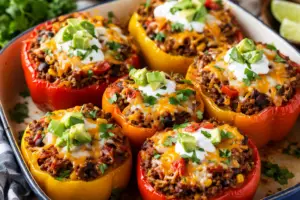
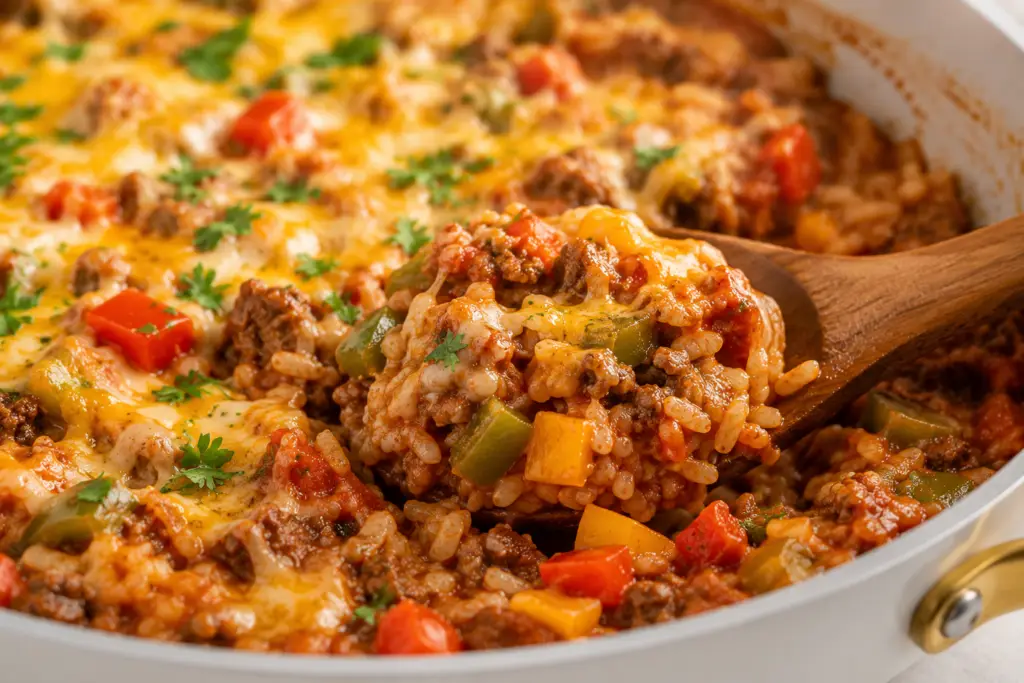
For stuffed peppers (the American comfort food), the standard recipe is to halve and seed 4 bell peppers, fill each half with a mixture of cooked ground beef, rice, diced tomatoes, and seasoning, top with cheese, bake at 375°F for 25-30 minutes. onion sauteed with the ground beef provides the foundational savory base. For storage, whole bell peppers keep 1-2 weeks refrigerated. Cut peppers keep 3-5 days. Frozen bell pepper strips work in cooked applications but not in raw. Other reader picks that build on bell pepper include Ground Beef and Tater Tot Casserole and Cottage Cheese Breakfast Casserole. Browse red bell peppers, cherry tomatoes, and salt for closely related cooking applications.