Buttercream Frosting
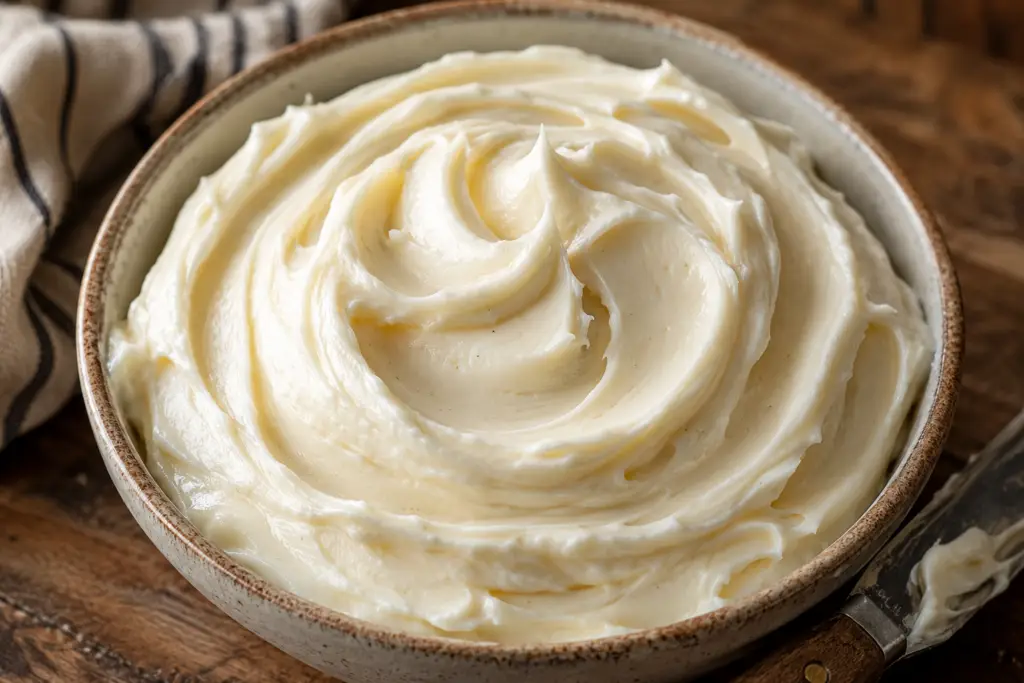
There is something magical about homemade buttercream frosting. It’s rich, creamy, perfectly sweet, and transforms even the simplest cake into something bakery-worthy. Whether you’re frosting birthday cakes, piping cupcakes, decorating sugar cookies, or creating beautiful layer cakes, this classic buttercream frosting recipe is one every baker should have in their recipe collection.
After years of baking cakes and cookies, I can confidently say this is my go-to vanilla buttercream recipe. It has the perfect balance of sweetness, whips up incredibly fluffy, and pipes beautifully while still being easy enough for beginners.
Unlike store-bought frosting that can taste overly sweet or artificial, homemade buttercream has a fresh vanilla flavor and a silky texture that melts in your mouth.
If you’ve ever wondered how bakeries get that smooth, flawless finish on cakes, keep reading because I’m sharing all of my favorite decorating tricks, including my secret for perfectly smooth buttercream cakes.
Why You’ll Love This Buttercream Frosting Recipe
- Uses simple pantry ingredients
- Ready in just 10 minutes
- Perfect for frosting cakes and cupcakes
- Pipes beautifully for decorating
- Easily customizable with different flavors
- Makes silky smooth cake finishes
- Great for birthdays, holidays, and weddings
- Freezes beautifully
What Is Buttercream Frosting?
Buttercream frosting is a classic frosting made primarily from butter and powdered sugar. American buttercream is the most popular version because it is easy to make, stable, and incredibly versatile.
There are several different types of buttercream including:
- American Buttercream
- Swiss Meringue Buttercream
- Italian Buttercream
- French Buttercream
- Ermine Frosting
For everyday baking, American buttercream remains the favorite because it comes together quickly and tastes amazing on nearly every dessert. It also holds its shape exceptionally well for piping decorations and cake borders.
Ingredients You’ll Need
Real butter is the foundation of great buttercream. Use high-quality unsalted butter for the best flavor.
The butter should be softened to room temperature but not melted. Soft butter whips air into the frosting, creating that fluffy bakery texture.
- Powdered Sugar
Powdered sugar sweetens and stabilizes the frosting.
Sifting the sugar first creates an extra smooth buttercream and prevents lumps.
Heavy cream helps create a silky texture while making the frosting lighter and easier to spread.
You can also substitute whole milk if needed, but heavy cream gives the most luxurious texture.
Vanilla provides warmth and depth of flavor.
For a bakery-style frosting, try adding vanilla bean paste for beautiful vanilla specks.
- Salt
Never skip the salt.
A small amount balances the sweetness and enhances the buttery flavor.
Best Buttercream Frosting Recipe
Ingredients
- 2 cups unsalted butter, softened (4 sticks)
- 7 to 8 cups powdered sugar, sifted
- 4 tablespoons heavy cream
- 2 teaspoons pure vanilla extract
- ¼ teaspoon fine salt
Instructions
- Add softened butter to the bowl of a stand mixer fitted with the paddle attachment.
- Beat on medium speed for 3 to 5 minutes until the butter becomes pale and fluffy.
- Slowly add powdered sugar one cup at a time, mixing on low speed after each addition.
- Add vanilla extract, salt, and heavy cream.
- Increase mixer speed to medium-high and beat for another 4 to 5 minutes until light and fluffy.
- Scrape down the bowl several times during mixing.
- If needed, add an extra tablespoon of cream for a softer consistency or additional powdered sugar for a stiffer frosting.
Yield Information
This recipe makes approximately:
- Frosting for 24 cupcakes
- One 9-inch two-layer cake
- One 9×13 cake
- Light crumb coat plus decorative piping
Why This Recipe Works
The secret to incredibly fluffy buttercream is whipping the butter first before adding the sugar.
Many recipes simply combine everything together, but whipping the butter separately creates a lighter texture and incorporates air into the frosting.
Heavy cream also gives the buttercream a silkier mouthfeel and slightly cuts the sweetness, resulting in a frosting that tastes more balanced.
The Secret To Bakery Smooth Buttercream
Professional cake decorators have several tricks for achieving ultra-smooth cakes.
Trick #1: Use a Bench Scraper
A tall metal bench scraper creates straight edges and smooth sides.
Trick #2: Heat Your Scraper
This is one of my favorite cake decorating hacks.
Dip your metal bench scraper into hot water, dry it thoroughly, then gently run it around your cake.
The slight warmth melts just the outermost layer of buttercream, creating an incredibly smooth finish.
Repeat as needed until your cake looks flawless.
Trick #3: Chill Immediately
Once your cake is smooth, place it into the refrigerator immediately.
Chilling allows the buttercream to firm up quickly and locks in those perfectly smooth edges.
This simple step makes your cakes look professionally decorated.
How To Frost A Layer Cake
- Level cake layers.
- Add a small amount of frosting to your cake board.
- Place the first cake layer down.
- Spread an even layer of buttercream.
- Repeat with remaining layers.
- Apply a thin crumb coat.
- Refrigerate for 20 minutes.
- Add the final layer of frosting.
- Smooth with an offset spatula and heated scraper.
- Chill immediately.
Tips For Perfect Buttercream Every Time
Use Room Temperature Butter
Cold butter creates lumps.
Sift Your Powdered Sugar
This guarantees a smoother frosting.
Don’t Overdo The Liquid
Too much cream can make frosting too soft.
Beat It Longer Than You Think
Extra whipping creates a fluffy, lighter buttercream.
Use The Paddle Attachment
A paddle creates fewer air bubbles than a whisk.
Add White Food Coloring
A tiny amount brightens buttercream and creates a whiter frosting.
Remove Air Bubbles
Mix on low speed for one minute at the end to eliminate trapped air.
Best Desserts To Pair With Buttercream Frosting
This frosting tastes amazing on:
- Vanilla cupcakes
- Chocolate cupcakes
- Funfetti cake
- Sugar cookies
- Red velvet cake
- Chocolate sheet cake
- Lemon cake
- Birthday cakes
- Cookie sandwiches
- Brownies
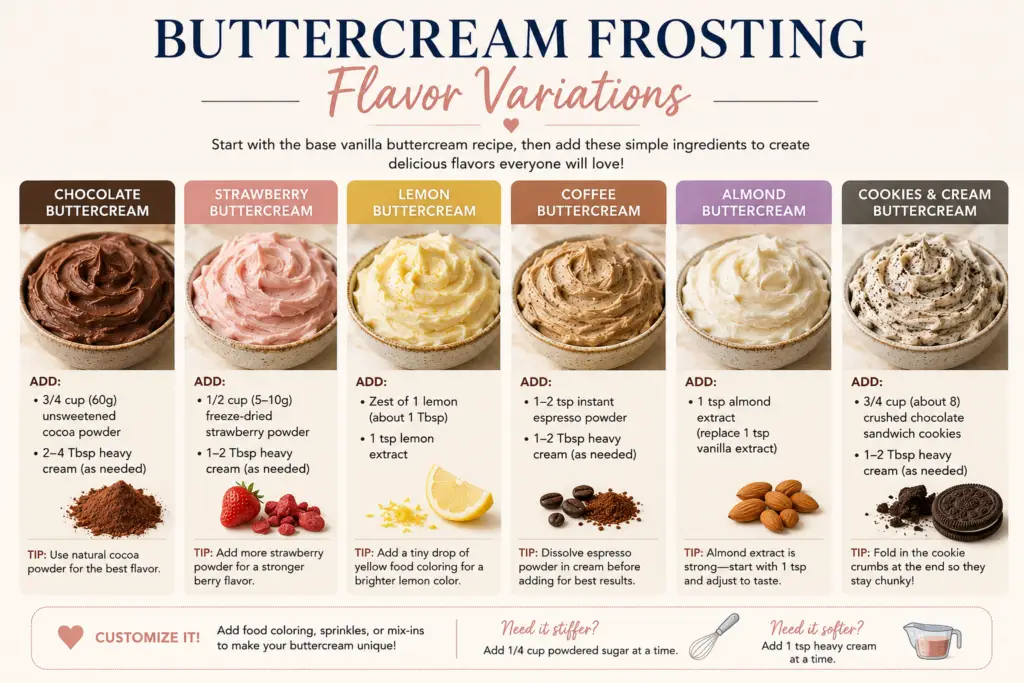
Flavor Variations
Chocolate
Buttercream
Add:
- ¾ cup cocoa powder
Strawberry Buttercream
Add:
- Freeze-dried strawberry powder
Lemon Buttercream
Add:
- Lemon zest and lemon extract
Coffee Buttercream
Add:
- Espresso powder dissolved in cream
Almond Buttercream
Replace half of the vanilla with almond extract.
Cookies and Cream Buttercream
Fold in crushed sandwich cookies.
How To Color Buttercream
Gel food coloring works best because it does not thin the frosting.
Start with a tiny amount and gradually increase until desired color is achieved.
Deep colors often become more vibrant after resting for several hours.
How To Store Buttercream
Store covered in the refrigerator for up to one week.
Before using again, allow it to come to room temperature and rewhip until fluffy.
Can You Freeze Buttercream?
Absolutely.
Store in an airtight container for up to 3 months.
Thaw overnight in the refrigerator and rewhip before using.
Common Buttercream Problems
Frosting Is Too Thick
Add heavy cream one teaspoon at a time.
Frosting Is Too Thin
Add additional powdered sugar.
Buttercream Looks Curdled
Continue mixing. It usually comes together.
Frosting Has Air Bubbles
Switch mixer to low speed and mix for several minutes.
Frosting Is Too Sweet
Add an extra pinch of salt or a splash of lemon juice to balance flavors.
Tips and Tricks for the Best Buttercream Frosting
Start With Quality Butter
Since butter is the star ingredient, use the best butter you can find. European-style butter has a slightly higher butterfat content, giving your frosting an extra rich and creamy flavor.
Softened Butter Is Key
Your butter should be soft enough that your finger leaves a slight indentation but not so soft that it appears greasy or melted. Butter that is too warm can make frosting overly soft and difficult to pipe.
Sift the Powdered Sugar
This extra step only takes a minute but makes a huge difference in texture. Sifting removes lumps and creates an ultra-silky frosting.
Whip the Butter First
Beating the butter by itself for several minutes creates a light and fluffy base before adding the sugar.
Use Heavy Cream for Extra Creaminess
Heavy cream creates a smoother, less gritty frosting compared to milk.
Reduce Air Bubbles
If you plan on smoothing cakes, mix the frosting on the lowest speed for one to two minutes after whipping. This removes large air pockets and gives you smoother finishes.
Chill Between Decorating Steps
If your buttercream begins to soften while decorating, refrigerate the cake for 15 to 20 minutes before continuing.
The Heated Scraper Trick
For bakery-style cakes, dip your metal bench scraper into hot water and wipe it dry. Gently glide it around the cake to smooth the buttercream. The warmth slightly melts the exterior frosting, creating beautifully smooth edges.
Immediately chill the cake afterward so the buttercream sets quickly and maintains that flawless finish.
For Sharp Edges
Use an acetate smoother or parchment paper method after chilling the cake for ultra-clean edges.
How Much Buttercream Do I Need?
- For 12 Cupcakes. Half of this recipe.
- For 24 Cupcakes. One full recipe.
- For a Two-Layer 8-Inch Cake. One batch.
- For a Tall Three-Layer Cake. One and a half batches.
- For Decorative Piping. Consider making an extra half batch to ensure you have enough frosting.
Decorating Tips for Beginners
Crumb Coat First
A thin layer of frosting traps loose crumbs and gives you a clean final finish.
Use an Offset Spatula
This helps evenly spread frosting without pulling crumbs.
Turntable Makes a Huge Difference
A rotating cake stand makes decorating easier and gives smoother sides.
Refrigerate Before Final Decorations
A chilled cake is much easier to decorate with piping details.
Practice Piping on Parchment
If you’re new to decorating, practice piping flowers and borders before applying them to your cake.
Why Is My Buttercream Grainy?
A grainy texture usually occurs because:
- Powdered sugar was not sifted.
- Butter was too cold.
- Frosting was not mixed long enough.
Continue mixing for several more minutes and add a small splash of heavy cream if necessary.
Why Is My Buttercream Yellow?
Butter naturally has a yellow tint.
To create a whiter frosting:
- Add a tiny amount of violet food coloring.
- Use clear vanilla extract.
- Beat the butter longer until pale and fluffy.
Why Is My Buttercream Melting?
Buttercream can become soft if:
- The kitchen is too warm.
- Butter was overly softened.
- Too much liquid was added.
Refrigerate the frosting for 15 to 20 minutes and remix before using.
How to Make Buttercream Less Sweet
American buttercream is naturally sweet, but these tips help balance the flavor:
- Add an extra pinch of salt.
- Use high-quality vanilla extract.
- Incorporate cream cheese.
- Add a tiny splash of lemon juice.
More Frosting Recipes You’ll Love
If you enjoy making homemade desserts from scratch, these frosting recipes are the perfect next bake. From rich chocolate frostings to light and fluffy toppings, each one pairs beautifully with cakes, cupcakes, brownies, cookies, and bars.
Homemade Cream Cheese Frosting
Smooth, tangy, and perfectly sweet, this classic cream cheese frosting is a must for carrot cake, red velvet cake, cinnamon rolls, pumpkin desserts, and banana cake. Its slight tang balances sweeter desserts beautifully and makes every bite taste bakery-worthy.
Chocolate Buttercream Frosting
Chocolate lovers will adore this rich and creamy frosting made with cocoa powder and butter. It is silky, easy to pipe, and absolutely delicious on chocolate cupcakes, vanilla cake, brownies, and cookies.
Chocolate Ganache
Made with just chocolate and cream, chocolate ganache is one of the easiest dessert toppings. Use it as a glaze, frosting, drip cake decoration, truffle filling, or whipped frosting. It adds an elegant finish to any dessert.
Stabilized Whipped Cream Frosting
This light and airy frosting is perfect when you want something less sweet than traditional buttercream. Stabilized whipped cream holds its shape beautifully and pairs wonderfully with fresh berries, angel food cake, strawberry desserts, and summer cakes.
Homemade Marshmallow Frosting
Soft, fluffy, and reminiscent of marshmallow fluff, this frosting is delicious on chocolate cupcakes, s’mores desserts, brownies, and layer cakes. It creates a fun nostalgic flavor that both kids and adults love.
Peanut Butter Frosting
Creamy peanut butter frosting is rich, slightly salty, and incredibly satisfying. Spread it on chocolate cake, brownies, banana cupcakes, or sandwich it between cookies for an irresistible dessert.
Lemon Buttercream Frosting
Bright and citrusy, lemon buttercream adds a refreshing twist to spring and summer desserts. It pairs beautifully with vanilla cake, blueberry cupcakes, lemon cake, and sugar cookies.
Cookies and Cream Frosting
This frosting is packed with crushed chocolate sandwich cookies and tastes just like your favorite cookies-and-cream ice cream. It is perfect for birthday cakes, cupcakes, brownies, and cookie sandwiches.
More Cakes Recipes To Try
This homemade buttercream frosting pairs beautifully with so many desserts. If you’re looking for your next baking project, try one of these reader favorites.
Soft, fluffy vanilla cupcakes are the ultimate pairing for classic buttercream frosting. Perfect for birthdays, celebrations, and everyday treats.
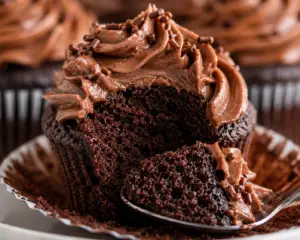
Rich chocolate cupcakes topped with creamy vanilla buttercream create the perfect balance of flavors and remain a timeless bakery favorite.
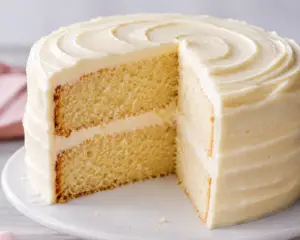
A bright and sunny lemon cake paired with vanilla buttercream makes an elegant dessert for spring brunches, Easter gatherings, and baby showers.
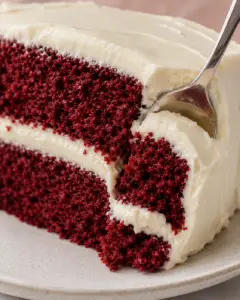
Classic red velvet cake and buttercream frosting are a match made in heaven. The subtle cocoa flavor and tender crumb pair beautifully with creamy frosting.
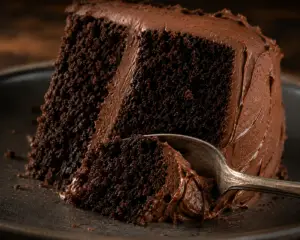
Whether it’s a simple sheet cake or a towering layer cake, homemade buttercream frosting perfectly complements rich chocolate cake.
- Key Lime Cake
This refreshing citrus cake pairs wonderfully with vanilla buttercream and creates the perfect summer dessert.
Loaded with colorful sprinkles and topped with fluffy buttercream frosting, funfetti cake instantly turns any day into a celebration.
Use this buttercream as a simple frosting for soft sugar cookies or pipe decorative swirls onto cookie bars and cut-out cookies.
A layer of vanilla buttercream spread over fudgy brownies creates a decadent dessert that tastes like it came straight from a bakery.
The warm spices in soft molasses cookies pair surprisingly well with sweet vanilla buttercream for a festive holiday treat.
Ultimate Baking Resource Guide
If you love baking from scratch, be sure to bookmark these helpful recipes and guides:
- How to Prevent Cookies from Spreading
- Homemade Frosting Recipe
- Cream Cheese Frosting Recipe
- Shortbread Cookies
- Molasses Cookies
- Brownies with Chocolate Chips
- Key Lime Pie Recipe
- Vanilla Cupcakes
- Chocolate Cupcakes
- Banana Bread Recipes
- Blondies Recipe
- Brownies from Scratch
- Chocolate Cheesecake
- Pie Recipes
Before You Go
A great buttercream frosting recipe is one every baker needs in their collection. This version is rich, fluffy, easy to work with, and perfect for everything from cupcakes to elaborate celebration cakes.
Whether you’re creating a simple birthday cake or decorating a stunning layer cake, this buttercream delivers bakery-quality results every single time. Don’t forget the heated scraper trick for perfectly smooth cakes and always chill immediately afterward for the most professional finish.
Once you try homemade buttercream frosting, you’ll never want store-bought frosting again.
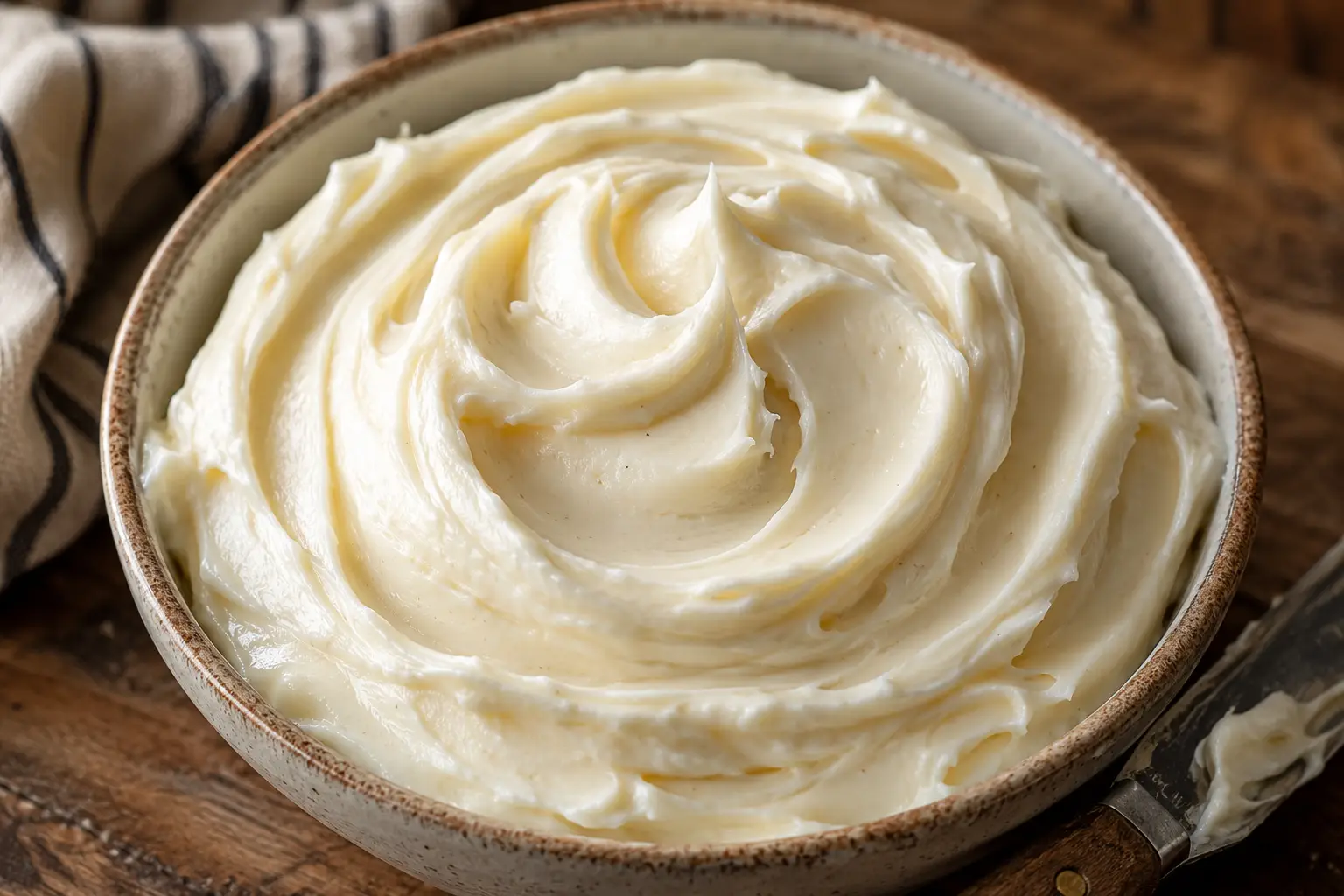
Buttercream Frosting
Equipment
- Standing mixer recommended
- Hand Beater
Ingredients
- 2 cups unsalted butter softened (4 sticks)
- 7-8 cups powdered sugar sifted
- 4 tbsp heavy cream
- 2 tsp vanilla extract
- ¼ tsp salt
 Get Recipe Ingredients
Instructions
- Add softened butter to the bowl of a stand mixer fitted with the paddle attachment.
- Beat on medium speed for 3 to 5 minutes until the butter becomes pale and fluffy.
- Slowly add powdered sugar one cup at a time, mixing on low speed after each addition.
- Add vanilla extract, salt, and heavy cream.
- Increase mixer speed to medium-high and beat for another 4 to 5 minutes until light and fluffy.
- Scrape down the bowl several times during mixing.
- If needed, add an extra tablespoon of cream for a softer consistency or additional powdered sugar for a stiffer frosting.
Notes
- Frosting for 24 cupcakes
- One 9-inch two-layer cake
- One 9x13 cake
- Light crumb coat plus decorative piping
Nutritional Value Card
Serving Size: Approximately 2 tablespoons frostingServings Per Recipe: 24 servings
| Nutrient | Amount Per Serving |
|---|---|
| Calories | 245 kcal |
| Carbohydrates | 31 g |
| Protein | 0 g |
| Fat | 14 g |
| Saturated Fat | 9 g |
| Cholesterol | 38 mg |
| Sodium | 32 mg |
| Sugar | 30 g |
| Fiber | 0 g |
| Calcium | 10 mg |
| Potassium | 18 mg |
| Vitamin A | 470 IU |
Frequently Asked Questions
Can I make this buttercream frosting ahead of time?
Yes, absolutely! You can make this buttercream frosting up to a week in advance. Store it tightly covered in an airtight container in the refrigerator. Before using, bring it to room temperature on your counter and re-whip it with your mixer for 1–2 minutes to restore its original fluffy texture.
How do I get my white buttercream to look bright white instead of yellow?
Because natural butter has a yellow hue, adding a microscopic drop of purple gel food coloring on the tip of a toothpick counteracts the yellow tones, turning the buttercream bright white. You can also whip the butter alone for 5 full minutes before adding ingredients.
How should I store cakes or cupcakes frosted with buttercream?
Because of the sugar-to-fat ratio, buttercream frosting remains stable at room temperature for up to 2 days in a cool room inside a cake keeper. If keeping longer or serving in a warm environment, store frosted treats in the refrigerator for up to 5 days, bringing them to room temperature 30 minutes before serving.
Can you freeze homemade buttercream frosting?
Yes! Buttercream freezes exceptionally well. Transfer the finished frosting into a freezer-safe container or heavy-duty freezer bag for up to 3 months. Thaw overnight in the refrigerator, bring to room temperature, and beat well before using.
How much frosting does this single batch make?
This recipe yields approximately 2.5 cups of frosting. This is enough to generously frost 12 to 15 cupcakes with tall piped swirls, or lightly cover a standard 9×13-inch sheet cake or a 2-layer 8-inch round cake.
More Dessert Recipes
Looking for more easy and comforting meals? Browse all recipes here: