
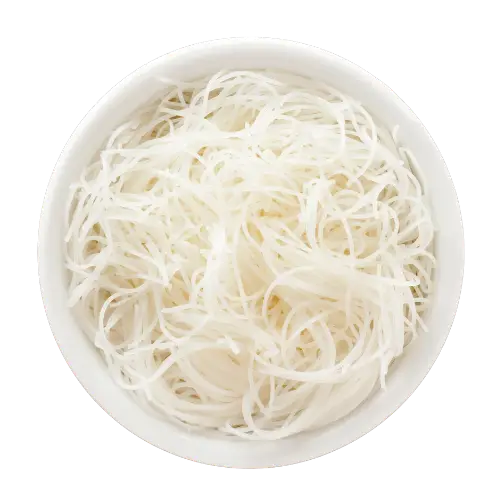
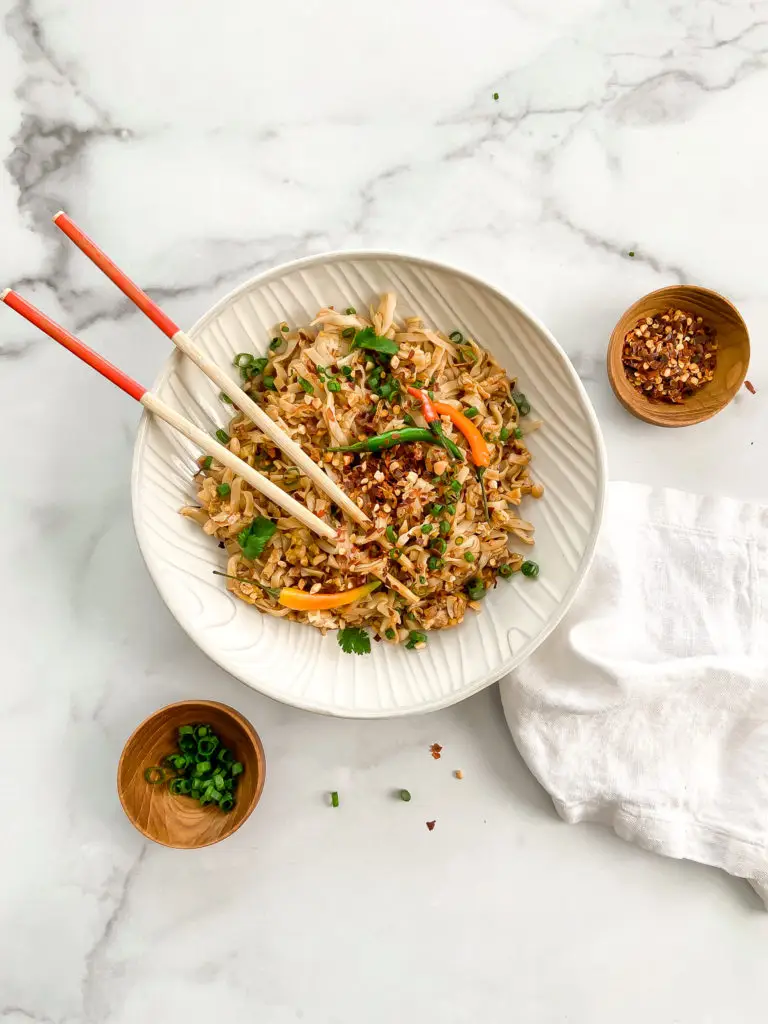
Rice noodles are the gluten-free Asian noodle that anchors pad Thai, pho, drunken noodles, and most Vietnamese and Thai noodle dishes. The thin, flat varieties (pad thai noodles, banh pho) are the most common in American recipes; round vermicelli rice noodles work for spring rolls and lighter applications. Rice noodle favorites include Easy Pad Thai Noodles where the noodles either stir-fry directly in the pan (pad thai) or float in broth (pho).
Rice noodles come in two main forms: dried (sold in packages, requiring soaking before use) and fresh (sold refrigerated, ready to use). Dried rice noodles are the more common form in American grocery stores. The standard preparation is to soak in room-temperature water for 30 minutes (or hot water for 10 minutes) until pliable but still firm, drain, and use immediately. Over-soaking produces mushy noodles that fall apart in the stir-fry.
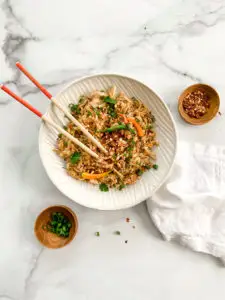
For pad thai, the technique is to soak the noodles, then stir-fry in a hot pan with the sauce, protein, vegetables, and eggs all together. The noodles finish cooking as they absorb the sauce, which is why the soak step matters, noodles that are too soft will turn to mush; noodles that are too firm won’t cook through. The soy sauce and tamarind paste form the foundational sauce flavor.
For pho (Vietnamese beef noodle soup), fresh rice noodles work best, they’re added to the hot broth at the table and warm through in seconds. Dried banh pho noodles also work but require pre-cooking in boiling water for 30 seconds before adding to the broth. The classic pho broth is beef bones simmered 6+ hours with ginger, charred onion, star anise, cloves, cinnamon stick, and fish sauce. The cilantro and bean sprouts at the table complete the dish.
For storage, dried rice noodles keep 2-3 years in a sealed package at room temperature. Soaked noodles (drained) keep 1-2 days refrigerated but the texture degrades quickly. Cooked rice noodles in sauce (leftover pad thai) reheat fine in a hot pan with a splash of water; microwaving makes them gummy. For gluten-free meal prep, rice noodles are one of the few pastas that hold texture through a 3-day fridge stay if stored separately from the sauce. Browse rice, rigatoni pasta, and salt for closely related cooking applications.
Rice noodles are commonly paired with vegetables, chicken, shrimp, tofu, and flavorful sauces. They work well in stir-fries, noodle bowls, and soups. Cook the noodles first, then toss them with sautéed vegetables, protein, and sauces like soy sauce or garlic sauce to create a quick and balanced meal.
Start by soaking or boiling rice noodles according to the package instructions until tender. Heat oil in a pan and cook garlic, vegetables, and your choice of protein. Add the softened noodles and stir-fry with sauce until everything is evenly coated. Serve immediately while the noodles are hot.
Rice noodles are naturally gluten-free and made from simple ingredients like rice flour and water. They are light, easy to digest, and cook quickly. Rice noodles are also versatile and can be used in soups, stir-fries, and noodle bowls, making them a convenient base for many meals.
Good substitutes for rice noodles include glass noodles, thin wheat noodles, spaghetti, or zucchini noodles. Choose a substitute based on the dish you are making. For stir-fries, thin wheat noodles work well, while glass noodles are a closer texture match for many Asian-style noodle recipes.
For more rice and rice-product variety, see our basmati rice and wild rice recipes.