
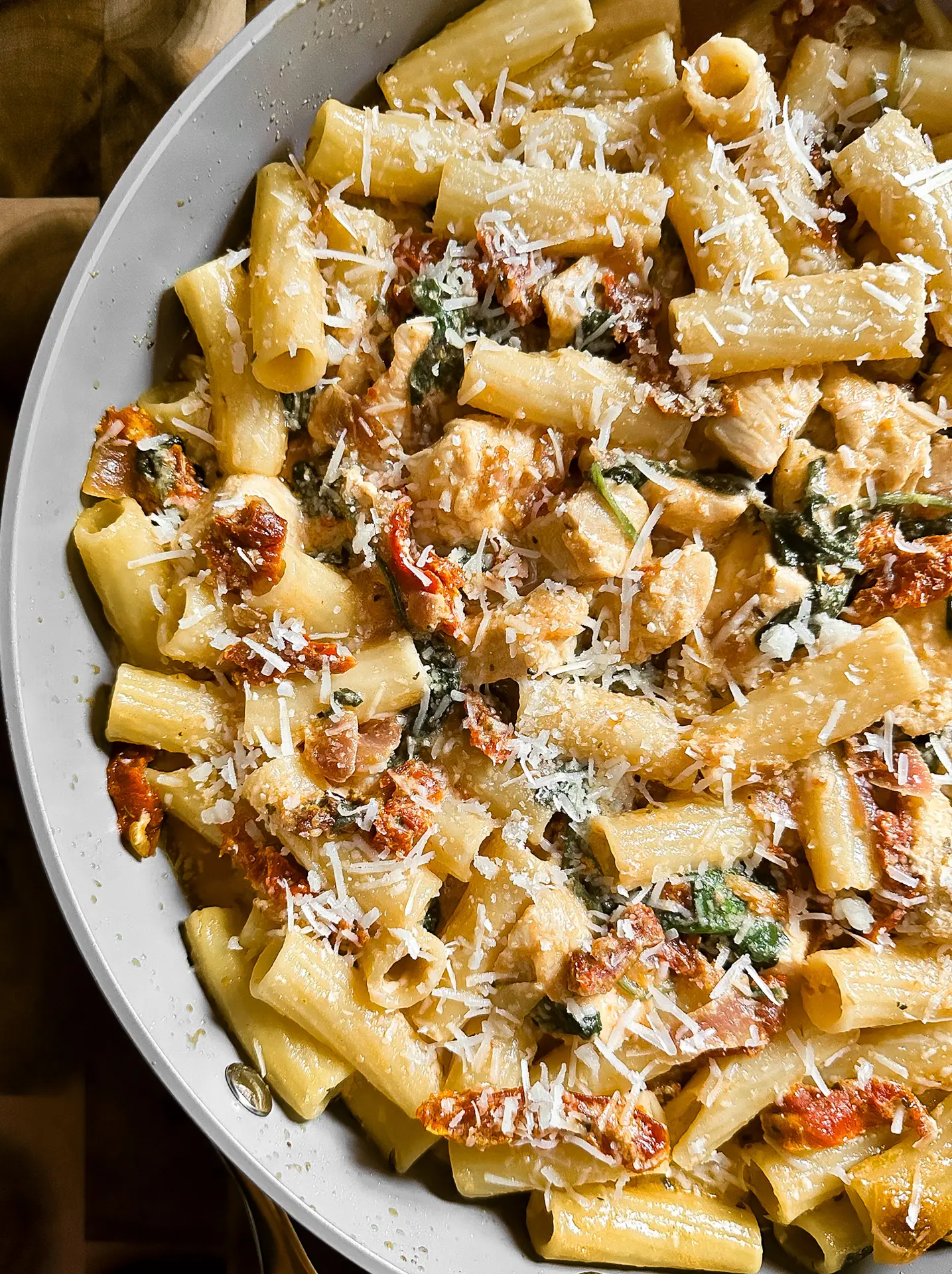
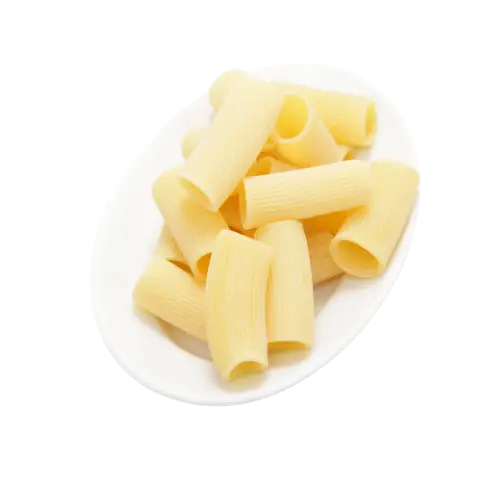
Rigatoni is the wide tube-shaped pasta with ridges along the outside, ideal for capturing chunky tomato sauces, baked pasta dishes, and any preparation where the sauce needs to cling to the pasta. The shape works particularly well with ground meat sauces because the meat catches inside the tubes. Reader favorites that build on it include Tuscan Chicken Pasta and Creamy Cottage Cheese Pasta Sauce where rigatoni or another short tube pasta provides the substantial bite that catches the sauce.
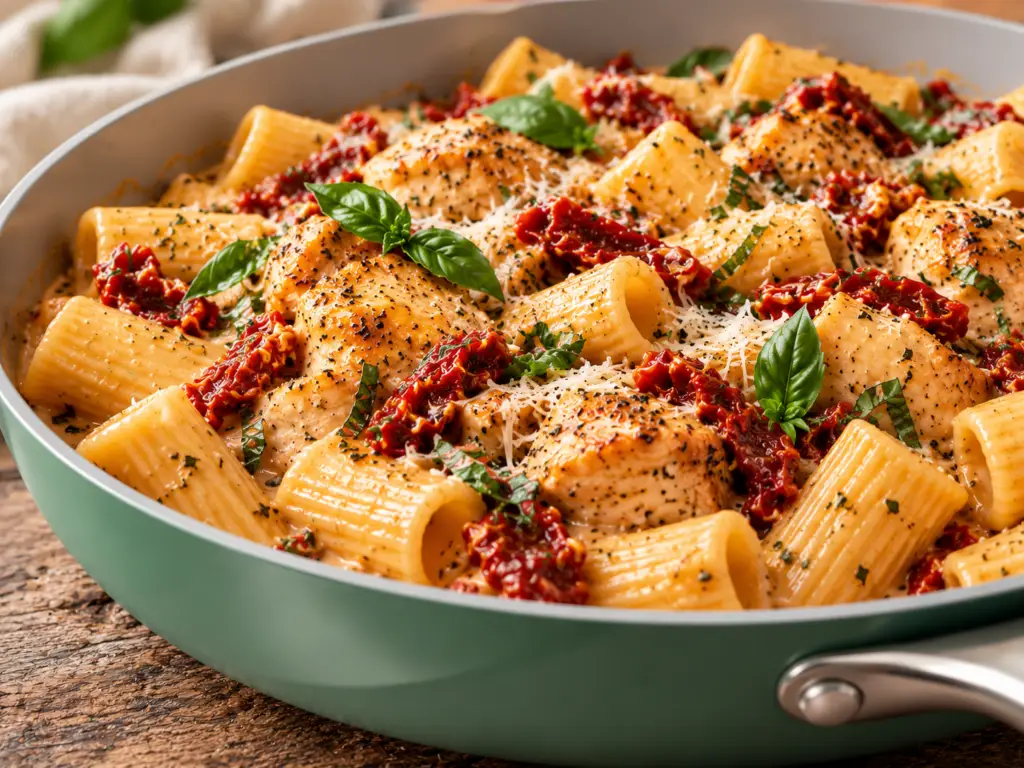
Rigatoni, penne, ziti, and mostaccioli are all tube-shaped pasta but with different sizes and surface textures. Rigatoni is the largest (around 1.5 inches long, 0.5 inches wide), with deep ridges running lengthwise along the outside. Penne is smaller with a diagonal cut at the ends and ridged surface. Ziti is smooth-surfaced and smaller. Mostaccioli is similar to penne but smaller. All work in most baked pasta dishes; rigatoni holds chunky meat sauces best because of the size and ridges.
For baked pasta dishes, rigatoni’s hollow tubes trap meat, cheese, and sauce in every bite. The standard ratio is 1 pound rigatoni + 1.5 quarts sauce + 2 cups cheese for a 9×13 baked pasta dish. Cook the pasta 2-3 minutes shy of al dente (it continues cooking in the oven), drain, toss with sauce, layer with cheese, bake at 375°F for 25-30 minutes until bubbling.
For meat sauces, the chunky texture of meat sauces (Bolognese, ragu, ground beef sauces) catches inside the rigatoni tubes. Smooth sauces (marinara, alfredo, oil-based) work better with smaller pastas where the sauce coats more evenly.
For cooking, the standard ratio is 1 pound rigatoni + 4 quarts water + 1 tablespoon salt. The cooking time is 11-13 minutes for al dente; check at 10 minutes and pull when the pasta still has slight bite at the center. Drain immediately; never rinse pasta destined for sauce (the starch on the surface is what helps sauce adhere).
For substitution, any short tube pasta works in rigatoni applications. Penne, ziti, and mostaccioli are the closest substitutes. Shells (medium or jumbo) also work because the cupped shape catches sauce similarly. Long pasta (spaghetti, fettuccine, linguine) doesn’t work for baked dishes or chunky sauces.
For cold pasta salads, rigatoni works but penne or rotini are easier to eat with a fork (smaller pieces). The standard pasta salad is 1 pound cooked pasta + 1 cup cubed vegetables + 1/2 cup cheese cubes + 1/2 cup dressing, chilled 2 hours before serving.
For storage, uncooked rigatoni keeps 1-2 years in a sealed pantry container. Cooked rigatoni keeps 3-4 days refrigerated tossed with a little oil to prevent sticking. Frozen baked rigatoni dishes keep 3 months; reheat covered at 350°F for 25-30 minutes until heated through. Browse pasta and rotini for closely related pasta shapes. Reader favorites built on it include Baked Ziti with Ground Beef.
Rigatoni pasta is great for holding thick sauces, making it ideal for baked dishes, meat sauces, and creamy pasta recipes.
Cook rigatoni until al dente, prepare a tomato sauce with garlic and herbs, then combine and simmer briefly before serving.
Rigatoni can be part of a healthy diet when paired with vegetables, lean proteins, and moderate portions. Whole wheat versions offer more fiber.
A typical serving of cooked rigatoni pasta contains about 200 calories per cup, depending on ingredients and portion size.
For more pasta and Italian options, see our marinara sauce and parmesan cheese recipes.