
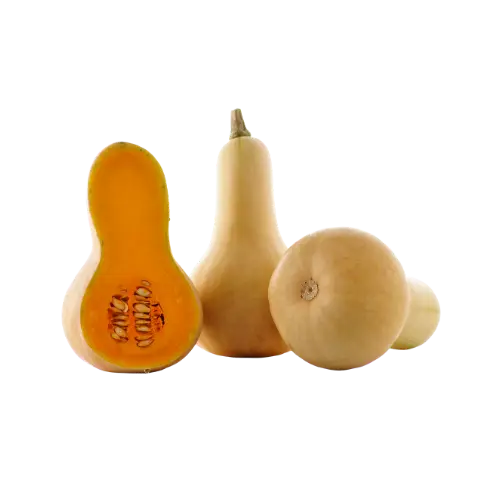
Butternut squash is the cream-and-orange winter squash with a thin neck and bulbous base. The flesh is sweet, dense, and roasts into something close to candy when caramelized at high heat. Best applications: butternut squash soup (the fall restaurant standard), roasted cubes for grain bowls, pasta with brown butter and sage, and butternut risotto. Reader favorites that translate to butternut squash include Maple Roasted Honeynut Squash where the honeynut variety (a butternut cross) gets the same maple-and-butter treatment, along with Easy Mini Pumpkin Pies and Pumpkin Blondies where the pumpkin puree can be swapped 1:1 for roasted butternut puree.

Peeling butternut squash is notoriously difficult because of the thick skin and irregular shape. The technique: microwave the whole squash for 3-4 minutes to soften the skin slightly, then peel with a Y-shaped vegetable peeler. The pre-microwave step cuts peeling time roughly in half. Pre-cubed butternut squash (sold in produce sections) is a time-saver but costs 2-3x more.
Roasting butternut squash: cut into 1-inch cubes, toss with olive oil + salt + pepper, spread on a sheet pan, roast at 425°F for 25-30 minutes. The high heat caramelizes the natural sugars and produces edges close to candy-sweet. Tossing with cinnamon and brown sugar before roasting amplifies the sweetness for dessert applications.
For butternut squash soup, the technique is to roast 4 cups cubed squash with 1 quartered onion at 425°F for 30 minutes, transfer to a pot with 4 cups chicken or vegetable broth, simmer 10 minutes, blend smooth. Finish with 1/2 cup heavy cream and a pinch of ground nutmeg. The roasting step is what produces the deep flavor that boiled versions cannot match.
For butternut squash pasta with brown butter sage, the technique is to roast cubed squash, toss with cooked pasta and crispy sage leaves in butter that’s been browned in the same pan. Finish with grated parmesan cheese and toasted pine nuts. For storage, whole butternut squash keeps 1-3 months in a cool pantry; cubed keeps 5-7 days refrigerated. Related fall-bake recipes on this site adapt well to butternut squash with a 1:1 puree substitution in pies, cakes, blondies, and quick breads. Browse acorn squash, mushrooms, and salt for closely related cooking applications.
Good butternut squash recipes include roasted squash, creamy soups, pasta dishes, grain bowls, and casseroles. Roasting cubes with olive oil and simple seasonings is one of the easiest methods. The squash can also be blended into soups or mixed with pasta and vegetables for a hearty meal.
Butternut squash is commonly cooked by roasting, sautéing, steaming, or blending into soups. Peel the squash, remove the seeds, and cut it into cubes or slices. Roast in the oven with oil and seasoning until tender, usually about 25–35 minutes depending on the size of the pieces.
Butternut squash can be used in soups, pasta dishes, salads, casseroles, and roasted vegetable mixes. It can also be mashed or blended for sauces and purees. Roasted squash cubes are commonly added to grain bowls or served as a flavorful side dish.
Butternut squash provides fiber, vitamins, and antioxidants that support overall health. It is especially rich in vitamin A, which supports vision and immune function. The squash is also naturally low in calories, making it a nutritious addition to balanced meals.
For more roasted-vegetable and winter-squash options, see our sweet potatoes and honeynut squash recipes.