
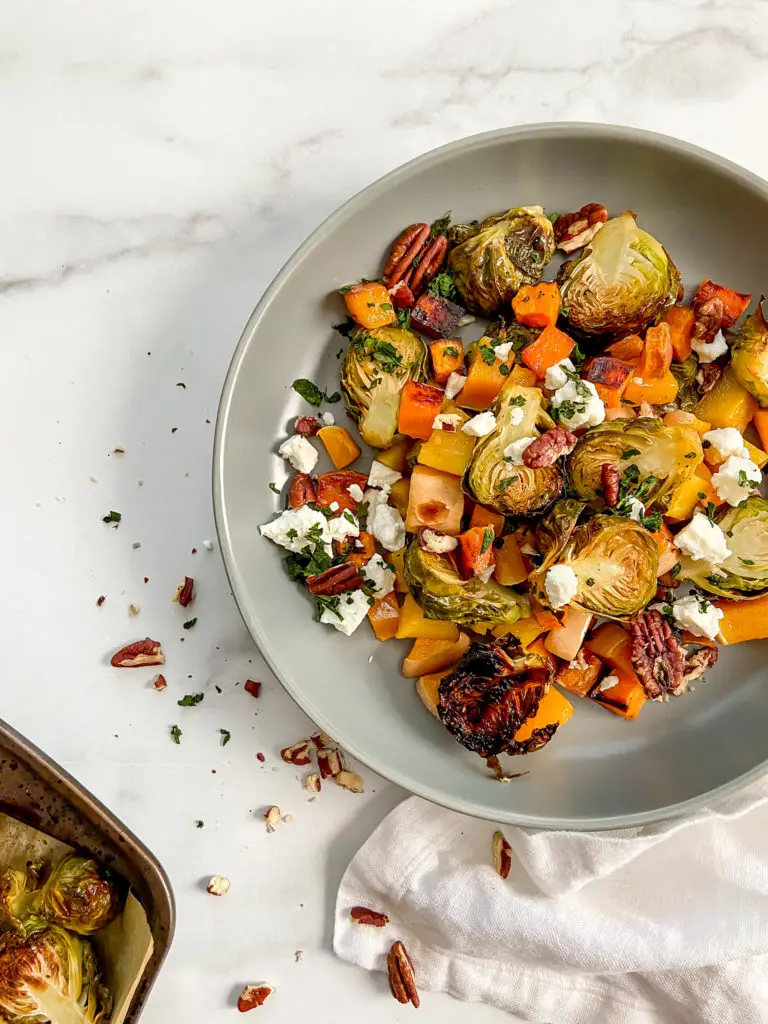
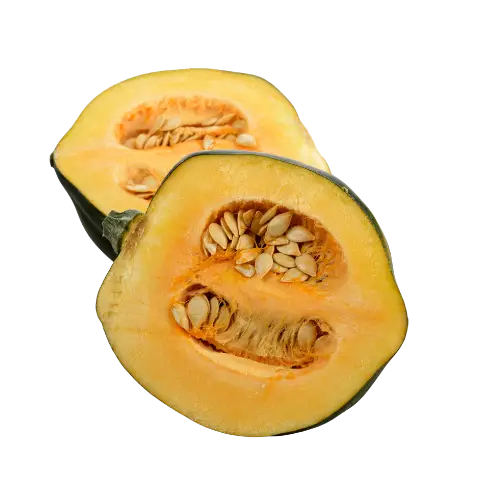
Acorn squash is the small, ridged winter squash with dark green skin and bright orange flesh. The natural sweetness intensifies during roasting, which makes it a fall and winter dinner staple. Halved and roasted with butter and brown sugar is the simplest preparation; stuffed acorn squash halves work as a complete vegetarian main. Reader favorites built on related winter-squash and fall-baking techniques include Maple Roasted Honeynut Squash, Easy Mini Pumpkin Pies, and Pumpkin Blondies where the maple-and-butter glaze, spiced custard filling, or brown-sugar batter all translate to acorn squash with minor adjustments.
Acorn squash and butternut squash are both winter squash but cook differently. Acorn has thinner flesh and faster cook time (35-45 minutes halved). Butternut has thicker flesh and longer cook time (50-60 minutes cubed). The skin of acorn squash is edible after roasting, which is unusual among winter squash. Most cooks scoop the flesh; eating the roasted skin is a textural choice.
The standard preparation: cut acorn squash in half lengthwise, scoop out seeds, brush with melted butter, sprinkle with brown sugar and cinnamon, roast cut-side-up at 400°F for 40-45 minutes until tender when pierced. The natural sugars caramelize at the edges of the cut surface. For savory versions, swap the brown sugar for olive oil, salt, and fresh sage.
For stuffed acorn squash, the halves hold sturdy fillings well. The standard filling is cooked wild rice + cranberries + toasted pecans + a small amount of melted butter, packed into the roasted halves. Bake an additional 10 minutes to warm through. Pairs particularly well with roasted chicken or pork tenderloin as a complete fall meal.
For storage, whole acorn squash keeps 1-2 months in a cool, dry pantry. Cut squash keeps 4-5 days refrigerated. Roasted flesh keeps 4-5 days refrigerated and reheats well in a 350°F oven covered with foil. The seeds can be roasted like pumpkin seeds: rinse, dry, toss with oil and salt, roast at 300°F for 30-45 minutes. Related fall-bake recipes on this site adapt well to acorn squash with a 1:1 puree substitution in pies, cakes, blondies, and quick breads. Browse honeynut squash, pumpkin, and salt for closely related cooking applications.
Common acorn squash recipes include roasted squash halves, stuffed squash, soups, and roasted vegetable dishes. The squash can also be sliced and baked with herbs, butter, or maple syrup. Its mild sweetness makes it suitable for both savory and lightly sweet preparations.
Acorn squash usually cooks in about 35 to 45 minutes when roasted at 400°F. The squash is typically cut in half or sliced, then roasted until the flesh becomes tender. Cooking time may vary depending on the size and thickness of the pieces.
Acorn squash can be roasted, baked, or steamed depending on the recipe. Roasting is the most common method and helps develop caramelized flavor. Simply cut the squash, remove the seeds, season it, and cook until the flesh becomes soft.
Acorn squash contains fiber, vitamins, and antioxidants that support overall health. It provides vitamin A, vitamin C, and potassium, which contribute to immune and heart health. Including squash in balanced meals adds nutrients and natural sweetness.
For more roasted-vegetable and fall-dinner options, see our butternut squash and sweet potatoes recipes.