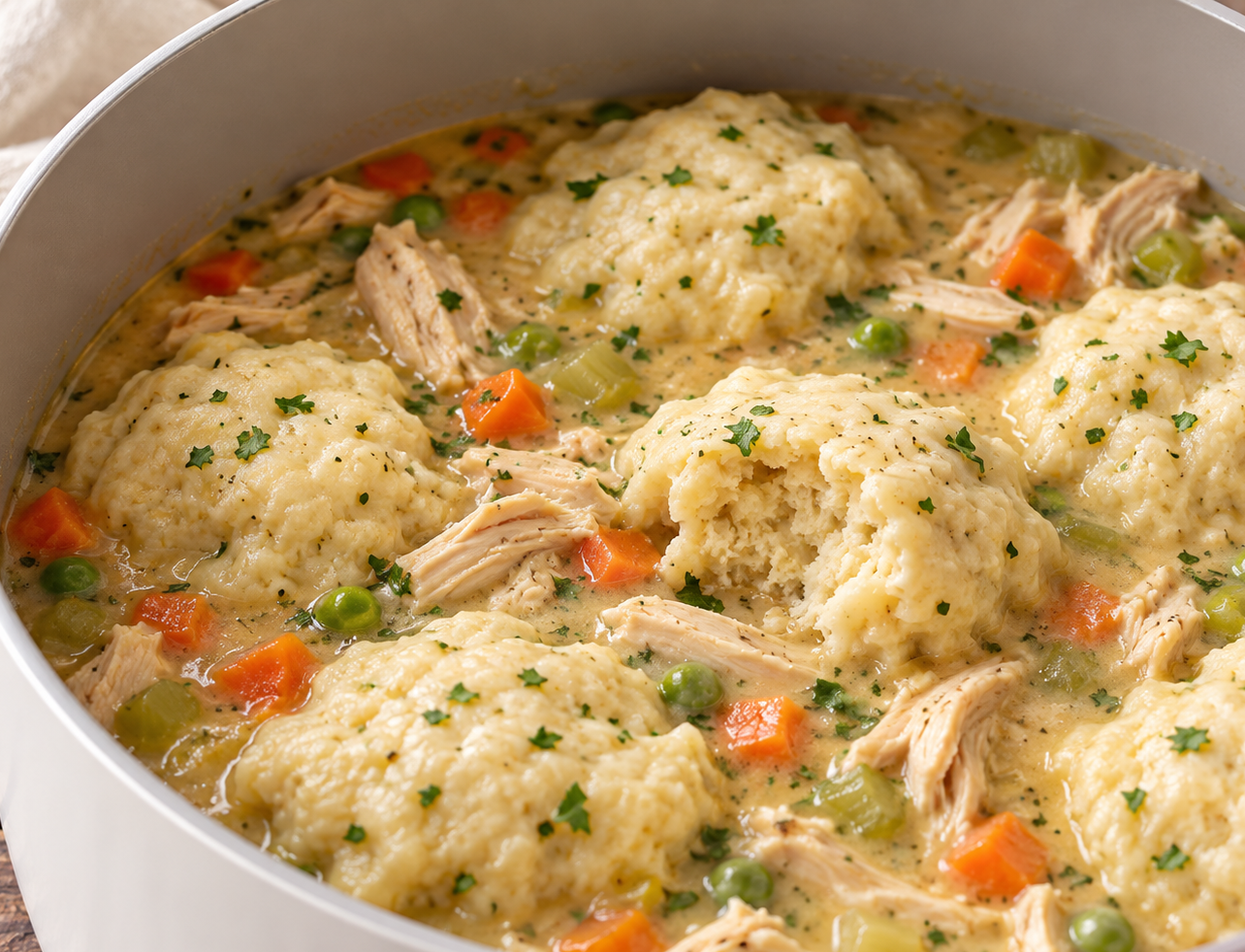
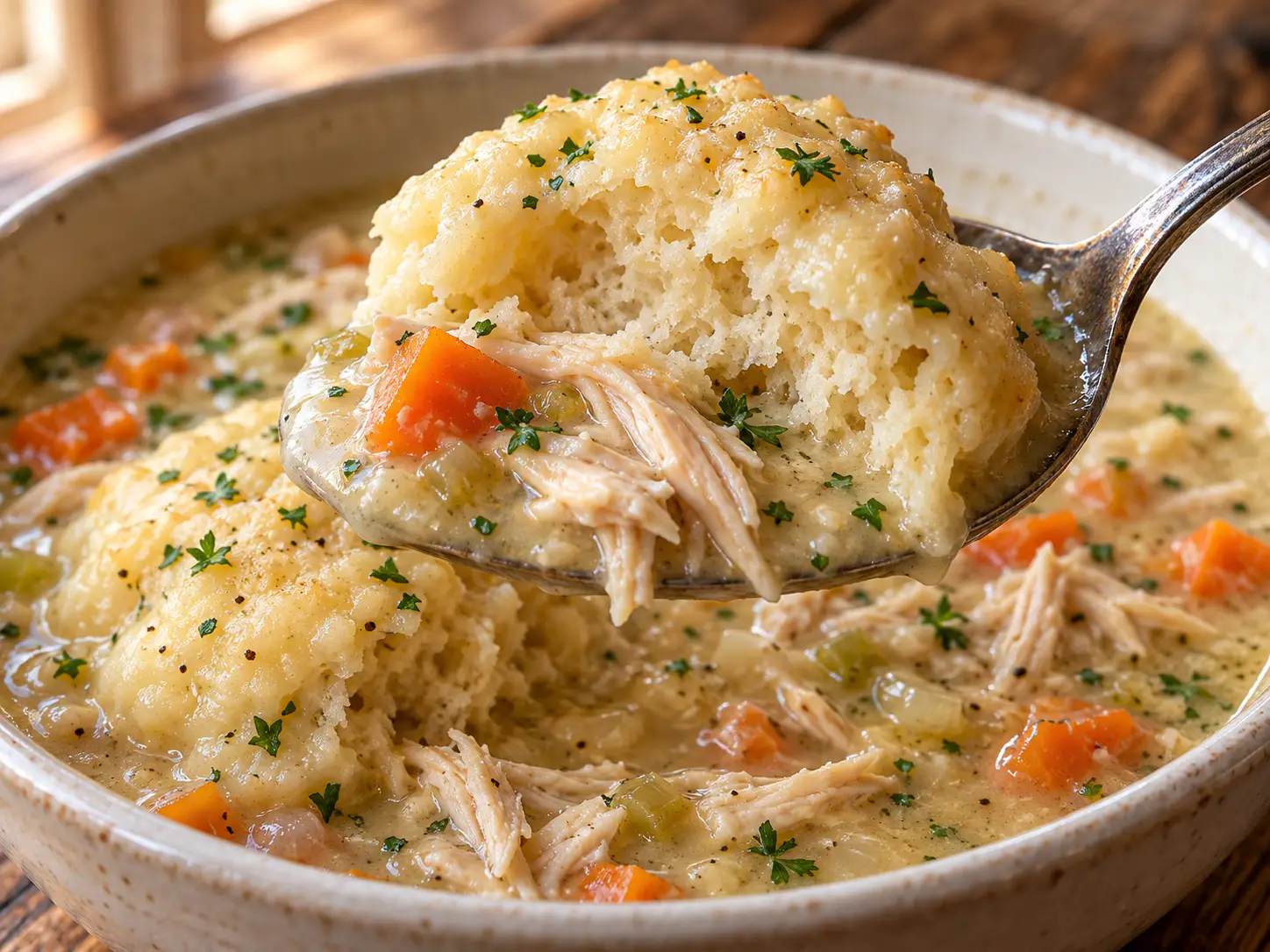
Why You’ll Love This One Pot Chicken and Dumplings
- One pot for cooking: The vegetables, creamy chicken base, and dumplings cook in the same Dutch oven.
- A rotisserie chicken shortcut: Start with cooked chicken so you can spend your time on the broth and dumplings.
- Fluffy homemade dumplings: No yeast, rolling pin, or biscuit cutter needed.
- No canned cream soup: Butter, flour, chicken broth, and a little cream create the base.
- A full dinner in a bowl: Chicken, vegetables, and dumplings make this a filling meal on its own.
- Easy to adjust: Skip the peas, change the herbs, or use leftover cooked chicken.
What Are Chicken and Dumplings?
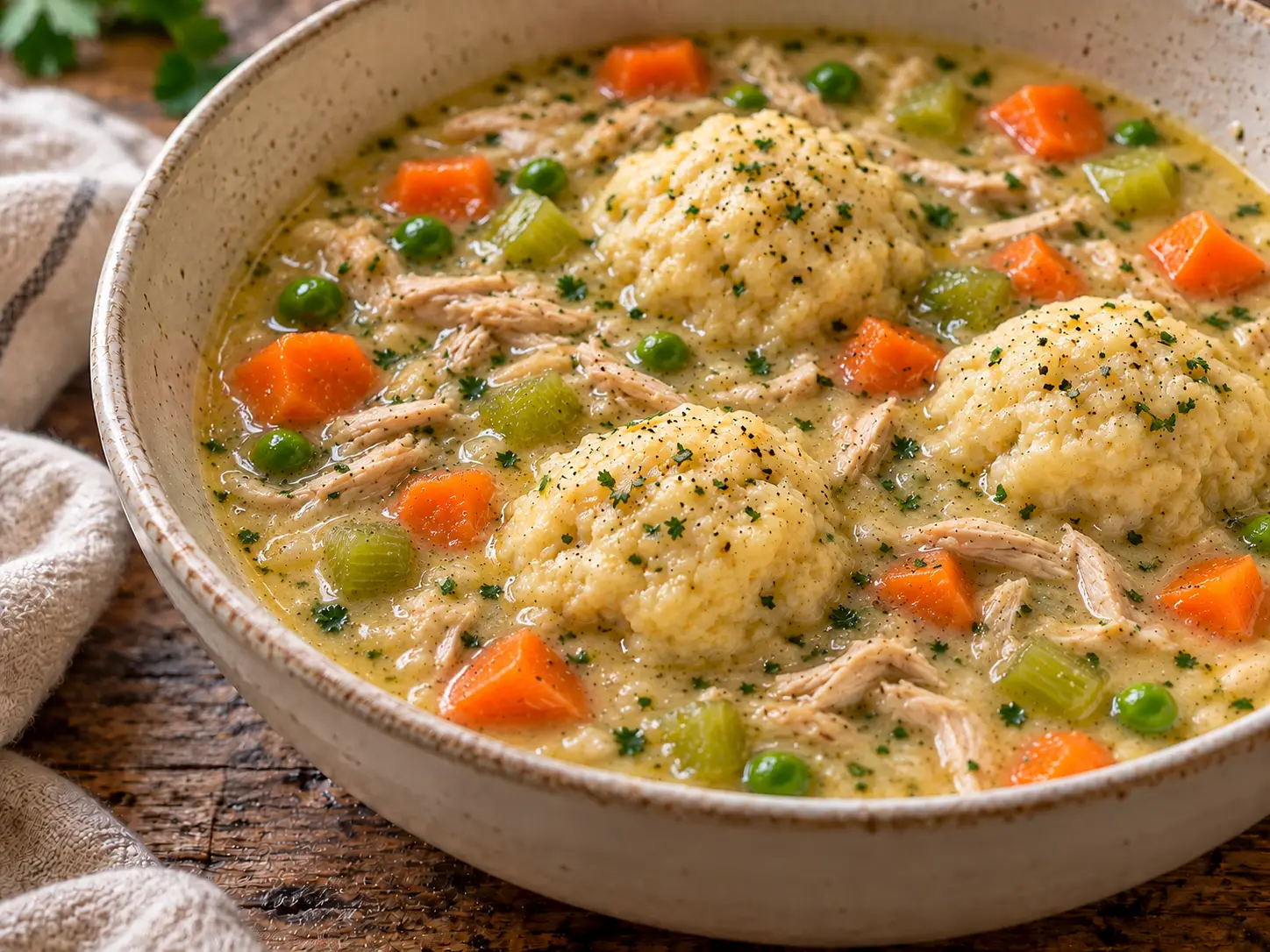
Chicken and dumplings is a savory dish of cooked chicken in broth with pieces of cooked dough. Some versions use thin rolled dumplings, while others use soft drop dumplings that puff up as they cook.
This recipe makes creamy chicken and dumplings with fluffy drop dumplings. Think of a tender biscuit-like center with a soft outside that soaks up the chicken broth.
The dumplings cook right on top of the chicken mixture. Their bottoms sit in the hot broth while the covered pot traps steam around the tops.
If you are looking for flat, noodle-like dumplings, that is a different dough and cooking method.
Ingredients You’ll Need
For the Creamy Chicken Base
Butter: Softens the vegetables and combines with flour to lightly thicken the broth. Unsalted butter gives you more control over the seasoning.
Onion, carrots, and celery: These create the vegetable base. Chop them into small, even pieces so they cook at a similar pace.
Garlic: Add it after the other vegetables soften so it does not burn.
All-purpose flour: Gives the broth body. You only need a small amount because the dumplings also add starch as they cook.
Low-sodium chicken broth: Makes seasoning easier, especially when using rotisserie chicken.
Cooked shredded chicken: Use breast meat, thigh meat, or a combination. Remove the skin and bones before measuring.
Heavy cream: Adds richness without needing a full carton.
Thyme and sage: Bring savory flavor to the chicken and broth without taking over the dish.
Frozen peas: Optional, but they add color and a little sweetness.
Salt and black pepper: Taste before adding much salt. Broth and cooked chicken vary by brand.
Fresh parsley: Adds a fresh finish when serving.
For the Buttermilk Dumplings
All-purpose flour: Measure by weight if possible. Too much flour makes the dumplings heavy.
Baking powder: Helps the dumplings rise. Use baking powder, not baking soda.
Fine salt: Seasons the dough itself.
Melted butter: Adds richness. Let it cool until warm rather than hot before mixing.
Buttermilk: Adds moisture and a mild tang.
Fresh parsley: Optional, but it looks pretty in the dumplings and ties in with the broth.
The Best Pot for Chicken and Dumplings
Use a wide, heavy-bottomed Dutch oven with a tight-fitting lid. A 6- to 7-quart pot gives the chicken base enough room and leaves space for the dumplings to expand.
Width matters as much as capacity. A narrow pot crowds the dumplings together, which can leave their centers undercooked. Aim for a pot about 11 to 12 inches across.
If your pot is narrower, cook the dumplings in batches instead of squeezing them into one crowded layer.
You will also need a mixing bowl, measuring cups and spoons, a wooden spoon, and a scoop or two spoons for portioning the dough.
How to Make One Pot Chicken and Dumplings
1. Soften the Vegetables
Melt the butter in your Dutch oven over medium heat. Add the onion, carrots, and celery.
Cook for 7 to 9 minutes, stirring often, until the onion softens and the carrots begin to become tender. The vegetables should look glossy, with no dark browning needed.
Add the garlic, thyme, and sage. Stir for about 30 seconds.
2. Build the Broth
Sprinkle the flour over the vegetables and stir for 1 minute. This mixes the flour with the butter and coats the vegetables.
Slowly pour in the chicken broth while stirring. Start with a small splash to loosen the flour mixture, then gradually add the rest.
Scrape along the bottom of the pot as you stir to prevent flour pockets.
Bring the broth to a gentle simmer and cook uncovered for 5 to 7 minutes. The carrots should be nearly tender, and the broth should lightly coat a spoon.
3. Add the Chicken and Cream
Stir in the shredded chicken, heavy cream, and peas, if using.
Simmer gently for 3 to 5 minutes, until everything is hot. Taste and add salt and pepper as needed.
At this stage, the base should look like a lightly creamy soup. If it already looks like thick gravy, add a little more broth before adding the dumplings.
The dumplings need enough liquid to cook, and the base will continue thickening.
4. Mix the Dumpling Dough
Whisk the flour, baking powder, and salt in a medium bowl.
Stir the cooled melted butter into the buttermilk, then pour the mixture into the dry ingredients. Add parsley if you are using it.
Fold with a spoon or spatula just until the flour disappears.
The dough should be thick, sticky, and scoopable. It should hold a soft mound on a spoon without feeling dry or firm enough to knead.
If dry flour remains after gentle mixing, add buttermilk 1 tablespoon at a time. Stop mixing once the dough comes together.
5. Add the Dumplings
Check that the chicken base is gently bubbling.
Divide the dough into 12 similar mounds, roughly 3 tablespoons each, and drop them over the surface. Leave small gaps between them so they have room to puff up.
Place the dumplings on top of the broth rather than pushing them underneath it.
Do not stir once the dumplings are in the pot.
6. Cover and Cook
Cover with the lid and maintain a gentle simmer for 18 minutes.
The exact burner setting depends on your stove and pot. You want steady, quiet bubbling rather than a hard boil.
Keep the lid closed during this first cooking period. The trapped steam helps cook the dumpling tops and centers.
After 18 minutes, cut open one of the largest dumplings. The center should look cooked and soft, with no wet dough or raw flour pockets.
If it is still doughy, cover the pot again and cook for another 3 to 5 minutes, then check again.
7. Rest and Serve
Once the dumplings are cooked, remove the pot from the heat and let it rest uncovered for 5 minutes.
The broth will thicken a little as it stands.
Ladle the chicken and vegetables into bowls, add two dumplings to each serving, and finish with parsley and black pepper.
Tips for Fluffy Homemade Dumplings
Measure the Flour Carefully
Use 250 grams of flour for the dumpling dough.
If measuring with cups, spoon the flour into the cup and level the top. Scooping directly from the bag can pack in more flour than the dough needs.
Check Your Baking Powder
Old baking powder can leave the dumplings dense. Check the date and replace it if you are unsure how long it has been open.
Keep the Dough Soft
The dough should stick to the spoon a little. If it feels firm enough to roll into neat balls, it may be too dry.
Add a little buttermilk rather than trying to force a stiff dough into the pot.
Mix Gently
The dough does not need to look perfectly smooth. A few uneven spots are fine.
Repeated stirring can make the dumplings chewy, so stop once there are no dry flour pockets.
Make Similar-Sized Dumplings
A large dumpling takes longer to cook than a small one. Similar portions help the entire batch finish together.
Avoid making a few oversized scoops just to use up the remaining dough.
Start With Simmering Broth
Add the dough only after the base returns to a gentle simmer.
Lukewarm liquid can let the dough spread before it begins to set.
Leave the Lid Closed
Save the first check for the end of the initial 18-minute cooking period. Opening the pot repeatedly lets steam escape and can lengthen cooking.
Chicken and Dumplings Troubleshooting
Why Are My Dumplings Dense?
Too much flour, too much mixing, or old baking powder can produce heavy dumplings.
The dough should be soft and sticky before cooking. If it feels like firm bread dough, it likely needs more liquid.
Why Are the Centers Still Raw?
The dumplings may be too large, crowded, or cooking over heat that is too low.
Put the lid back on, make sure the broth is gently simmering, and cook in additional 3- to 5-minute intervals until the centers are done.
Why Did the Dumplings Fall Apart?
A hard boil or stirring after adding the dough can break the dumplings apart.
Keep the broth at a gentle simmer and leave the dough mounds alone while they cook.
Why Is the Broth Too Thick?
The flour and dumplings both thicken the base, and the dumplings absorb liquid as they sit.
Add warm chicken broth in small amounts around the dumplings until the texture is how you like it.
Why Is the Broth Too Thin?
Let the finished dish rest for 5 minutes first.
If you still want it thicker, lift the cooked dumplings onto a plate. Stir 1 teaspoon of cornstarch with 1 tablespoon of cold water, add it to the simmering base, and cook for 1 to 2 minutes.
Return the dumplings gently. Repeat with a small amount of slurry only if needed.
Easy Swaps and Variations
Use Rotisserie Chicken or Leftover Chicken
Both work well. Remove the skin and bones, then shred or chop the meat into bite-size pieces.
You will need about 4 cups, or 560 grams, of cooked chicken.
Start With Raw Chicken
Use about 1½ pounds of boneless, skinless chicken breasts or thighs.
After adding the broth, place the chicken in the pot and simmer gently until its thickest part reaches 165°F, checking with a food thermometer. Remove, shred, and return the chicken before adding the cream, peas, and dumplings. Allow extra cooking time for this version. Food Safety and Inspection Service
Substitute for Buttermilk
Put 1 tablespoon of lemon juice or white vinegar in a liquid measuring cup.
Add whole milk to reach the 1-cup line, stir, and let stand for 5 to 10 minutes.
This mixture is thinner than cultured buttermilk. Add it gradually and stop when the dough is soft and scoopable.
Make a Lighter Creamy Base
Replace the heavy cream with half-and-half.
Keep the broth at a gentle simmer after adding it. The result will be a little less rich.
Skip the Cream
Replace the cream with ½ cup of additional broth.
The flour and dumplings will still give the broth some body, but the finished dish will be less creamy.
Change the Herbs
Add chopped chives to the dumpling dough or use fresh thyme in the broth.
For fresh thyme, start with 1 tablespoon of leaves in place of the dried thyme.
Leave Out the Peas
Simply skip them. The carrots and celery still give the dish plenty of vegetables.
What to Serve With Chicken and Dumplings
I would keep the sides simple.
A crisp green salad with a tart dressing balances the creamy broth. Roasted green beans or broccoli add something fresh to the plate.
Bread is optional since the dumplings already fill that role. If you want it, a small piece of crusty bread is useful for the broth left in your bowl.
How to Store and Reheat Chicken and Dumplings
Refrigerating Leftovers
Divide leftovers into shallow containers and refrigerate within 2 hours, or within 1 hour if the surrounding temperature is above 90°F.
Keep the refrigerator at 40°F or below and use leftovers within 3 to 4 days. If you used leftover cooked chicken, count storage time from when that chicken was originally cooked. Food Safety and Inspection Service
Store the dumplings separately if you want to limit how much broth they absorb overnight.
Reheating on the Stovetop
Warm the chicken base in a saucepan over medium-low heat, adding a splash of broth to loosen it.
Add the dumplings, cover, and heat gently until the food reaches 165°F throughout. Avoid vigorous stirring so the dumplings keep their shape. Food Safety and Inspection Service
Reheating an Individual Bowl
Microwave loosely covered in short intervals, moving the chicken base around between intervals.
Check that the dumpling centers heat through, too. A hot bowl of broth can still have a cool dumpling in the middle.
Can You Freeze Chicken and Dumplings?
Yes, but freezing can change the texture.
For the best result, freeze the chicken base before adding the cream and dumplings. Use freezer-safe containers with room for expansion and aim to use it within 2 to 3 months for quality.
Thaw in the refrigerator, reheat, add the cream, and make a fresh batch of dumplings.
You can freeze the finished dish, but the cream may separate and the dumplings may become softer when reheated.
Make-Ahead Tips
Chop the vegetables and portion the cooked chicken the day before.
You can also whisk the dry dumpling ingredients in advance and keep them covered at room temperature.
For a bigger head start, cook the chicken base through the chicken-and-cream step, then cool and refrigerate it promptly.
The next day, reheat it to a gentle simmer, adding broth if needed. Mix the dumpling dough just before you are ready to cook it.
Once liquid meets baking powder, the dough begins changing. For the best rise, do not mix the wet dumpling dough hours ahead of dinner.
More Recipes to Try
If you love a cozy chicken dinner, these Sugar Face Bakes recipes belong on your next meal plan:
Frequently Asked Questions
Can I Make Chicken and Dumplings With Rotisserie Chicken?
Yes. This recipe uses about 4 cups of cooked shredded chicken. Remove the skin and bones first, and taste the broth before adding salt because rotisserie chicken is already seasoned.
Is This Recipe Really One Pot?
All the cooking happens in one pot. You will use a separate bowl to mix the dumpling dough, but there is no second pan or baking dish to heat.
What Is the Difference Between Drop Dumplings and Rolled Dumplings?
Drop dumplings use a soft dough that is spooned onto simmering broth and cooked covered.
Rolled dumplings use a firmer dough that is rolled out and cut into strips or pieces. This recipe is designed for drop dumplings.
Do I Cook Dumplings Covered or Uncovered?
Cook these dumplings covered. The trapped steam helps cook the tops and centers.
Keep the lid closed for the first 18 minutes, then check one of the largest dumplings.
How Do I Know When Dumplings Are Done?
Cut open a large dumpling. The inside should be soft and cooked through, with no wet dough or raw flour pockets.
Floating or puffing up alone does not prove the center is ready.
Can I Use Milk Instead of Buttermilk?
Yes. Use the milk-and-lemon-juice substitute listed above.
Since it is thinner than cultured buttermilk, pour it in gradually and watch the dough texture.
Can I Use Canned Biscuits?
You can make a biscuit-based version, but refrigerated biscuit dough is different from this drop dumpling dough.
Follow a recipe written for your biscuit product, including its piece size and cooking instructions. Do not assume the homemade dumpling timing will apply.
Can I Make This Without Heavy Cream?
Yes. Leave out the cream and replace it with ½ cup of broth.
The flour and dumplings will still give the broth some body.
Can I Make Gluten-Free Chicken and Dumplings?
A gluten-free version needs changes to both the broth thickener and dumpling dough.
Use a recipe developed for your gluten-free flour blend rather than assuming a direct swap will give the same rise and texture. This recipe is written for wheat flour.
Can I Double the Recipe?
The chicken base can be doubled in a large enough pot, but the dumplings still need surface space.
Use two wide pots or cook the dumplings in batches. Doubling the ingredients in the same 6-quart pot would crowd them.
Can I Make a Smaller Batch?
Yes. Halve the ingredients and make 6 dumplings of the same size as the full recipe.
Use a smaller, wide pot with a fitted lid and check the dumplings after the same initial 18-minute cooking period.
Can I Make This in a Slow Cooker?
This recipe is written for the stovetop.
A slow cooker heats differently and needs separate instructions for thickening the broth and cooking the dumplings. Use a recipe written for that appliance.
Can I Freeze Chicken and Dumplings?
Yes, but the dumplings may soften and the creamy broth may separate.
For better texture, freeze the chicken base before adding the cream and dumplings, then finish the recipe after thawing and reheating.
Why Do My Leftovers Look So Thick?
The dumplings absorb broth while stored, and the starch thickens as it cools.
Add a splash of broth when reheating and warm gently until the texture loosens.