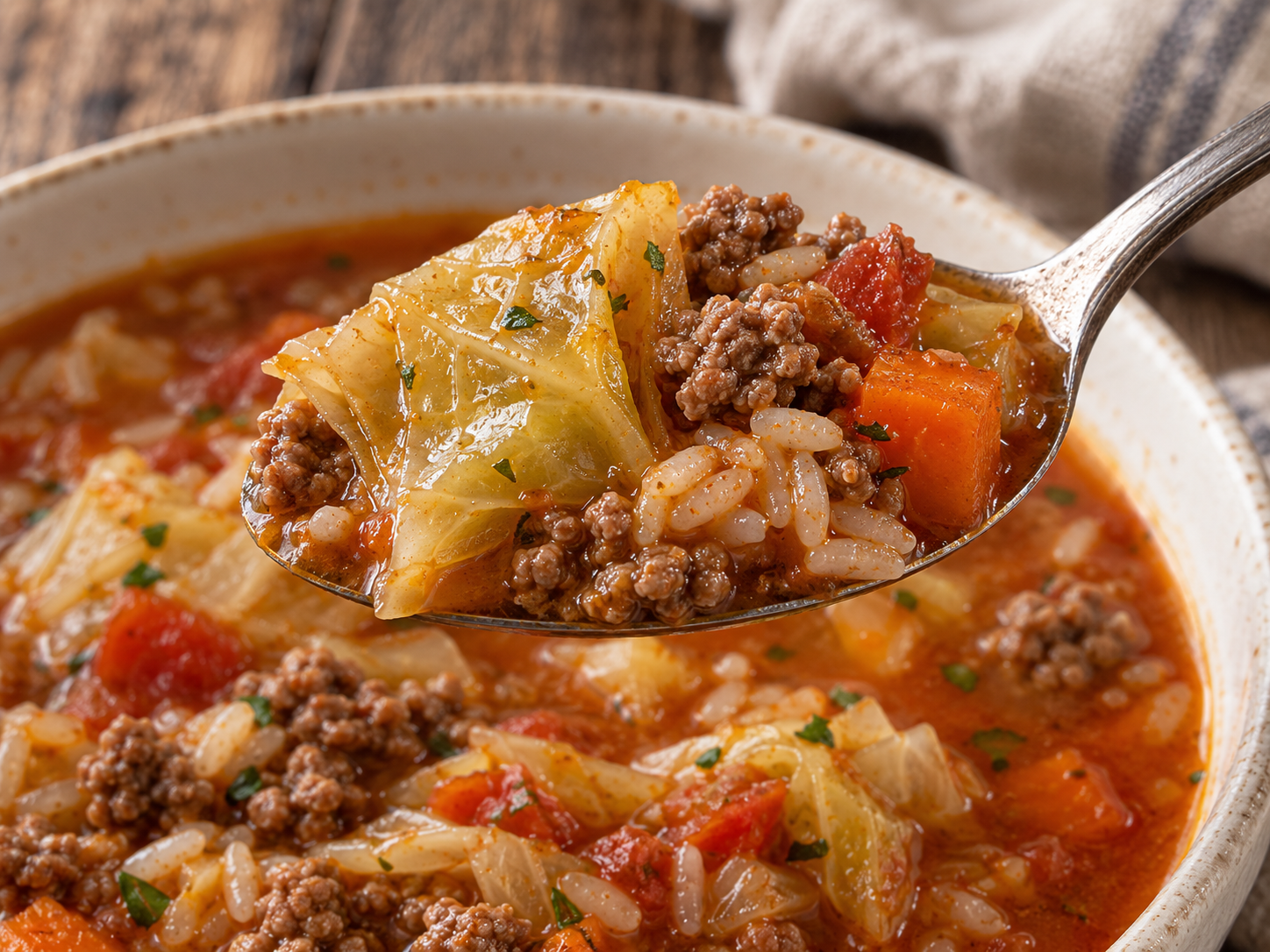
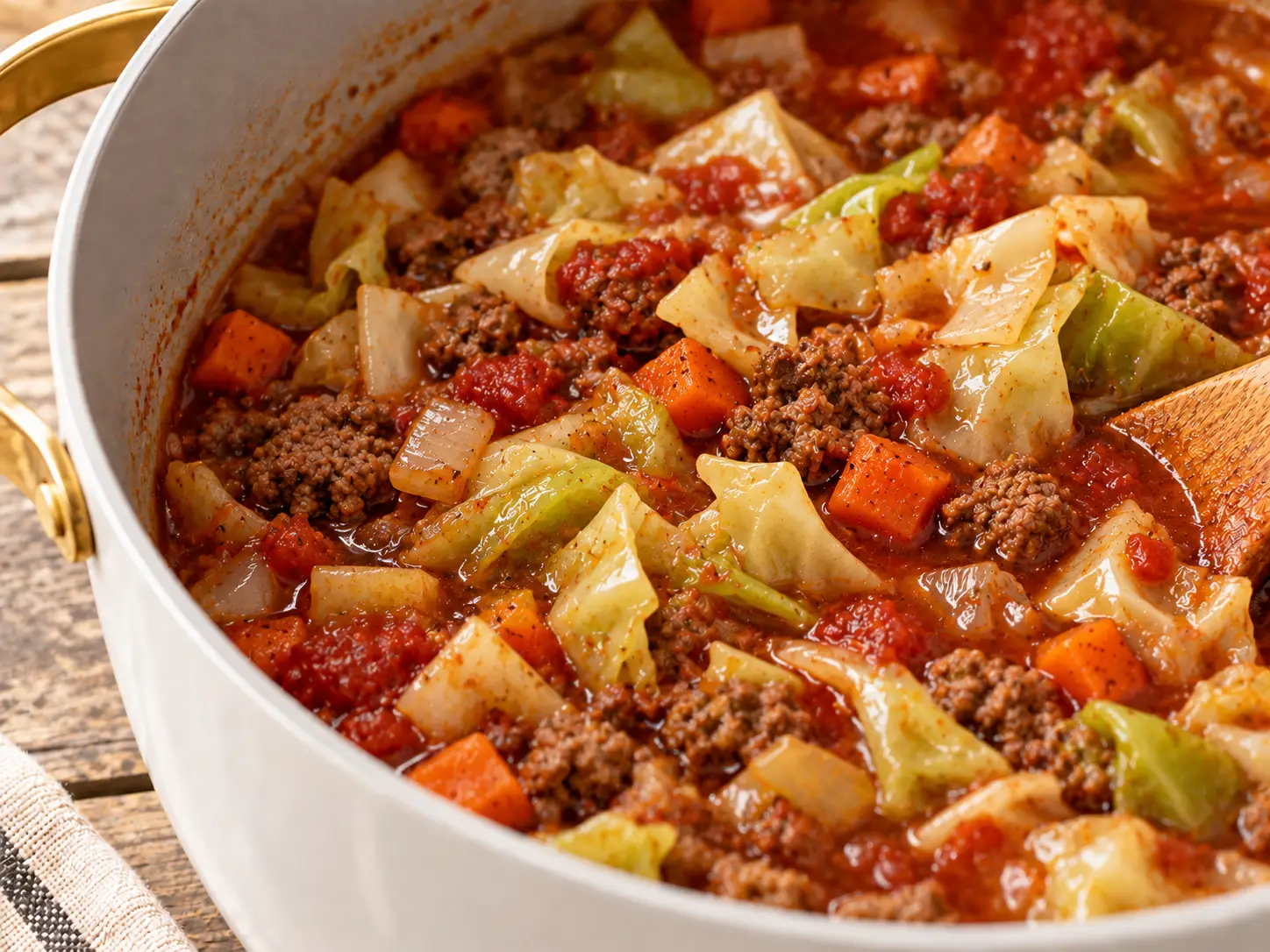
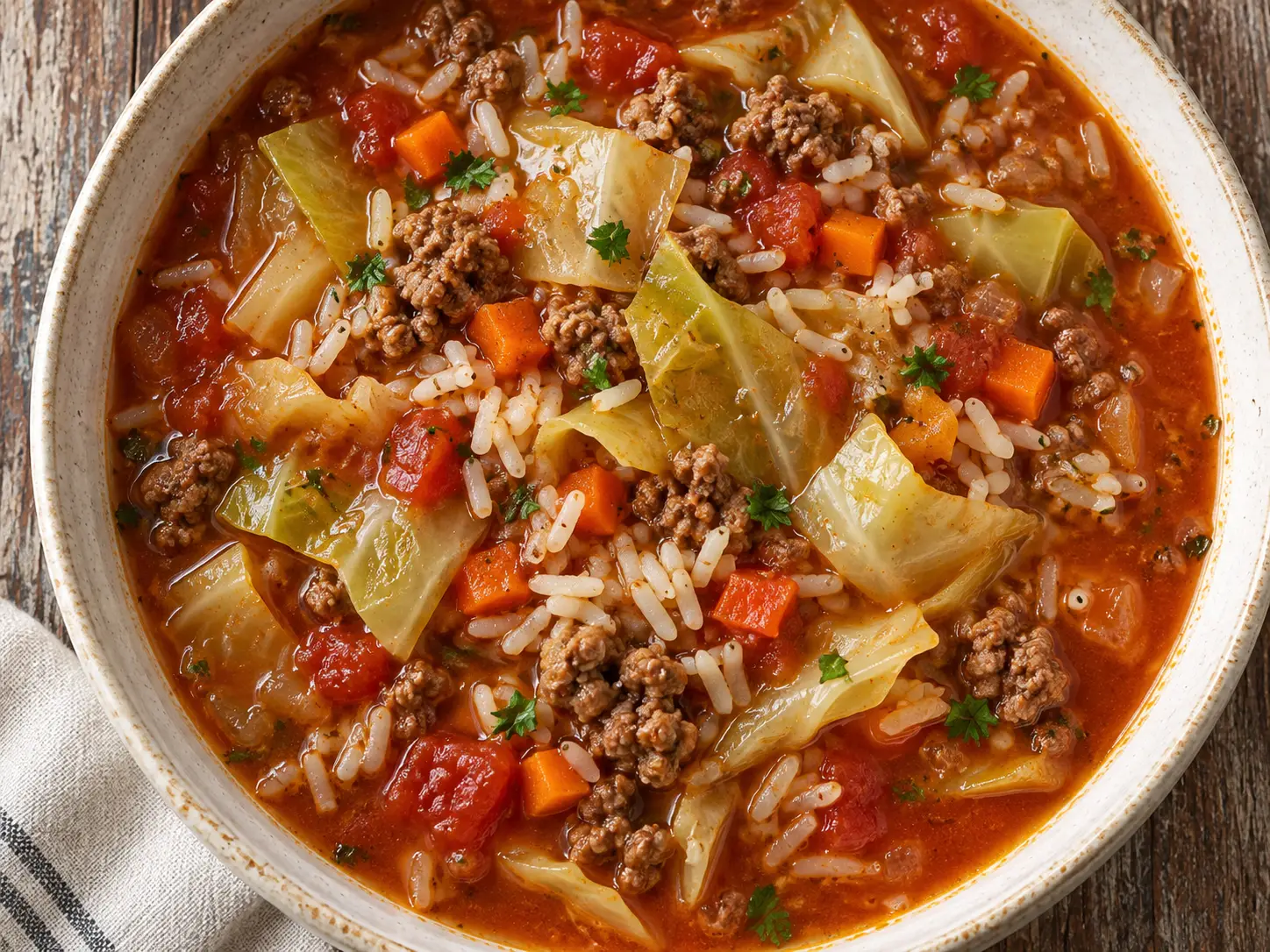
A big pot of cabbage roll soup is the perfect reason to bring out my white Caraway Dutch oven. The light-gray ceramic interior makes those colorful carrots, tender cabbage, and rich tomato broth look so pretty, and the gold handles are such a cute detail. For this recipe, use a pot with enough room to stir comfortably as the cabbage softens, and keep the heat at a gentle simmer. If Caraway has been on your kitchen wish list, use my link for a generous discount applied at checkout. As a Caraway ambassador, I may earn a commission when you shop through my link or code.
Why You’ll Love This Cabbage Roll Soup
- All the familiar flavors: Beef, cabbage, rice, and tomatoes come together in every spoonful.
- Simple preparation: Chopping and simmering replace the work of filling and rolling individual cabbage leaves.
- A generous batch: The recipe makes eight servings, enough for dinner and a few lunches.
- Flexible rice options: Freshly cooked rice, brown rice, or safely stored leftover rice can all work.
- Easy to portion: Keep the rice separate when you want to freeze the soup or reheat individual bowls.
- No cream needed: The tomato broth has plenty of flavor without dairy.
What Is Cabbage Roll Soup?
Cabbage roll soup is made with ingredients commonly found in tomato-based stuffed cabbage rolls: ground meat, cabbage, rice, and tomatoes. Instead of wrapping the filling in whole cabbage leaves, you chop the cabbage and simmer it with the beef and broth.
You may also see it called stuffed cabbage soup or unstuffed cabbage roll soup. Recipes vary. Some include pork, dill, a sweeter tomato sauce, or other seasonings. This version uses ground beef, green cabbage, carrots, and long-grain rice in a savory tomato broth.
Think of it as a convenient soup inspired by cabbage rolls. It is not meant to represent every family’s version of the dish.
What Does Cabbage Roll Soup Taste Like?
The first thing you taste is the savory tomato broth, followed by the beef, tender cabbage, and mild sweetness from the carrots and onion. Rice adds a soft, filling texture without taking over the soup.
As green cabbage cooks, its flavor becomes milder and sweeter. It blends into the tomato broth rather than tasting like a bowl of raw cabbage.
This version leans savory. There is no added sugar in the main recipe, though you can add a small amount if you prefer the slightly sweet tomato sauce found in some stuffed cabbage recipes.
Ingredients for Cabbage Roll Soup with Ground Beef and Rice
Ground Beef
Use 90% lean ground beef for a good balance of flavor and fat. It gives the broth a savory base without leaving a thick layer of grease on top.
If you use 80/20 beef, drain excess fat after browning. Very lean beef also works, though it may need a little more care during browning to keep it from sticking.
Break the meat into small pieces as it cooks. Smaller crumbles give you a little beef in each spoonful instead of large chunks that are awkward to eat.
Green Cabbage
Ordinary green cabbage is a good choice because it holds its shape during simmering and becomes tender without falling apart immediately.
You need about 6 cups chopped, approximately 1¼ pounds or 570 grams after removing the core.
Cabbage heads vary in size, so measure the chopped cabbage rather than relying on “half a head.” Cut it into roughly ¾-inch pieces so it fits comfortably on a spoon.
Rice
This recipe uses 2¼ cups cooked long-grain white rice, usually made from about ¾ cup dry rice. Cook it according to the package instructions while the soup simmers.
Cooking the rice separately lets you decide exactly how soft it should be. It also keeps the rice from soaking up too much broth during the soup’s cooking time.
For dinner tonight, stir the cooked rice into the finished soup. For meal prep, add rice to each bowl and ladle the soup over it.
Crushed Tomatoes and Tomato Sauce
Crushed tomatoes give the broth body, while plain canned tomato sauce makes it smooth enough to coat the cabbage and beef.
Use unseasoned tomato sauce rather than a jar of pasta sauce, which can change the flavor and salt level.
Tomato paste adds a deeper tomato flavor. Cook it briefly with the beef and vegetables before adding the liquid.
Beef Broth
Reduced-sodium beef broth allows more control over the seasoning. Start with 6 cups, then add a little more at the end if you prefer a thinner soup.
Brands differ in saltiness, so taste before adding extra salt.
If you only have regular beef broth, begin with less added salt and season the finished soup as needed.
Onion, Carrots, and Garlic
Onion and garlic build the savory base. Carrots add a gentle sweetness that balances the tomatoes without requiring sugar in the main recipe.
Dice the onion and carrots fairly small. Large carrot chunks can take longer to soften than the cabbage.
Paprika, Worcestershire Sauce, and Bay Leaf
Sweet paprika gives the broth a warm flavor. Worcestershire sauce adds a small amount of savory depth, and a bay leaf seasons the soup as it simmers.
Smoked paprika can be used if you want a smoky flavor, but it will change the character of the broth. Start with half the amount and taste.
Apple Cider Vinegar
A teaspoon of apple cider vinegar stirred in at the end brightens the tomato broth.
Add it gradually. You want a little lift in flavor, not a strongly sour soup. If your tomatoes already taste sharp, use less vinegar or leave it out.
How to Cut Cabbage for Soup
Remove damaged outer leaves and rinse the cabbage. Cut the head in half through the stem, then cut each half into quarters.
Slice away the firm core from each quarter. Lay a quarter flat and cut it into strips, then cut across those strips to make pieces about ¾ inch wide.
A few uneven pieces are fine. The goal is cabbage that cooks at a similar pace and fits on a spoon.
Very thin shreds soften quickly and can become limp during a long simmer. Large squares can make the soup awkward to eat. A medium chop gives you tender pieces with some texture left.
What Is the Best Rice for Cabbage Roll Soup?
Long-grain white rice is a good starting point because it has a mild flavor and holds its shape when cooked properly.
Plain basmati rice also works. Jasmine rice can be used, though its aroma will be more noticeable.
Brown rice gives the soup a chewier texture. Cook it separately and use the same amount of cooked rice listed in the recipe.
Avoid using a seasoned rice mix unless you want those seasonings in the broth. Plain rice gives you better control over the finished flavor.
Why Cook the Rice Separately?
Rice absorbs liquid as it cooks and continues soaking up broth as the soup sits. That means a soup that looks perfect at dinner can become much thicker by the next day.
Cooking the rice separately solves several practical problems:
- You can cook it until just tender.
- You can add more or less to each serving.
- You can freeze the soup base without rice.
- You can reheat the broth without repeatedly cooking the rice.
- You can use plain cooked rice you already have.
If you are serving the whole batch immediately, stirring the rice into the pot is convenient. If you expect leftovers, keeping it separate usually gives you a better texture.
How to Make Cabbage Roll Soup
1. Start the Rice
Cook the rice in a separate saucepan according to its package directions. You can do this while preparing the soup, so it does not need to add extra time to dinner.
If you already have plain cooked rice, measure out 2¼ cups and keep it refrigerated until you are ready to use it.
2. Brown the Ground Beef
Heat the oil in a large pot over medium-high heat. Add the beef and break it into small pieces.
Let it sit briefly between stirs so it can brown rather than simply release liquid. Drain excess fat if needed.
Ground beef should reach 160°F, measured with a food thermometer. Browning adds flavor, but color alone is not a safety check. www.fsis.usda.gov
3. Soften the Vegetables
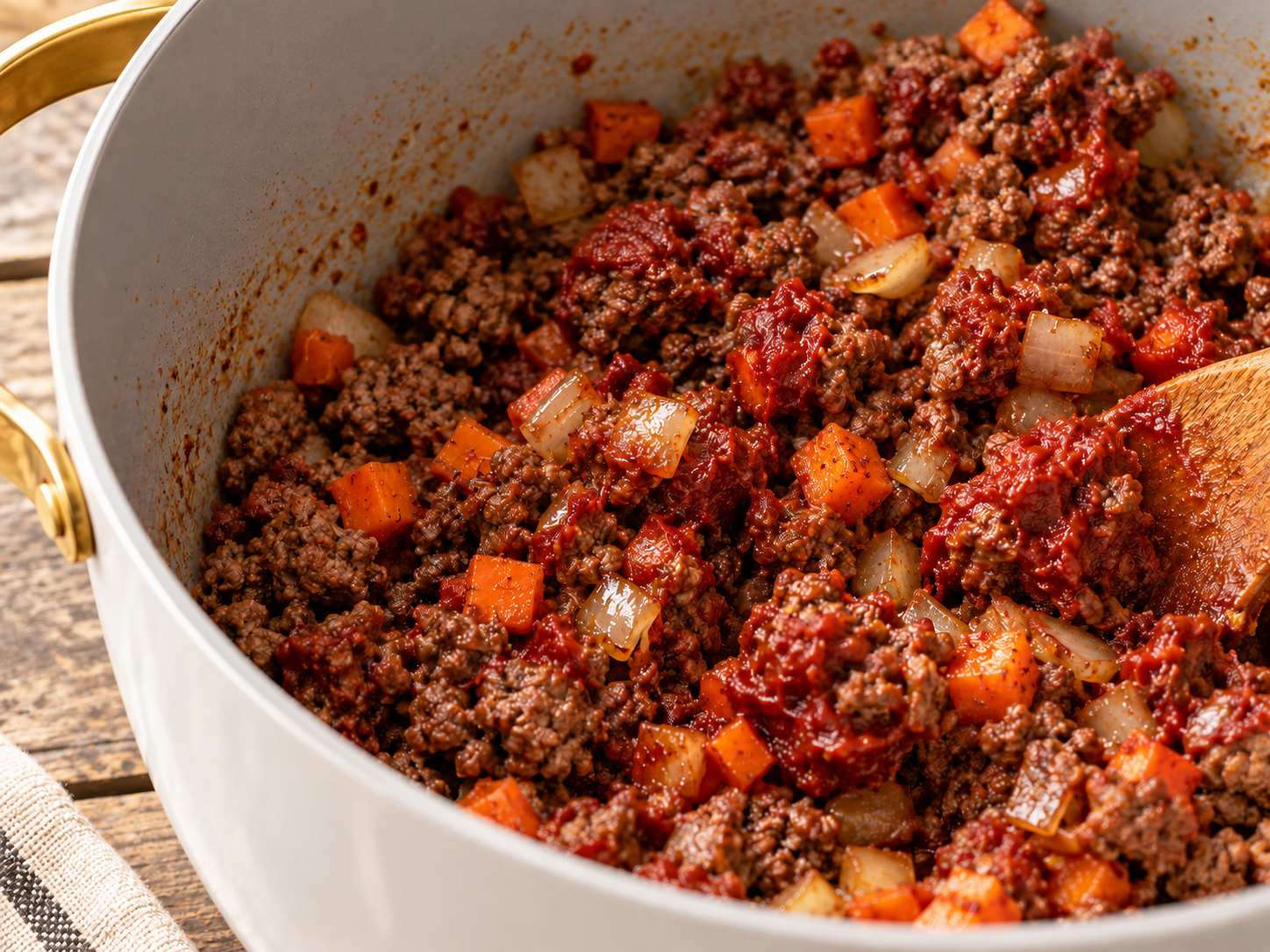
Add the onion and carrots to the beef. Cook until the onion starts to soften, then stir in the garlic, tomato paste, and paprika.
Give the tomato paste about a minute in the pot, stirring so it does not scorch. This helps the flavor blend into the broth.
4. Add the Cabbage and Broth
Stir in the chopped cabbage, crushed tomatoes, tomato sauce, beef broth, Worcestershire sauce, bay leaf, salt, and pepper.
Scrape up any browned bits from the bottom of the pot.
Bring the soup to a boil, then lower the heat to a gentle simmer. Partially cover and cook until the cabbage and carrots are tender, about 25 to 35 minutes.
5. Finish with Rice and Vinegar
Remove the bay leaf. Stir in the cooked rice and heat it through, then add the vinegar.
Taste and adjust the salt and pepper. Add a little more broth if you prefer a thinner consistency.
If you are planning on leftovers, leave the rice out of the main pot. Spoon properly heated rice into individual bowls before adding the hot soup.
Tips for Flavorful Cabbage Roll Soup
Give the Beef Time to Brown
Use a wide pot and avoid stirring constantly at the beginning.
If the beef releases a lot of liquid, let that liquid cook off before continuing with the vegetables. A little browning adds flavor to the whole pot.
Use a Large Enough Pot
A 6- to 7-quart pot gives the cabbage room before it softens.
The raw cabbage may look bulky when you first add it, but it settles as it cooks. Stir carefully until it begins to soften.
Keep the Simmer Gentle
A rolling boil is not necessary once the ingredients are combined.
A gentle simmer cooks the vegetables evenly and reduces the chance of losing too much broth.
Taste the Cabbage Before Serving
The cabbage should be tender enough to bite through easily, with no tough raw center.
If it still feels firm, continue simmering and check again in five minutes.
Add Rice with Leftovers in Mind
Rice continues to absorb liquid after cooking.
Adding all of it to the pot is convenient for a meal served immediately, but storing it separately gives you better control the next day.
Balance the Tomatoes at the End
Taste after the vegetables have softened.
If the broth tastes flat, it may need a little salt or the teaspoon of vinegar. If the tomatoes are already quite sharp, use less vinegar or omit it.
For a sweeter cabbage roll flavor, stir in 1 teaspoon brown sugar, then taste before adding any more. This is optional and is not included in the nutrition estimate.
Recipe Variations and Substitutions
Cabbage Roll Soup with Brown Rice
Use 2¼ cups cooked brown rice instead of white rice.
Cook it separately according to its package directions. It generally takes longer, so start it earlier.
Ground Turkey Cabbage Soup
Replace the beef with ground turkey and use beef, chicken, or vegetable broth.
Cook ground turkey to 165°F. The finished soup will have a milder meat flavor, and its nutrition will depend on the turkey’s fat percentage.
Beef and Pork Cabbage Roll Soup
Use ½ pound ground beef and ½ pound ground pork.
Drain excess fat after browning, then continue with the recipe.
Cabbage Soup Without Rice
Omit the rice for a lighter broth-based soup.
Start with 5 cups broth and add more as needed. You can also stir in cooked cauliflower rice shortly before serving, but the texture will be different.
Spicy Cabbage Roll Soup
Add a pinch of red pepper flakes with the paprika.
Start small, especially if you are serving children or anyone who prefers mild soup. You can always add more heat to individual bowls.
Gluten-Free Cabbage Roll Soup
Use broth and Worcestershire sauce labeled gluten-free and check the labels on the other packaged ingredients.
Beef, cabbage, and plain rice do not contain gluten, but packaged sauces and broths can vary.
Can You Make Cabbage Roll Soup in a Slow Cooker?
For a slow cooker variation, brown the beef and soften the onion and carrots on the stove first.
Stir in the garlic, tomato paste, and paprika, then transfer the mixture to a 6-quart or larger slow cooker.
Add the cabbage, tomatoes, tomato sauce, broth, Worcestershire sauce, bay leaf, salt, and pepper.
Cook on low for approximately 6 to 8 hours or high for 3 to 4 hours, until the vegetables are tender. Slow cookers vary, so use the cabbage and carrot texture as your guide.
Keep the cooked rice separate and add it shortly before serving. Finish with the vinegar after cooking.
These are suggested cooking ranges for a variation, rather than a tested slow cooker method. Begin checking the vegetables toward the earlier end of the range.
What to Serve with Cabbage Roll Soup
This beef and cabbage soup already includes meat, vegetables, and rice, so the sides can stay simple.
- Crusty bread: Perfect for dipping into the tomato broth.
- Garlic toast: Adds a little crunch alongside the tender vegetables.
- A green salad: A light vinaigrette works well with the savory soup.
- Sour cream: A small spoonful gives the broth a creamy finish.
- Fresh herbs: Chopped parsley or dill adds freshness before serving.
Keep toppings on the table so everyone can finish their own bowl. Sour cream and bread are not included in the nutrition estimate.
How to Store, Freeze, and Reheat Cabbage Roll Soup
Refrigerator Storage
Divide the soup into shallow containers and refrigerate promptly, within two hours of cooking. If the surrounding temperature is above 90°F, refrigerate within one hour.
Keep the refrigerator at 40°F or below and use the soup within 3 to 4 days. Do not wait for a large pot to cool completely on the counter. www.fsis.usda.gov
Store cooked rice separately when possible, and refrigerate it promptly too. When using leftover rice, count its storage time from when it was originally cooked.
Freezer Storage
For the best texture, freeze the cabbage and beef soup without rice.
Portion it into freezer-safe containers, leaving room for expansion. Freeze for up to 3 months.
Soup that already contains rice can also be frozen, but the rice will be softer after reheating. Thaw in the refrigerator.
Reheating on the Stove
Warm the soup in a saucepan over medium-low heat, stirring occasionally.
Add broth or water if it has thickened. Heat leftovers to 165°F, measured with a food thermometer, then serve.
Reheating in the Microwave
Use a covered microwave-safe bowl and stir during heating.
Check the temperature in several places, especially when reheating a large portion. Add a splash of broth if needed to loosen the soup.
How to Make Cabbage Roll Soup Ahead
For meal prep, make the beef, cabbage, and tomato soup base without adding the rice.
Refrigerate the soup and cooked rice promptly in separate containers. When it is time to eat, reheat the portions you need and combine them just before serving.
You can also prepare the vegetables ahead. Chop the cabbage, dice the onion and carrots, and refrigerate them in covered containers until cooking.
Measure the seasonings and set aside the unopened canned ingredients. Having everything ready makes the cooking process easier on a busy evening.
Common Cabbage Roll Soup Problems and How to Fix Them
The Soup Is Too Thick
Rice may have absorbed extra broth, or the soup may have reduced during simmering.
Stir in broth or water, ½ cup at a time, until it reaches the consistency you like. Taste again after thinning because extra liquid can dilute the seasoning.
The Soup Is Too Thin
Simmer uncovered for a few minutes before adding the rice.
You can also stir in a spoonful of tomato paste and let it cook into the broth.
Avoid adding dry rice just to thicken the soup. It needs its own cooking time and enough liquid.
The Rice Is Mushy
Overcooked rice cannot be made firm again.
For the next batch, cook it separately until just tender and add it to individual bowls. Reheat only the portions you plan to eat.
The Cabbage Is Still Tough
Continue simmering and check every five minutes.
Large pieces and thick sections near the core may need extra time. Keep enough liquid in the pot so the vegetables can cook without sticking.
The Soup Tastes Greasy
Drain excess fat after browning the beef.
For a finished batch, use a spoon to remove fat from the surface. After refrigeration, any firm fat on top is also easy to lift away before reheating.
The Broth Tastes Too Sharp
Skip the vinegar and taste after the carrots and cabbage have softened.
If needed, add a little extra broth and 1 teaspoon brown sugar. Make small changes and taste between additions.
The Soup Needs More Flavor
Check the salt first, especially if you used no-salt-added tomatoes and a very low-sodium broth.
Then consider a little more black pepper, a small splash of Worcestershire sauce, or fresh herbs. Add one ingredient at a time so you can tell what the soup actually needs.
Nutritional Information
For one-eighth of the recipe, including the rice and excluding toppings, the estimated nutrition is:
- Calories: approximately 290
- Protein: approximately 18 grams
- Carbohydrates: approximately 36 grams
- Total fat: approximately 8 grams
- Saturated fat: approximately 3 grams
- Fiber: approximately 6 grams
- Total sugars: approximately 11 grams
- Sodium: approximately 800 milligrams, with a wide range depending on the broth, tomatoes, sauce, and added salt
These are rounded ingredient-based estimates, not laboratory measurements. The estimate assumes 90% lean ground beef, 2¼ cups cooked white rice, the listed vegetables and tomato products, reduced-sodium broth, and ½ teaspoon table salt.
Brands, drained fat, rice yield, and portion size change the numbers. Recalculate using your actual ingredient labels before entering nutrition into a published recipe card.
The beef supplies protein, the rice adds carbohydrates, and the vegetables provide fiber.
To reduce sodium, use no-salt-added tomatoes and tomato sauce, choose a lower-sodium broth, and season the finished soup to taste.
More Recipes to Try
If you like a warm bowl of soup or an easy ground beef dinner, add these SugarFace Bakes recipes to your list:
Frequently Asked Questions
Is cabbage roll soup the same as cabbage soup?
Cabbage soup is a broad name for soups containing cabbage. Cabbage roll soup usually includes ground meat, tomatoes, and rice to echo the filling and sauce of stuffed cabbage rolls.
Should I cook the rice before adding it?
For this recipe, yes. Cooking the rice separately makes the texture easier to control and lets you keep it out of the stored soup.
Add cooked rice near the end or directly to serving bowls.
Can I add uncooked rice directly to the soup?
Some recipes are designed that way, but this one uses cooked rice.
Adding dry rice changes the liquid needs and cooking time, so do not substitute equal cups of uncooked rice for the cooked amount listed below.
Can I use leftover rice?
Yes, if it was cooled and refrigerated promptly and is still within its safe storage period.
Use 2¼ cups plain cooked rice. Heat chilled rice thoroughly with the soup before serving.
What is the best cabbage for cabbage roll soup?
Green cabbage is the default for this recipe.
Savoy cabbage can also work, but check it earlier because its leaves may soften faster. Red cabbage changes the soup’s color, and napa cabbage cooks more quickly.
Do I need to blanch the cabbage?
No. Chopped raw cabbage cooks in the broth.
Blanching is useful when preparing whole leaves for some stuffed cabbage recipes, but it is unnecessary here.
Can I make cabbage roll soup ahead of time?
Yes. Make the soup base without rice, refrigerate promptly, and store the rice separately.
Reheat the portions you need and combine them just before serving.
Can I freeze cabbage roll soup with rice?
Yes, though the rice will likely soften and the soup may need extra broth after reheating.
Freezing the soup base without rice gives you more control over the texture.
Is cabbage roll soup dairy-free?
The recipe does not call for dairy.
Check packaged ingredient labels and skip sour cream or other dairy toppings if needed.
Can I make cabbage roll soup without tomatoes?
You can make a beef, cabbage, and rice soup with broth instead, but it will taste different from this tomato-based recipe.
Do not simply omit all the tomato ingredients without adjusting the broth and seasonings. The tomatoes supply both liquid and flavor.
How do I make cabbage roll soup thicker?
Simmer the soup uncovered briefly before adding the rice, or add a little tomato paste and let it cook into the broth.
Remember that the rice will absorb some liquid after it is added.
Can I double the recipe?
Yes, but use a pot large enough for the full batch or divide it between two pots.
Brown the beef in batches so it has room to cook properly. The vegetables may take longer to reach a simmer in a larger batch, so check their texture rather than relying only on the clock.