
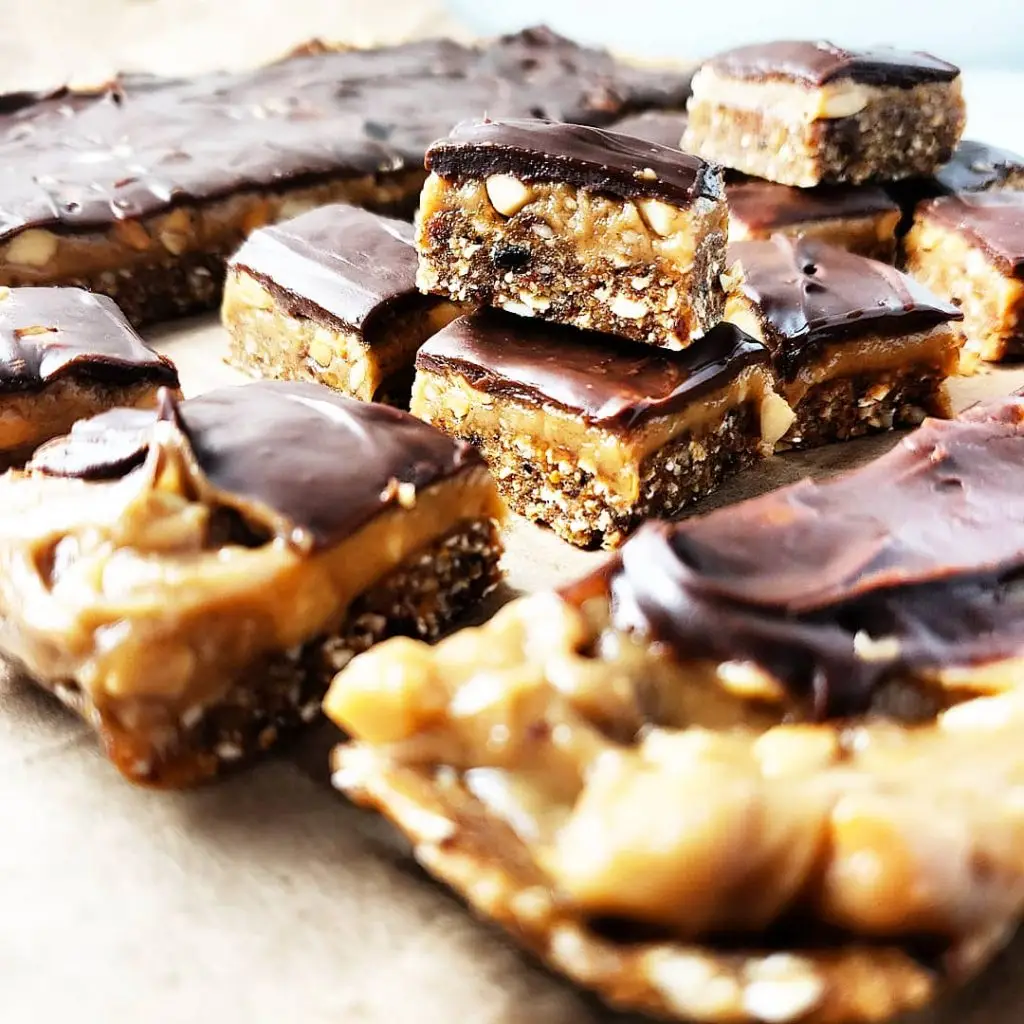

Dates are the sweet, sticky stone fruit (technically a drupe) that work as a natural sweetener in raw bars, protein snacks, smoothies, and paleo desserts. The high sugar content (60-70%) means a small amount sweetens dramatically; the caramel-like flavor adds depth that white sugar cannot. Reader favorites that build on it include Protein Stuffed Dates and Healthy No Bake Date Bars where dates serve as both the sweetener and the binding agent that holds the no-bake mixture together.
Medjool, Deglet Noor, and Barhi dates are the three most common varieties at the supermarket. Medjool dates are the large, soft, caramel-sweet ones that work best in raw bars and stuffed-date applications. Deglet Noor dates are smaller, drier, less sweet, and best for chopping into baked goods or rolling in coatings. Barhi dates are softer, almost honey-textured, mostly eaten fresh as a snack rather than cooked.
For no-bake bars and protein balls, the standard formula is 1 cup pitted dates + 1 cup nuts (almonds, cashews, walnuts) + 2 tablespoons cocoa or other binder, blended in a food processor until the mixture sticks together when pressed. Press into a parchment-lined pan, refrigerate 1 hour, slice. The dates provide both the sweetener and the binding agent that holds the bars together without baking.
For stuffed dates, the standard preparation is to slit each Medjool date lengthwise (don’t cut all the way through), remove the pit, and fill with nut butter, cream cheese, or goat cheese. Top with chopped nuts, drizzle with honey, or wrap in bacon and bake briefly. The natural sweetness of the date balances the saltiness of the filling.
For smoothies and shakes, dates provide natural sweetness without refined sugar. Add 1-2 pitted dates per smoothie; the high-speed blender breaks them down into the liquid. Pre-soaking dates in warm water 10 minutes softens them for smoother blending and easier digestion.
For substitution in baking, date paste (made from 1 cup pitted dates + 1/2 cup hot water blended smooth) substitutes for refined sugar at a 1:1 ratio in many quick breads, brownies, and cookies. The texture stays moist, slightly chewier, and the flavor profile shifts toward caramel. Best for recipes with strong dominant flavors (chocolate, banana, spice) that mask the date undertone.
For storage, dates keep 6-12 months at room temperature in a sealed container, 12 months refrigerated. The natural sugars crystallize on the surface (white bloom) as dates age; soaking briefly in warm water restores plumpness. Refrigerated dates last longer but firm up; bring to room temperature before serving for best texture. Discard if visible mold appears or the texture becomes leathery beyond what soaking can restore. Browse medjool dates and almond butter for closely related ingredients. Reader favorites built on it include Peanut Butter Protein Balls and No Bake Protein Balls.
Dates are commonly used in energy bites, smoothies, cakes, cookies, and dessert bars. They are also added to oatmeal, yogurt bowls, and snack mixes. Their natural sweetness makes them useful for desserts and snacks that use less refined sugar.
Dates can be chopped and added to baked goods, blended into smoothies, or processed into a paste for desserts. Soaking dried dates in warm water for a few minutes softens them and makes them easier to blend into recipes.
Good substitutes for dates include raisins, prunes, dried figs, or mashed bananas depending on the recipe. These ingredients provide sweetness and moisture. The amount may need slight adjustment based on texture and flavor.
Dates are commonly eaten fresh or dried as a snack. They can also be stuffed with nuts, chopped into desserts, or blended into smoothies. Their soft texture and sweet flavor make them easy to include in many recipes.
For more natural-sweetener and date options, see our apricot and almond butter recipes.