Chicken stock and chicken broth are not the same thing. Stock is made from bones (which release collagen and produce body); broth is made from meat (which produces flavor but no body). Both have their uses, but stock is significantly more versatile because the body gives sauces and soups thickness that cannot be added later. Most cartons labeled “stock” or “broth” are interchangeable in practice; the higher-end versions actually deliver on the stock distinction. Butter mounted into hot stock at the end of a sauce reduction is the classic French technique that turns a simple stock reduction into a finished pan sauce, providing both gloss and richness.
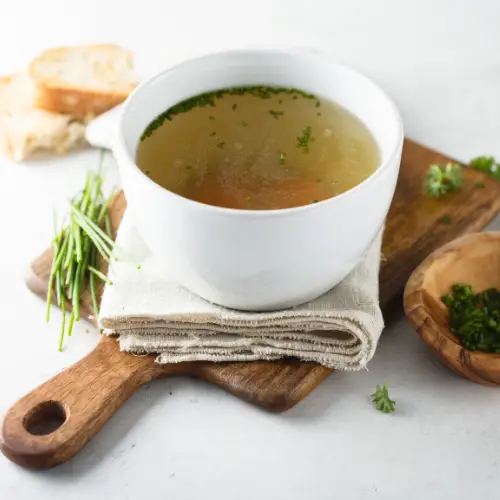
For homemade stock, the technique is straightforward but time-consuming. Roast chicken bones (from a previous roast chicken, plus the carcass) at 425°F for 30-45 minutes until deeply browned. Transfer to a stockpot with garlic, celery, carrot, and aromatics. Cover with cold water by 2 inches. Bring to a bare simmer (NOT a boil. Boiling makes the stock cloudy) and cook 6-8 hours, skimming foam occasionally. Strain through a fine-mesh strainer, cool, and refrigerate. The stock keeps 5 days in the fridge or 3 months in the freezer. The difference between homemade and store-bought is dramatic in soups where the stock is the lead flavor.
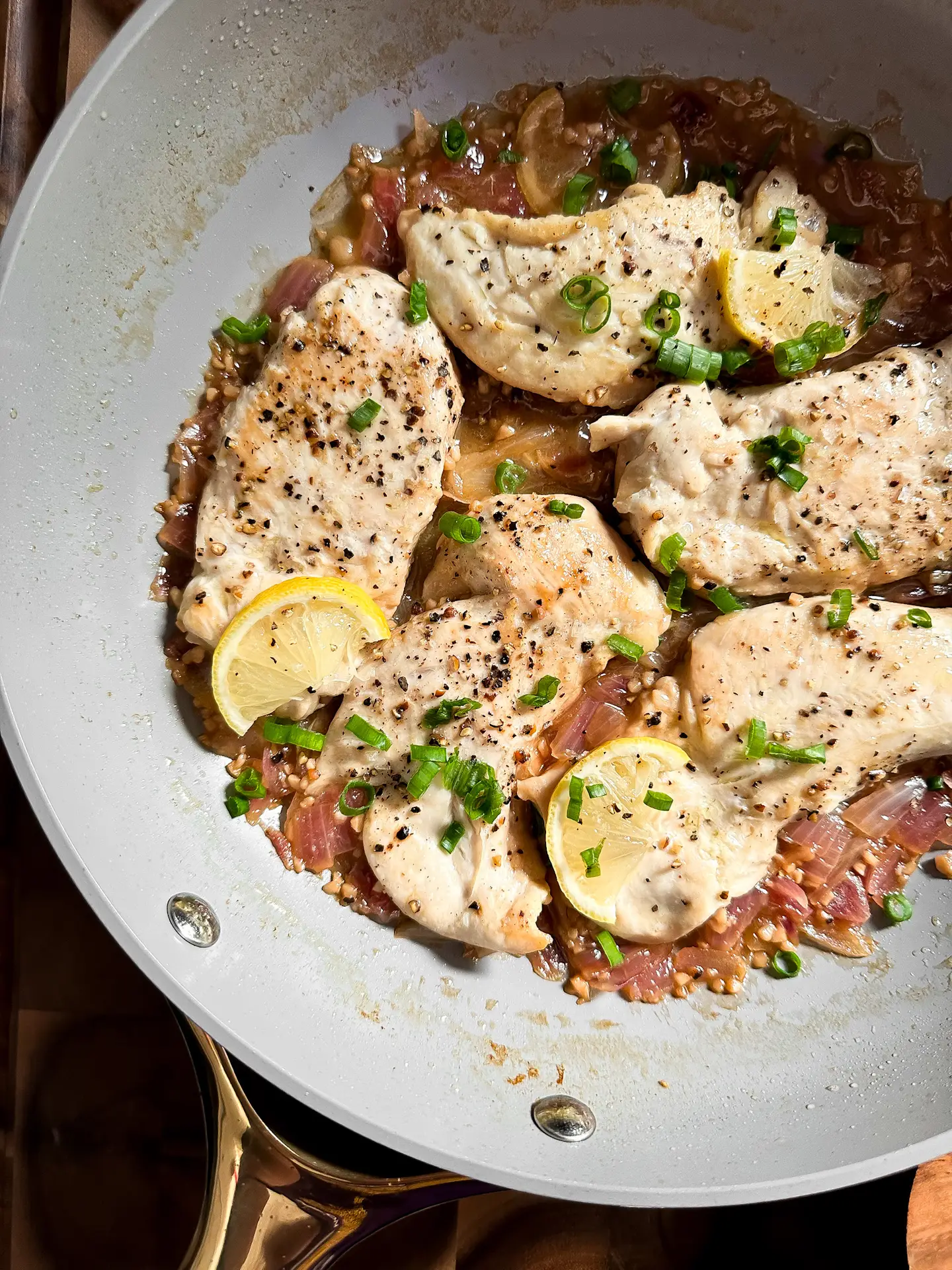
For pan sauces and reductions, chicken stock is reduced to concentrate the flavor and build body. The standard technique after pan-searing meat: pour off excess fat, deglaze with white wine, add chicken stock to cover the bottom of the pan, reduce over medium-high heat until the sauce coats the back of a spoon. Chicken Francese uses this technique in a lemon-butter pan sauce, where the chicken stock is what gives the sauce body and savory depth, with thyme contributing the herb backbone.
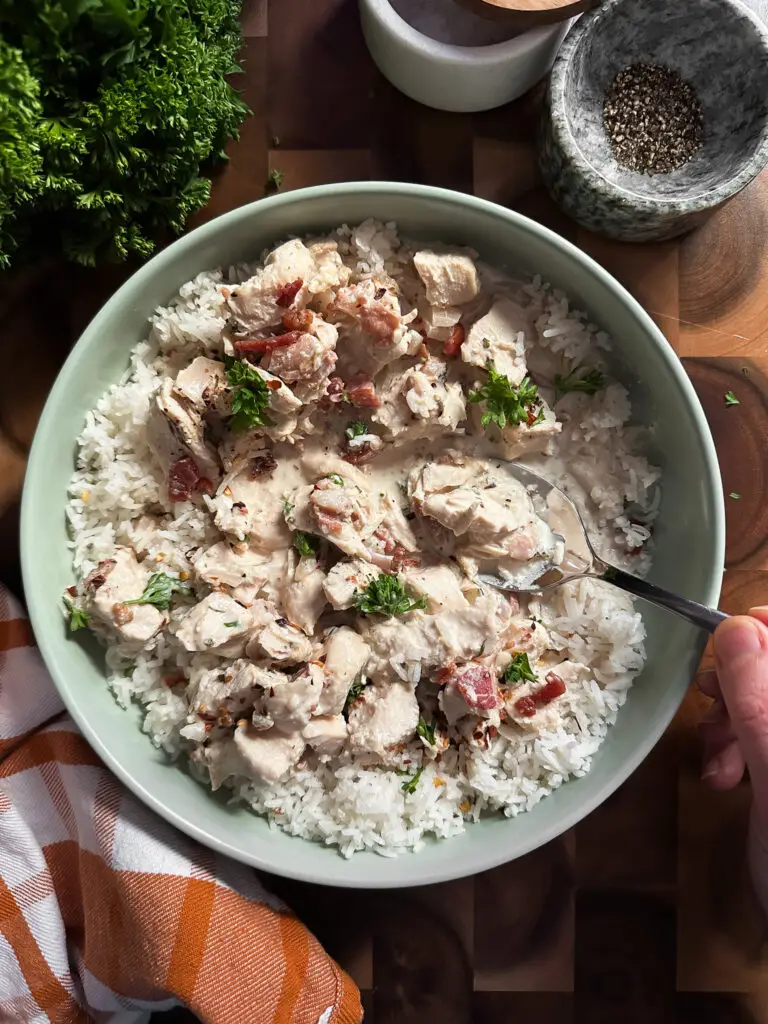
For slow-cooker and braising applications, chicken stock is the liquid that builds the savory base over hours of cooking. A standard slow-cooker chicken dish needs roughly 1 cup of stock for 4 hours of cooking on low; longer cooks need more liquid as evaporation accelerates. Healthy Slow Cooker Crack Chicken uses chicken stock as the base liquid that gets enriched with cream cheese at the end. The stock provides the savory foundation while the dairy adds the richness. parsley as the finishing herb works equally well across stock-based dishes; the bright green note balances the deep stock flavor without competing. Look to chicken broth and vegetable broth for adjacent applications in the recipe index library.