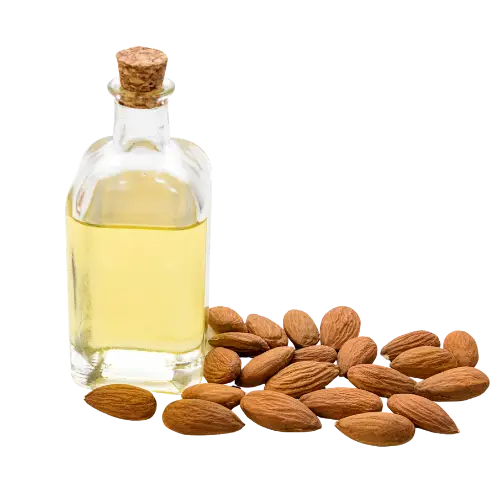
Almond extract is significantly more concentrated than vanilla extract, the standard substitution rule is 1/4 to 1/2 teaspoon almond extract per 1 teaspoon vanilla extract. Going heavier produces an unpleasant chemical or ‘cherry cough syrup’ note that ruins the dish. Going lighter loses the distinctive almond flavor. The standard amount for one batch of cookies is 1/4 teaspoon paired with 1 teaspoon vanilla extract; the two extracts work together rather than as substitutes.
Most commercial almond extract is made from benzaldehyde (the chemical compound that gives almonds their flavor) extracted from peach or apricot pits rather than from actual almonds. Real almond-derived extracts (sometimes labeled ‘pure almond extract from almonds’) taste cleaner and slightly less artificial. Both work in baking; the pure version costs roughly 3x more and the difference is detectable only in finished products where almond is the dominant flavor.
For wedding cookies (Mexican wedding cookies, Italian wedding cookies, Russian tea cakes, all variations of the same basic recipe), almond extract is the defining ingredient. The standard recipe is butter, powdered sugar, flour, finely chopped nuts, and 1 teaspoon almond extract for the whole batch. The vanilla extract pairs alongside for depth, but almond extract carries the flavor. Without almond extract, these cookies taste like generic shortbread.
For storage, almond extract keeps 4-5 years in a sealed bottle stored in a cool, dark pantry. The alcohol base preserves it indefinitely, but the flavor concentration weakens slightly over years. Almond extract pairs particularly well with cinnamon-and-sugar applications including snickerdoodle variations, stollen, and any holiday baking. The brown-sugar-and-almond combination amplifies both flavors in a way that pure vanilla cannot. Other reader picks that build on almond extract include Gluten Free Almond Coconut Cake and Almond Shortbread Cookies. Browse vanilla extract, almond flour, and salt for closely related cooking applications.