
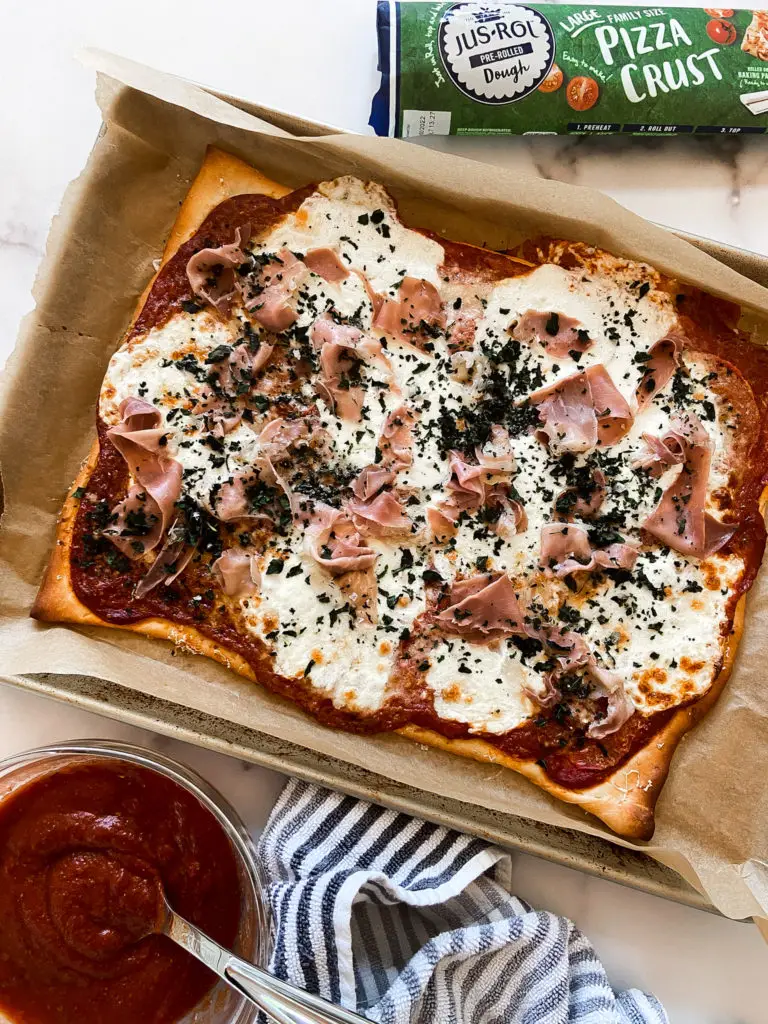
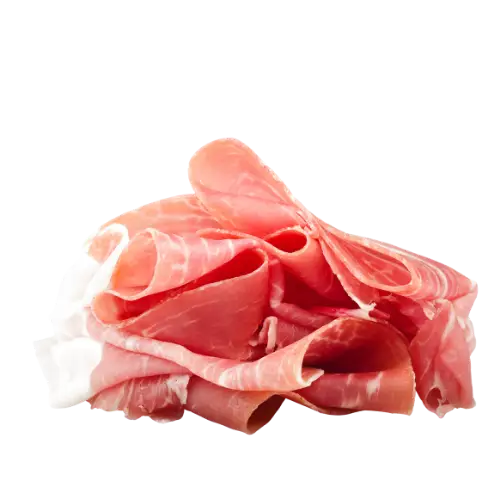
Prosciutto is the Italian dry-cured ham, salt-aged and air-dried for 12-24+ months until silky, slightly translucent, and intensely savory. The thin slices are typically eaten raw on charcuterie boards, wrapped around melon or grilled asparagus, or layered on pizza after baking (heat ruins the delicate texture). A reader favorite built on it is Easy Homemade Pizza Sauce where slices of prosciutto layered over the homemade pizza sauce after baking add the salty, dry-cured depth that distinguishes Italian-style pizza.
Prosciutto di Parma (DOP), Prosciutto di San Daniele (DOP), and generic prosciutto crudo are all dry-cured Italian hams with subtle differences. Parma is from the Parma region and has slightly sweeter, milder flavor. San Daniele is from Friuli and has a more pronounced sweet-nutty depth. Generic prosciutto crudo is the broader category that includes Italian and American-made versions. All work interchangeably in cooking; the DOP versions are the premium choices for charcuterie display.
For pizza applications, the prosciutto goes on after baking, not before. The intense oven heat (450-500°F for pizza) crisps and dries the prosciutto, destroying the silky texture that makes it worth the premium price. Layering 4-6 slices on the hot pizza right out of the oven lets the warmth release the aromatic oils without ruining the texture. Pairing with tomato (as in The Best Slow Cooker Goulash and The Best Old Fashioned Goulash) and fresh basil (used in Ground Beef and Tater Tot Casserole and Cottage Cheese Breakfast Casserole) produces the classic Italian flavor combination.
For wrapping applications (prosciutto-wrapped melon, asparagus, figs, or chicken), the long thin slices wrap once around the food item. For wrapped chicken, the prosciutto crisps during cooking and acts as a self-basting fat layer; for wrapped melon or figs, the prosciutto stays raw and silky as the contrast element. The combination of salty cured meat with sweet fruit is the classic Italian aperitivo.
For charcuterie boards, 2-3 oz prosciutto per person is the standard portion. Pair with aged parmesan cheese (seen in The Best Sheperds Pie and Chicken Cordon Bleu Casserole) or Pecorino, fresh ricotta or burrata, marinated olives, fresh figs or melon, crusty bread, and a dry white wine or Prosecco. The prosciutto should be sliced paper-thin (request this at the deli counter, or ask for it sliced fresh rather than pre-packaged).
For substitution, no other cured meat truly replaces prosciutto. Speck (smoked dry-cured ham from northern Italy) is the closest cousin with added smokiness. Serrano ham has a similar texture but slightly different flavor profile. Bacon is not a substitute; it’s cooked and smoked, not cured.
For storage, unopened pre-packaged prosciutto keeps until the printed date (usually 2-3 months). Once opened, the slices keep 5-7 days refrigerated tightly wrapped. Freshly-sliced prosciutto from a deli counter has shorter shelf life, use within 3-5 days for best texture.
Prosciutto recipes are made by adding thin slices of prosciutto to appetizers, pasta, salads, or baked dishes. The meat can be served fresh, wrapped around ingredients like fruit or vegetables, or lightly crisped in a skillet to enhance its flavor and texture.
Prosciutto is commonly used in appetizers, pasta dishes, salads, sandwiches, and pizza. It is often paired with fruits, cheeses, or roasted vegetables. Its salty flavor enhances many dishes without requiring long cooking times.
Prosciutto can be cooked by placing slices in a skillet over medium heat until crisp. This process takes only a few minutes and creates a crunchy texture. Cooked prosciutto is often used as a topping for pasta, salads, or soups.
Prosciutto pairs well with fruits like melon or figs, cheeses, fresh herbs, pasta, and roasted vegetables. Its salty flavor balances sweet and mild ingredients. It is commonly used in appetizers, salads, and Italian-inspired dishes.
For more cured-meat and Italian topping options, see our bacon and mozzarella cheese recipes.