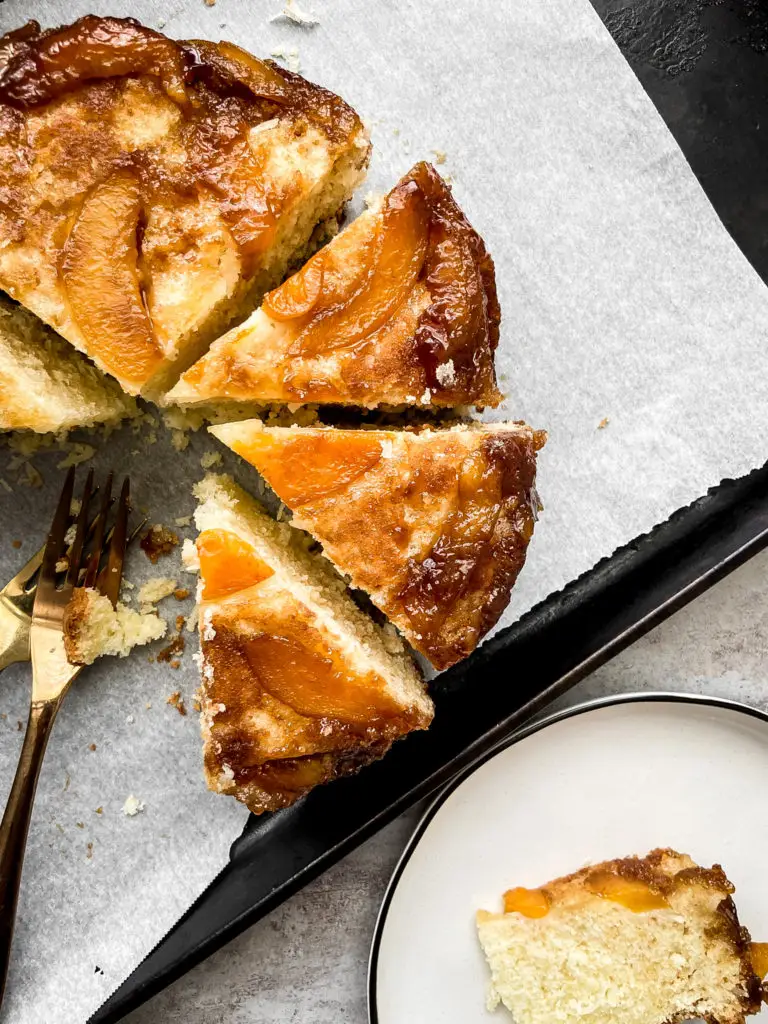
Fresh, frozen, and canned peaches each work in different applications. Fresh peaches (in season June-September) are the right choice for raw applications like fruit salads, salsas, and cold desserts where texture matters. Frozen peaches work for cooked applications like cobblers, smoothies, and sauces, no thawing needed if cooking. Canned peaches (in juice or light syrup) are the convenience choice for cake toppings and year-round availability.
For cake toppings, peach slices can go on top of the almond flour (as in The Best Ground Beef Meatballs and Banana Chocolate Chip Muffins) batter before baking (the slices sink slightly and create pockets of fruit) or be added as a finishing layer after the cake cools. Fresh or well-drained canned peaches work for either approach. Pairing with vanilla extract (used in Peanut Butter Protein Balls and Egg Free Cottage Cheese Muffins) in the batter amplifies the fruit’s natural sweetness without adding processed sugar notes.
For peeling fresh peaches, the easiest technique is blanching: score an X on the bottom of each peach, drop in boiling water for 30-45 seconds, transfer immediately to an ice bath, then slip the skin off with your fingers. This works for batches of 6+ peaches more efficiently than peeling with a knife.
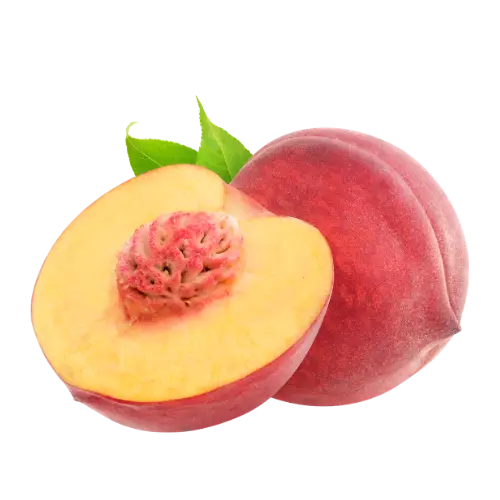
For ripeness, the peach should yield to gentle pressure near the stem end but not be mushy. The fragrance test is reliable: a ripe peach smells sweet and floral from a few feet away; an unripe one has little fragrance. Underripe peaches finish ripening at room temperature in 1-3 days; once ripe, refrigerate to extend shelf life by 3-5 days.
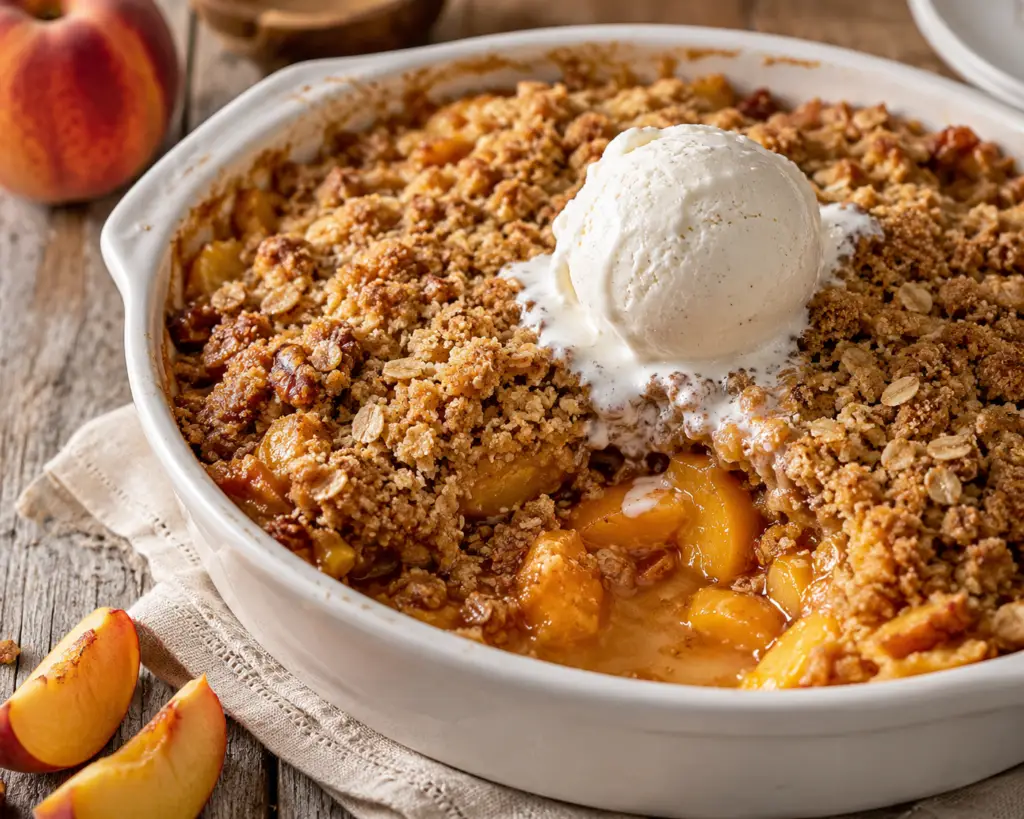
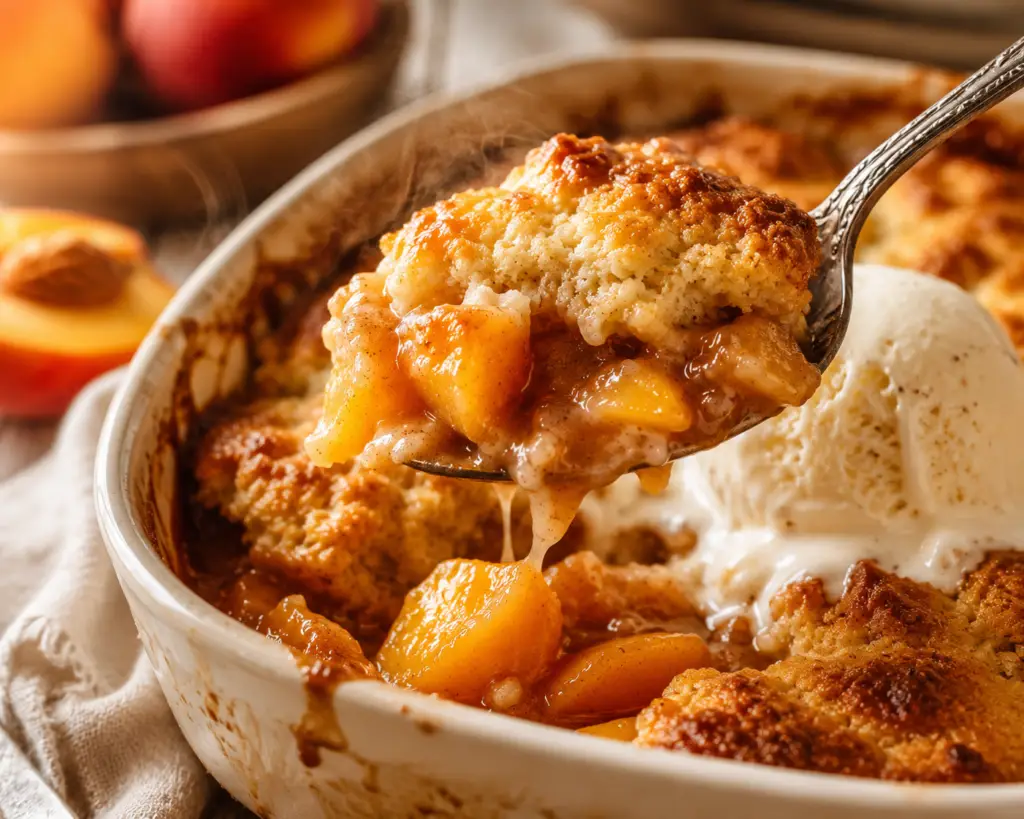
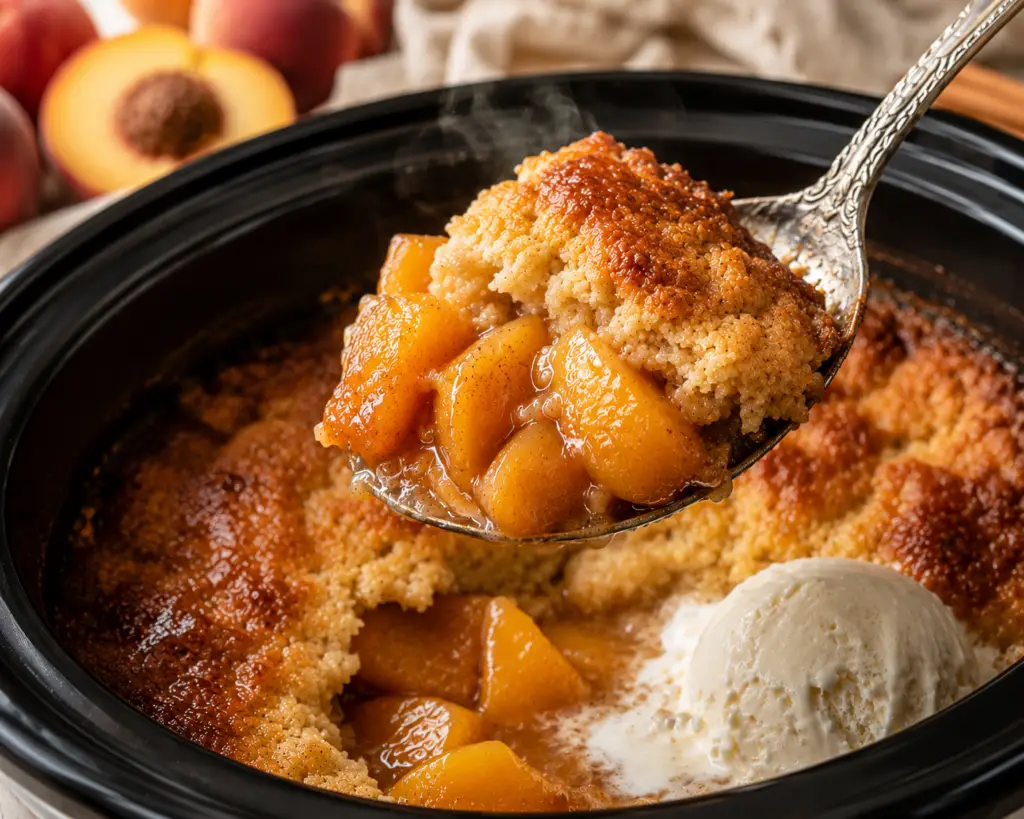
For cobblers and crumbles, the standard ratio is 6-8 ripe peaches sliced + 1/4 cup sugar (seen in Cottage Cheese Eggless Pancakes and High Protein Blueberry Muffins) + 2 tablespoons cornstarch (such as in Lemon Raspberry Muffins and Eggless Chocolate Chip Cookies) + 1 teaspoon vanilla + pinch of cinnamon (as in Banana Bread Overnight Oats and Chocolate Chip Muffins) for the filling, topped with crumble or biscuit dough, baked at 375°F for 45-50 minutes. The cornstarch is what produces the proper thickened filling rather than runny peach soup. For storage, ripe peaches keep 3-5 days refrigerated.