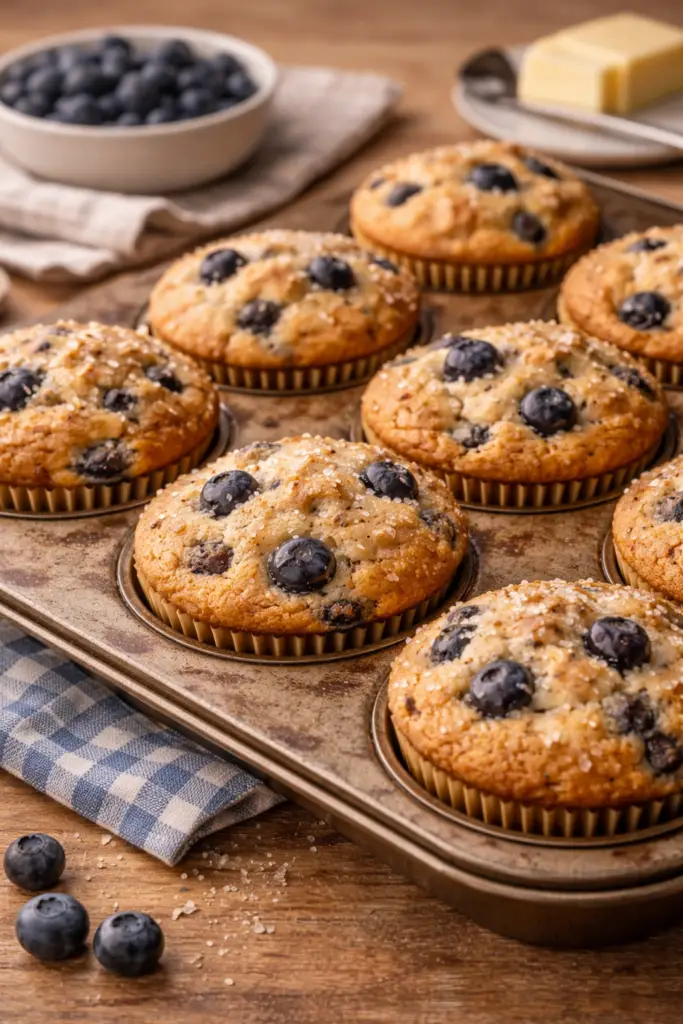
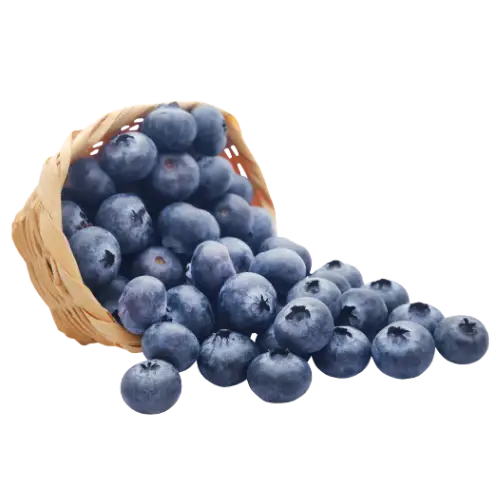
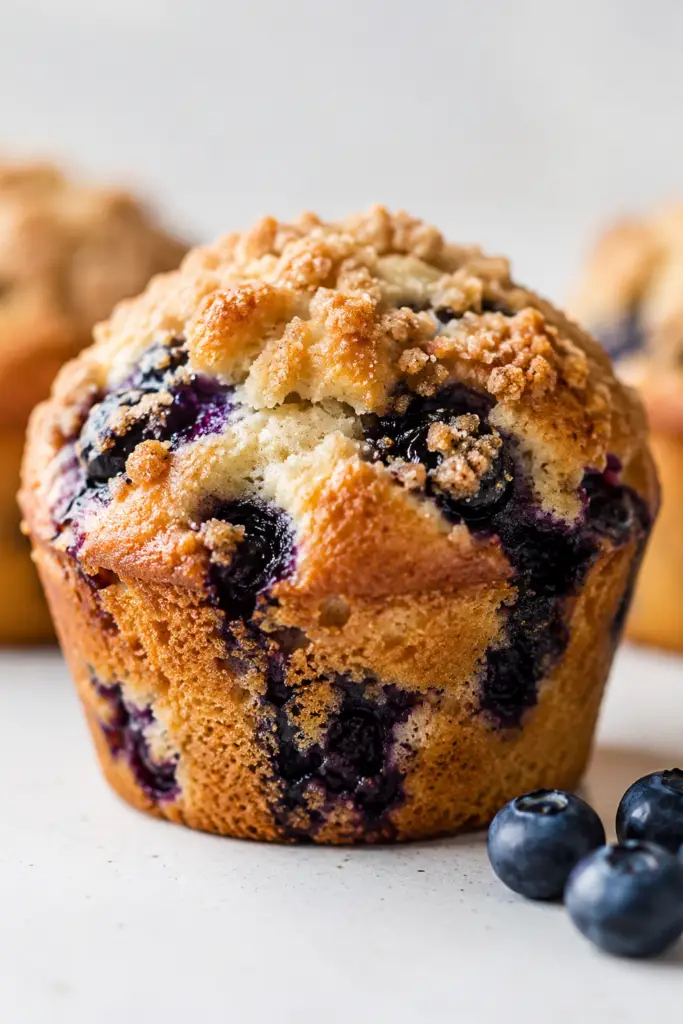
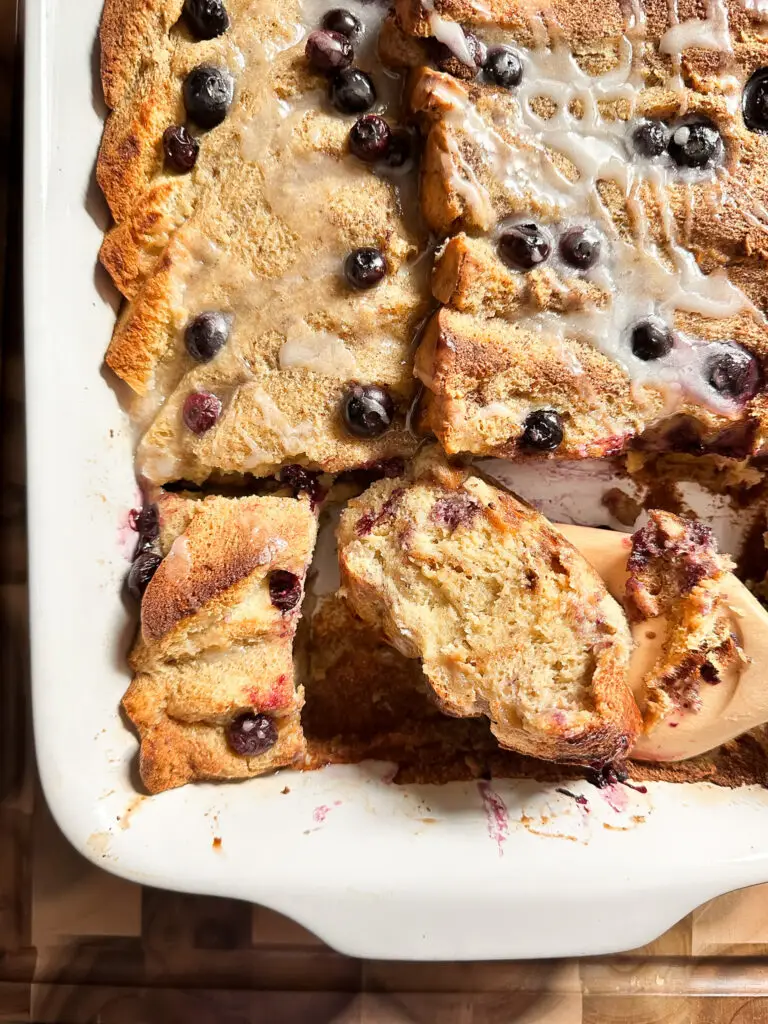
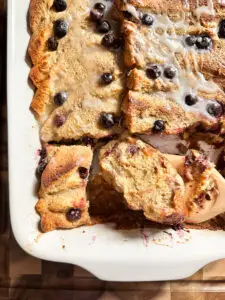
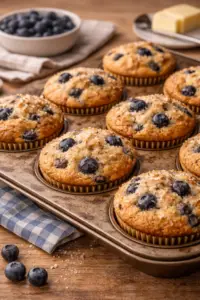
Fresh and frozen blueberries are roughly interchangeable in baked goods, but produce slightly different finished results. Fresh blueberries hold their shape during baking and create visible whole-berry pockets in muffins and scones. Frozen blueberries (don’t thaw before adding to batter) release more juice and create blue streaks throughout the bake. Both work; the fresh version reads as more rustic and the frozen as more uniformly blueberry-flavored throughout.
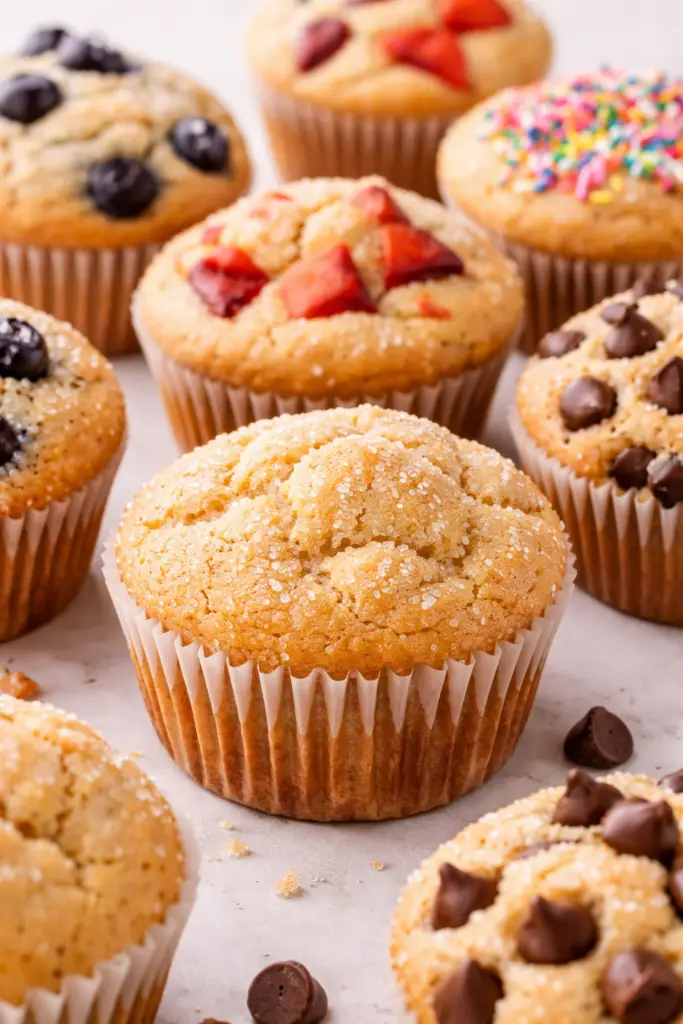
For muffins, the trick to evenly distributed blueberries is to toss them in 1 tablespoon of flour before folding into the batter. The flour coating prevents the berries from sinking to the bottom during baking. Pairs particularly well with greek yogurt in the batter for the high-protein version that holds for meal prep. vanilla extract added to the batter at 1.5x the standard amount amplifies the berry sweetness.
For pancakes and waffles, fresh blueberries dropped onto the batter just after pouring (not mixed in) produces the best visual and flavor distribution. The berries warm through during cooking but don’t bleed color into the batter. The bottom-side gets golden, the top-side stays pale until flipped. maple syrup as the finishing drizzle is the standard pairing, though warm berry sauce works equally well.
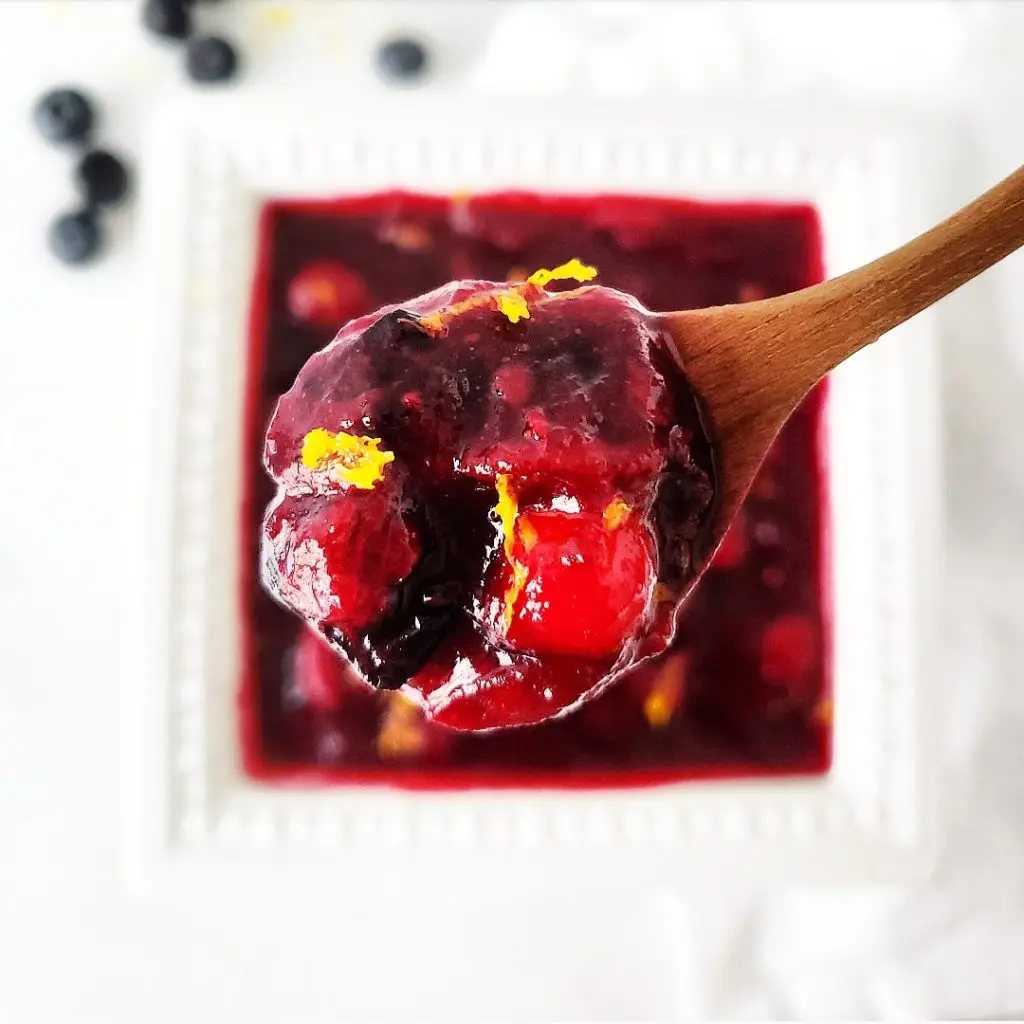
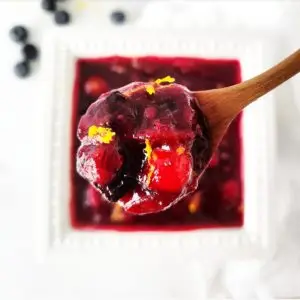
For sauces and compotes, the technique is to simmer blueberries with sugar, lemon juice, and a pinch of salt for 8-10 minutes until thickened. Use the resulting sauce as a topping for greek yogurt, ice cream, pancakes, or as a filling for layer cakes. The sauce keeps 5-7 days refrigerated. For longer storage, water-bath canning extends the shelf life to 6-12 months in sealed jars. Other reader picks that build on blueberries include Egg Free Cottage Cheese Muffins and Chocolate Banana Overnight Oats. Browse apples, bananas, and salt for closely related cooking applications.