Creamy and Fluffy Cottage Cheese Eggs
If you’ve been scrolling social media lately, you’ve likely seen the viral trend: adding cottage cheese eggs to your morning scramble. If you’re skeptical, let me put your mind at ease—this isn’t just hype. Adding cottage cheese is a chef-level hack for creating the creamiest, fluffiest, high-protein scrambled eggs imaginable. It transforms a basic morning meal into something rich, velvety, and nutritionally superior. If you’ve been loving my Whipped Cottage Cheese Bowl and Carrot Cake Overnight Oats, this savory staple is the perfect addition to your breakfast rotation.

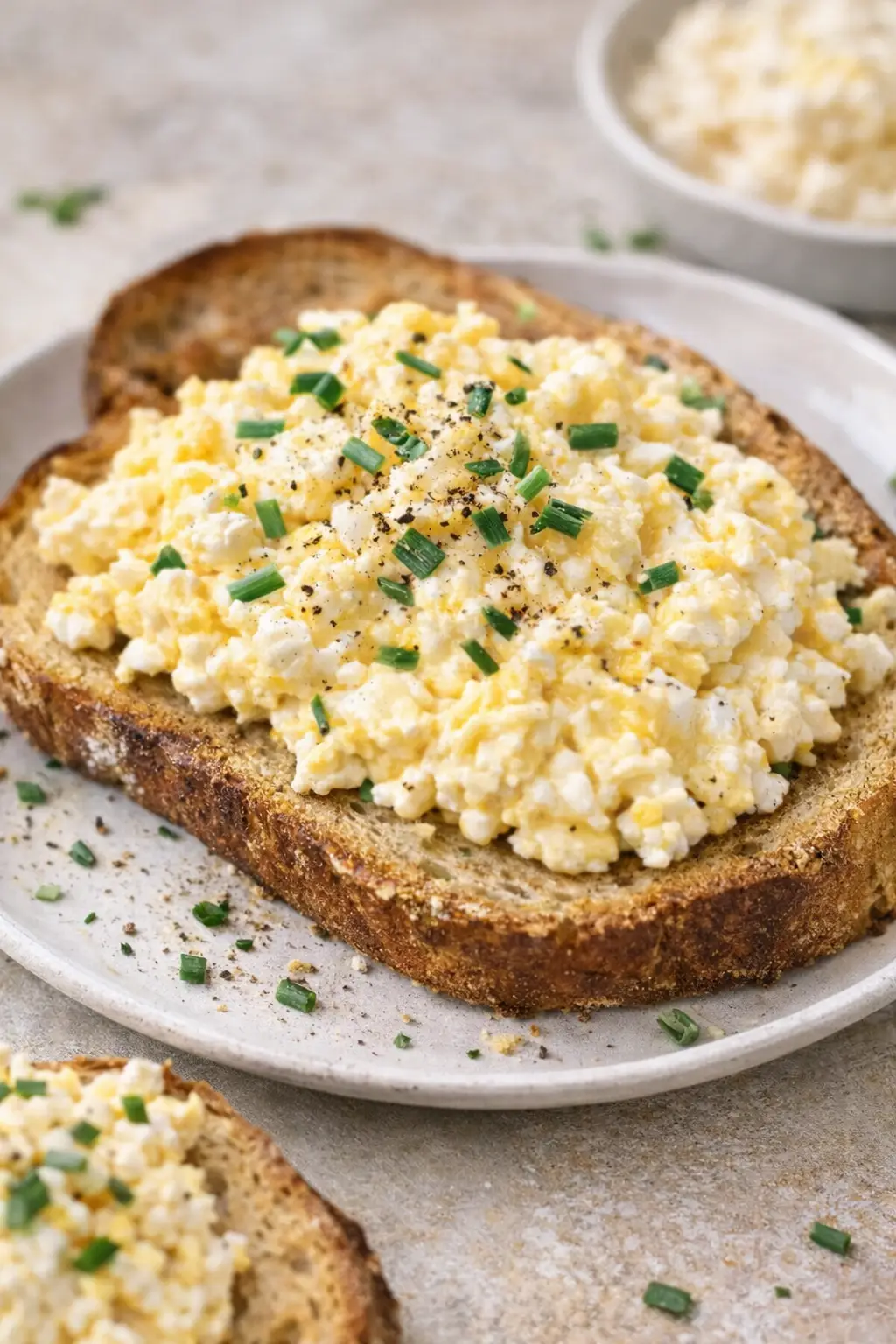
Creamy scrambled eggs made with cottage cheese, served on a slice of golden toasted bread and garnished with fresh chives and cracked black pepper. The eggs have a soft, fluffy texture with visible curds of cottage cheese, creating a rich, high-protein breakfast that’s both healthy and satisfying. Perfect for anyone looking for an easy, nutritious morning meal, this cottage cheese eggs recipe delivers maximum flavor with minimal ingredients.
Why You'll Love This Creamy and Fluffy Cottage Cheese Eggs
If you’re looking to hit your protein goals without relying solely on protein powder, this is your new go-to.
Ultra-Creamy Texture: The cottage cheese melts into the eggs, replacing the need for heavy cream or excessive butter.
20g+ Protein: A massive boost to your morning macros, keeping you full and focused until lunch.
Low-Carb & Keto-Friendly: Perfect for those following specialized diets or looking for a balanced, blood-sugar-friendly start to the day.
Simple Ingredients: You likely already have eggs and cottage cheese in your fridge right now!
Key Ingredients You'll Need
Eggs: The base of your scramble.
Cottage Cheese: The secret to the creamy, soft-curd texture.
Olive Oil or Butter: Just a touch for the pan.
Salt & Pepper: For flavor.
Fresh Chives or Herbs: Optional, but highly recommended for a fresh finish.
How to Make Creamy and Fluffy Cottage Cheese Eggs
Whisk: In a small bowl, whisk your eggs and cottage cheese together until well combined. (Optional: Blend the mixture if you prefer an ultra-smooth, “no-curd” texture).
Heat Gently: Heat a non-stick pan over medium-low heat. This is the secret—fast heat makes rubbery eggs, while low heat makes them silky.
Cook: Pour in your egg mixture. Stir slowly and gently with a spatula, creating soft folds as the curds form.
Remove Early: Take the pan off the heat just before the eggs look fully set. They will finish cooking from the residual heat on your plate.
Serve: Top with cracked black pepper, salt, and fresh herbs. Serve alongside my High-Protein Cottage Cheese Bread for the ultimate breakfast.
Health Benefits
High-Quality Protein: Cottage cheese adds casein protein, which digests slowly and promotes satiety, making it an excellent tool for weight loss or muscle maintenance.
Nutrient Density: You get the benefits of eggs (choline, healthy fats) alongside the probiotics and calcium found in cottage cheese.
Stable Energy: High-protein breakfasts prevent the energy crashes associated with high-carb morning meals.
Flavor Variations
Mediterranean: Fold in fresh spinach and feta cheese at the end.
Spicy Scramble: Add a dash of red pepper flakes or your favorite hot sauce to the egg mixture before cooking.
Garlic Herb: Use garlic powder and fresh parsley for a flavor profile that pairs perfectly with sourdough toast.
Cheesy Upgrade: Sprinkle in a little sharp cheddar or parmesan right before removing from the heat.
Don’t miss out on our latest kitchen adventures—subscribe to the Sugar Face Bakes YouTube channel for weekly recipe updates and pro tips.
Stacie’s Tricks & Tips
The “Low & Slow” Rule: Never rush your eggs. Cooking on high heat is the biggest mistake; it will cause the cottage cheese to separate and the eggs to become dry and rubbery.
Salt Timing: Don’t salt your raw egg mixture too far in advance, as this can break down the proteins and lead to watery eggs. Season right before or after cooking.
Blending is Key: If you have an aversion to the texture of cottage cheese curds, simply pulse your cottage cheese in a blender with the eggs before cooking. It turns into a velvety liquid that cooks into the perfect “restaurant-style” scramble.
Pan Matters: Use a quality non-stick pan. It prevents sticking and ensures you get those beautiful, large, fluffy folds.
Snack Pairing: If you’re prepping this for a big morning, grab one of my Chocolate Chip Protein Cookies from the Shop to have as a post-breakfast treat.
Storage & Meal Prep
These eggs are best eaten immediately. However, you can store leftovers in an airtight container for up to 2 days. Reheat gently on the stovetop or in the microwave (at 50% power) with a splash of milk to restore moisture.
If you loved these cottage cheese eggs, you’ll also love these high-protein breakfast recipes:
Cottage Cheese Eggs (High Protein Scrambled Eggs)
Ingredients
- 4 large eggs
- ½ cup cottage cheese blended, optional
- 1 tbsp olive oil optional, if you are not cooking with a non-stick pan
- sea salt for topping
- ground black pepper for topping
Instructions
- Whisk eggs and cottage cheese together.
- Heat pan over medium-low heat.
- Add butter or oil, if using.
- Pour in egg mixture. Stir gently until soft curds form.
- Remove from heat slightly before done.
- Stir another 1 minute. Season with sea salt and pepper. Enjoy!
Notes
🥗 NUTRITIONAL VALUE CARD (Approximate with 1 tbsp oil or butter)
Per Serving:- Calories: 180–220
- Protein: 18–22g
- Fat: 10–12g
- Carbs: 3–5g
Frequently Asked Questions
Can you taste the cottage cheese in scrambled eggs?
No, you cannot! Once cooked, the cottage cheese loses its distinct texture and tangy flavor, melting into the eggs to provide a creamy, rich consistency that mimics high-end restaurant scrambled eggs.
Are cottage cheese eggs healthy for weight loss?
Yes, cottage cheese eggs are an excellent weight loss choice. They are naturally high in protein, which helps keep you full longer and prevents hunger cravings. Because they are low in carbohydrates and high in satiety, they help you maintain a balanced calorie intake throughout the day.
Can I blend the cottage cheese before adding it to the eggs?
Yes, blending the cottage cheese first is highly recommended if you prefer a perfectly smooth, uniform texture in your scrambled eggs. It eliminates the small cottage cheese curds, resulting in a consistent, velvety finish that is almost like an omelet-scramble hybrid.
Is it better to cook cottage cheese eggs on high heat?
No, you should always cook cottage cheese eggs on low to medium-low heat. Because of the protein content in both the eggs and the cottage cheese, high heat can cause them to become tough, rubbery, or watery. Low heat ensures a soft, fluffy, and perfectly creamy curd.
How many eggs should I use with the cottage cheese?
A great rule of thumb is to use 2 to 3 eggs for every 1/4 cup of cottage cheese. This ratio provides the perfect balance of richness and fluffiness without overwhelming the eggs with too much liquid.
More Breakfast Recipes
Looking for more easy and comforting meals? Browse all recipes here: