

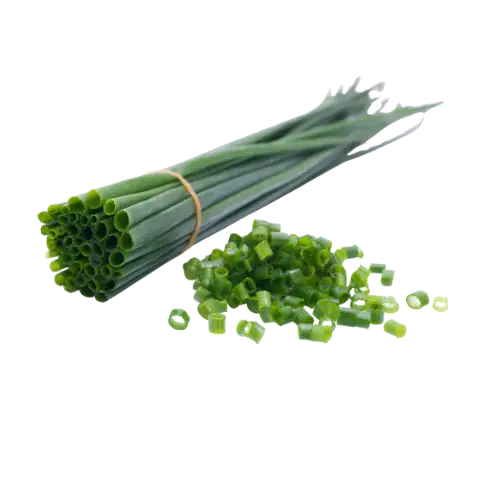
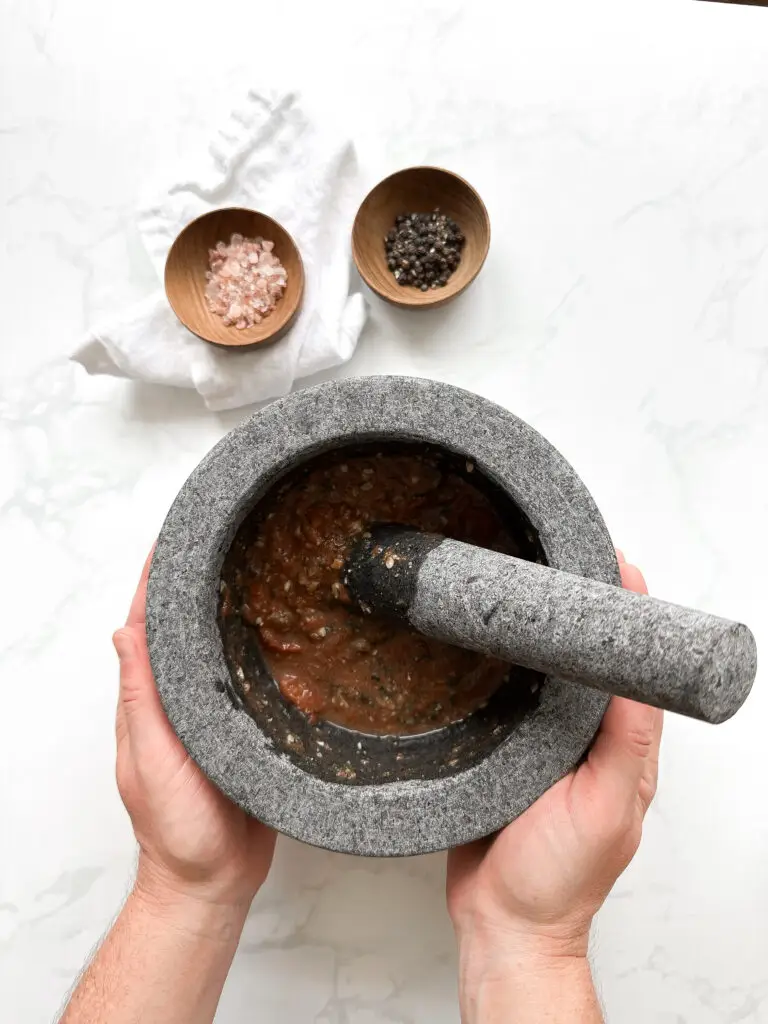
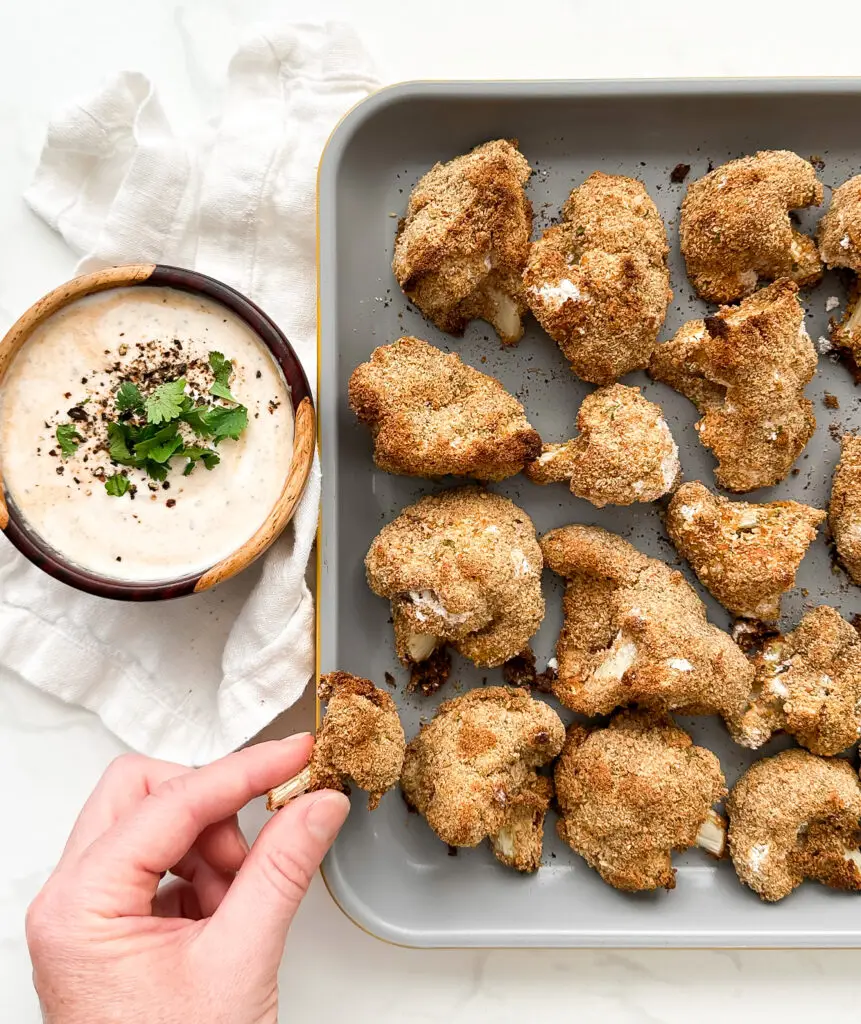
Chives are the mild, onion-flavored herbs (technically the leaves of an allium) that finish dips, baked appetizers, scrambled eggs, and most savory preparations where you want gentle oniony brightness without overpowering other ingredients. The delicate flavor is the lightest in the onion family, mild enough to use generously as both a stirred-in ingredient and a finishing garnish. The bright green color and tender texture also make chives the standard visual garnish for dips and appetizers. Reader favorites that use chives include Traditional Sikil Pak Mayan Dip and Crispy Baked Cauliflower Bites where the fresh chives provide the bright pop of color and oniony lift that finish the smoky, nutty dip.



Chives and scallions are not the same thing despite both looking similar. Chives are thin (1-2mm), bright green, with hollow stems and a delicate onion flavor. Scallions (green onions) are thicker (5-10mm), with a white bulb and dark green tops, and a stronger onion flavor. For finishing dishes where you want gentle onion flavor and pretty appearance, chives win. For cooking applications where the onion flavor needs to come through, scallions or actual onions are better.
Fresh chives lose their flavor when heated for more than a few seconds, which is why they’re almost exclusively a finishing herb in American cooking. Adding chives at the start of any cooking application produces a generic green color but loses the chive flavor. Sprinkling chives over the finished dish in the last 30 seconds of cooking (or after plating) preserves the herb’s flavor.
For baked potatoes, chives are the standard finishing herb alongside sour cream and butter. The simple application of 1 tablespoon chopped fresh chives sprinkled over a baked potato is what distinguishes restaurant baked potatoes from generic home preparation. parsley works as a substitute but lacks the gentle onion flavor.
For deviled eggs (the picnic and party standard), chopped chives mixed into the yolk filling AND sprinkled on top doubles the chive presence. The standard recipe is 6 hard-boiled eggs halved, yolks mixed with 1/4 cup mayonnaise, 1 teaspoon Dijon mustard, 1 tablespoon chopped chives, salt and pepper, piped back into the whites. paprika sprinkled on top alongside more chives produces the classic visual finish. For storage, fresh chives keep 7-10 days refrigerated in a paper-towel-lined container. Other reader picks that build on chives include The Best Sweet Potato Cornbread and Sweet Potato Casserole. Browse fresh basil, parsley, and salt for closely related cooking applications.
Chives are commonly chopped and added to dishes such as scrambled eggs, baked potatoes, soups, salads, and creamy sauces. They provide a mild onion flavor and bright color. Adding chives near the end of cooking helps keep their fresh taste and aroma.
Chives and green onions are related but not the same. Chives are thin herbs with a mild onion flavor, while green onions have thicker stalks and a stronger taste. Both can be used in cooking, but chives are often used as a garnish.
Yes, green onions can be used as a substitute for chives in many recipes. Because green onions have a stronger flavor, it is best to use a smaller amount. Finely chop the green onion tops to mimic the appearance and texture of chives.
Chives are used to add mild onion flavor and visual appeal to dishes. They are often used in salads, dips, egg dishes, and sauces. Their delicate taste enhances recipes without overpowering other ingredients.