Cooking for Picky Eaters — How to Feed Kids Who Hate Everything
If you’ve ever made dinner only to hear, “I don’t like that,” before your child has even tasted it, welcome to the world of cooking for picky eaters.
Feeding kids who seem to hate everything can make everyday meals surprisingly stressful. One child doesn’t like anything green. Another suddenly decides chicken is “weird.” Someone wants pasta—but only plain pasta—and the meal you were sure everyone loved last week is apparently unacceptable today.
The good news? You don’t have to become a short-order cook, and you don’t need a completely separate menu of chicken nuggets, buttered noodles, and crackers every night.
Cooking for picky eaters is less about finding one magical recipe every child will love and more about building meals that feel familiar, flexible, and low-pressure. A few simple changes to how you prepare and serve family meals can make dinner easier while gradually giving kids more opportunities to explore new foods.
In this guide, I’m sharing practical picky eater meal ideas, easy family dinner strategies, foods picky kids are more likely to try, and simple ways to introduce new foods without turning dinner into a battle.
Why Are Kids Such Picky Eaters?
First, picky eating is incredibly common.
Children may reject foods because of flavor, texture, smell, appearance, temperature, or simply because the food is unfamiliar. And sometimes the reason makes absolutely no sense to the adult standing in the kitchen.
The cheese is touching the chicken.
The banana has a brown spot.
The pasta has “green things.”
The sandwich was cut into squares instead of triangles.
Welcome to feeding kids.
Young children are also learning independence, and food is one of the few areas where they have a lot of control. You can decide what goes on the table, but you can’t physically make someone enjoy broccoli.
That’s why taking some of the pressure out of mealtime can be so helpful.
What Should I Cook for a Picky Eater?
Start with foods that are already familiar and build around them.
Instead of asking, “What brand-new dinner can I convince my child to eat?” think:
What does my child already eat, and how can I build a balanced family meal around it?
If your child likes pasta, pasta becomes your starting point.
If they like chicken, build around chicken.
If tortillas are always safe, taco night may be your best friend.
This approach allows the entire family to eat essentially the same dinner while giving picky eaters something recognizable on their plate.
My Favorite Rule: Always Include One Familiar Food
This is one of the easiest strategies for feeding picky kids.
When serving dinner, include at least one food you already know your child generally likes.
That might be:
- Bread or a dinner roll
- Rice
- Pasta
- Fruit
- Cheese
- Tortillas
- Cucumbers
- Crackers
- Potatoes
- Yogurt
- A familiar protein
It doesn’t mean your child gets an entirely separate dinner.
Instead, the familiar food sits alongside whatever the family is eating.
For example, if dinner is chicken, roasted potatoes, and broccoli, your child’s familiar food might be the potatoes.
They can decide what else they want to explore.
Stop Making Everything Touch
This sounds almost comically simple, but presentation can make a huge difference with picky eaters.
Adults might love a big bowl filled with chicken, rice, vegetables, avocado, dressing, and toppings.
Some kids look at that same bowl and see chaos.
Try serving components separately.
Instead of a chicken rice bowl, serve:
Chicken + rice + cucumber + avocado + sauce on the side.
Same ingredients. Completely different presentation.
This is especially useful for tacos, wraps, pasta dishes, rice bowls, salads, sandwiches, and sheet-pan dinners.
Deconstructed Meals Are a Picky-Eater Game Changer
If I had to choose one style of dinner for families with picky eaters, it would be build-your-own meals.
Everyone gets the same basic ingredients but chooses how to assemble them.
Build-Your-Own Taco Night
Put out:
- Soft tortillas
- Seasoned chicken or ground beef
- Shredded cheese
- Lettuce
- Tomatoes
- Avocado
- Corn
- Salsa
- Greek yogurt or sour cream
A child might eat a tortilla with chicken and cheese while an adult loads theirs with vegetables and salsa.
You still made one dinner.
DIY Pasta Night
Serve pasta with:
- Marinara
- Butter or olive oil
- Parmesan
- Meatballs or chicken
- Broccoli
- Peas
- Garlic bread
Kids who prefer plain pasta can start there while everyone else adds what they like.
Build-Your-Own Rice Bowls
Try:
- Rice
- Chicken
- Ground turkey or beef
- Cucumbers
- Carrots
- Avocado
- Corn
- Cheese
- A simple sauce
Let everyone build their own bowl.
15 Easy Dinner Ideas for Picky Eaters
When you don’t know what to cook, start with simple meals that can easily be customized.
1. Chicken Quesadillas
Fill tortillas with chicken and cheese, then offer salsa, avocado, tomatoes, or Greek yogurt separately.
2. Homemade Chicken Tenders
Crispy chicken tends to be familiar to many kids. Pair it with roasted potatoes, fruit, cucumbers, or another easy side.
3. Build-Your-Own Tacos
Keep all the toppings separate and let everyone decide what goes inside.
4. Spaghetti and Meatballs
Keep the sauce on the side if necessary. Kids can start with plain pasta, Parmesan, or meatballs.
5. Mini Pizzas
Use pita bread, naan, English muffins, or pizza dough and let kids choose their toppings.
6. Breakfast for Dinner
Eggs, pancakes, toast, fruit, yogurt, and breakfast potatoes can make an easy family dinner.
7. Chicken and Rice
Keep the seasoning simple and serve vegetables or sauces separately.
8. Baked Potato Bar
Bake potatoes and offer cheese, chicken, broccoli, bacon, Greek yogurt, and other toppings.
9. Turkey or Beef Burgers
Serve burgers with buns and toppings separately. Add oven fries and fruit for easy sides.
10. Grilled Cheese and Soup
A familiar grilled cheese can make trying a small serving of soup feel less intimidating.
11. Buttered Noodles With Optional Add-Ins
Put chicken, Parmesan, peas, broccoli, meatballs, or sauce on the table and allow everyone to customize.
12. Sheet-Pan Chicken and Potatoes
Keep vegetables separated on the pan so kids can easily identify each food.
13. Snack Plate Dinner
Think cheese, crackers, turkey, fruit, vegetables, hummus, hard-boiled eggs, and mini sandwiches.
It doesn’t have to look like a traditional dinner to count as dinner.
14. Chicken Wraps
Put tortillas, chicken, lettuce, cheese, cucumbers, tomatoes, and sauce on the table and let everyone make their own.
15. Homemade Mac and Cheese
Pair a familiar favorite with peas, broccoli, chicken, fruit, or another food your child is learning to eat.
Try the “Safe + Learning” Plate
Instead of labeling foods as foods your child “likes” or “hates,” it can be helpful to think about familiar foods and learning foods.
A simple dinner plate might contain:
1 familiar food + 1 protein + 1 fruit or vegetable + 1 learning food
The learning food doesn’t need to be a huge serving.
In fact, smaller can sometimes be better.
A giant pile of broccoli can feel overwhelming to a child who doesn’t eat broccoli. One tiny piece sitting beside familiar foods is much less dramatic.
Exposure counts.
Use Food Chaining to Introduce New Foods
Food chaining simply means moving from a food a child already accepts toward something similar.
If your child likes chicken nuggets, for example, you might gradually explore:
Chicken nuggets → homemade chicken tenders → breaded chicken cutlets → grilled chicken
If they love French fries:
French fries → potato wedges → roasted potatoes → sweet potato fries
If they love strawberry yogurt:
Strawberry yogurt → Greek strawberry yogurt → plain yogurt with strawberries → fresh strawberries
The new food shares something familiar with the previous food—taste, shape, texture, or appearance.
That can make it less intimidating.
Don’t Hide Every Vegetable
I understand the temptation.
Spinach disappears beautifully into smoothies. Zucchini can vanish into muffins. Vegetables can be blended into pasta sauces.
And there is nothing inherently wrong with using vegetables creatively.
But I wouldn’t make hiding vegetables your only strategy.
Children also need opportunities to see foods as they actually are.
If broccoli is always secretly blended into something else, your child isn’t necessarily becoming more comfortable with broccoli.
Try both approaches.
Add vegetables to recipes when it makes sense and continue serving small, recognizable portions alongside familiar foods.
Sauces Can Be Your Secret Weapon
Some kids love dipping.
Use it.
Try serving foods with:
- Ketchup
- Ranch
- Hummus
- Greek yogurt dip
- Marinara
- Guacamole
- Honey mustard
- Tzatziki
- Mild cheese sauce
If dipping a carrot into ranch makes someone willing to explore carrots, I’m counting that as progress.
Let Kids Help in the Kitchen
Kids are often more curious about foods they’ve helped prepare.
Depending on their age, they can:
- Wash vegetables
- Stir batter
- Sprinkle cheese
- Add pizza toppings
- Tear lettuce
- Measure ingredients
- Mix sauces
- Build tacos
- Assemble wraps
- Arrange fruit
- Choose a vegetable for dinner
It doesn’t guarantee they’ll eat it.
But touching, smelling, preparing, and interacting with food are all forms of exposure.
Give Choices—But Keep Them Small
Instead of asking:
“What do you want for dinner?”
Try:
“Would you rather have broccoli or carrots tonight?”
Or:
“Do you want chicken with rice or potatoes?”
The adult still determines the overall meal, but the child gets a little ownership over it.
Too many choices can make dinner more complicated. Two simple options are usually plenty.
Be Careful With the Short-Order Cook Trap
Your child refuses dinner.
You make macaroni and cheese.
Tomorrow they refuse dinner again.
You make chicken nuggets.
Pretty soon you’re preparing three separate meals every evening.
It’s exhausting.
Instead, build at least one familiar component into the family dinner whenever possible.
That way there is something approachable available without starting an entirely new meal.
What If My Kid Says They Hate Dinner Before Trying It?
This might be one of the most frustrating parts of feeding picky eaters.
Try keeping your reaction neutral.
Instead of immediately negotiating over bites, you can simply continue with dinner.
The goal is to make new foods feel normal rather than turning every unfamiliar ingredient into the main event.
Children sometimes need repeated exposure to a food before it feels familiar enough to explore. Seeing, smelling, touching, licking, or taking a tiny taste can all be part of becoming comfortable with it.
Don’t Make Dessert the Prize
“If you eat three bites of broccoli, you can have dessert.”
We’ve probably all heard some version of this.
The problem is that it unintentionally sends a message:
Broccoli = unpleasant thing I must endure.
Dessert = amazing reward.
Instead of creating a food hierarchy, keep mealtime as neutral as possible.
Easy Lunch Ideas for Picky Eaters
Lunch doesn’t have to be elaborate either.
Try turkey and cheese roll-ups, quesadillas, mini sandwiches, pasta salad with ingredients separated, crackers with cheese and turkey, hummus plates, chicken wraps, yogurt with fruit, peanut or seed butter toast where appropriate, or leftovers from a familiar dinner.
Bento-style lunches can work especially well because foods remain separated.
Healthy Snacks for Picky Eaters
Snacks are another opportunity to introduce variety without making it a big production.
Try pairing two food groups together:
Apple + peanut or seed butter
Crackers + cheese
Greek yogurt + berries
Banana + nut or seed butter
Cucumber + hummus
Toast + avocado
Fruit + cottage cheese
Pretzels + hummus
You don’t need every snack to be perfect. Think about variety across the entire day rather than judging nutrition one bite at a time.
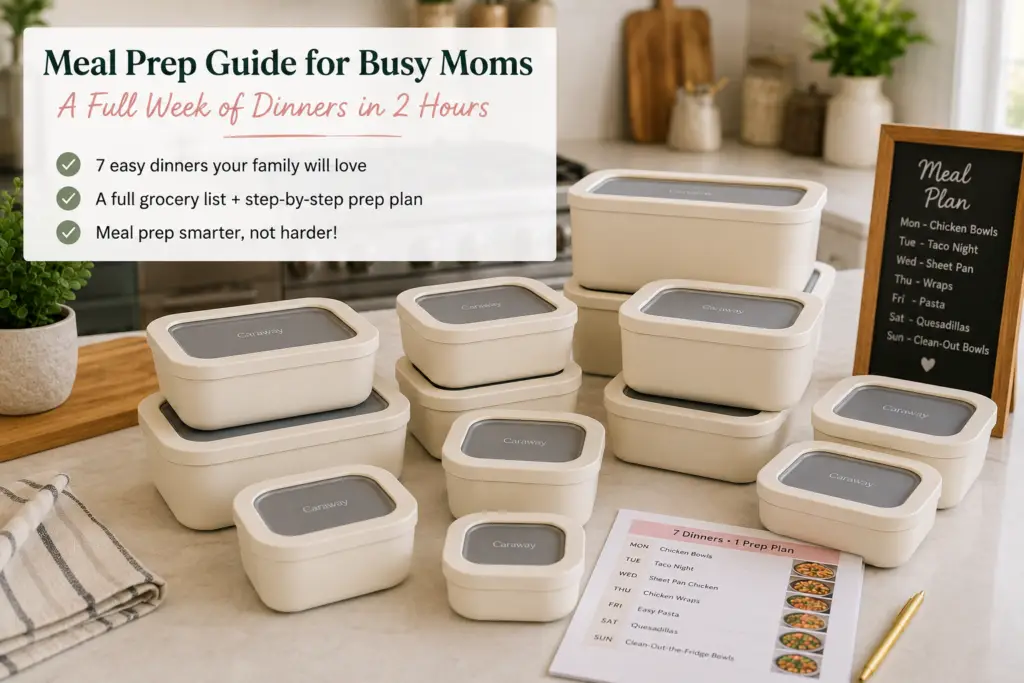
A Simple Weekly Dinner Plan for Picky Eaters
If planning dinner every night feels exhausting, give each night a loose theme.
Monday: Pasta Night
Pasta + sauce on the side + meatballs + vegetable + garlic bread
Tuesday: Taco Night
Tortillas + protein + cheese + toppings
Wednesday: Chicken Night
Chicken tenders + potatoes + fruit + vegetable
Thursday: Breakfast for Dinner
Eggs + pancakes or toast + fruit + yogurt
Friday: Pizza Night
Homemade mini pizzas + vegetables or fruit
Saturday: Build-a-Bowl Night
Rice + chicken or beef + toppings + sauces
Sunday: Comfort Food Night
Mac and cheese, burgers, baked potatoes, soup and sandwiches, or another family favorite
This gives kids some predictability while still allowing you to change the ingredients each week.
What to Do When Your Child Suddenly Stops Eating a Favorite Food
Yesterday bananas were life.
Today bananas are apparently offensive.
Try not to panic.
Food preferences can change, and repeatedly serving the exact same favorite because it’s guaranteed to be eaten can sometimes make burnout happen even faster.
Rotate familiar foods whenever possible.
If your child likes strawberries, blueberries, bananas, and apples, don’t automatically serve strawberries at every meal simply because they’re the current favorite.
Variety within their accepted foods counts too.
What Not to Do With a Picky Eater
Try to avoid turning dinner into a negotiation.
Pressure such as “just three more bites,” comparing siblings, forcing children to clean their plates, bribing every bite with dessert, or constantly commenting on how little they’ve eaten can make the table feel stressful.
Instead, concentrate on what you can control:
You decide what foods are offered and when.
Your child decides which offered foods they eat and how much.
That distinction can take a surprising amount of tension out of family dinner.
Remember: One Meal Doesn’t Define Their Diet
Your child ate crackers, cheese, and strawberries for dinner.
That’s okay.
Look at eating patterns over several days rather than expecting every plate to contain the perfect combination of protein, vegetables, fruit, whole grains, and healthy fats.
Some days kids eat everything.
Some days they seem to survive on air and one blueberry.
Consistency matters more than perfection.
When Picky Eating May Need Professional Support
There is a difference between common childhood food preferences and feeding difficulties that interfere with nutrition, growth, or everyday life.
If your child eats an extremely limited range of foods, regularly gags or vomits around certain textures, has difficulty chewing or swallowing, is losing weight or not growing as expected, has nutritional deficiencies, or mealtimes cause significant distress, talk with your child’s pediatrician or an appropriately qualified feeding professional.
This article is intended for general meal-planning ideas and isn’t a substitute for individualized medical or nutrition advice.
Tips for Cooking for Picky Eaters
Here are the strategies I’d keep coming back to:
- Include at least one familiar food with dinner.
- Serve complicated meals deconstructed when possible.
- Keep portions of unfamiliar foods small.
- Let kids build their own tacos, bowls, pizzas, and wraps.
- Serve sauces and toppings on the side.
- Continue offering foods without forcing them.
- Let kids help shop, prep, and cook.
- Give two choices instead of unlimited options.
- Rotate familiar foods so children don’t burn out on them.
- Don’t automatically cook an entirely different dinner when the first one is refused.
- Keep mealtime conversation about more than how much everyone is eating.
The Bottom Line
Cooking for picky eaters doesn’t require finding a magical list of foods every child will love.
It requires flexibility.
Start with something familiar. Keep new foods low-pressure. Separate ingredients when that helps. Let kids customize their meals. Continue offering variety without making every bite a battle.
Some nights your child might surprise you and taste the roasted broccoli.
Other nights they might eat a dinner roll and six strawberries.
Keep playing the long game.
The goal isn’t to create a perfect eater overnight. It’s to make family meals manageable while helping children gradually become more comfortable around a wider variety of foods.
More Family-Friendly Recipes to Try
If you’re looking for more easy dinner inspiration, these types of recipes are especially helpful for families with picky eaters:
- Crispy chicken wraps
- Chicken Caesar wraps
- Chicken quesadillas
- Air fryer crispy chicken wrap
- Slow cooker meatballs
- Pasta and meatballs
- Easy chicken breast recipes
- Build-your-own taco bowls
Frequently Asked Questions About Picky Eaters
What do you feed a child who is extremely picky?
Start with familiar foods your child reliably eats and pair them with small portions of other family foods. Deconstructed meals such as tacos, rice bowls, pasta bars, snack plates, and mini pizzas can be particularly useful because children can choose from several components.
What are good dinners for picky eaters?
Chicken tenders, quesadillas, tacos, pasta, meatballs, homemade pizza, chicken and rice, burgers, baked potatoes, breakfast for dinner, wraps, grilled cheese, and build-your-own bowls are easy places to start.
Should I make a separate dinner for my picky eater?
You don’t necessarily need to prepare a completely separate meal. Try including at least one familiar food as part of the family dinner and serving meals in customizable components when possible.
How do I get my picky eater to try new foods?
Keep portions small, offer foods repeatedly without pressure, pair unfamiliar foods with familiar ones, involve kids in cooking, and experiment with different preparations.
Should I force my child to take one bite?
Pressure can turn tasting into a power struggle. A lower-pressure approach allows children to become familiar with foods and decide whether they’re ready to taste them.
What vegetables are easiest for picky eaters?
There isn’t one vegetable every picky eater will accept, but carrots, cucumbers, sweet potatoes, corn, peas, roasted potatoes, bell peppers, and mild roasted vegetables can be approachable starting points. Experiment with raw versus cooked textures because some children strongly prefer one.
How can I make healthy meals for picky eaters?
Rather than trying to make every plate perfect, build meals around familiar foods and gradually add variety from proteins, grains, fruits, vegetables, and fats.
Why does my child eat something one day and refuse it the next?
Children’s appetites and preferences can fluctuate. Familiarity, mood, hunger, presentation, texture, and normal developmental changes can all affect what a child wants to eat on a particular day.
How many times should I offer a food before giving up?
There isn’t a magic number that applies to every child. Instead of focusing on a specific number of bites or attempts, continue offering small portions periodically without making eating the food a requirement.
How do I feed a picky eater without cooking two meals?
Use modular dinners. Tacos, pasta bars, rice bowls, baked potato bars, wraps, mini pizzas, breakfast-for-dinner, and snack plates allow everyone to eat from the same group of ingredients while customizing their plate.
Is picky eating normal?
Some food selectivity is common during childhood. If the range of accepted foods becomes extremely limited or you’re concerned about growth, nutrition, chewing, swallowing, gagging, or significant distress around food, speak with your child’s healthcare provider.