If you’ve ever pulled a tray of cookies from the oven only to find thin, flat discs instead of thick, chewy bakery-style cookies, you’re not alone. One of the most common baking questions I get is: “How do I prevent cookies from spreading?”
The good news is that cookie spreading is usually caused by a few simple factors that are easy to fix. Whether you’re making classic chocolate chip cookies, peanut butter cookies, sugar cookies, or stuffed cookies, these baking tips will help you create cookies that stay thick, soft, and beautifully shaped every single time.
Why Do Cookies Spread?
Cookies naturally spread as the butter melts and the dough begins to bake. A little spreading is normal and gives cookies that perfect texture. However, too much spreading can leave you with thin, crispy cookies instead of soft and chewy ones.
The most common causes of cookie spreading include:
- Butter that is too warm
- Not enough flour
- Skipping the chilling step
- Over-greased baking sheets
- Incorrect oven temperature
- Too much sugar
- Old baking ingredients
Let’s break down each one.
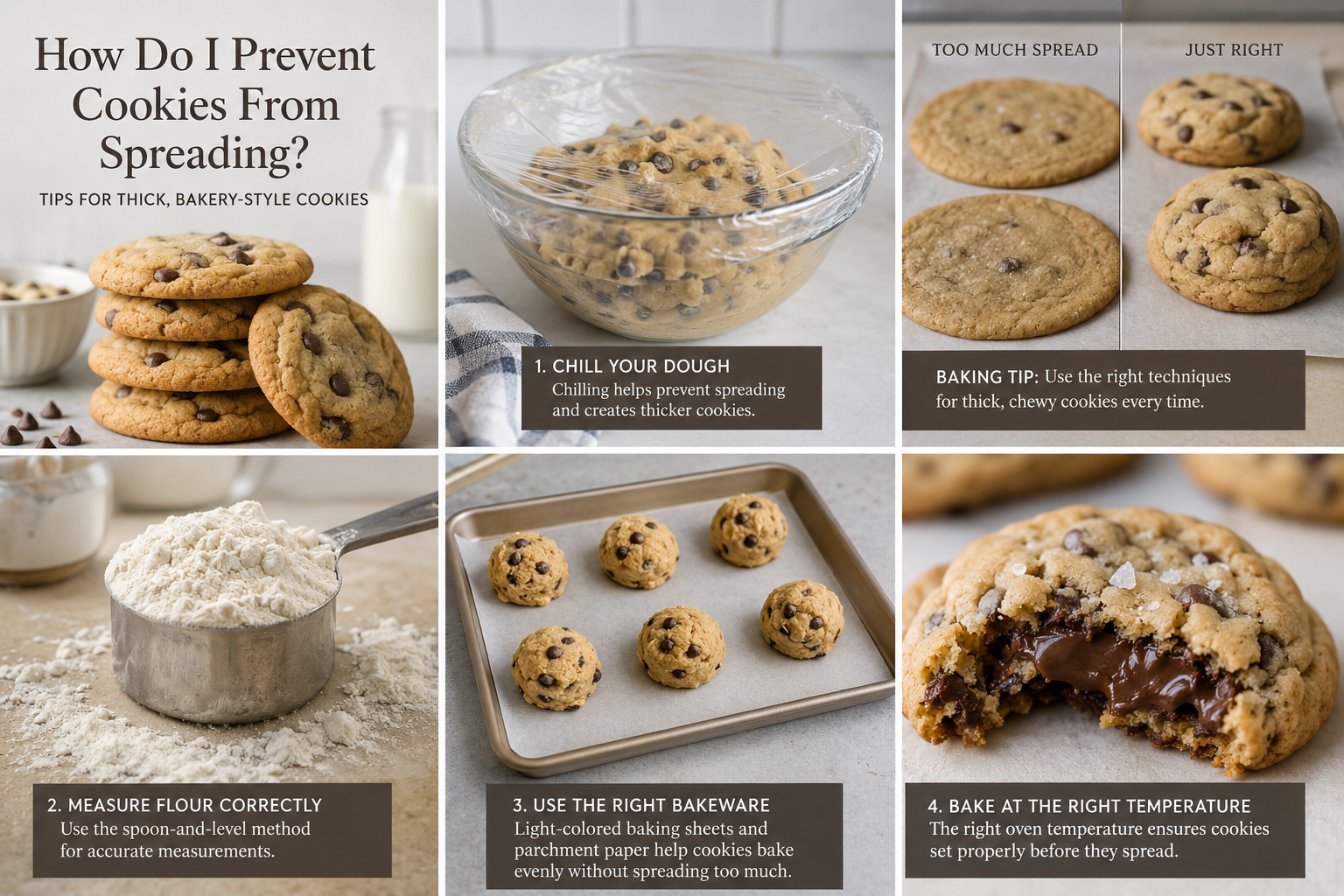
1. Chill Your Cookie Dough
One of the easiest ways to prevent cookies from spreading is to chill the dough before baking.
Cold dough takes longer for the butter to melt, giving the flour and eggs more time to set the cookie structure. This results in thicker, puffier cookies with better texture.
How Long Should You Chill Cookie Dough?
- Minimum: 30 minutes
- Best results: 1–2 hours
- For very thick cookies: Overnight
If your kitchen is warm, chilling becomes even more important.
Pro Tip: Scoop the dough into balls before chilling so they’re ready to bake straight from the refrigerator.
2. Use Butter at the Correct Temperature
Many cookie recipes call for softened butter, but softened does not mean melted.
Properly softened butter should:
- Feel cool to the touch
- Slightly indent when pressed
- Still hold its shape
If butter becomes greasy or shiny, it’s likely too warm and can cause excessive spreading.
If your butter accidentally gets too soft, simply refrigerate the dough for 30 to 60 minutes before baking.
3. Measure Flour Correctly
Too little flour is one of the biggest reasons cookies spread.
Instead of scooping flour directly with the measuring cup, use the spoon-and-level method:
- Fluff the flour.
- Spoon it into the measuring cup.
- Level it with a knife.
Scooping directly into the flour bag can add less flour than intended, creating a dough that’s too wet.
For the most accurate results, use a kitchen scale.
4. Check Your Oven Temperature
Many home ovens run hotter or cooler than the displayed temperature.
If your oven temperature is too low, the butter melts before the cookie structure has time to set, leading to flat cookies.
An inexpensive oven thermometer can make a huge difference in your baking results.
Most cookies bake best between:
- 350°F (175°C)
- 375°F (190°C)
5. Don’t Over-Grease Your Baking Sheet
Modern baking sheets usually don’t need additional grease.
Too much butter or cooking spray creates a slippery surface, causing cookies to spread excessively.
Instead, use:
- Parchment paper
- Silicone baking mats
These provide even baking and help cookies maintain their shape.
6. Use the Right Baking Sheet
Dark pans absorb more heat and can cause cookies to spread differently than lighter pans.
For best results, use:
- Light-colored aluminum baking sheets
- Heavy-duty pans for even heat distribution
Thin pans can also create uneven baking and spreading.
One of my favorite baking tools for consistent cookie results is my Caraway baking sheet. A high-quality baking sheet can make a surprisingly big difference in how cookies spread and bake. Thin or dark-colored pans often cause cookies to spread too quickly or bake unevenly, while a heavy-duty ceramic-coated baking sheet helps distribute heat more evenly for beautiful, bakery-style cookies. I especially love using my Caraway bakeware because the non-toxic ceramic coating promotes even browning, easy cleanup, and consistently thick, perfectly baked cookies every time. IF you have read this far, click here for a GENEROUS discount on sitewide items from my trusted cookware/bakeware company applied at checkout.
7. Make Sure Your Baking Soda and Baking Powder Are Fresh
Expired leavening agents can negatively affect texture and spread.
Baking soda and baking powder lose potency over time, leading to cookies that don’t rise properly.
Replace them every 6–12 months for the best baking results.
8. Avoid Overmixing the Dough
Overmixing can warm the dough and incorporate too much air.
Mix only until the ingredients are combined.
Overworked dough often produces flatter, tougher cookies.
9. Watch Your Sugar Ratio
Sugar melts as cookies bake.
Recipes with a high sugar content naturally spread more.
Brown sugar helps create thicker, softer cookies because it contains moisture, while white sugar tends to create thinner, crispier cookies.
For bakery-style cookies, many bakers prefer using slightly more brown sugar than granulated sugar.
10. Add Extra Mix-Ins Carefully
Chocolate chips, Oreos, nuts, and candies can affect cookie structure.
Large add-ins often help support thicker cookies, but too many can weaken the dough.
A good rule of thumb is to avoid overloading the dough with excessive mix-ins.
11. Chill Between Batches
If you’re baking multiple trays, avoid placing dough on a hot baking sheet.
Warm pans immediately begin melting the butter, leading to spreading before the cookies even enter the oven.
Always allow baking sheets to cool completely between batches.
How to Fix Cookie Dough That Already Spread
If your first batch spreads too much, don’t panic.
Try these quick fixes:
- Chill the remaining dough for one hour.
- Add 1–2 tablespoons of flour.
- Verify your oven temperature.
- Use parchment paper instead of greasing the pan.
- Freeze dough balls for 15 minutes before baking.
These small adjustments can completely transform the remaining batches.
How to Make Thick Bakery-Style Cookies
For thick, chewy cookies every time:
✔ Chill the dough
✔ Use cool, softened butter
✔ Measure flour properly
✔ Bake on parchment paper
✔ Use room temperature eggs
✔ Bake slightly underdone for a soft center
These simple techniques are what give bakery cookies their signature thick and gooey texture.
Before You Go
Preventing cookies from spreading comes down to controlling temperature, measuring ingredients accurately, and giving the dough enough time to chill. A few small adjustments can make the difference between flat cookies and thick, bakery-style treats.
The next time your cookies spread too much, don’t toss the recipe. Try these simple baking tips and you’ll be rewarded with soft, chewy cookies that look just as good as they taste.
Baking Recipes To Try:
- Chocolate Chip Cookies – Link when discussing thick, bakery-style cookies and chilling dough.
- Peanut Butter Cookies – Link when discussing sugar ratios and soft versus crispy cookies.
- Snickerdoodle Cookies – Add when talking about properly measuring flour and preventing flat cookies.