You followed the recipe, checked the temperature, and let the chicken rest. But when you took the first bite, it was chewy, tough, or strangely rubbery.
So, why is your chicken rubbery?
Rubbery chicken usually comes from overcooking, cooking at too low a temperature, starting with uneven pieces, or slicing the meat too soon. Sometimes the chicken itself can be the issue, especially with woody chicken breast. Undercooked chicken may also have an unpleasant rubbery texture and is not safe to eat.
The good news is that most of these problems are easy to prevent. Once you know what causes chewy chicken, you can make it tender and juicy whether you are baking, grilling, sautéing, or using an air fryer.
Why Is My Chicken Rubbery?
Chicken becomes rubbery when the muscle fibers tighten and lose too much moisture. This often happens when the meat cooks for too long or at the wrong temperature.
Chicken breast is especially prone to turning rubbery because it is lean. It does not have much fat to protect the meat from drying out. Even a few extra minutes can change a juicy chicken breast into something tough and difficult to chew.
However, overcooking is not the only possible cause. Rubbery chicken can also result from:
- Undercooking
- Uneven thickness
- Crowding the pan
- Cooking cold chicken straight from the refrigerator
- Using too much acid in a marinade
- Slicing immediately after cooking
- Starting with woody chicken breast
- Reheating the chicken too aggressively
The texture can help you figure out what went wrong. Dry, stringy chicken is probably overcooked. Slick, glossy, or unusually soft chicken may be undercooked. Chicken that feels hard or unusually dense before cooking could be woody breast.
The Most Common Reason: Overcooked Chicken
Overcooking is the most common reason chicken turns rubbery.
As chicken cooks, its proteins contract. Some contraction is necessary to give cooked chicken its firm texture. If cooking continues for too long, the muscle fibers tighten further and force out moisture.
The result is chicken that feels:
- Dry
- Stringy
- Tough
- Chewy
- Rubbery around the edges
Boneless, skinless chicken breasts are easy to overcook because their thickness can vary from one end to the other. By the time the thickest section reaches a safe temperature, the thin end may already be dry.
How to prevent overcooked chicken
Use an instant-read meat thermometer instead of relying only on cooking time. Insert it into the thickest part of the meat without touching the pan, bone, or grill grates.
Chicken is safe when it reaches an internal temperature of 165°F. For juicy chicken breast, you can remove it from the heat at around 160°F to 162°F if the temperature continues rising to 165°F while it rests.
This temperature increase after cooking is called carryover cooking. The exact amount depends on the size of the chicken and the cooking method, so always confirm that the meat reaches a safe temperature.
Can Undercooked Chicken Be Rubbery?
Yes, undercooked chicken can feel rubbery, but the texture is usually different from overcooked chicken.
Undercooked chicken may be:
- Slick or slippery inside
- Glossy
- Very soft
- Gelatinous near the center
- Difficult to bite through
- Pink or translucent in thick areas
Color alone is not a dependable way to determine whether chicken is cooked. Some fully cooked chicken can remain slightly pink, while chicken that looks white may still be below a safe internal temperature.
Use a thermometer and make sure the thickest part reaches 165°F.
What to do if your chicken is undercooked
Return it to the heat immediately.
For baked chicken, place it back in a preheated oven and check it every few minutes. For stovetop chicken, return it to the skillet over medium-low heat and cover the pan. Add a small splash of broth or water to keep the surface from drying out.
Do not leave partially cooked chicken sitting at room temperature while you decide what to do.
The Chicken Was Cooked at Too Low a Temperature
Cooking chicken slowly at a low temperature may sound like a good way to keep it tender, but that is not always true for lean cuts.
Boneless chicken breasts can become rubbery when they spend too long in the oven. The extended cooking time gradually squeezes moisture from the meat, even if the oven temperature is low.
For most boneless chicken breasts, baking at 400°F to 425°F works better than baking at 325°F. The higher temperature cooks the outside quickly while giving the inside less time to dry out.
Chicken thighs are more forgiving. Their higher fat content makes them better suited for slower cooking.
A better oven temperature for chicken breast
Try baking boneless, skinless chicken breasts at 425°F until the thickest section reaches a safe temperature. Depending on their size and thickness, this usually takes about 18 to 25 minutes.
Cooking time is only a guide. The thermometer should make the final call.
The Chicken Pieces Were Uneven
A chicken breast is naturally thicker on one end and thinner on the other. That uneven shape makes it difficult to cook the entire piece properly.
If you wait for the thick end to finish cooking, the narrow end can become tough. If you remove the chicken when the narrow end is ready, the middle may still be undercooked.
How to make chicken an even thickness
Place the chicken between two pieces of parchment paper or inside a food-safe storage bag. Gently pound the thick end with a meat mallet or rolling pin until the entire breast is close to the same thickness.
You do not need to flatten it into a cutlet unless the recipe calls for one. The goal is simply to reduce the difference between the thick and thin sections.
You can also slice large chicken breasts horizontally to make two thinner pieces. Thin chicken cooks faster and more evenly, making it easier to avoid a rubbery texture.
You Crowded the Pan
Putting too much chicken into one pan can cause steaming instead of browning.
Chicken releases moisture as it cooks. When the pan is crowded, that liquid collects around the meat and lowers the pan’s surface temperature. The chicken sits in its own juices instead of developing a golden crust.
Crowding does not always make the inside rubbery on its own, but it often leads to longer cooking times. That extra time can dry out the meat.
How much space does chicken need?
Leave enough room so the pieces are not touching. You should be able to see some of the pan between them.
If your skillet or sheet pan is too small, cook the chicken in batches. It takes a little longer, but the texture and color will be much better.
The Pan Was Not Hot Enough
Adding chicken to a cold or barely warm skillet can cause it to cook slowly and release more moisture.
For pan-seared chicken, preheat the skillet over medium or medium-high heat before adding oil. Let the oil warm until it looks thin and shimmery, then add the chicken.
You should hear a steady sizzle when the chicken touches the pan. If nothing happens, the skillet is not hot enough.
Once the chicken is in the pan, avoid moving it constantly. Let the first side cook long enough to form a golden crust before turning it.
You Cooked Cold Chicken Straight From the Refrigerator
Very cold chicken can cook unevenly. The outside may become overdone while the center slowly comes up to temperature.
You do not need to leave raw chicken on the counter for a long time. About 15 to 20 minutes is usually enough to remove the refrigerator chill while you prepare the other ingredients.
Follow food-safety guidelines and do not leave raw chicken at room temperature for more than two hours. On a hot day, that window is shorter.
The Chicken Was Marinated Too Long
Marinades can add flavor and help with browning, but more time is not always better.
Acidic ingredients such as lemon juice, lime juice, vinegar, and yogurt change the proteins on the chicken’s surface. When chicken stays in a strong acidic marinade for too long, the exterior can become mushy, mealy, or oddly rubbery after cooking.
How long should you marinate chicken?
The right time depends on the cut and the marinade:
- Thin chicken cutlets: 30 minutes to 2 hours
- Boneless chicken breasts: 30 minutes to 6 hours
- Chicken thighs: 1 to 12 hours
- Whole chicken: up to 24 hours, depending on the recipe
Chicken coated in a mild oil-and-herb mixture can usually marinate longer than chicken sitting in a large amount of citrus juice or vinegar.
If you need to prep chicken overnight, use less acid or add the acidic ingredient closer to cooking time.
The Chicken Was Not Brined Correctly
Brining can help chicken retain moisture, but an overly salty or very long brine may give the meat a firm, cured, or slightly bouncy texture.
For a simple wet brine, dissolve about ¼ cup kosher salt in 4 cups of water. Brine boneless chicken breasts for 30 minutes to 2 hours in the refrigerator. Rinse only if your recipe instructs you to, then pat the chicken very dry.
A dry brine is another option. Sprinkle the chicken lightly with salt and refrigerate it uncovered or loosely covered for several hours. Use a light hand, especially if your seasoning blend also contains salt.
Always keep chicken refrigerated while it brines.
You Sliced the Chicken Too Soon
Cutting chicken immediately after cooking allows its juices to spill onto the plate instead of staying in the meat.
Rest boneless chicken breasts for about 5 to 10 minutes before slicing. Larger bone-in pieces or whole chickens need more time.
Resting does not repair chicken that is already badly overcooked, but it helps well-cooked chicken stay juicy.
Loosely cover the chicken with foil while it rests. Wrapping it tightly may trap too much steam and soften the browned surface.
You Cut the Chicken in the Wrong Direction
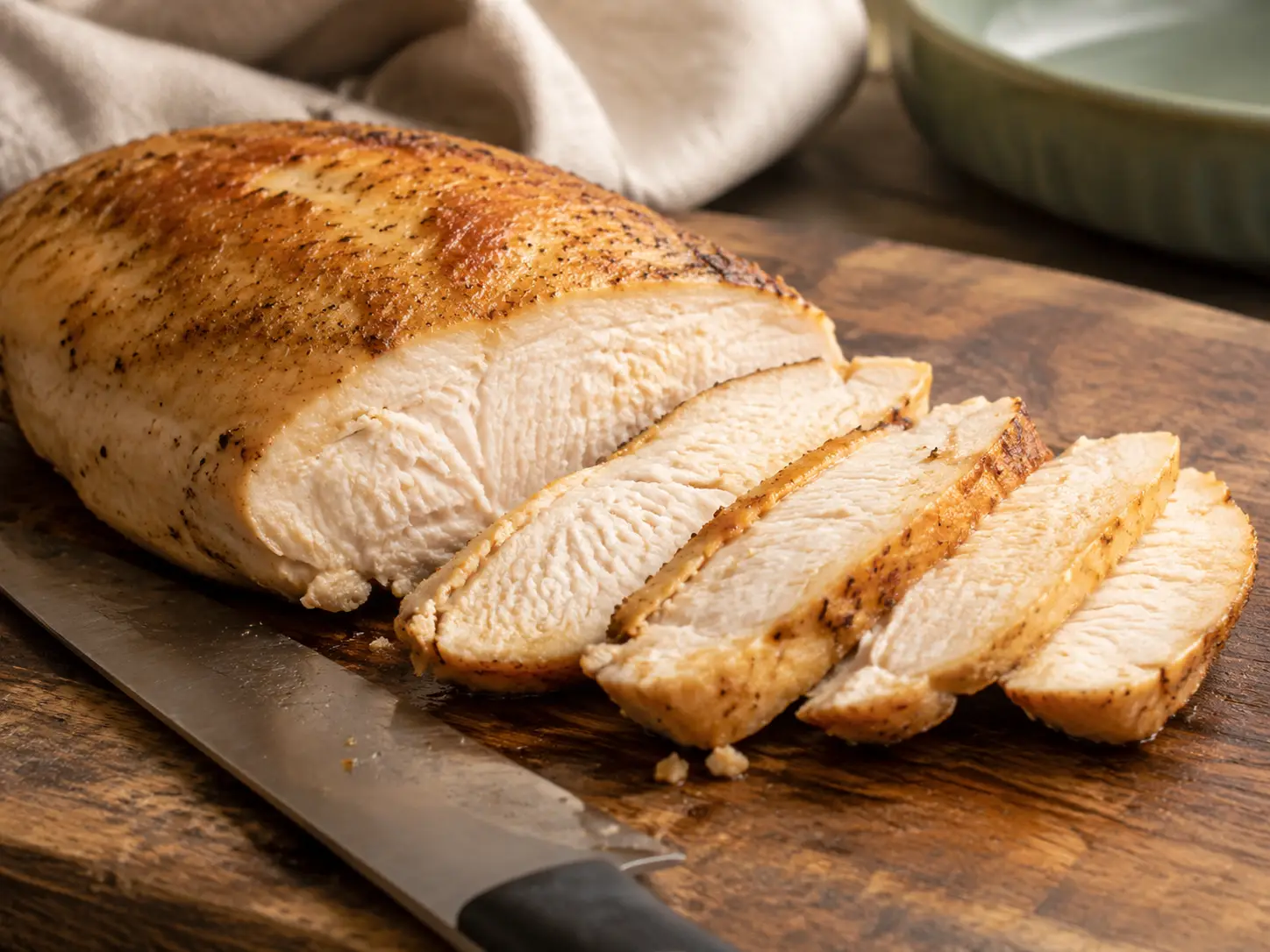
Chicken breast has visible muscle fibers that run in a particular direction. Cutting parallel to those fibers leaves longer strands, which can make the chicken seem chewier.
For a more tender bite, slice across the grain. This shortens the muscle fibers and makes each piece easier to chew.
Look closely at the cooked chicken before slicing. Find the direction of the lines and cut across them rather than following them.
It Could Be Woody Chicken Breast
Sometimes the cooking method is not the problem.
Woody breast is a condition that can affect chicken breast meat. The raw chicken may feel unusually hard, dense, swollen, or lumpy. It may also have pale stripes running across the surface.
After cooking, woody chicken can remain tough, crunchy, or rubbery even when it reaches the proper temperature.
Signs of woody chicken breast
Look for:
- A hard or stiff texture when raw
- A thicker, bulging shape
- Pale white lines across the surface
- Meat that feels unusually dense
- A crunchy or rubbery texture after cooking
Woody chicken is not caused by anything you did in the kitchen. If the meat felt abnormally firm before cooking, the chicken itself may be responsible for the finished texture.
Can woody chicken be fixed?
You cannot fully change the structure of woody chicken breast, but you can make it easier to eat.
Try slicing it thinly, chopping it for casseroles, or shredding it into a sauce. Cooking it in broth may also make the texture less noticeable.
For future meals, choose smaller chicken breasts that feel flexible and have fewer visible white stripes.
Why Is My Grilled Chicken Rubbery?
Grilled chicken usually becomes rubbery because the grill is too hot, the meat is uneven, or it cooks for too long.
A very hot grill can burn the outside before the center is ready. You may then leave the chicken on longer to finish the middle, causing the outer layers to dry out.
For better grilled chicken:
- Pound the chicken to an even thickness.
- Preheat the grill and clean the grates.
- Oil the grates or lightly oil the chicken.
- Cook over medium or medium-high heat.
- Turn the chicken only as needed.
- Check the internal temperature early.
- Rest it before slicing.
If the chicken is browning too quickly, move it to a cooler area of the grill to finish cooking.
Why Is My Baked Chicken Rubbery?
Baked chicken can turn rubbery when it is cooked too long, baked at a low temperature, or placed in the oven at uneven thicknesses.
Large chicken breasts are especially difficult to bake evenly. Pounding them, slicing them into cutlets, or choosing smaller pieces can help.
For juicy baked chicken breast:
- Preheat the oven to 425°F.
- Pat the chicken dry.
- Pound it to an even thickness.
- Coat it lightly with oil and seasonings.
- Arrange the pieces with space between them.
- Bake until the thickest section approaches 165°F.
- Rest for 5 to 10 minutes before slicing.
Avoid opening the oven repeatedly because this releases heat and makes cooking times less predictable.
Why Is My Air Fryer Chicken Rubbery?
Air fryers circulate hot air quickly, so chicken can go from juicy to dry in only a few minutes.
Common causes of rubbery air fryer chicken include:
- Cooking at too high a temperature
- Using very thin pieces
- Overcrowding the basket
- Following a set time without checking the temperature
- Reheating cooked chicken for too long
Start checking chicken several minutes before the recipe’s suggested cooking time. Air fryer models vary, and smaller pieces may cook much faster than expected.
Arrange the pieces in a single layer with room for air to circulate.
Why Is My Slow Cooker Chicken Rubbery?
Chicken can be overcooked in a slow cooker.
Boneless chicken breast does not need an entire day to cook. Leaving it on low for eight hours can make it dry, stringy, and rubbery. Many chicken breasts are ready after about three to four hours on low, but the timing depends on the slow cooker and the size of the meat.
Chicken thighs are often a better choice for recipes that require longer cooking. Their extra fat helps them remain tender.
Use enough liquid to support the recipe, but do not assume extra liquid will prevent overcooking. Once the proteins tighten, sauce cannot put the moisture back inside the meat.
Why Is Reheated Chicken Rubbery?
Chicken often becomes rubbery after reheating because it is essentially being cooked again.
High heat and long reheating times force out even more moisture. The microwave can be especially rough on sliced chicken because the thin edges heat faster than the center.
How to reheat chicken without making it rubbery
For the microwave:
- Place the chicken in a microwave-safe dish.
- Add a spoonful of broth, water, or sauce.
- Cover the dish loosely.
- Heat at 50 percent power in short intervals.
- Stop once the chicken is hot.
For the oven:
- Place the chicken in a baking dish.
- Add a small amount of broth.
- Cover the dish with foil.
- Warm at 325°F until heated through.
Whenever possible, store chicken whole and slice it after reheating. Whole pieces lose moisture more slowly than thin slices.
How to Fix Rubbery Chicken
You cannot completely reverse overcooking, but you can make rubbery chicken much easier to eat.
- Slice it very thin
Cut the chicken across the grain into thin strips. Shorter muscle fibers create a more tender bite.
- Add a sauce
A creamy sauce, gravy, salsa, barbecue sauce, pesto, or pan sauce can add moisture and make dry chicken more enjoyable.
Warm the chicken gently in the sauce. Do not boil it, since more cooking can make it even tougher.
- Shred it
Shredded chicken works well in recipes where the texture is less noticeable, including:
- Chicken salad
- Tacos
- Quesadillas
- Soup
- Pasta
- Casseroles
- Enchiladas
- Buffalo chicken dip
- Barbecue chicken sandwiches
Mix the shredded chicken with a flavorful sauce or broth before serving.
- Chop it into small pieces
Finely chopped chicken can be added to fried rice, pasta salad, pizza, wraps, or grain bowls. Smaller pieces are easier to chew and blend with other textures.
- Simmer it gently in broth
Place sliced or shredded chicken in warm broth for a few minutes. Keep the heat low and avoid a hard boil.
This will not restore the moisture that was lost, but the broth can improve the eating experience.
How to Cook Tender, Juicy Chicken Every Time
The exact cooking method may change, but the basic rules stay the same.
- Start with evenly sized pieces
Choose chicken breasts that are close in size or pound them to an even thickness.
- Pat the surface dry
Dry chicken browns more easily. Excess water creates steam and can slow down browning.
- Season before cooking
Salt adds flavor throughout the meat when given a little time to work. Season chicken at least 15 minutes before cooking when possible.
- Preheat the cooking surface
Make sure the oven, grill, skillet, or air fryer is fully preheated before adding the chicken.
- Avoid crowding
Leave space between pieces so heat can circulate and moisture can escape.
- Use a meat thermometer
Check the thickest part of the chicken. Begin checking earlier than you think you need to, especially with thin cutlets and air fryer recipes.
- Let the chicken rest
Give the juices time to settle before slicing.
- Slice across the grain
This creates shorter, easier-to-chew pieces.
Quick Guide to Rubbery Chicken
| What you notice | Likely cause | What to do next time |
|---|---|---|
| Dry, stringy, and tough | Overcooked | Check the temperature earlier |
| Glossy or slick inside | Undercooked | Continue cooking to 165°F |
| Dry edges with a moist center | Uneven thickness | Pound the chicken evenly |
| Pale surface with little browning | Crowded or cool pan | Preheat the pan and cook in batches |
| Mushy or firm exterior | Marinated too long | Shorten the marinating time |
| Hard or crunchy throughout | Woody chicken breast | Choose smaller, more flexible breasts |
| Juices run onto the cutting board | Sliced too soon | Rest for 5 to 10 minutes |
| Tough after reheating | Heated too long | Use lower heat with added moisture |
One More Chicken Cooking Guide to Try
Once you know why chicken becomes rubbery, this related guide can help you get better results with every batch:
Before You Go
Rubbery chicken is usually a temperature or timing problem. The meat cooked too long, cooked unevenly, or was sliced before it had time to rest. In some cases, undercooking, a strong marinade, or woody chicken breast may be responsible.
For the best texture, use evenly sized pieces, preheat your cooking surface, leave room between the chicken, and keep an instant-read thermometer nearby. Remove the chicken at the right time, let it rest, and slice it across the grain.
If the chicken is already rubbery, do not throw it away. Slice it thinly or shred it, add a flavorful sauce, and turn it into tacos, soup, pasta, wraps, or a casserole.