

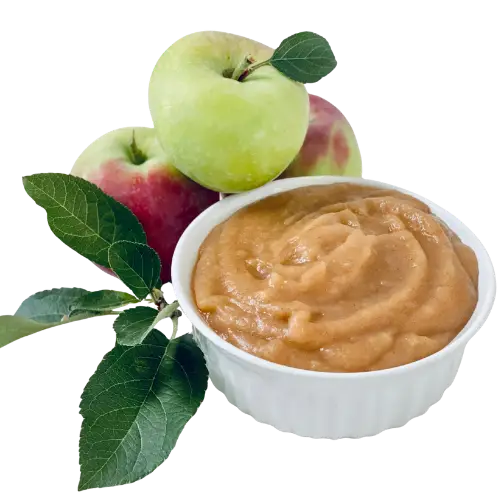
Unsweetened applesauce is the apple puree without added sugar, used as a 1:1 oil or butter substitute in many baking recipes to reduce fat content. The apple flavor is mild enough to blend into most batters without dominating, but adds natural sweetness and moisture that makes baked goods more tender. Reader favorites built on it include Caramel Apple Pie, Apple Maple Upside Down Bundt Cake, and Apple Layered Cake where apples (fresh, sauced, or both) provide the sweet-tart fruit base that defines apple-forward baking.

Unsweetened applesauce is pureed cooked apples with no added sugar, the right choice for baking substitutions and savory pairings. Sweetened applesauce contains added sugar (often 15-20 grams per 1/2 cup serving) that throws off the balance in recipes designed for the unsweetened version. Mott’s, Musselman’s, and Vermont Village all make widely available unsweetened versions.
For oil substitution in baking, unsweetened applesauce replaces vegetable oil at a 1:1 ratio in many quick breads, muffins, and brownies. The substitution produces slightly denser, slightly moister finished bakes with less fat. Works best in recipes where oil is the main fat (not in cookies or anything where butter creaming is critical). The 1/2 cup applesauce per 1/2 cup oil ratio is the standard substitution.
For egg substitution, 1/4 cup unsweetened applesauce replaces 1 egg in many baked goods. Works best in muffins, quick breads, and pancakes where the egg is for binding and moisture; doesn’t work in recipes where egg structure is essential (angel food cake, meringue, custards). The substitution reduces cholesterol and produces slightly denser results.
For sugar reduction in baking, unsweetened applesauce can replace some of the sugar in muffins and quick breads. The applesauce provides natural sweetness from fruit sugars plus moisture; reduce other liquid by 1-2 tablespoons per 1/2 cup applesauce added. The total sugar reduction is modest but the moisture and texture improvement is significant.
For pork chops and roast pork, applesauce is the classic side dish. The sweet-tart apple flavor balances the rich pork; the texture contrast adds interest. Serve cold or at room temperature alongside hot pork. Unsweetened applesauce has the right acidity to cut through pork richness; sweetened versions can taste cloying. Apple-forward bakes that pair the fruit with caramel or spice include Caramel Apple Pie, Apple Maple Upside Down Bundt Cake, and Apple Layered Cake.
For breakfast applications, unsweetened applesauce works as a spread on toast, a topping for oatmeal or yogurt, or a stirred-in ingredient for overnight oats. The 1-2 tablespoons applesauce per breakfast portion adds natural sweetness without added sugar.
For homemade applesauce, peel and chop 6-8 apples, simmer in 1/2 cup water with a cinnamon stick for 20-25 minutes until tender, mash or blend smooth, finish with 1 tablespoon lemon juice. Homemade tastes dramatically better than jarred and takes 30 minutes total.
For applesauce muffins (the classic baking application), the standard recipe is 2 cups flour + 1/2 cup sugar + 1 teaspoon baking soda + 1 teaspoon cinnamon + 1 cup unsweetened applesauce + 1/2 cup oil + 2 eggs + 1 teaspoon vanilla, baked at 350°F for 22-25 minutes. The applesauce produces tender, moist muffins with mild apple flavor.
For storage, opened unsweetened applesauce keeps 7-10 days refrigerated in the original jar. Frozen applesauce keeps 6 months in airtight containers. The texture suffers slightly after freezing; works fine for baking applications but less ideal as a standalone side dish. Discard if any mold appears.
To make unsweetened applesauce, peel and chop apples, then cook them with a little water until soft. Mash or blend until smooth, adding cinnamon if desired.
You can substitute mashed bananas, yogurt, pumpkin puree, or blended pears. Each will provide moisture and a slightly different flavor.
The basic ingredients are apples and water. Optional additions include cinnamon or lemon juice for extra flavor.
Unsweetened applesauce is low in fat, contains natural sugars, and provides fiber and vitamin C. It can support digestion and serve as a healthier alternative in recipes.