
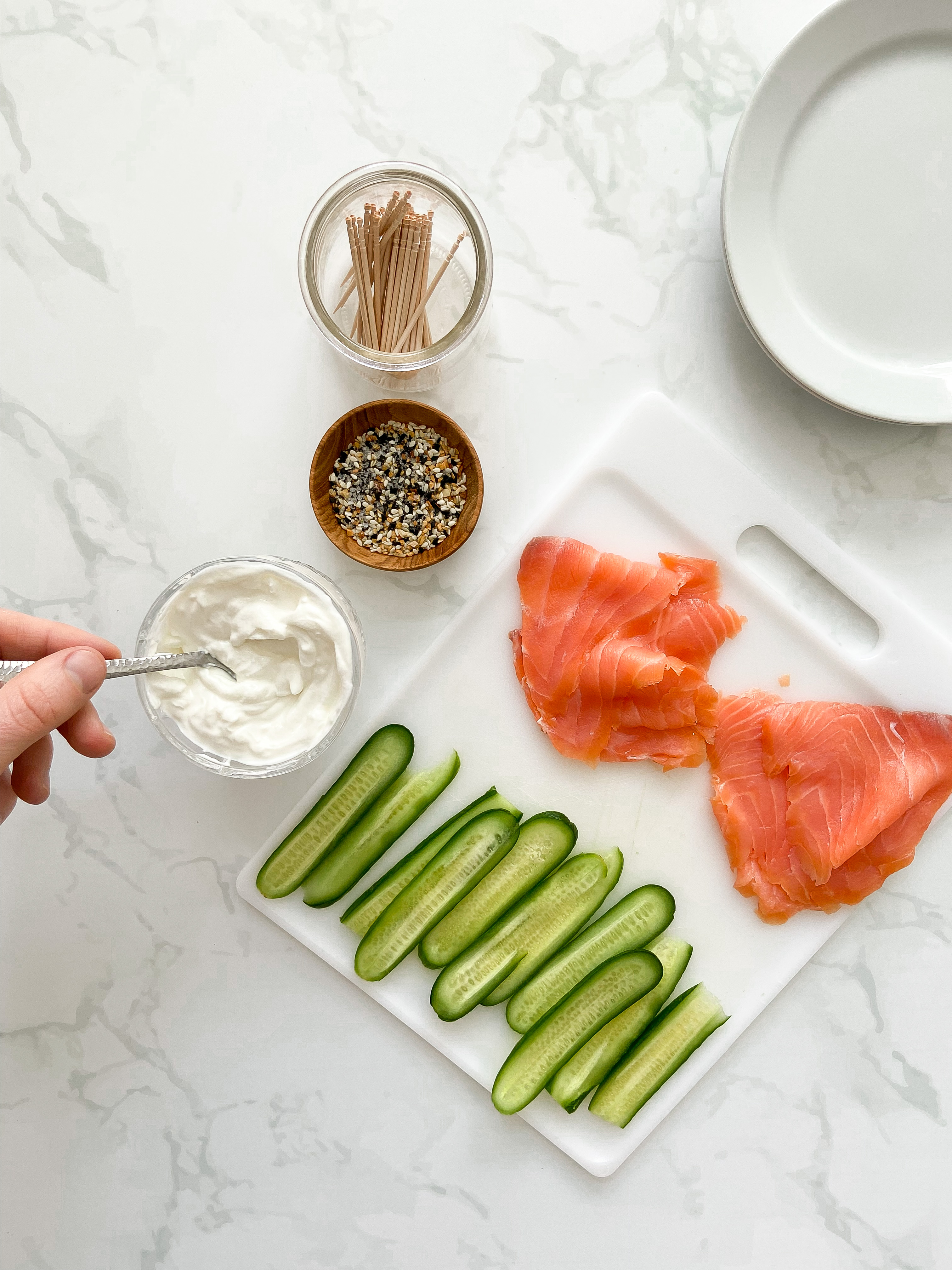
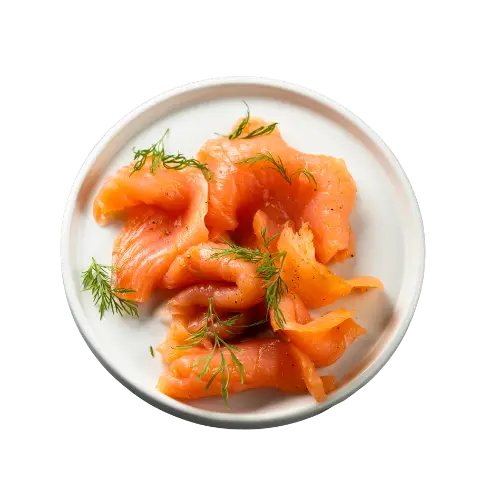
Smoked salmon (cold-smoked, the silky, ready-to-eat variety) is the brunch and appetizer standard. It’s already cooked through the smoking process; pairs with bagels, cream cheese, capers, and red onion for the classic combination. Hot-smoked salmon (firmer, flaky) is a different product used in salads and pasta. Reader favorites that build on it include Smoked Salmon Appetizer and Easy Oven Baked Salmon where the salmon (smoked or oven-baked) provides the lean protein and rich flavor that anchors the dish.
Cold-smoked and hot-smoked salmon are two different products from the same fish. Cold-smoked salmon (lox, gravlax, Nova) is cured in salt then smoked at low temperatures (under 90°F), producing the silky, slightly translucent, ready-to-eat slices used on bagels and in charcuterie. Hot-smoked salmon is cured then smoked at higher temperatures (160-180°F), producing flaky, fully cooked salmon with deeper smoke flavor; the texture is similar to baked salmon.
For bagel and lox, the build is toasted bagel + schmear of cream cheese + 3-4 slices cold-smoked salmon + thin red onion slices + capers + cucumber slices + fresh dill. The combination of bagel, cream cheese, smoked fish, and acidic toppings is the canonical New York deli formula.
For smoked salmon appetizers, the standard cocktail-party plate is sliced cold-smoked salmon arranged on a platter with capers, sliced red onion, lemon wedges, cream cheese or creme fraiche, and pumpernickel or rye crackers. Per person, plan 2-3 oz salmon as appetizer or 4-6 oz as a main.
For pasta dishes with hot-smoked salmon, flaked salmon goes into cream-based sauces in the last 2-3 minutes of cooking just to warm through. Overcooking destroys the texture. The classic recipe is fettuccine + 1 cup heavy cream + 1/2 cup grated parmesan + flaked hot-smoked salmon + fresh dill + lemon zest. The salmon adds protein and smokiness without needing additional cooking.
For salmon-and-egg combinations (smoked salmon scramble, eggs benedict variations), fold flaked or chopped cold-smoked salmon into beaten eggs just before they set. The residual heat warms the salmon without cooking it through; the texture stays silky.
For substitution, hot-smoked salmon and canned salmon both work in baked or cooked applications. For raw applications, cold-smoked salmon doesn’t have a direct substitute; the curing process is what produces the silky texture and salty depth. Gravlax (homemade salt-cured salmon) is similar but unsmoked.
For storage, vacuum-sealed cold-smoked salmon keeps 2-3 weeks refrigerated unopened. Once opened, use within 5 days. Hot-smoked salmon keeps 5-7 days refrigerated. Both products freeze well for 2-3 months; thaw overnight in the refrigerator before using. The texture of frozen cold-smoked salmon is slightly less ideal but still usable. Browse tahini and lemon zest for closely related ingredients.
Smoked salmon recipes usually involve combining smoked salmon with fresh ingredients such as cream cheese, herbs, bread, or pasta. Because the salmon is already cured and smoked, it does not require additional cooking. Simply slice or flake it and add it to salads, spreads, or light meals.
Some of the easiest smoked salmon recipes include bagels with cream cheese and smoked salmon, smoked salmon salads, and simple appetizer bites. These dishes require minimal preparation because smoked salmon is ready to eat and only needs to be assembled with other ingredients.
Smoked salmon pairs well with cream cheese, lemon, dill, capers, eggs, and fresh bread. These ingredients complement its mild smoky flavor and smooth texture. They are often used together in appetizers, breakfast dishes, and light meals.
Smoked salmon is often served chilled or at room temperature. It can be layered on toast or bagels, added to salads, or arranged on platters with crackers and spreads. Garnishing with herbs, lemon slices, or capers helps enhance flavor and presentation.