
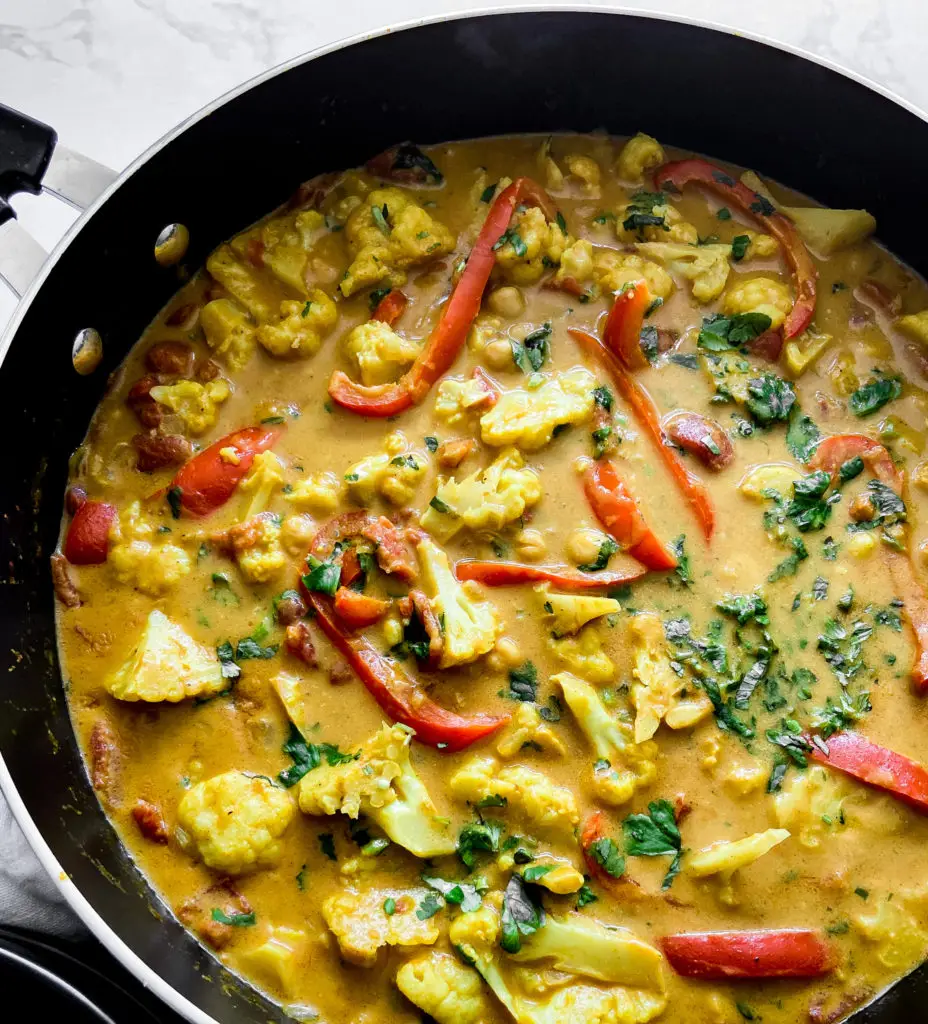
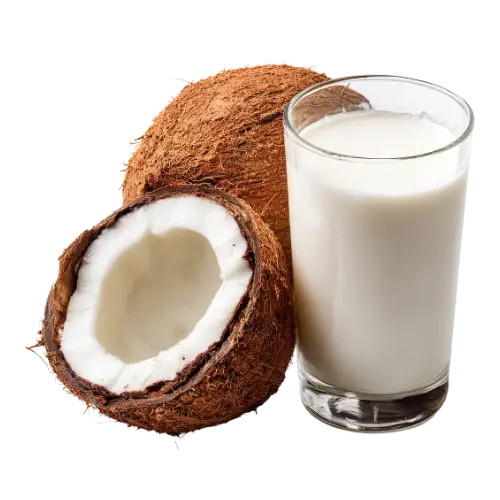
Full-fat coconut milk (the canned variety, not the carton beverage) is the rich, fatty liquid extracted from coconut meat that anchors Thai curries, Indian dishes, vegan custards, and most coconut-forward cooking. The fat content separates from the water during storage, producing the thick coconut cream that floats on top when the can sits undisturbed. Reader favorites built on it include One Pot Eggplant Curry, Vegan Cauliflower Curry, and Gluten Free Almond Coconut Cake where the coconut milk provides both the richness and the subtle sweetness that defines authentic Southeast Asian curries and dairy-free desserts.

Full-fat coconut milk and light coconut milk are the same product diluted to different levels. Full-fat (often labeled “thick” or “premium”) contains 50-60% coconut extract and around 20-22% fat. Light coconut milk is diluted with water to 5-7% fat. For curries, ice cream, and any recipe where richness matters, full-fat is essential; light produces thin, watery results.
For Thai curries (red, green, yellow), the standard technique is to “crack” the coconut milk: scoop out the thick cream from the top of the can, fry it in the pan with curry paste until the oil separates and the mixture is fragrant, then add the rest of the can plus other ingredients. The cracking step concentrates flavor and produces the signature red-orange oil pools in restaurant-style curry. One Pot Eggplant Curry and Vegan Cauliflower Curry both use this technique as the base.
For coconut whipped cream (the dairy-free whipped topping alternative), chill 1 can of full-fat coconut milk overnight, scoop the solid cream off the top (discard the liquid water or save for smoothies), beat with 2 tablespoons powdered sugar and 1 teaspoon vanilla until fluffy. The result is a fluffy, lightly sweet topping; the brand matters significantly since some brands have stabilizers that prevent good whipping (Thai Kitchen and Aroy-D are reliable).
For coconut rice (the Thai and Caribbean side dish), substitute 1 can full-fat coconut milk for 1.5 cups of the cooking liquid in standard rice. The standard recipe is 1 cup jasmine rice + 1 can coconut milk + 1/2 cup water + 1 teaspoon salt, brought to a boil, covered, simmered on low 18-20 minutes. The rice is creamy and slightly sweet.
For ice cream and dairy-free desserts, full-fat coconut milk replaces heavy cream in many ice cream recipes. The standard substitution is 1 can coconut milk + 1/2 cup sugar + 1 teaspoon vanilla, churned in an ice cream maker. The result is dairy-free with subtle coconut flavor and silky texture.
For baking applications, full-fat coconut milk substitutes for whole milk or heavy cream in muffins, quick breads, and cakes. The substitution produces slightly denser, slightly more moist finished bakes with subtle coconut undertone. Gluten Free Almond Coconut Cake shows the technique in a layered cake build. Reduce other liquid by 2 tablespoons per cup of coconut milk substituted because of the higher fat content.
For substitution, light coconut milk works in soups but not in recipes where richness matters. Coconut cream is even richer and can substitute at a 1:2 ratio with water added. Heavy cream is the closest dairy substitute for cooking but lacks the coconut flavor.
For storage, unopened cans keep 1-2 years in the pantry. Once opened, transfer to a glass container; keeps 4-5 days refrigerated or 6 months frozen in 1-cup portions. The fat separates from the water on standing; whisk or shake before using if the can has been sitting in storage. Browse coconut water and coconut milk for closely related coconut products.
Full fat coconut milk is commonly used to add richness and creaminess to soups, curries, sauces, desserts, and drinks. Its thick texture blends easily into both sweet and savory recipes. It is especially useful in dairy-free cooking where a creamy consistency is needed.
Full fat coconut milk can be made by blending fresh grated coconut with hot water and then straining the mixture through cheesecloth. The thick liquid that comes from the first pressing contains the highest fat content and is considered full fat coconut milk.
Full fat coconut milk contains healthy fats along with small amounts of vitamins and minerals. When used in moderation, it can be part of a balanced diet. Its rich texture makes it useful in recipes that require creaminess without dairy.
Common substitutes for full fat coconut milk include heavy cream, evaporated milk, or unsweetened almond milk depending on the recipe. For dairy-free cooking, cashew cream or blended soaked cashews can provide a similar creamy texture.
For more milk and dairy-free options, see our almond milk and avocado recipes.