
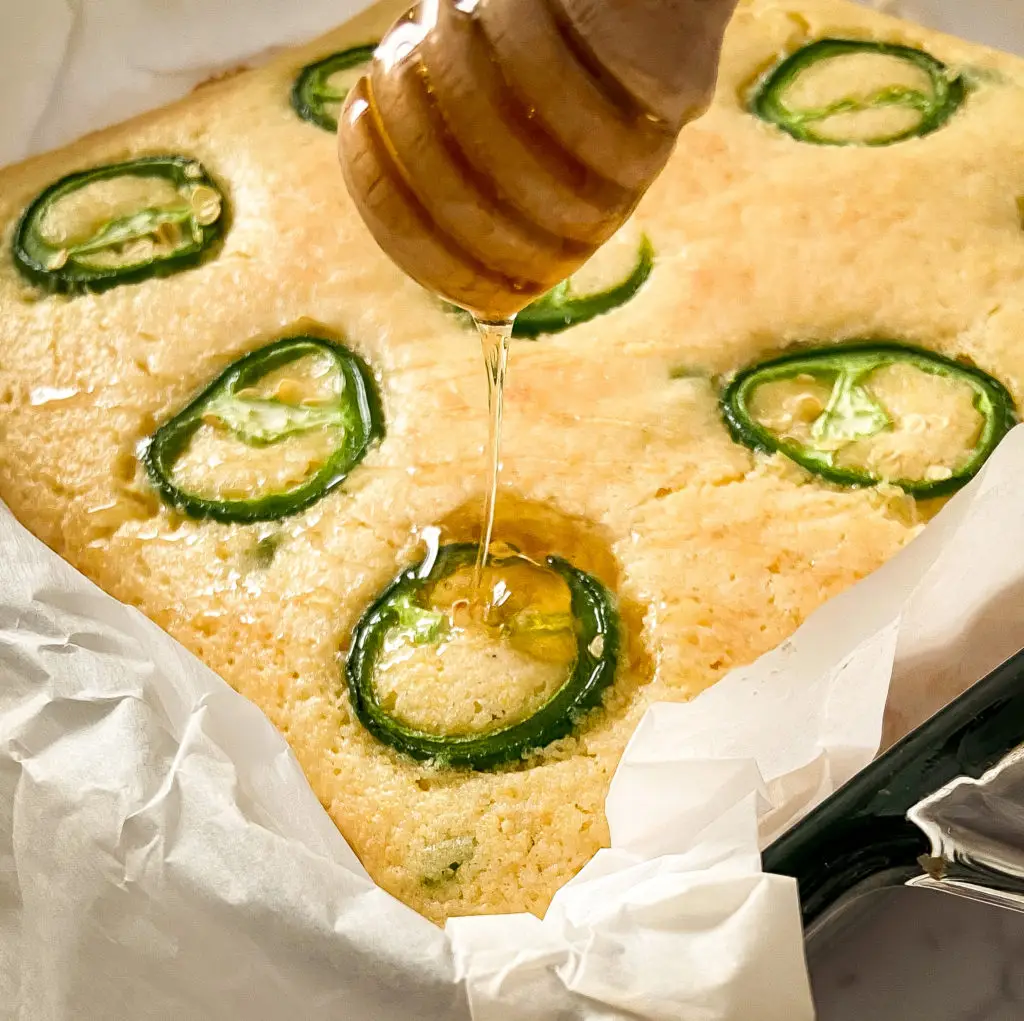
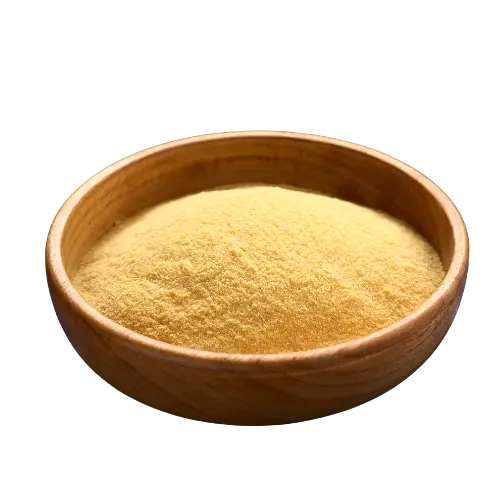
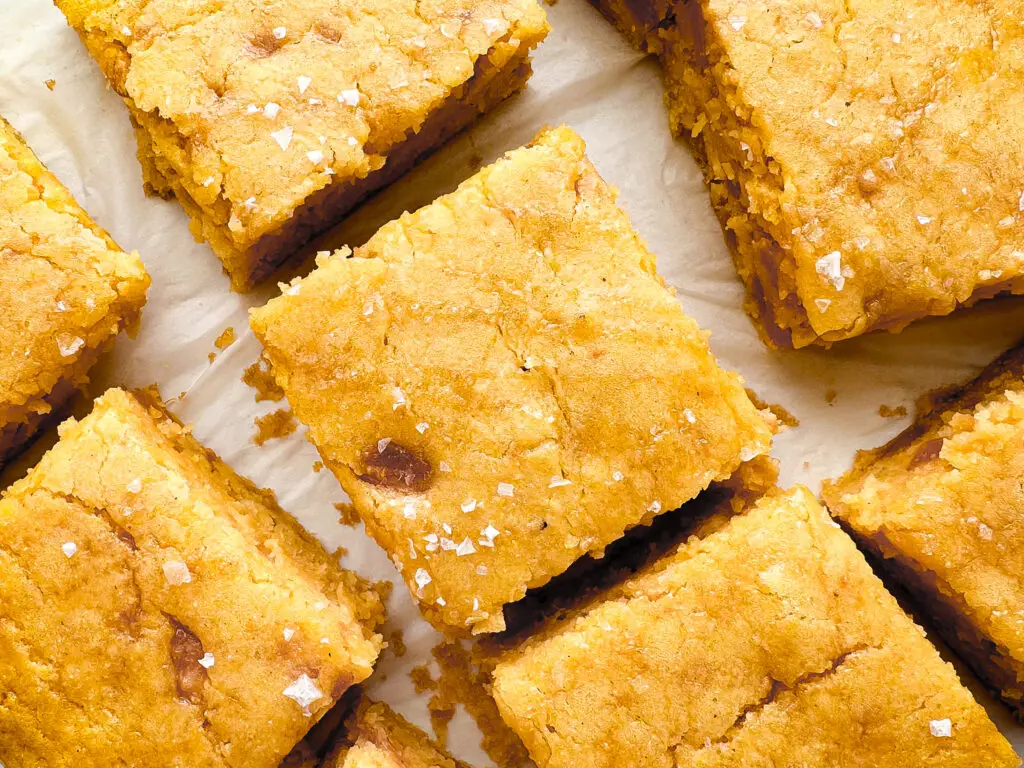
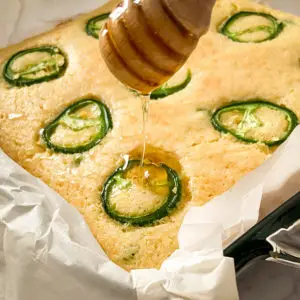
Cornmeal is the coarse-ground dried corn that anchors cornbread, hush puppies, polenta, and most Southern baking. Stone-ground cornmeal has more flavor than degerminated supermarket cornmeal because the germ (the most nutrient-dense part) is left intact. The trade-off is shorter shelf life, stone-ground keeps roughly 6 months versus 1 year for degerminated. Reader favorites built on it include The Best Sweet Potato Cornbread, Best Southern Style Jalapeno Cornbread, and Cornbread Dressing where the cornmeal provides the slightly gritty, sweet-corn texture that defines authentic Southern cornbread.
Cornmeal, polenta, and grits are all ground corn but differ in coarseness and corn variety. Cornmeal is fine to medium grind from yellow or white field corn, the workhorse for cornbread, muffins, and dredging. Polenta is medium to coarse grind, traditionally from Italian flint corn varieties, used for the porridge of the same name. Grits are coarse-ground hominy (lye-treated corn), the American South breakfast staple. The three are not interchangeable in most applications.
For cornbread, the standard ratio is 1 cup cornmeal + 1 cup flour + 1 tablespoon baking powder + 1 teaspoon salt + 1 cup buttermilk + 2 eggs + 1/4 cup melted butter + 2 tablespoons sugar (or none for savory Southern-style). Bake at 425°F in a preheated cast-iron skillet for 20-25 minutes until golden. The hot skillet is what produces the crispy bottom crust that distinguishes proper cornbread. The Best Sweet Potato Cornbread and Best Southern Style Jalapeno Cornbread both build on this cornmeal base with regional add-ins.
For polenta, the standard ratio is 1 cup polenta + 4 cups water + 1 teaspoon salt, whisked together cold then brought to a simmer over medium heat. Cook 30-45 minutes stirring frequently until the polenta pulls away from the sides of the pan. Finish with butter and grated parmesan for the classic Northern Italian version.
For dredging fried foods, cornmeal coats catfish, okra, and green tomatoes for the Southern fried texture. The standard dredge is 1 cup cornmeal + 1/2 cup flour + 1 teaspoon salt + 1 teaspoon black pepper. The cornmeal provides crisp golden coating; the flour helps the coating adhere.
For Yellow vs white cornmeal, yellow cornmeal is the regional standard in most of the US (Texas, North) and has slightly sweeter, cornier flavor. White cornmeal is the Deep South preference (Louisiana, Mississippi, Alabama) with milder, less assertive corn flavor. Both work in most recipes; regional cornbread loyalty runs deep.
For stone-ground vs steel-cut, stone-ground cornmeal retains the corn germ for richer flavor and slightly grittier texture. Steel-cut (the supermarket standard) has the germ removed for longer shelf life but less flavor. Specialty brands like Anson Mills and Bob’s Red Mill make stone-ground versions worth seeking out.
For storage, regular cornmeal keeps 1 year in a sealed pantry container, 18 months refrigerated. Stone-ground cornmeal contains oils that go rancid faster; refrigerator or freezer storage extends shelf life to 6-12 months. Smell-test older containers; rancid cornmeal has a paint-like smell. Browse yellow cornmeal and corn for closely related grain products.
Cornmeal is commonly used in cornbread, muffins, pancakes, and baked casseroles. It is also used as a coating for fried or baked foods and can be cooked into porridge-style dishes like polenta. Its texture and mild corn flavor work well in both sweet and savory recipes.
Cornmeal adds texture, structure, and a mild corn flavor to recipes. In baking, it provides a slightly crumbly texture to breads and muffins. When used as a coating, cornmeal helps create a crisp exterior during cooking.
Cornmeal can be cooked by simmering it in water, milk, or broth until thick and smooth. Stirring frequently helps prevent lumps and ensures even cooking. It is also used as an ingredient in baked goods and coatings.
Cornmeal can be baked into breads and muffins, simmered into porridge, or used as a coating for fried or baked foods. Cooking methods vary depending on the recipe, but the ingredient is known for its versatility in both sweet and savory dishes.
For more cornbread and grain options, see our yellow cornmeal and buttermilk recipes.