
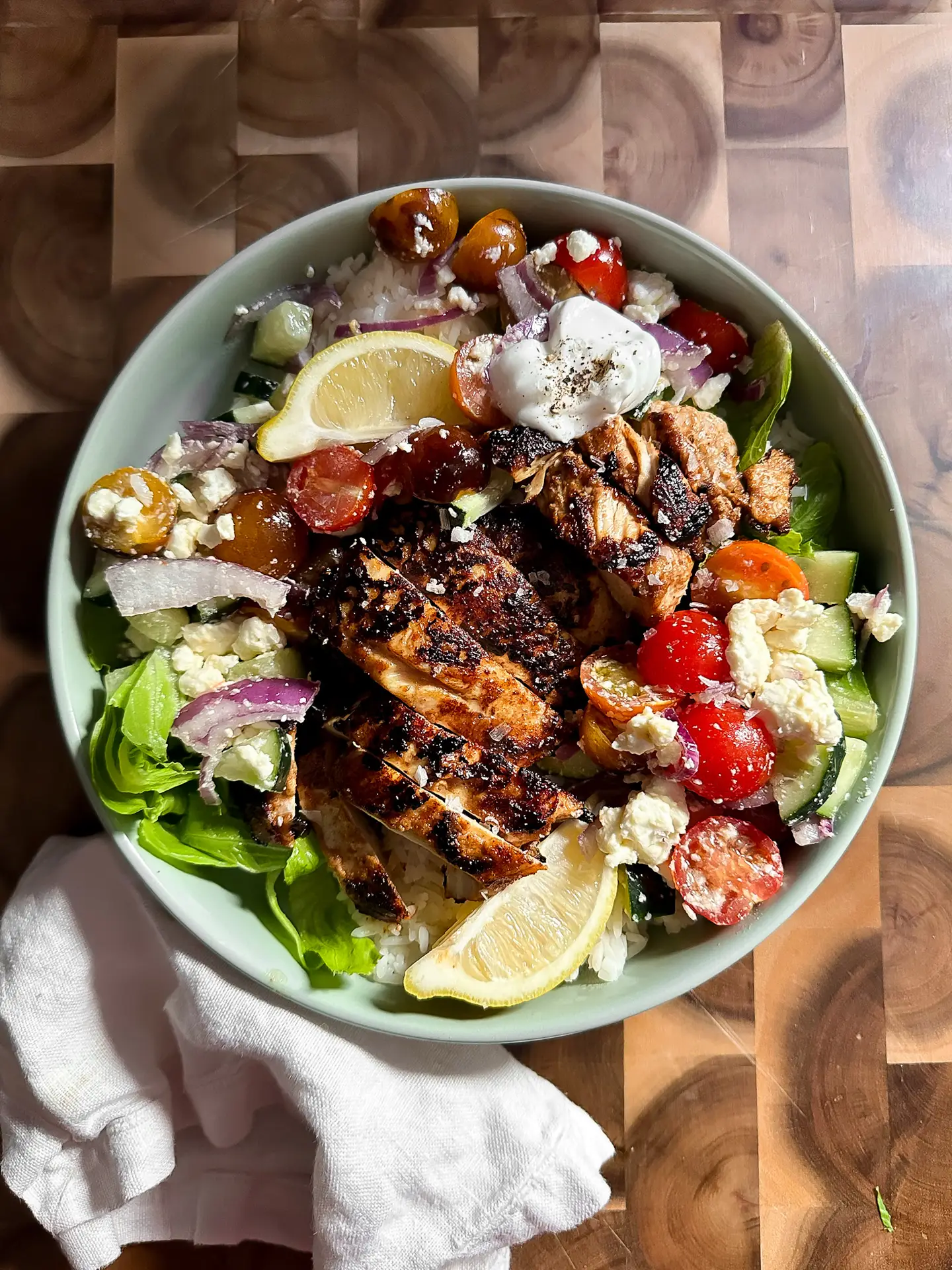
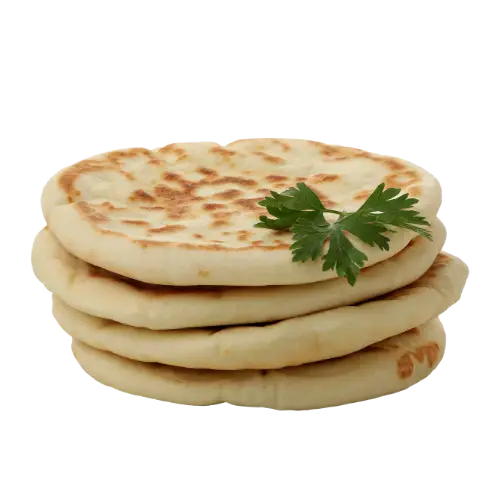
Pita bread is the slightly leavened Middle Eastern and Greek flatbread that puffs into a pocket during baking. The pocket holds fillings (falafel, gyros, shawarma); torn pieces work as dippers for hummus and tzatziki. The slightly chewy texture and mild flavor pair particularly well with the bold flavors of Mediterranean and Middle Eastern cooking. Reader favorites that build on it include Chicken Shawarma Bowls and Greek Chicken Souvlaki where the pita serves as the wrap, dipper, or shawarma-bowl base for Greek and Middle Eastern dishes.
Greek-style and Middle Eastern-style pita bread are slightly different products. Greek pita is thicker, softer, and usually doesn’t form a pocket; ideal for souvlaki wraps and gyros. Middle Eastern (Arabic) pita is thinner, forms a hollow pocket during baking, ideal for stuffing with falafel or shawarma fillings. Both are made from similar dough; the difference is in the final shape after baking.
For warming pita (a step that’s often skipped at home), wrap a stack in foil and bake at 350°F for 5-7 minutes, or warm individually on a dry skillet for 30 seconds per side. Cold or refrigerator-stiff pita cracks when folded or pocket-opened; warm pita is flexible and tastes dramatically better.
For pocket-stuffed sandwiches like Middle Eastern falafel or shawarma sandwiches, cut the pita in half (or open the pocket carefully along one edge), stuff with the filling, tahini sauce, chopped tomatoes, cucumbers, and pickled onions. The 6-inch pita pocket holds about 1 cup of filling; the 8-inch version holds 1.5-2 cups.
For Greek-style wraps, the pita stays whole and the filling goes on top like a soft taco, then it’s rolled or folded. Souvlaki and gyro sandwiches use this technique with grilled meat, tzatziki sauce, tomatoes, onions, and lettuce.
For pita chips, cut pitas into 8 triangles, brush with olive oil, sprinkle with salt and spices, bake at 350°F for 12-15 minutes until golden and crispy. Pita chips work as dippers for hummus, baba ganoush, tzatziki, and most Middle Eastern dips. They keep 1 week in a sealed container.
For homemade pita, the dough is a basic flour, water, yeast, salt, and olive oil formula. The key to getting the pocket is high-heat baking (500°F+) on a preheated pizza stone or cast-iron skillet. The intense heat creates steam inside the dough that puffs the bread into a balloon, leaving the pocket when it cools. Most home ovens get hot enough; the temperature is non-negotiable.
For storage, fresh pita keeps 2-3 days at room temperature in a sealed bag, 1 week refrigerated, 3 months frozen. Refrigerated pita firms up dramatically; warming reconstitutes the soft texture. Frozen pita thaws in 30 minutes at room temperature; the texture stays good if frozen fresh and used within the 3-month window. Browse tahini and hummus for closely related Middle Eastern ingredients. Reader favorites built on it include Easy and Smooth Hummus.
Pita bread is made by mixing flour, water, yeast, salt, and oil, then kneading, shaping, and baking at high heat until the bread puffs and forms a pocket.
Pita bread can be baked in the oven, cooked on a stovetop skillet, or warmed on a grill until soft and slightly puffed.
You can make wraps, sandwiches, pita pizzas, chips, and stuffed pockets using pita bread with a variety of fillings and toppings.
Pita bread is typically made from flour, water, yeast, salt, and sometimes olive oil, creating a soft and slightly chewy texture.
For more flatbread and Mediterranean options, see our brioche bread and whole wheat recipes.