
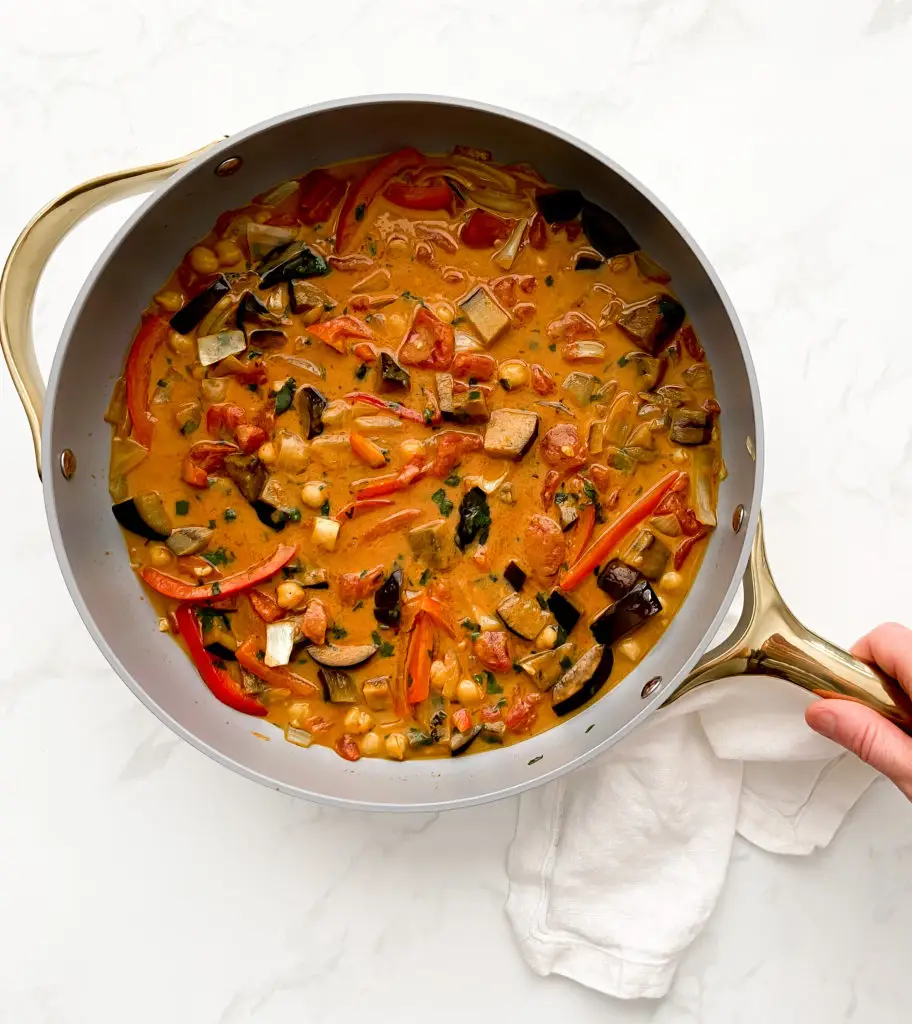
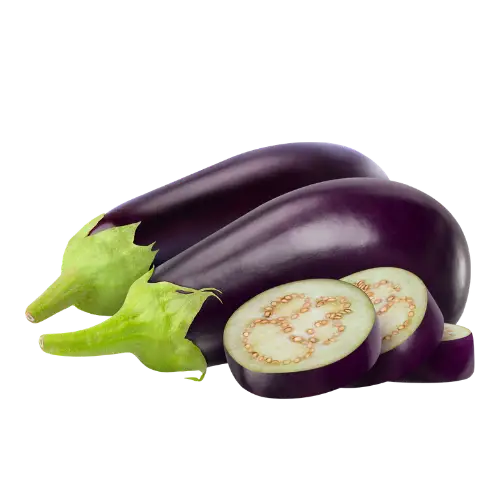
Eggplant is the deep purple, spongy vegetable that anchors vegetarian curries, baba ganoush, eggplant parmesan, and most Mediterranean and Middle Eastern vegetable cooking. The flesh absorbs flavors aggressively, which makes it ideal for sauces and braises but requires salting to remove bitterness in some applications. A reader favorite that builds on it is One Pot Eggplant Curry where the eggplant absorbs the curry sauce and becomes the meaty, satisfying base of the vegetarian dish.
Globe eggplants (the large purple supermarket variety), Italian eggplants (smaller, similar shape), Japanese eggplants (long, thin, less bitter), and white eggplants are all interchangeable in most recipes but with slight texture and flavor differences. Globe eggplants have more seeds and can be slightly bitter; salting before cooking helps. Japanese and Italian varieties have fewer seeds and milder flavor.
For salting, slice or cube eggplant, sprinkle generously with kosher salt, let sit 30-45 minutes until water beads on the surface, rinse, pat dry. This step is less necessary with modern eggplant varieties (most have been bred for less bitterness) but still produces better browning by removing surface moisture.
For roasting, cube eggplant into 1-inch pieces, toss with olive oil and salt, roast at 425°F for 25-30 minutes until tender and browned at the edges. The high heat caramelizes the natural sugars and produces the meaty, slightly sweet flavor that distinguishes roasted eggplant from boiled or steamed.
For eggplant Parmesan, the technique is to slice eggplant into 1/2-inch rounds, salt and drain 30 minutes, dredge in flour + egg wash + breadcrumbs, fry in olive oil until golden, layer with marinara sauce and mozzarella, bake until bubbling. This is the iconic Italian-American eggplant preparation.
For baba ganoush, char whole eggplants directly over a gas flame or under a broiler until the skin is blackened and the flesh is soft (15-20 minutes), let cool, peel off the skin, blend the flesh with tahini, lemon juice, garlic, olive oil, and salt. The smoky flavor is what distinguishes baba ganoush from generic blended eggplant.
For Asian preparations, Japanese eggplants are sliced thin or cut into wedges and braised in soy sauce, mirin, and miso. The thinner skin and reduced bitterness make them ideal for Asian cooking where the eggplant flavor should integrate rather than dominate.
For curry preparations, cubed eggplant absorbs curry sauce aggressively. The eggplant becomes the meaty, satisfying base of vegetarian curries. Roasting the eggplant before adding to the curry (rather than just simmering raw eggplant in the curry) produces deeper flavor and better texture.
For storage, fresh eggplant keeps 5-7 days refrigerated in the produce drawer. Wrinkled or soft spots indicate aging; usable but should be cooked soon. Cut eggplant turns brown quickly from oxidation; squeeze with lemon juice or use immediately. Cooked eggplant freezes well in airtight containers for 6 months. Browse zucchini and tomato for closely related Mediterranean vegetables.
Eggplant can be sliced, cubed, or roasted and added to many savory dishes. It is commonly used in baked casseroles, pasta sauces, stir-fries, and roasted vegetable dishes. Because eggplant absorbs flavors easily, it works well with ingredients like garlic, tomatoes, olive oil, and herbs.
Roasting or baking eggplant is one of the best ways to cook it because it develops a soft texture and rich flavor. Slice the eggplant, brush it with oil, and roast at about 400°F until tender and lightly browned. This method enhances its natural taste.
Start by washing and slicing the eggplant, then season it with oil, salt, and spices. Depending on the recipe, bake, roast, sauté, or grill the pieces until they become tender. Eggplant can then be added to sauces, layered in casseroles, or served as a side dish.
Baking eggplant is often preferred because it uses less oil and still produces tender, flavorful results. Frying creates a crisp exterior but can absorb more oil during cooking. For lighter meals, baking or roasting is usually the better option while still delivering good texture and flavor.